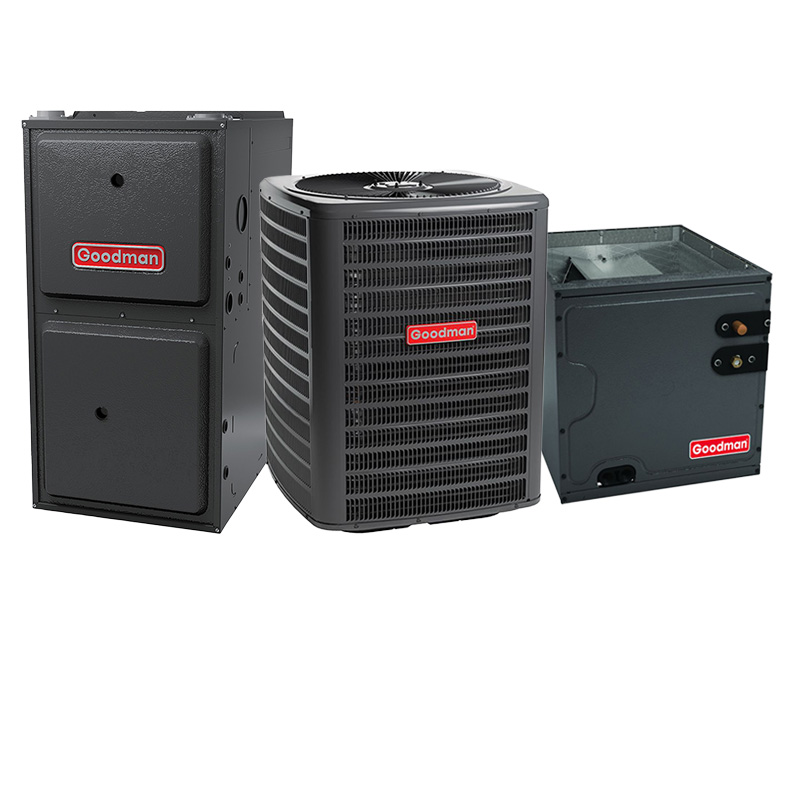
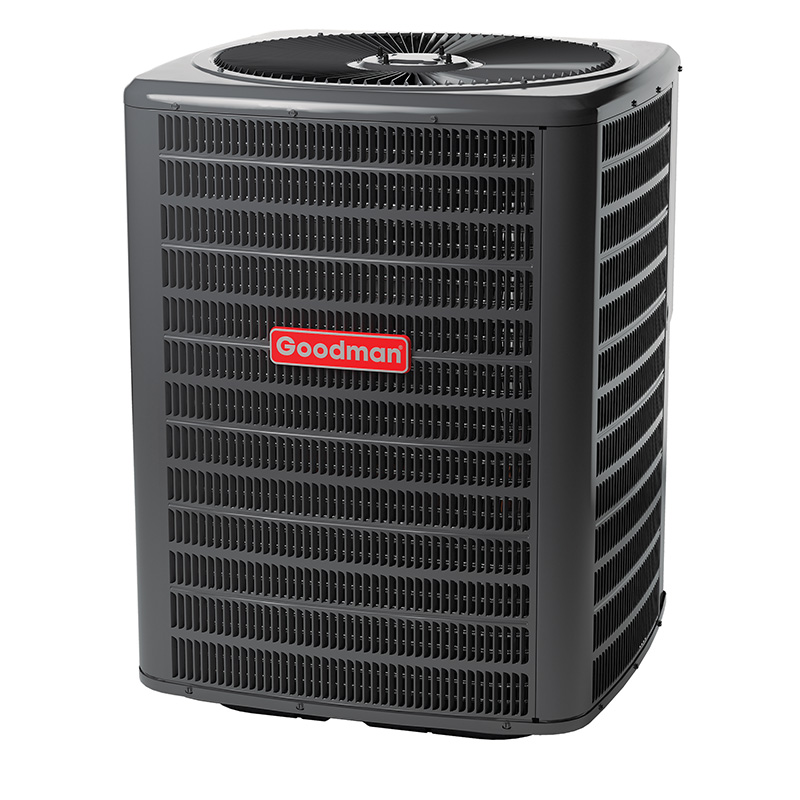
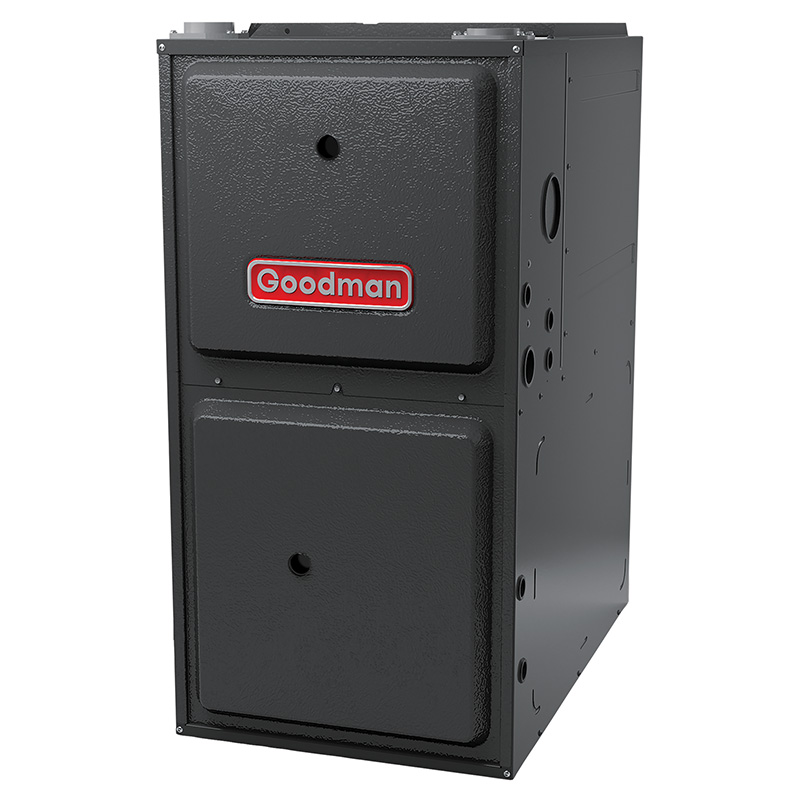
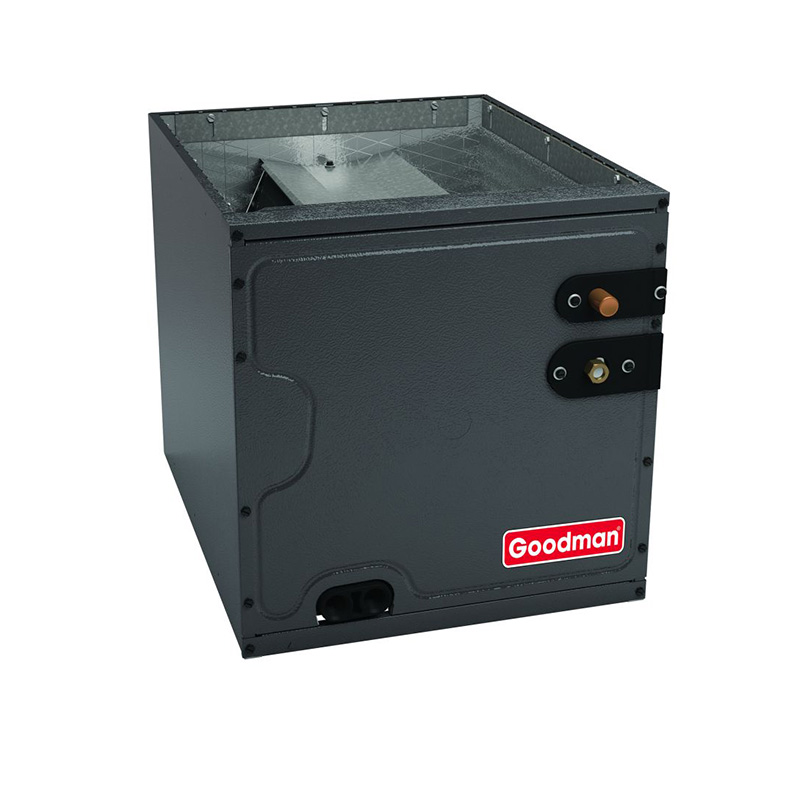
Goodman Furnace AC – 2 Ton 15.2 SEER2 AC With 80000 BTU 96% AFUE Multi-Speed ECM Gas Furnace System – Upflow | R32
View on AC Direct see your lowest price →Check current price on AC Direct →
Key features
- 2-ton cooling capacity rated at 15.2 SEER2, meeting current federal efficiency standards with room to spare
- 80,000 BTU gas furnace at 96% AFUE, qualifying as a condensing unit with a secondary heat exchanger
- Multi-speed ECM blower motor reduces air handler electricity use and improves airflow consistency
- Upflow cabinet orientation designed for basement or interior-closet installations with overhead ductwork
- R-32 refrigerant charge, a lower global-warming-potential refrigerant replacing R-410A in new equipment
- Factory-matched coil and condenser designed to hit rated SEER2 and AHRI efficiency as a verified system
About this system
This Goodman bundle pairs a 2-ton, 15.2 SEER2 central air conditioner with an 80,000 BTU, 96% AFUE multi-speed ECM gas furnace in an upflow configuration, and it ships ready for R-32 refrigerant. The 15.2 SEER2 rating clears the current federal minimum by a comfortable margin without reaching the premium efficiency tier, which keeps the purchase price accessible while still delivering real monthly savings over older 13 or 14 SEER equipment. At 96% AFUE, the furnace converts 96 cents of every gas dollar into usable heat, putting it firmly in the condensing-furnace category alongside units that cost considerably more.
The multi-speed ECM blower motor is the component worth paying attention to here. Unlike a single-speed PSC motor that simply runs at full blast or stops, an ECM adjusts airflow in response to demand, which reduces electricity consumption at the air handler, improves temperature consistency room to room, and lowers the static pressure that stresses duct connections over time. The upflow configuration means supply air exits the top of the furnace cabinet, making this the right fit for basement or closet installations where ductwork runs up through the floor above. Buyers with attic or crawlspace setups should look at a downflow or horizontal variant instead.
This system suits homeowners in climates that see genuine winters and moderate-to-warm summers, particularly those replacing aging equipment on a budget who want a meaningful efficiency upgrade without the cost premium of a Carrier, Trane, or Lennox nameplate. It is not the right choice for buyers who want inverter-driven variable-capacity cooling or who expect 20-plus years of largely maintenance-free service from a compressor. It is, however, a straightforward, well-specified system at a price point that leaves room in the budget for a quality installation, which matters more with Goodman than with almost any other brand.
The Goodman 2-ton 15.2 SEER2 / 96% AFUE bundle offers a genuinely competitive efficiency spec at a price point that undercuts comparable Carrier, Trane, and Lennox systems by 15 to 25 percent. The ECM furnace motor and high-AFUE heat exchanger are real upgrades over entry-level alternatives, though the brand's documented history of capacitor failures, evaporator coil leaks, and shorter-than-premium compressor lifespans means buyers should budget for maintenance and lean heavily on installer quality to get the most from it.
Overall score is the average of the five ratings above.
What we like
- Purchase price runs 15 to 25 percent below comparable equipment from Trane, Carrier, and Lennox
- 96% AFUE condensing furnace is a meaningful efficiency step up from 80% AFUE alternatives
- ECM multi-speed blower reduces electricity consumption and smooths out temperature swings
- 15.2 SEER2 provides real operating savings versus older or minimum-efficiency equipment
- R-32 refrigerant is a forward-looking choice with lower environmental impact than R-410A
Trade-offs
- Dual-run capacitors are the most commonly reported failure point, typically around years 5 to 9, though repairs usually cost only 300 to 600 dollars
- Evaporator coil leaks appear in a meaningful share of owner reports, a more disruptive and costly fix than a capacitor swap
- Compressor lifespan averages 10 to 14 years, noticeably shorter than the 15 to 20 years often cited for premium-brand compressors
- A minority of new owners report refrigerant leaks in the first year, most often traced to installation or initial charge quality rather than a factory defect
What homeowners and pros say about Goodman
Homeowners who post about Goodman equipment tend to cluster at the extremes. On ConsumerAffairs, where the rating sits around 2.5 out of 5, the recurring complaints are not about the first few years but about what happens after year 7: capacitor failures, refrigerant leaks traced back to evaporator coil issues, and repair bills that start to erode the savings from the lower upfront price. The dual-run capacitor is the most commonly cited failure, and experienced techs note it is usually a straightforward 300 to 600 dollar fix, but it happens often enough that owners who were not expecting it feel blindsided. Evaporator coil leaks are a more serious documented issue, and a minority of new owners report refrigerant loss within the first year, typically pointing back to installation or charge quality rather than a factory problem.
On Google dealer review pages, where scores average closer to 3.8 out of 5, the tone shifts. Installers and their customers who had a competent commissioning experience frequently credit the low price and the availability of parts as real advantages. HVAC technicians who service multiple brands often say Goodman equipment performs closer to its rated efficiency when the installation is done right, and that the parts supply chain is reliable. The compressor lifespan of roughly 10 to 14 years is shorter than the 15 to 20 years premium brands tend to see, and professionals who work on both acknowledge it. The consistent takeaway across both channels is that this specific 15.2 SEER2, 96% AFUE system is a reasonable buy when the savings are reinvested in a thorough installation, a registered warranty, and a service plan that catches the small failures before they become large ones.
Sources: ConsumerAffairs Goodman owner reviews, AHRI Directory of Certified Product Performance, U.S. DOE appliance and equipment efficiency standards, Goodman product specification sheets.
What it costs to run
At 15.2 SEER2, cooling this 2-ton system for a typical 1200-hour cooling season at the U.S. average electricity rate of $0.17/kWh works out to roughly $322 per year in cooling, about $43 less per year than a minimum-efficiency 13.4 SEER2 unit of the same size. Your real cost depends on your climate and local rate.
Method: (24,000 BTU/hr ÷ 15.2 SEER2) × 1200 hours ÷ 1000 × $0.17/kWh. Rate source: U.S. EIA average; cooling hours: moderate-climate estimate.
How it compares
| Brand | Comparable model | SEER2 | Stage | Price position |
|---|---|---|---|---|
| Goodman | GSXH502410 / GMVC960804CN (this system) | 15.2 | Single-stage AC / Multi-speed furnace | Value pick |
| Carrier | Comfort 15 Series (24ACC636) | 15.2 | Single-stage | Typically 15 to 25 percent more than this Goodman bundle |
| Trane | XR15 Series (4TTR5024) | 15.2 | Single-stage | Typically 15 to 25 percent more than this Goodman bundle |
| Lennox | Merit 14ACX Series | 15.0–15.2 | Single-stage | Typically 15 to 25 percent more than this Goodman bundle |
Competitor rows are comparable single-stage units at similar efficiency; price is relative position, not a quote.
Questions about this system
Is R-32 refrigerant safe, and will my current HVAC technician be able to service this system?
R-32 is mildly flammable, which is why EPA and industry guidelines require technicians to use R-32-certified equipment and procedures. It is widely used in mini-splits already sold in the U.S., and most service companies are equipping their techs for it now. Confirm your installer and any future service technician holds the appropriate certification before the first charge or any refrigerant work.
What size home does a 2-ton, 80,000 BTU system actually fit?
A rough rule of thumb puts 2 tons at roughly 900 to 1,400 square feet, but climate zone, insulation level, window area, and ceiling height all shift that range significantly. The only reliable answer comes from a Manual J load calculation performed by your installer before equipment is ordered, because an oversized or undersized system will underperform regardless of its efficiency rating.
Goodman has mixed reviews online. Should I be worried about reliability?
The concern is legitimate but worth contextualizing. Goodman scores around 2.5 out of 5 on ConsumerAffairs, a channel where dissatisfied owners are more likely to post than happy ones, with repair cost complaints typically surfacing after year 7. Google dealer reviews average closer to 3.8 out of 5, where affordability draws consistent praise. The documented failure modes are dual-run capacitors, evaporator coil leaks, and compressor lifespan that averages 10 to 14 years rather than the 15 to 20 years seen in premium brands, so budgeting for maintenance and choosing an experienced installer are more important with Goodman than with a premium nameplate.
What warranty does this Goodman system come with, and are there any registration requirements?
Goodman typically offers a 10-year parts warranty on registered equipment, with registration required within a set window after installation to receive the full term. Failure to register usually drops coverage to a shorter base warranty. Read the specific warranty document included with this model at purchase, and register promptly through Goodman's website after your contractor completes the installation.
Can I install this system myself to save money on labor?
In most jurisdictions the answer is no for a legal, permitted installation. Handling R-32 refrigerant requires EPA 608 certification, gas line work requires a licensed plumber or HVAC tech in most states, and pulling permits typically requires a licensed contractor. Beyond legality, Goodman's own documentation and the brand's real-world reliability track record both point to installation quality as the single largest factor in how long and how well the equipment performs, so this is not a place to cut corners.
Specifications
| Cooling capacity | 2 Ton |
| Efficiency | 15.2 SEER2 |
| Furnace output | 80000 BTU |
| Furnace efficiency | 96% AFUE |
| Configuration | Upflow |
| Refrigerant | R-32 |