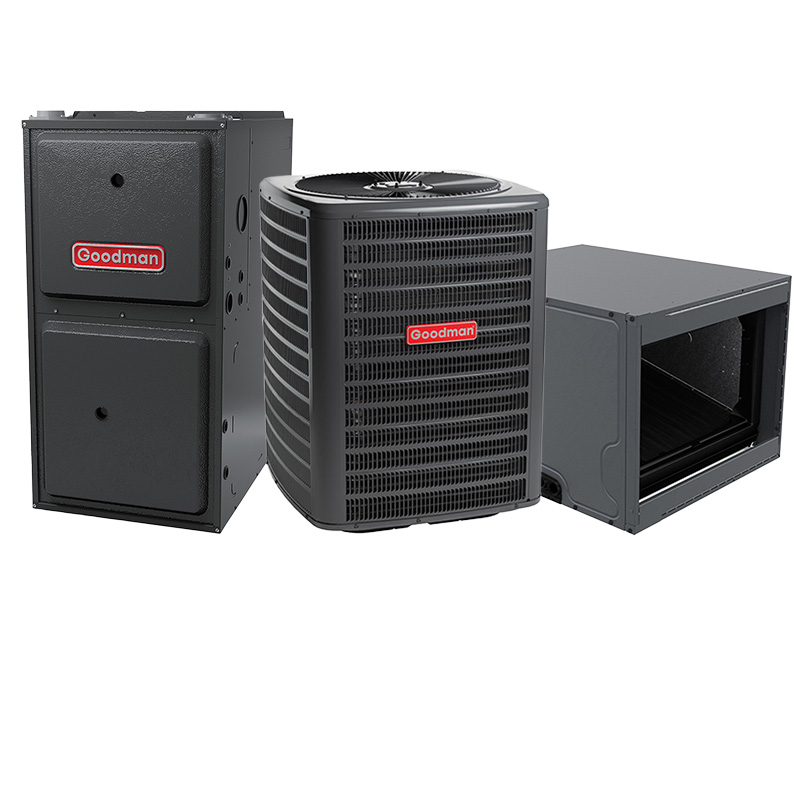
Goodman Furnace AC – 4 Ton 14.5 SEER2 AC With 100000 BTU 96% AFUE Multi-Speed ECM Gas Furnace System – Horizontal | R32
View on AC Direct see your lowest price →Check current price on AC Direct →
Key features
- 4-ton cooling capacity rated at 14.5 SEER2 for moderate efficiency
- 100,000 BTU gas furnace with 96% AFUE high-efficiency rating
- Multi-speed ECM blower motor for quieter, more even airflow
- Horizontal configuration designed for attic or crawlspace installations
- R-32 refrigerant with lower global warming potential than R-410A
- Matched system design intended to simplify permitting and warranty validation
About this system
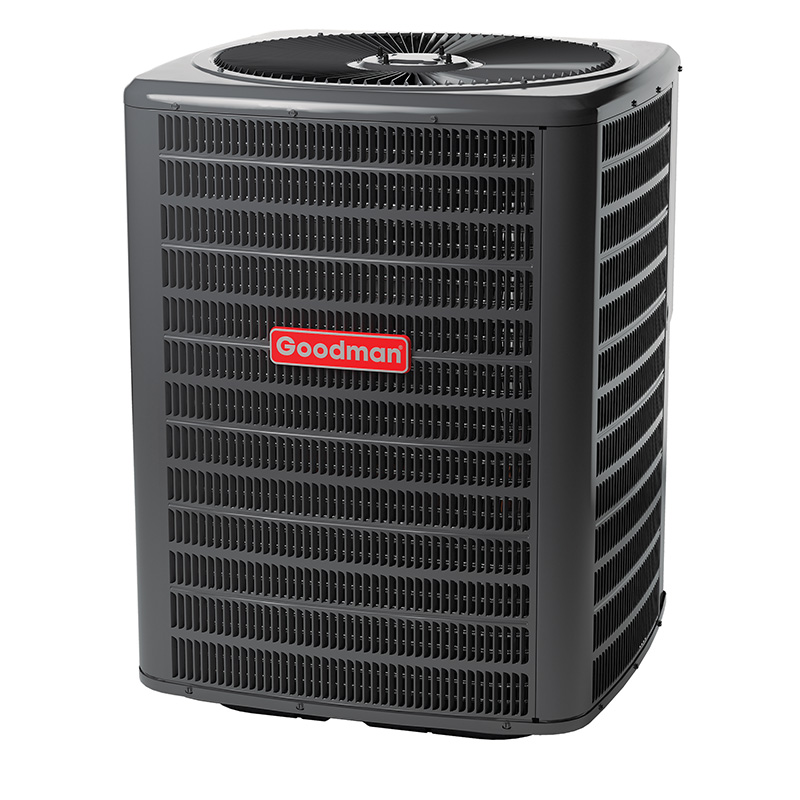
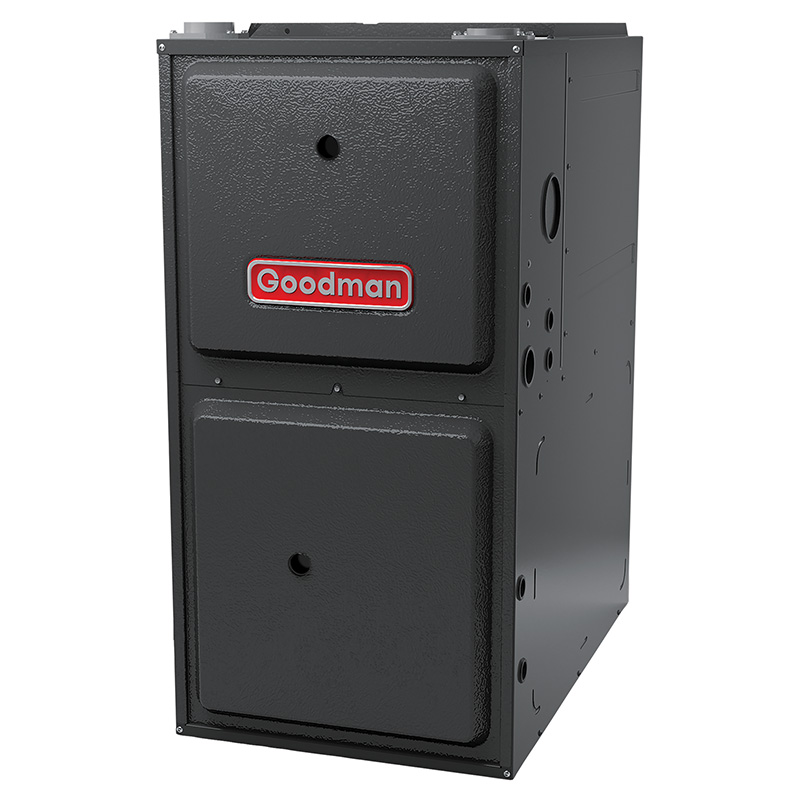
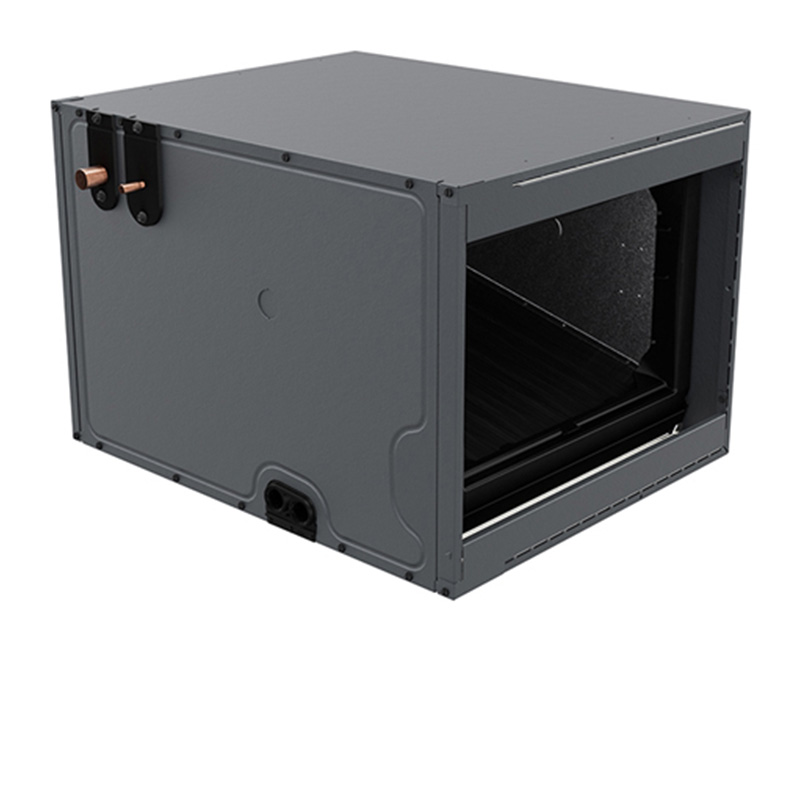
This Goodman system pairs a 4-ton, 14.5 SEER2 central air conditioner with a 100,000 BTU, 96% AFUE multi-speed ECM gas furnace configured for horizontal installation. The horizontal layout makes it the right fit for attic or crawlspace applications where vertical clearance is limited. R-32 refrigerant is the environmentally progressive choice here: it carries a lower global warming potential than the R-410A it replaces and is increasingly common in new residential equipment as the industry phases down older refrigerants.
A 96% AFUE furnace sits in the high-efficiency tier, meaning 96 cents of every dollar of gas burned converts to usable heat. The multi-speed ECM blower motor adjusts airflow to match demand rather than running at a single fixed speed, which tends to reduce temperature swings and lower electricity consumption compared to a standard PSC motor. At 4 tons, this system is sized for homes roughly in the 1,800 to 2,400 square foot range depending on climate, insulation, and duct layout. A Manual J load calculation is still essential before committing to any size.
Goodman occupies the value segment, typically priced 15 to 25 percent below comparable Trane, Lennox, and Carrier equipment. That lower entry cost comes with real trade-offs on long-term reliability history, so this system suits budget-conscious buyers who understand the ownership profile and are prepared to budget for maintenance after the mid-life mark of roughly year seven.
This Goodman combo delivers a genuinely high-efficiency furnace and a code-compliant AC at a price point that is hard to match from premium brands. The ECM motor and 96% AFUE furnace are real strengths, but the brand's documented reliability pattern, especially after year seven, means total cost of ownership depends heavily on installer quality and willingness to keep up with maintenance. Buyers who prioritize the lowest upfront price and can accept a shorter average compressor lifespan will find real value here; those who want premium longevity should budget up.
Overall score is the average of the five ratings above.
What we like
- 96% AFUE furnace is a genuine high-efficiency rating that meaningfully reduces gas bills versus 80% units
- ECM multi-speed blower lowers operating electricity costs and improves comfort compared to single-speed PSC motors
- R-32 refrigerant is forward-compatible and carries a lower environmental impact than outgoing R-410A
- Horizontal configuration directly addresses attic and crawlspace installs where vertical units simply will not fit
- Entry price is typically 15 to 25 percent below Carrier, Trane, and Lennox equivalents, leaving room in the budget for a quality install
Trade-offs
- Dual-run capacitors are the most commonly reported failure point and often appear before year 10, adding service calls even if each repair is relatively low cost
- Evaporator coil leaks appear in a meaningful share of owner reports and can be an expensive mid-life repair
- Compressor lifespan averages 10 to 14 years versus 15 to 20 years for premium-brand compressors, raising the odds of a costly replacement inside a 15-year horizon
- A minority of owners report refrigerant leaks in the first year, usually traceable to install or initial charge quality rather than the equipment itself, which underscores how much outcome depends on the installer chosen
What homeowners and pros say about Goodman
Homeowners who purchased Goodman equipment tend to split clearly in their assessments. On Google dealer review pages, Goodman systems average around 3.8 out of 5, where the most common praise centers on affordability and the ability to get a functional system installed without stretching a budget. On ConsumerAffairs, which skews toward complaint-motivated reviews, the brand sits at roughly 2.5 out of 5, and the recurring theme is repair costs that start climbing after about year seven. For this horizontal 4-ton system specifically, buyers should go in with both data points in mind rather than leaning on either one alone.
HVAC technicians consistently point to install quality as the single biggest factor in how long a Goodman unit performs. The documented failure modes line up with that view: dual-run capacitor failures are the most reported issue and are generally a low-cost repair, but evaporator coil leaks and early refrigerant loss in the first year often trace back to workmanship rather than the equipment itself. Compressor lifespan, averaging 10 to 14 years against a premium-brand average of 15 to 20 years, is the one hardware trade-off that is harder to offset with good installation practice. Owners who factor in a potential compressor replacement around year 12 alongside the lower purchase price often find the total cost picture closer to a premium brand than the sticker difference suggests.
Sources: ConsumerAffairs Goodman owner reviews, AHRI Directory of Certified Product Performance, U.S. DOE appliance and equipment efficiency standards, Goodman product specification sheets.
What it costs to run
At 14.5 SEER2, cooling this 4-ton system for a typical 1200-hour cooling season at the U.S. average electricity rate of $0.17/kWh works out to roughly $675 per year in cooling, about $56 less per year than a minimum-efficiency 13.4 SEER2 unit of the same size. Your real cost depends on your climate and local rate.
Method: (48,000 BTU/hr ÷ 14.5 SEER2) × 1200 hours ÷ 1000 × $0.17/kWh. Rate source: U.S. EIA average; cooling hours: moderate-climate estimate.
How it compares
| Brand | Comparable model | SEER2 | Stage | Price position |
|---|---|---|---|---|
| Goodman | GSXH504810 + GMVC961005CN (this system) | 14.5 | Single-stage AC / Multi-speed furnace | Value pick |
| Carrier | Comfort 14 Series (24ACC4) | 14.3 to 15.2 | Single-stage | Typically 15 to 25 percent more than this Goodman system |
| Trane | XR14 Series (4TTR4) | 14.3 to 15.0 | Single-stage | Typically 15 to 25 percent more than this Goodman system |
| Lennox | Merit 14 Series (14ACX) | 14.3 to 15.0 | Single-stage | Typically 15 to 25 percent more than this Goodman system |
Competitor rows are comparable single-stage units at similar efficiency; price is relative position, not a quote.
Questions about this system
Why does this system use R-32 instead of R-410A, and does that affect repair costs?
R-32 is a next-generation refrigerant with a lower global warming potential and is becoming the industry standard as R-410A is phased down under updated EPA regulations. Most licensed HVAC technicians are already certified to handle it, and availability is growing, so repair and recharge costs should be comparable to what you would have seen with R-410A. It is worth confirming your chosen service contractor is familiar with R-32 before signing a maintenance agreement.
What does 'horizontal configuration' actually mean for my installation?
A horizontal configuration means the air handler or furnace is designed to lie on its side, routing airflow in from one end and out through the other. This is standard for attic platforms and crawlspaces where there is not enough headroom for an upright cabinet. If your current unit is installed vertically in a closet or basement, this specific model is not the right fit for that location.
How long can I realistically expect the compressor to last?
Based on documented owner experience with Goodman equipment, the compressor tends to average 10 to 14 years, compared to 15 to 20 years reported for premium-brand compressors. That does not mean yours will fail at year 10, but it is a realistic planning figure. Keeping up with annual maintenance, especially ensuring proper refrigerant charge, gives the compressor the best chance of reaching the longer end of that range.
What is the most common repair call I should budget for after the warranty period?
Dual-run capacitors are the most frequently reported failure on Goodman systems and typically cost between 300 and 600 dollars to replace including the service call. This is a relatively straightforward repair and not a system-ending event. Evaporator coil leaks are also documented in owner reviews and are a more expensive fix, so catching any refrigerant loss early through regular maintenance is worthwhile.
Is the 4-ton size right for my home, or should I go up or down?
Tonnage should never be selected by square footage alone. Climate zone, ceiling height, insulation levels, window area, and duct condition all affect the correct size. A 4-ton unit is a common fit for homes roughly 1,800 to 2,400 square feet in moderate climates, but an oversized unit will short-cycle and cause humidity problems while an undersized one will run continuously in peak heat. Ask your installer for a Manual J load calculation before finalizing the purchase.
Specifications
| Cooling capacity | 4 Ton |
| Efficiency | 14.5 SEER2 |
| Furnace output | 100000 BTU |
| Furnace efficiency | 96% AFUE |
| Configuration | Horizontal |
| Refrigerant | R-32 |