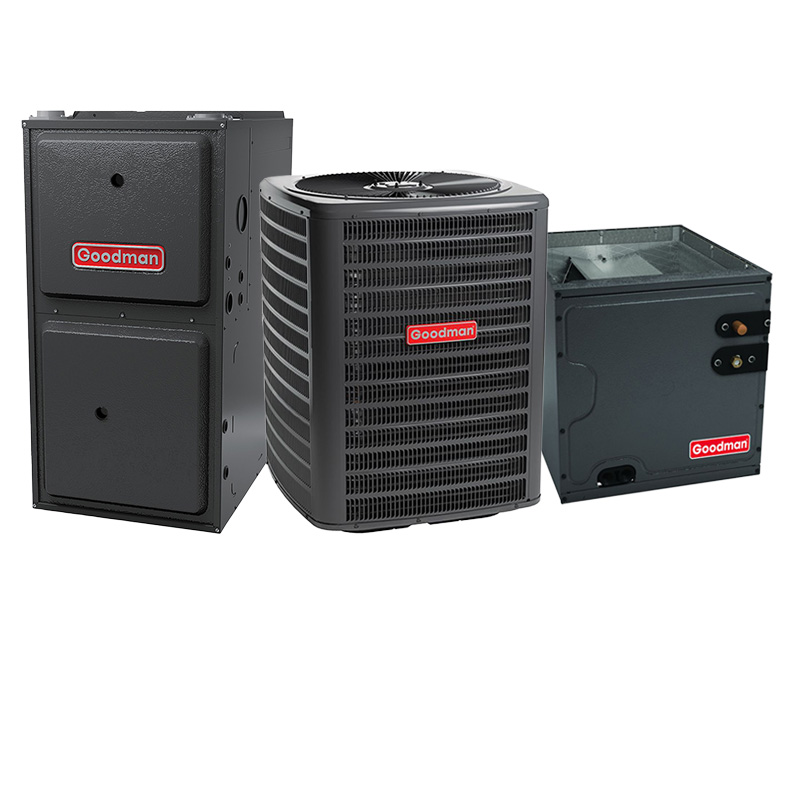
Goodman Furnace AC – 4 Ton 15.2 SEER2 AC With 100000 BTU 96% AFUE Multi-Speed ECM Gas Furnace System – Upflow | R32
View on AC Direct see your lowest price →Check current price on AC Direct →
Key features
- 4-ton cooling capacity rated at 15.2 SEER2 for above-minimum efficiency
- 100,000 BTU furnace with 96% AFUE for high-efficiency gas heating
- Multi-speed ECM blower motor reduces fan energy use and improves humidity control
- R-32 refrigerant with a lower global-warming potential than R-410A
- Upflow configuration for basement, closet, or ground-level mechanical room installs
- Single-stage cooling compressor paired with a multi-speed furnace air handler
About this system
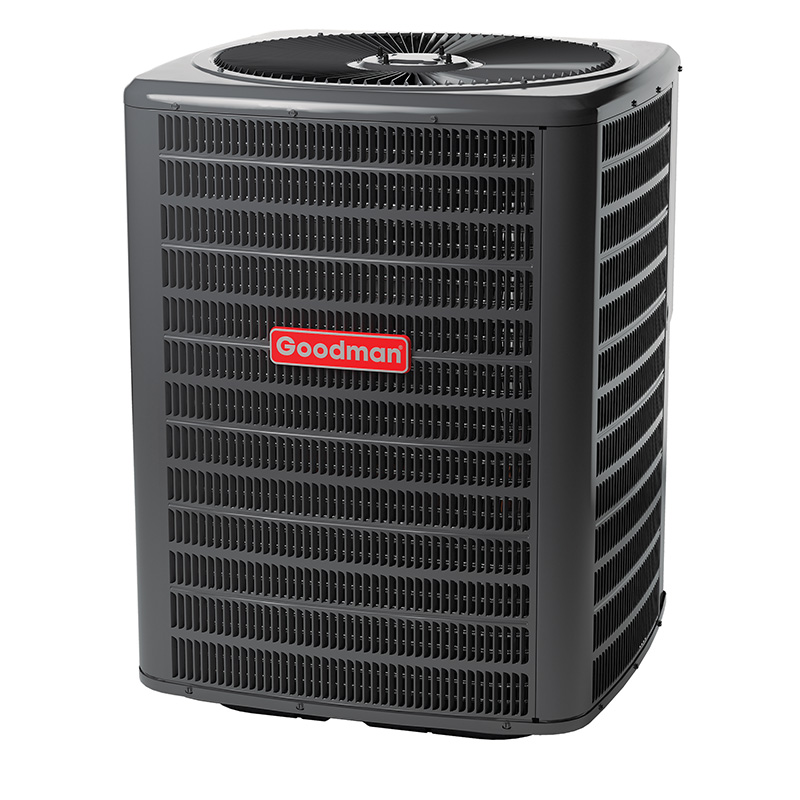
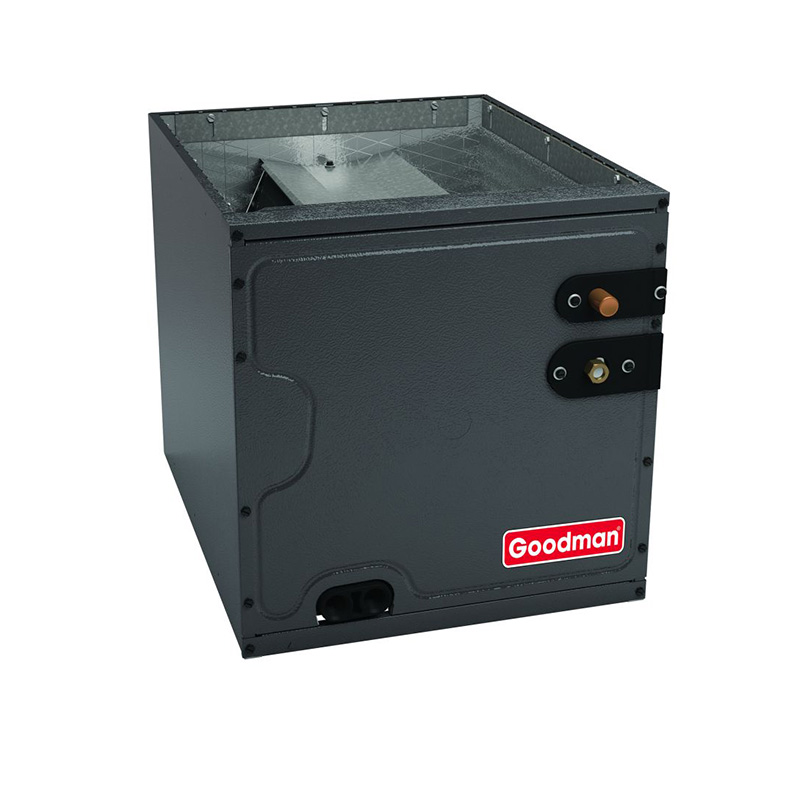
This Goodman bundle pairs a 4-ton, 15.2 SEER2 central air conditioner with a 100,000 BTU, 96% AFUE multi-speed ECM gas furnace in an upflow configuration. The cooling side uses R-32 refrigerant, a lower global-warming-potential option that is becoming more common as the industry moves away from R-410A. At 15.2 SEER2, the system clears the federal minimum for most U.S. climate regions and delivers a meaningful efficiency step up from entry-level equipment, though it stops short of the variable-speed or two-stage compressor territory where top-tier efficiency and comfort are found.
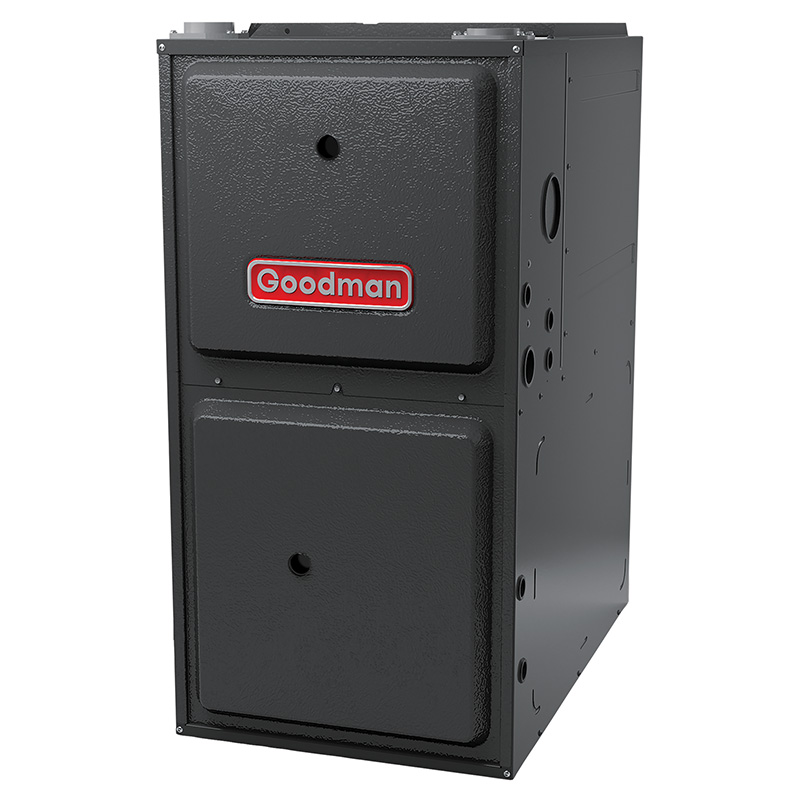
The furnace is the stronger performer of the two components. A 96% AFUE rating means 96 cents of every fuel dollar goes to heat, and the ECM (electronically commutated motor) blower cuts fan electricity use compared to a standard PSC motor. Multi-speed operation allows the furnace to run at a lower stage on milder days, which helps with humidity control and reduces on-and-off cycling noise. The upflow configuration suits the most common residential installation scenario: a furnace in a basement, utility closet, or ground-level mechanical room blowing conditioned air upward into duct runs above it.
This system is well suited to homeowners replacing aging equipment in a 2,000 to 2,600 square foot home who want a proven efficiency tier without paying premium-brand prices. It is less suited to buyers who prioritize long-term compressor longevity, ultra-quiet operation, or variable-capacity cooling comfort, all of which require stepping up to a two-stage or inverter-driven system.
This Goodman system delivers a solid efficiency package at a price point that is 15 to 25 percent below comparable Carrier, Trane, and Lennox equipment, making it one of the more practical value picks in the 15 SEER2 tier. The 96% AFUE furnace with an ECM blower is genuinely strong hardware, and R-32 is a forward-looking refrigerant choice. The honest trade-off is that Goodman compressors tend to average 10 to 14 years versus 15 to 20 for premium brands, and long-term satisfaction depends heavily on who installs it and how well it is commissioned.
Overall score is the average of the five ratings above.
What we like
- 96% AFUE furnace is among the most efficient gas heating options available at any price point
- ECM blower motor lowers operating electricity costs compared to standard PSC motors
- R-32 refrigerant is a lower global-warming-potential choice aligned with industry direction
- Street price runs 15 to 25 percent below Carrier, Trane, and Lennox equivalents
- 15.2 SEER2 meets or exceeds federal minimums across all U.S. climate regions
Trade-offs
- Goodman compressors average 10 to 14 years versus 15 to 20 years for premium brands, meaning earlier replacement costs are a realistic possibility
- Dual-run capacitors are a well-documented failure point, typically needing replacement every 5 to 10 years at a cost of $300 to $600
- A meaningful share of owner reviews report evaporator coil leaks, which can be costly and disruptive to repair
- Single-stage cooling provides less humidity control and comfort consistency than two-stage or variable-capacity systems
What homeowners and pros say about Goodman
Homeowners who track their Goodman equipment online tend to cluster at the extremes. On ConsumerAffairs, where the rating sits at roughly 2.5 out of 5, the dominant complaint pattern is repair costs accelerating after about year seven, with evaporator coil leaks and compressor failures cited most often in longer-term ownership threads. On Google dealer review pages, where Goodman installers average closer to 3.8 out of 5, the tone shifts: buyers who got a clean install at a competitive price are generally satisfied, and affordability comes up repeatedly as the reason they chose the brand in the first place. The gap between those two data points reflects something real about the product rather than random noise.
HVAC technicians who work on a lot of Goodman equipment tend to say the same things. Dual-run capacitor swaps are routine calls, usually straightforward and inexpensive but frequent enough that experienced Goodman owners budget for them. Compressor lifespan is the longer-term concern: Goodman compressors tend to average 10 to 14 years in the field, while premium-brand compressors more often reach 15 to 20 years, which matters when you are deciding whether to repair or replace. A minority of owners also report refrigerant leaks in the first year, and technicians generally attribute those to installation or initial charge issues rather than a factory defect, which is why nearly every pro will tell you that with Goodman specifically, the quality of the installation crew matters as much as the equipment itself.
Sources: ConsumerAffairs Goodman owner reviews, AHRI Directory of Certified Product Performance, U.S. DOE appliance and equipment efficiency standards, Goodman product specification sheets.
What it costs to run
At 15.2 SEER2, cooling this 4-ton system for a typical 1200-hour cooling season at the U.S. average electricity rate of $0.17/kWh works out to roughly $644 per year in cooling, about $87 less per year than a minimum-efficiency 13.4 SEER2 unit of the same size. Your real cost depends on your climate and local rate.
Method: (48,000 BTU/hr ÷ 15.2 SEER2) × 1200 hours ÷ 1000 × $0.17/kWh. Rate source: U.S. EIA average; cooling hours: moderate-climate estimate.
How it compares
| Brand | Comparable model | SEER2 | Stage | Price position |
|---|---|---|---|---|
| Goodman | GSXH504810 + GMVC961005CN (this system) | 15.2 | Single-stage cooling / multi-speed heat | Value pick |
| Carrier | Comfort 15 Series (24ACC6) | 15.2 | Single-stage | Typically 15 to 25 percent more than Goodman |
| Trane | XR15 Series (4TTR5) | 15.2 | Single-stage | Typically 15 to 25 percent more than Goodman |
| Lennox | Merit 14ACX / ML14XC1 Series | 15.2 | Single-stage | Typically 15 to 25 percent more than Goodman |
Competitor rows are comparable single-stage units at similar efficiency; price is relative position, not a quote.
Questions about this system
What warranty does Goodman include with this system, and do I need to register it?
Goodman typically covers parts for 10 years on registered equipment, but you must register the unit within a set window after installation or the warranty period drops significantly. Always confirm registration requirements with the dealer at time of purchase, and keep your installation paperwork.
Is R-32 refrigerant easy to service, and can any HVAC technician work on it?
R-32 requires EPA Section 608 certification, the same standard credential most licensed HVAC technicians already hold, but some contractors have not yet stocked R-32 and may need to order it. Confirm your service contractor is familiar with R-32 handling before committing, since it is mildly flammable and requires specific safety procedures compared to R-410A.
How likely am I to face a capacitor replacement on this system, and what will it cost?
Dual-run capacitor failure is the single most commonly reported repair on Goodman air conditioners. It tends to show up after several years of use and typically runs $300 to $600 in parts and labor, which is a relatively inexpensive fix. Keeping a service agreement that includes an annual checkup can catch a weakening capacitor before it causes a no-cool situation.
Will the multi-speed furnace actually help with summer humidity control, or is that only a heating benefit?
Yes, the ECM multi-speed blower helps during cooling as well. Running at a lower fan speed extends the time air spends crossing the cold evaporator coil, which removes more moisture per cycle. It is not as effective as a true variable-speed system, but it is a genuine improvement over single-speed PSC blowers for humidity management.
Is 4 tons the right size for my house, or should I have it checked before ordering?
A proper Manual J load calculation is the only reliable way to confirm sizing; general rules of thumb based on square footage alone are frequently wrong and lead to an oversized system that short-cycles and struggles with humidity. Ask your installing contractor to perform or provide a Manual J before finalizing the equipment selection, since an oversized 4-ton unit will underperform even at high efficiency ratings.
Specifications
| Cooling capacity | 4 Ton |
| Efficiency | 15.2 SEER2 |
| Furnace output | 100000 BTU |
| Furnace efficiency | 96% AFUE |
| Configuration | Upflow |
| Refrigerant | R-32 |