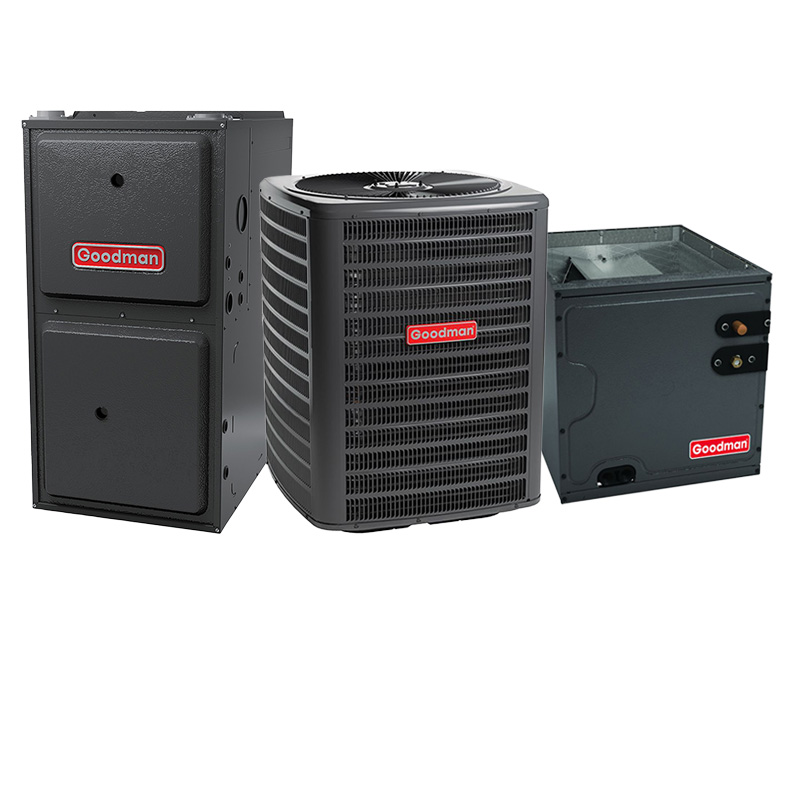
Goodman Furnace AC – 4 Ton 15.2 SEER2 AC With 80000 BTU 96% AFUE Multi-Speed ECM Gas Furnace System – Upflow | R32
View on AC Direct see your lowest price →Check current price on AC Direct →
Key features
- 4-ton cooling capacity, suited for roughly 2,000 to 2,600 sq ft depending on climate and load
- 15.2 SEER2 efficiency rating, above the current federal minimum for most U.S. regions
- 96% AFUE gas furnace, meaning only 4% of fuel energy is lost through the flue
- Multi-speed ECM blower motor reduces electricity use and improves humidity control vs. single-speed
- R-32 refrigerant with lower global warming potential than R-410A
- Upflow configuration for standard basement or closet installations with overhead ductwork
About this system
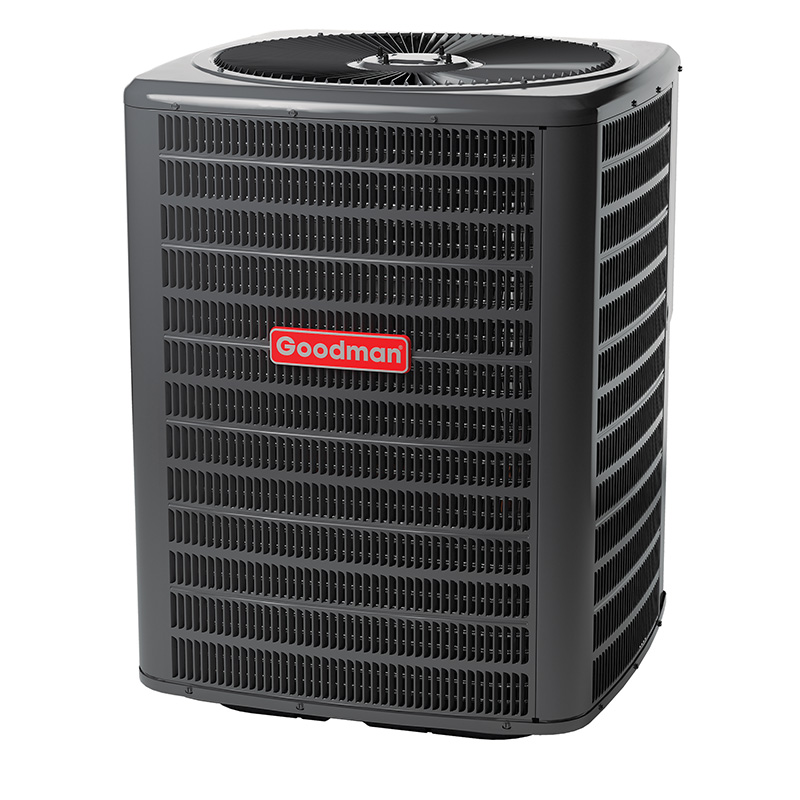
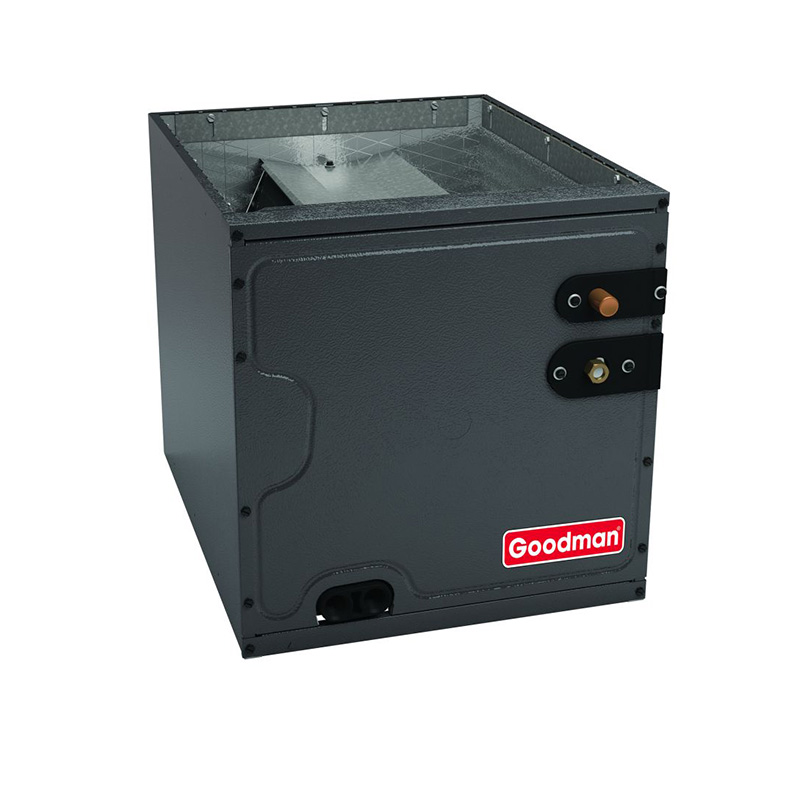
This Goodman bundle pairs a 4-ton, 15.2 SEER2 central air conditioner with an 80,000 BTU, 96% AFUE multi-speed ECM gas furnace in an upflow configuration, making it a capable year-round comfort system for homes in the 2,000 to 2,600 square foot range, depending on local climate and insulation. The 15.2 SEER2 rating clears the current federal minimum efficiency threshold with a modest margin, meaning real-world cooling costs will be noticeably lower than older 13 or 14 SEER equipment, though it stops short of the higher-efficiency variable-speed territory. R-32 refrigerant is worth noting: it carries a lower global warming potential than the R-410A it replaces and is increasingly the industry standard, so future service and recharges should remain straightforward as the refrigerant supply chain matures.
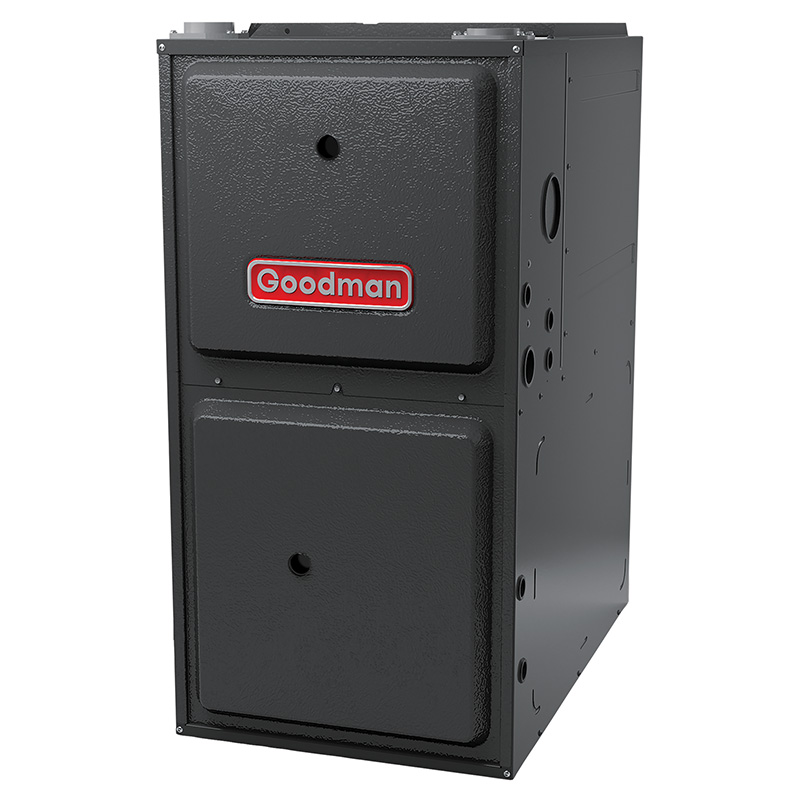
The 96% AFUE furnace is the standout spec in this pairing. At 96%, only four cents of every heating dollar escapes up the flue, which is a meaningful efficiency level for a mid-market system and qualifies as a high-efficiency unit under most utility rebate programs. The multi-speed ECM blower motor runs at lower speeds during moderate demand, reducing electricity draw and evening out temperature swings compared to a single-speed blower. Upflow configuration suits the most common basement or closet installation layouts where supply air rises into the living space. This system suits budget-conscious homeowners replacing aging equipment who want solid efficiency numbers without paying the premium commanded by Trane, Lennox, or Carrier.
This Goodman system delivers genuinely competitive efficiency specs at a price point 15 to 25 percent below comparable Carrier, Trane, and Lennox offerings, making it an honest value play for homeowners replacing aging equipment on a defined budget. The 96% AFUE furnace and multi-speed ECM motor are real highlights, and the 15.2 SEER2 cooling will cut energy costs versus older gear. The trade-off is a brand track record that shows higher long-term repair frequency and shorter average compressor life than premium competitors, so the upfront savings can narrow over a 12 to 15 year ownership horizon.
Overall score is the average of the five ratings above.
What we like
- 96% AFUE furnace is a high-efficiency rating that can qualify for utility rebates in many states
- Multi-speed ECM blower improves comfort and humidity control compared to single-speed alternatives at this price
- 15.2 SEER2 meaningfully reduces cooling energy costs versus equipment at or near the federal minimum
- R-32 refrigerant is increasingly available and carries a lower environmental impact than R-410A
- Purchase price runs 15 to 25 percent below comparable Trane, Lennox, and Carrier systems
Trade-offs
- Dual-run capacitors are the most frequently reported failure point, typically requiring a 300 to 600 dollar repair
- Evaporator coil leaks appear in a meaningful share of owner reviews and can be a costly mid-life repair
- Compressor lifespan averages 10 to 14 years versus 15 to 20 years documented in premium brands, compressing the long-term value case
- A minority of owners report refrigerant leaks in the first year, often traced to install or factory charge issues rather than a part failure
What homeowners and pros say about Goodman
Homeowners who research Goodman before buying consistently land on the same two themes: the price is genuinely lower than the big-name brands, and the outcome depends heavily on who installs it. On ConsumerAffairs, Goodman scores around 2.5 out of 5, a channel where people tend to post when something goes wrong, and the recurring complaint is repair costs climbing after roughly year seven. Google dealer reviews tell a more balanced story, averaging around 3.8 out of 5 across many locations, where affordability is the most frequently cited reason buyers chose Goodman in the first place. Neither number should be dismissed, and neither tells the whole story on its own.
HVAC technicians who service Goodman equipment regularly point to dual-run capacitors as the most common call-back, typically a quick fix in the 300 to 600 dollar range that does not reflect poorly on the system as a whole. More consequential are evaporator coil leaks, which appear in a meaningful share of owner reviews and carry higher repair costs, and a compressor lifespan that averages 10 to 14 years versus the 15 to 20 years more commonly associated with Trane, Carrier, and Lennox compressors. A minority of owners also report refrigerant leaks within the first year, which technicians typically attribute to installation or charge issues rather than factory defects. For this specific system, the 96% AFUE furnace with an ECM blower is a genuine strong point at this price tier, and buyers who pair it with a skilled installer and annual maintenance tend to report better long-term experiences than those who shop on price alone and cut corners on service.
Sources: ConsumerAffairs Goodman owner reviews, AHRI Directory of Certified Product Performance, U.S. DOE appliance and equipment efficiency standards, Goodman product specification sheets.
What it costs to run
At 15.2 SEER2, cooling this 4-ton system for a typical 1200-hour cooling season at the U.S. average electricity rate of $0.17/kWh works out to roughly $644 per year in cooling, about $87 less per year than a minimum-efficiency 13.4 SEER2 unit of the same size. Your real cost depends on your climate and local rate.
Method: (48,000 BTU/hr ÷ 15.2 SEER2) × 1200 hours ÷ 1000 × $0.17/kWh. Rate source: U.S. EIA average; cooling hours: moderate-climate estimate.
How it compares
| Brand | Comparable model | SEER2 | Stage | Price position |
|---|---|---|---|---|
| Goodman | GSXH504810 + GMVC960803BN (or equivalent bundle) | 15.2 | Single-stage AC / Multi-speed furnace | Value pick |
| Carrier | Performance 15 (24ACC6) with 80% or 96% AFUE furnace bundle | 15 to 15.2 | Single-stage | Typically 15 to 25 percent more than Goodman |
| Trane | XR15 (4TTR5) with S9X2 furnace bundle | 15 to 15.2 | Single-stage | Typically 15 to 25 percent more than Goodman |
| Lennox | Merit ML15XC1 with ML196E furnace bundle | 15 to 15.2 | Single-stage | Typically 15 to 25 percent more than Goodman |
Competitor rows are comparable single-stage units at similar efficiency; price is relative position, not a quote.
Questions about this system
Will this 4-ton system be the right size for my house?
Tonnage should always be confirmed with a Manual J load calculation from your installer, not a rule-of-thumb square footage estimate. In a well-insulated home in a moderate climate, 4 tons often serves 2,000 to 2,600 square feet, but a house with poor insulation, high ceilings, or a very hot climate may need more or less capacity. Oversizing causes short cycling and poor humidity control, so push your contractor to run the numbers.
Is 15.2 SEER2 good enough, or should I pay more for a higher-efficiency unit?
15.2 SEER2 clears the current federal minimum with a reasonable margin and will reduce cooling bills compared to equipment at or below that threshold. Whether upgrading to 18 or 20 SEER2 pays off depends on your local electricity rates, how many cooling hours your climate logs, and how long you plan to stay in the home. In moderate climates or shorter ownership situations, the payback period on a higher-efficiency unit often stretches beyond ten years.
What does the R-32 refrigerant mean for future service costs?
R-32 is a newer refrigerant being adopted broadly across the industry as a lower-GWP replacement for R-410A. It is increasingly stocked by HVAC distributors, and most technicians are trained to handle it. For now, availability is good and pricing is competitive, and the long-term supply outlook is more stable than R-410A, which is being phased down under current EPA regulations.
How worried should I be about the documented Goodman reliability issues?
The most common documented failure is the dual-run capacitor, which is a straightforward, relatively low-cost repair in the 300 to 600 dollar range. Evaporator coil leaks and shorter-than-premium compressor life are real concerns, but they tend to surface in years seven and beyond. Scheduling annual maintenance, ensuring a proper installation with correct refrigerant charge, and budgeting a few hundred dollars for a capacitor replacement at some point are reasonable ways to manage the risk.
Does the installer really matter that much for a Goodman system?
Yes, and this is consistently the finding among HVAC technicians who work on Goodman equipment. The brand's performance and longevity lean heavily on correct sizing, proper refrigerant charge, tight duct connections, and accurate electrical setup. A minority of first-year refrigerant leaks reported by owners are attributed to install or charge issues rather than defective parts. Choosing a licensed, experienced contractor and verifying they pull permits is as important as the equipment choice itself.
Specifications
| Cooling capacity | 4 Ton |
| Efficiency | 15.2 SEER2 |
| Furnace output | 80000 BTU |
| Furnace efficiency | 96% AFUE |
| Configuration | Upflow |
| Refrigerant | R-32 |