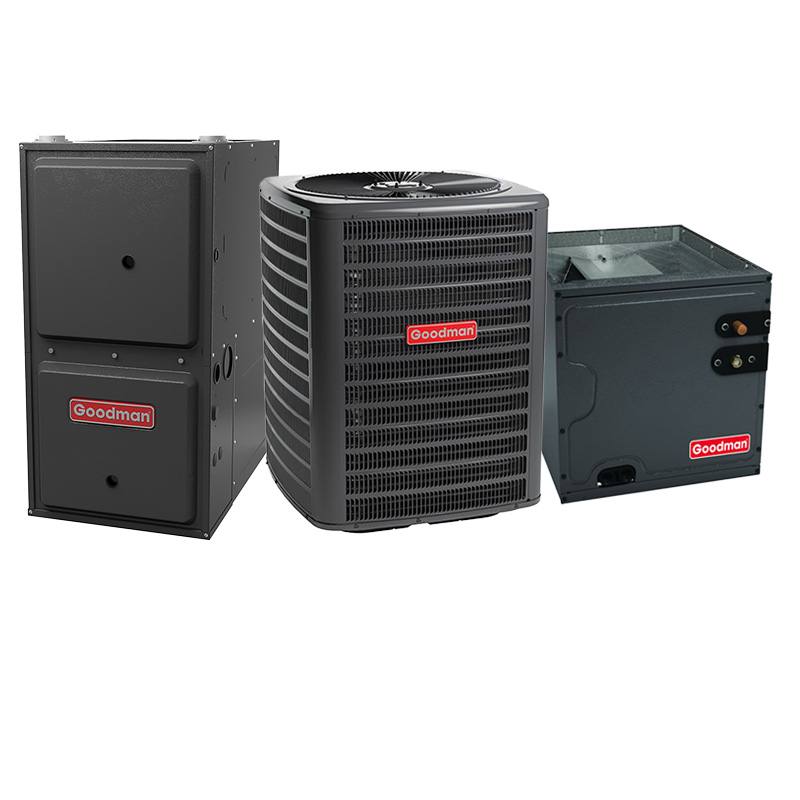
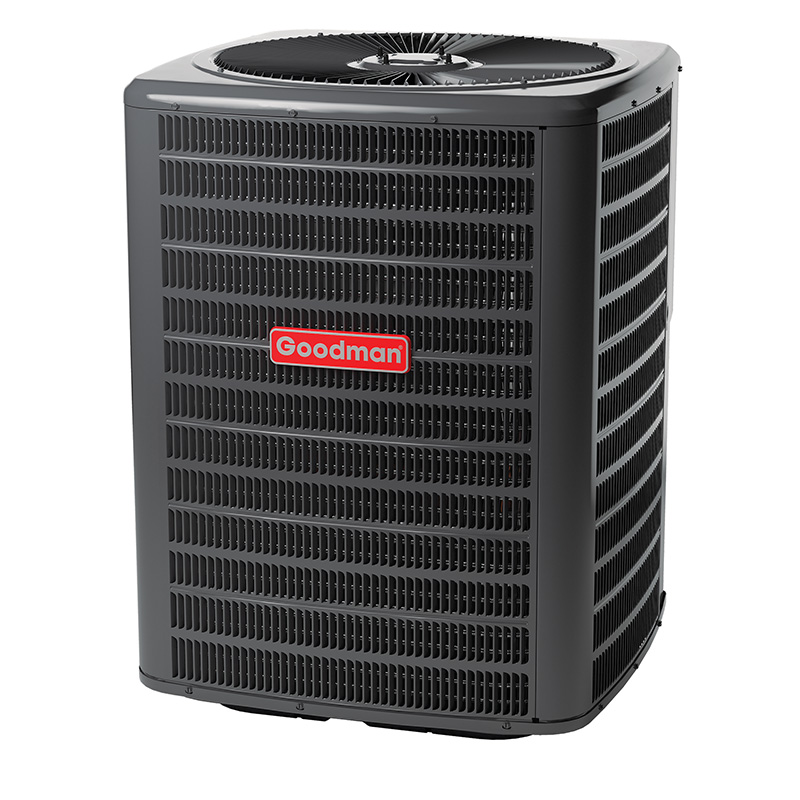
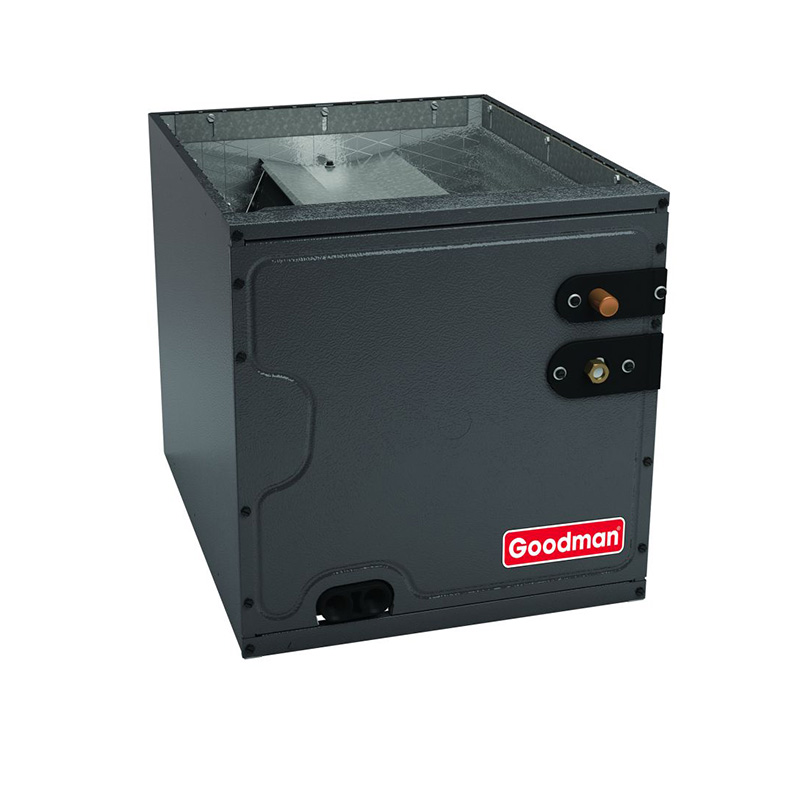
Goodman Furnace AC – 4 Ton 15.2 SEER2 AC With 120000 BTU 96% AFUE Multi-Speed ECM Gas Furnace System – Downflow | R32
View on AC Direct see your lowest price →Check current price on AC Direct →
Key features
- 4-ton cooling capacity paired with 120,000 BTU heating output for larger homes
- 15.2 SEER2 efficiency rating meets current federal minimums nationwide
- 96% AFUE high-efficiency furnace recovers nearly all fuel energy as usable heat
- Multi-speed ECM blower motor reduces blower energy use and improves humidity control
- Downflow configuration designed for above-plenum or specific basement installations
- R-32 refrigerant with lower global-warming potential, compatible with post-R-410A regulations
About this system
This Goodman bundle pairs a 4-ton, 15.2 SEER2 central air conditioner with a 120,000 BTU, 96% AFUE multi-speed ECM gas furnace in a downflow configuration, using R-32 refrigerant. The combination is sized for larger homes, typically in the 2,200 to 2,800 square foot range depending on climate and insulation, and the downflow setup is specifically built for installations where the air handler sits above the duct opening, common in homes with crawl spaces or certain basement layouts. R-32 is a lower-global-warming-potential refrigerant that many manufacturers are moving toward as R-410A is phased out, so this system is built for the near-term regulatory environment rather than already facing obsolescence.
The 96% AFUE rating places the furnace squarely in the high-efficiency tier, meaning only four cents of every fuel dollar is lost as exhaust heat. The multi-speed ECM blower motor is a real practical benefit: it ramps airflow up and down based on demand rather than running at a single fixed speed, which reduces energy consumption on the blower side, improves humidity control in cooling mode, and tends to produce quieter operation during lower-load cycles. At 15.2 SEER2, the AC unit meets federal minimums for northern states and sits just above the new southern-region threshold, so it is compliant but not a high-efficiency standout. Buyers who want meaningful savings on cooling bills and live in warmer climates may want to weigh whether a higher SEER2 option is worth the added cost.
This Goodman system delivers solid, code-compliant specs at a price point that undercuts premium brands by a meaningful margin, making it a practical choice for budget-conscious buyers who are not chasing top-tier efficiency. The 96% AFUE furnace and ECM motor are genuine strengths, but the 15.2 SEER2 cooling side is entry-level, and Goodman's documented reliability history means long-term costs depend heavily on install quality and maintenance discipline. It is a reasonable value, not a worry-free investment.
Overall score is the average of the five ratings above.
What we like
- Price typically runs 15 to 25 percent below comparable Carrier, Trane, and Lennox systems
- 96% AFUE furnace is a legitimate high-efficiency rating that reduces heating bills in cold climates
- ECM multi-speed blower improves comfort and lowers blower electricity costs versus single-speed motors
- R-32 refrigerant positions the system well as R-410A is phased out of the market
- Downflow configuration covers a specific installation need that not all bundles address
Trade-offs
- 15.2 SEER2 is the lowest compliant tier for cooling efficiency, so summer utility savings are limited compared to 17 SEER2-plus options
- Compressors on Goodman units average 10 to 14 years, shorter than the 15 to 20 years more common in premium brands
- Dual-run capacitors are a well-documented weak point, and evaporator coil leaks appear in a notable share of owner reviews
- Downflow-only configuration limits installation flexibility and may increase labor costs if the home layout requires adaptation
What homeowners and pros say about Goodman
Homeowners who buy Goodman equipment frequently point to the price as the deciding factor, and dealer Google reviews averaging around 3.8 out of 5 suggest that when the installation goes smoothly, most buyers are satisfied in the early years. The affordability praise is consistent. Where things get more complicated is the longer view: the ConsumerAffairs score sits at roughly 2.5 out of 5, and while that platform draws a disproportionate number of frustrated owners, the recurring pattern is repair costs that climb noticeably after year seven. The specific failure modes that show up most often are dual-run capacitor failures, which are common across brands and usually a straightforward low-cost repair, and evaporator coil leaks, which are more disruptive and have generated enough complaints to be a genuine concern rather than a statistical outlier.
HVAC technicians generally describe Goodman as workable equipment whose lifespan is unusually sensitive to how well it was installed and how consistently it is maintained. The compressor is the clearest example: Goodman compressors tend to average 10 to 14 years in the field, compared to 15 to 20 years that owners of Carrier, Trane, and Lennox systems more often see. A small but documented share of owners also report refrigerant leaks in the first year, something technicians almost uniformly attribute to install or charge errors rather than factory defects. For this 4-ton downflow system specifically, the furnace specs are strong, the ECM motor is a real comfort and efficiency benefit, and the savings versus premium brands are genuine. The honest trade-off is that the margin you save up front is also the buffer you may need for service calls down the road.
Sources: ConsumerAffairs Goodman owner reviews, AHRI Directory of Certified Product Performance, U.S. DOE appliance and equipment efficiency standards, Goodman product specification sheets.
What it costs to run
At 15.2 SEER2, cooling this 4-ton system for a typical 1200-hour cooling season at the U.S. average electricity rate of $0.17/kWh works out to roughly $644 per year in cooling, about $87 less per year than a minimum-efficiency 13.4 SEER2 unit of the same size. Your real cost depends on your climate and local rate.
Method: (48,000 BTU/hr ÷ 15.2 SEER2) × 1200 hours ÷ 1000 × $0.17/kWh. Rate source: U.S. EIA average; cooling hours: moderate-climate estimate.
How it compares
| Brand | Comparable model | SEER2 | Stage | Price position |
|---|---|---|---|---|
| Goodman | GSXH504810 + GCVC961205DN (this system) | 15.2 | Single-stage / Multi-speed | Value pick |
| Carrier | Comfort 24ACC636A003 + 59SC5C120S21–16 | 15.2 | Single-stage / Multi-speed | Approximately 20 percent more than this Goodman bundle |
| Trane | XR15 4TTR5048J + S9X2D120U5PSB | 15.2 | Single-stage / Multi-speed | Approximately 20 to 25 percent more than this Goodman bundle |
| Lennox | Merit ML15XC1-048 + ML196UH135XE48C | 15.2 | Single-stage / Multi-speed | Approximately 20 to 25 percent more than this Goodman bundle |
Competitor rows are comparable single-stage units at similar efficiency; price is relative position, not a quote.
Questions about this system
Is 120,000 BTU too much furnace for my home if I'm only using a 4-ton AC?
It can be for moderately insulated homes in mild climates, and an oversized furnace short-cycles, which reduces comfort and efficiency. A proper Manual J load calculation before purchase is the right way to confirm this BTU level matches your actual heating demand rather than assuming the AC tonnage and furnace BTU should scale together.
Why does this system use R-32 instead of R-410A?
R-410A is being phased out under federal regulations because of its high global-warming potential. R-32 has roughly one-third the climate impact of R-410A and is the direction most manufacturers are moving. It does require technicians to have specific training and equipment, so confirm your installer is R-32 certified before the job starts.
What does downflow configuration mean and how do I know if my home needs it?
In a downflow setup the furnace pulls return air in at the top and discharges conditioned air downward into the duct system below. This is typical when the air handler sits in a closet or platform above a crawl space or slab. If your existing system is upflow or horizontal, this bundle will not fit without significant duct rework.
Goodman has mixed reviews online. How worried should I be about reliability?
The ConsumerAffairs score for Goodman sits around 2.5 out of 5, though that channel skews heavily toward people reporting problems. Google dealer reviews average closer to 3.8 out of 5, with affordability cited most often as a strength. The documented failure modes worth monitoring are dual-run capacitors, which are a common but inexpensive fix, and evaporator coil leaks, which are more disruptive. A small percentage of owners also report refrigerant leaks in the first year, which are usually tied to install quality rather than a product defect.
Does the multi-speed ECM motor actually save money compared to a standard blower?
Yes, meaningfully so. An ECM motor running at partial speed draws significantly less electricity than a PSC single-speed motor running at full load. In a system that runs thousands of hours per year the blower electricity difference is real, and the slower speeds also improve latent cooling, meaning the system removes more humidity from the air during mild weather.
Specifications
| Cooling capacity | 4 Ton |
| Efficiency | 15.2 SEER2 |
| Furnace output | 120000 BTU |
| Furnace efficiency | 96% AFUE |
| Configuration | Downflow |
| Refrigerant | R-32 |