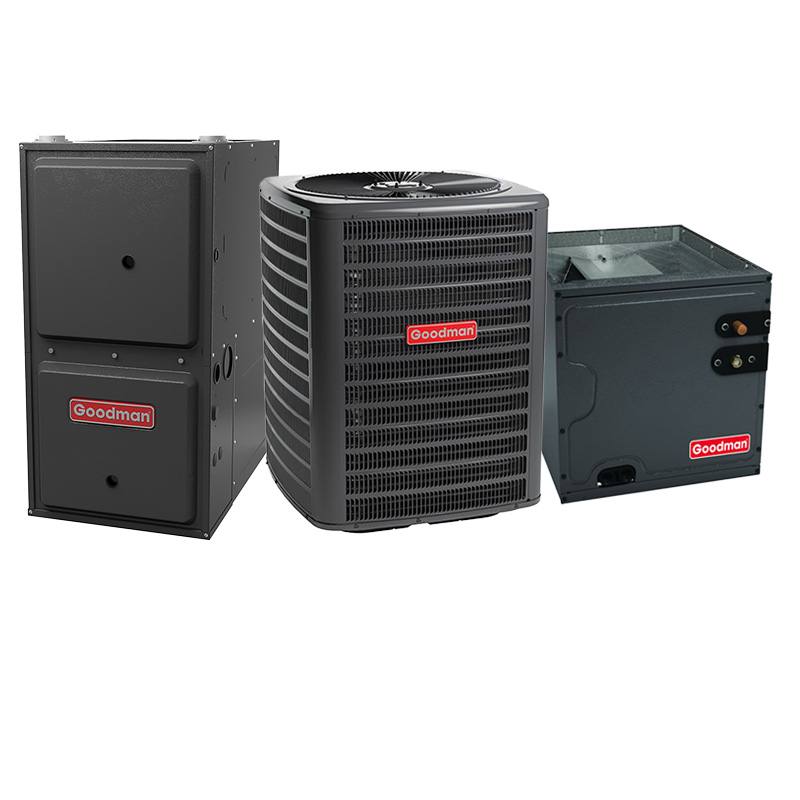
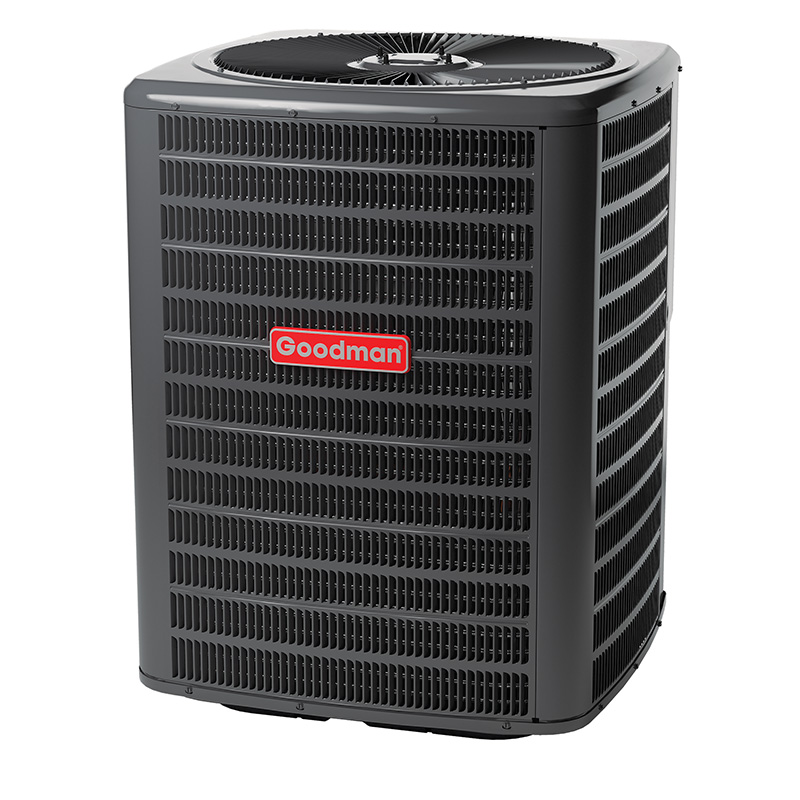
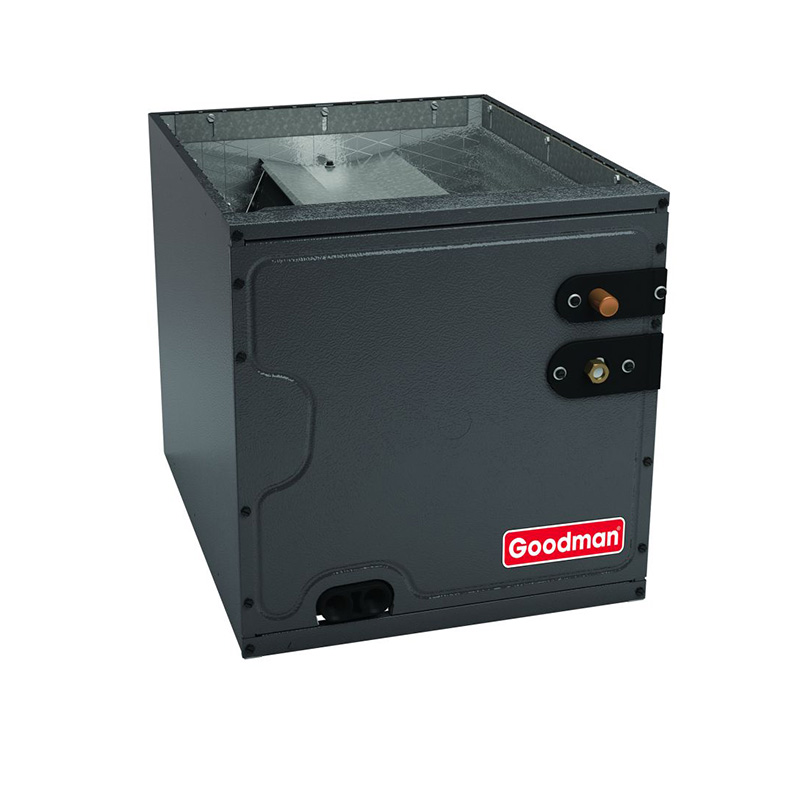
Goodman Furnace AC – 4 Ton 14.5 SEER2 AC With 80000 BTU 96% AFUE Multi-Speed ECM Gas Furnace System – Downflow | R32
View on AC Direct see your lowest price →Check current price on AC Direct →
Key features
- 4-ton cooling capacity rated at 14.5 SEER2 for baseline energy compliance
- 96% AFUE gas furnace converts nearly all fuel to usable heat
- Multi-speed ECM blower motor reduces fan electricity draw and evening temperature swings
- Downflow configuration designed for closet or platform installations that supply air below the unit
- R-32 refrigerant with lower global warming potential than R-410A
- 80,000 BTU heating output suited to mid-size homes in moderate to cold climates
About this system
This Goodman bundle pairs a 4-ton, 14.5 SEER2 central air conditioner with an 80,000 BTU, 96% AFUE multi-speed ECM gas furnace in a downflow configuration, making it a practical choice for homes where the air handler sits in an upper-level closet or a platform that blows conditioned air downward into the duct system. The R-32 refrigerant charge is a forward-looking detail: R-32 has a lower global warming potential than the older R-410A it replaces, and it is increasingly the industry standard as manufacturers phase out legacy refrigerants under updated EPA rules.
On the cooling side, 14.5 SEER2 sits right at the current federal minimum for the northern United States and just above the southern minimum, so buyers in hotter climates who run the AC heavily from May through September will notice higher operating costs compared with a 16 or 17 SEER2 unit. The furnace side is a different story: 96% AFUE is genuinely high-efficiency territory, meaning only about four cents of every fuel dollar escapes as exhaust. The ECM blower motor runs at multiple speeds, which smooths temperature swings, cuts fan electricity use compared with a standard PSC motor, and improves dehumidification in shoulder seasons. Together, the system suits a mid-size home of roughly 2,000 to 2,600 square feet in a moderate to cold climate where heating efficiency matters more than peak cooling efficiency.
This Goodman system delivers solid heating efficiency and a compliant cooling rating at a price that undercuts Carrier, Trane, and Lennox by a meaningful margin, making it a reasonable choice for budget-conscious buyers who hire a skilled installer and plan to maintain it consistently. The 14.5 SEER2 rating is no better than entry-level, so heavy AC users in hot climates will pay more each summer compared with a mid-efficiency alternative. Long-term ownership costs depend heavily on install quality and how quickly Goodman's known weak points, particularly capacitors and evaporator coils, show up.
Overall score is the average of the five ratings above.
What we like
- 96% AFUE furnace delivers strong heating efficiency and lower gas bills in cold climates
- ECM multi-speed blower improves comfort and cuts fan operating costs versus single-speed motors
- R-32 refrigerant is a future-ready choice as the industry moves away from R-410A
- Priced roughly 15 to 25 percent below comparable Carrier, Trane, and Lennox systems
- Downflow configuration opens installation options in homes without a basement utility room
Trade-offs
- 14.5 SEER2 is the minimum compliance tier, so cooling efficiency lags mid- and high-efficiency competitors
- Compressor lifespan averages 10 to 14 years versus 15 to 20 years seen in premium brands, raising long-term replacement risk
- Evaporator coil leaks and dual-run capacitor failures are the two most frequently reported service issues, adding repair costs after year 7
- Owner satisfaction scores are below average, with ConsumerAffairs averaging about 2.5 out of 5, largely driven by repair cost complaints on older units
What homeowners and pros say about Goodman
Among homeowners, Goodman earns a split reputation. Google dealer reviews average around 3.8 out of 5 across multiple locations, and the most common reason people speak positively is straightforward: the price. Buyers who shopped multiple bids and chose Goodman often report satisfaction in the first few years, particularly when the installing contractor is experienced. On ConsumerAffairs, however, the brand scores closer to 2.5 out of 5, and reading through those submissions reveals a pattern: complaints are not usually about the first few years of ownership but about repair costs that start climbing around year seven or eight. The documented failure modes line up with this timeline. Dual-run capacitors are the single most frequently cited component failure and are generally inexpensive to fix, but evaporator coil leaks and early compressor wear are the issues that push owners toward frustration, since both repairs can cost as much as a significant portion of the original system price.
HVAC technicians who work on Goodman equipment regularly tend to offer a more nuanced view. Many note that the brand builds to a price point, and that the quality of an installation matters at least as much as the equipment itself. A properly sized, correctly charged, and carefully commissioned Goodman system often performs reliably for a decade or more. The same technicians point out that refrigerant leaks reported within the first year are almost always a charge or connection issue from the installation rather than a factory defect, which is why installer selection is emphasized repeatedly in trade circles when Goodman comes up. For this specific system, the 96% AFUE furnace with an ECM motor tends to draw less criticism than the cooling side, since high-efficiency gas furnaces are a more mature and consistent part of Goodman’s lineup. The R-32 refrigerant is noted as a sensible move by contractors who are already stocking it for other jobs.
Sources: ConsumerAffairs Goodman owner reviews, AHRI Directory of Certified Product Performance, U.S. DOE appliance and equipment efficiency standards, Goodman product specification sheets.
What it costs to run
At 14.5 SEER2, cooling this 4-ton system for a typical 1200-hour cooling season at the U.S. average electricity rate of $0.17/kWh works out to roughly $675 per year in cooling, about $56 less per year than a minimum-efficiency 13.4 SEER2 unit of the same size. Your real cost depends on your climate and local rate.
Method: (48,000 BTU/hr ÷ 14.5 SEER2) × 1200 hours ÷ 1000 × $0.17/kWh. Rate source: U.S. EIA average; cooling hours: moderate-climate estimate.
How it compares
| Brand | Comparable model | SEER2 | Stage | Price position |
|---|---|---|---|---|
| Goodman | 4-Ton 14.5 SEER2 / 80K BTU 96% AFUE Downflow Bundle | 14.5 | Multi-speed | Value pick |
| Carrier | Comfort 24ACC636A003 / 59SC5 Series | 15 | Single-stage | Approximately 15 to 25 percent more than this Goodman bundle |
| Trane | XR15 / S9V2 Series | 15 | Single-stage | Typically 20 to 30 percent above this Goodman bundle |
| Lennox | Merit 14ACX / ML96V Series | 14.3 | Single-stage | Generally 15 to 25 percent higher than this Goodman bundle |
Competitor rows are comparable single-stage units at similar efficiency; price is relative position, not a quote.
Questions about this system
Why does this system use R-32 instead of R-410A, and does that affect service costs?
R-32 is a newer refrigerant with roughly one-third the global warming potential of R-410A, and it is increasingly standard as manufacturers phase out R-410A under updated EPA regulations. Most HVAC technicians are already certified to handle R-32, but confirm your service contractor has the correct equipment before scheduling any refrigerant work, since cross-contamination with older refrigerants can cause compressor damage.
Is 14.5 SEER2 going to cost me significantly more to run than a higher-rated unit?
Compared with a 16 SEER2 system, a 14.5 SEER2 unit uses roughly 10 percent more electricity to deliver the same cooling output. For a 4-ton system running in a moderate climate, that difference may amount to $50 to $150 per cooling season, though the gap grows if you live somewhere with a long, hot summer. In a cold climate where heating is the dominant expense, the 96% AFUE furnace matters more than the SEER2 rating.
What does 'downflow' mean and how do I know if my home needs it?
Downflow means the furnace pulls return air in at the top and pushes heated or cooled air out the bottom, typically into a plenum and duct system located below the unit. This configuration is common when the air handler is installed in an upper-floor closet or on a raised platform. If your existing furnace is labeled downflow or your installer confirms your duct system is below the unit, this configuration is correct; installing a mismatched airflow configuration will cause serious system problems.
What are the most likely repair costs I should budget for over the life of this system?
The most commonly reported failure on Goodman equipment is the dual-run capacitor, a relatively inexpensive part where repairs typically run $300 to $600 including labor. Evaporator coil leaks are the second documented issue and cost considerably more to address, often $1,000 or above depending on the scope. Compressors on Goodman units tend to average 10 to 14 years, so budgeting for a potential compressor replacement or full system swap in that window is prudent.
Does Goodman's warranty cover parts and labor, and do I need to register the system?
Goodman's standard warranty covers parts, but labor is typically not included, meaning you will pay a technician's hourly rate for any warranty repair. The full parts warranty, which extends to 10 years on the compressor and covered components, generally requires registration within a set window after installation. Failing to register usually drops coverage to a shorter base period, so confirm registration requirements with your installer on the day the system is commissioned.
Specifications
| Cooling capacity | 4 Ton |
| Efficiency | 14.5 SEER2 |
| Furnace output | 80000 BTU |
| Furnace efficiency | 96% AFUE |
| Configuration | Downflow |
| Refrigerant | R-32 |