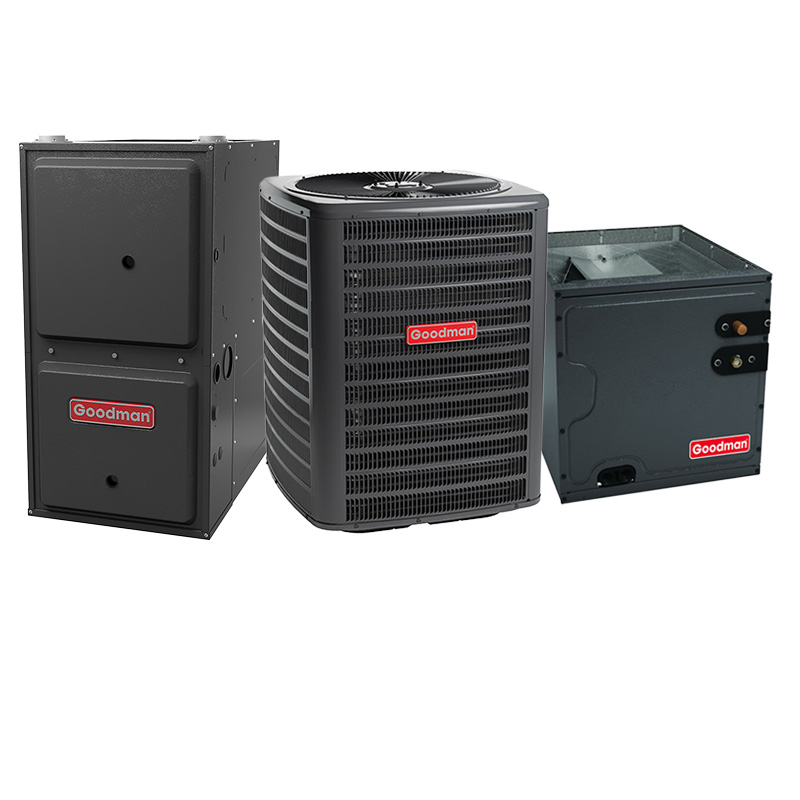
Goodman Furnace AC – 5 Ton 15.2 SEER2 AC With 120000 BTU 96% AFUE Multi-Speed ECM Gas Furnace System – Downflow | R32
View on AC Direct see your lowest price →Check current price on AC Direct →
Key features
- 5-ton cooling capacity paired with 120,000 BTU heating output for larger homes
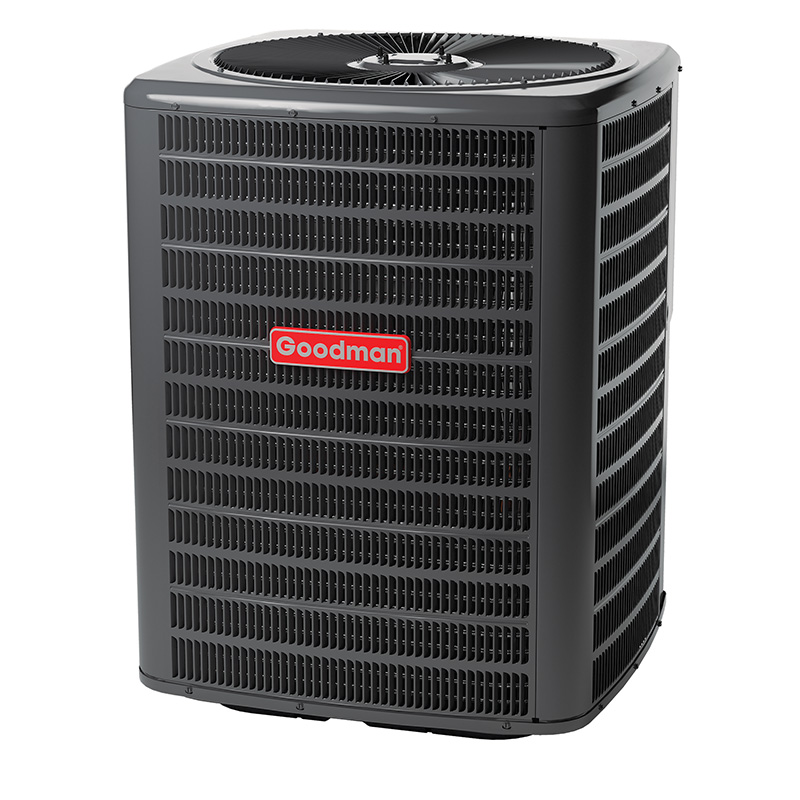
- 15.2 SEER2 rated air conditioner using R-32 refrigerant
- 96% AFUE high-efficiency gas furnace, qualifying tier for federal energy tax credits
- Multi-speed ECM blower motor reduces electricity use and improves humidity control
- Downflow configuration designed for installations where supply air discharges downward
- Goodman 10-year parts limited warranty with registration within 60 days of install
About this system
This Goodman bundle pairs a 5-ton, 15.2 SEER2 central air conditioner with a 120,000 BTU, 96% AFUE multi-speed ECM gas furnace in a downflow configuration, making it a practical choice for homes where the air handler sits above the living space and conditioned air flows downward, common in crawlspace and basement setups. The R-32 refrigerant charge is a forward-looking choice: R-32 has a lower global warming potential than the older R-410A it replaces, and the industry is broadly moving in this direction, so parts and service availability should remain solid for the foreseeable future. At 5 tons, this system is sized for larger homes, typically in the 2,200 to 2,800 square foot range depending on climate, insulation, and ceiling height, and should be verified with a proper Manual J load calculation before purchase.
The 96% AFUE rating means the furnace converts 96 cents of every fuel dollar into usable heat, putting it in the high-efficiency tier that qualifies for federal tax credits under current energy efficiency incentive programs. The multi-speed ECM blower motor runs at lower speeds during mild conditions, which cuts electricity consumption compared to a standard single-speed motor and helps with humidity control in summer. At 15.2 SEER2, the air conditioner clears the federal minimum for most Northern regions and sits just above the minimum for many Southern states, so it is efficient enough to deliver meaningful savings over an older system but is not the highest rung on the efficiency ladder. Homeowners who want maximum long-term energy savings may want to weigh variable-speed or two-stage cooling options, though those come at a higher upfront cost.
This Goodman bundle delivers solid specs at a price point 15 to 25 percent below comparable Carrier, Trane, and Lennox systems, making it a reasonable choice for budget-conscious buyers who prioritize upfront cost over premium longevity. The 96% AFUE furnace and R-32 refrigerant are genuine strengths, but the brand's real-world track record shows compressor lifespans and coil durability that trail premium competitors, and long-term ownership costs can narrow the initial savings gap. Install quality matters more with Goodman than with almost any other brand, so choosing an experienced contractor is not optional here.
Overall score is the average of the five ratings above.
What we like
- Upfront cost runs 15 to 25 percent below Trane, Carrier, and Lennox at comparable specs
- 96% AFUE furnace is in the high-efficiency tier and may qualify for federal tax credits
- Multi-speed ECM motor improves part-load efficiency and summer dehumidification
- R-32 refrigerant is the emerging industry standard with lower environmental impact
- 10-year registered parts warranty is competitive for a value-tier brand
Trade-offs
- Compressor lifespan averages 10 to 14 years versus 15 to 20 years typical of premium brands
- Evaporator coil leaks are a documented recurring issue in owner feedback, potentially a costly mid-life repair
- ConsumerAffairs scores average around 2.5 out of 5, with repair cost escalation after year 7 as the most common complaint
- A minority of owners report refrigerant leaks within the first year, most often tied to install or initial charge issues
What homeowners and pros say about Goodman
Homeowners who post about Goodman online tend to split into two camps: those who are satisfied with a system that works without drama for the first several years, and those who hit unexpected repair bills after the warranty period ends. On ConsumerAffairs, where the audience skews toward people motivated to write by frustration, Goodman averages around 2.5 out of 5 stars, and the most consistent theme in the negative reviews is repair costs climbing after roughly year 7. Google dealer reviews tell a somewhat different story, averaging around 3.8 out of 5 across hundreds of reviews per location, where affordability is the most commonly cited reason for satisfaction. Neither score suggests a standout performer, but together they describe a brand that delivers on its primary promise: lower upfront cost, with trade-offs that tend to appear in the back half of the system’s life.
HVAC technicians tend to have a nuanced view of Goodman. Many will tell you that a well-installed Goodman outperforms a poorly installed premium unit, and they point to dual-run capacitor failures as the most routine service call on this brand, a repair that is inexpensive and fast. The concerns they raise more seriously are evaporator coil leaks, which require more labor and refrigerant to address, and compressor longevity that averages 10 to 14 years rather than the 15 to 20 years technicians associate with Trane or Carrier compressors. A small but notable share of early owners report refrigerant leaks in the first year, which technicians typically attribute to installation or initial charge issues rather than a factory defect. For this specific 5-ton, R-32 system, finding a contractor with demonstrated R-32 experience is especially important, as the refrigerant transition adds one more variable to get right at startup.
Sources: ConsumerAffairs Goodman owner reviews, AHRI Directory of Certified Product Performance, U.S. DOE appliance and equipment efficiency standards, Goodman product specification sheets.
What it costs to run
At 15.2 SEER2, cooling this 5-ton system for a typical 1200-hour cooling season at the U.S. average electricity rate of $0.17/kWh works out to roughly $805 per year in cooling, about $108 less per year than a minimum-efficiency 13.4 SEER2 unit of the same size. Your real cost depends on your climate and local rate.
Method: (60,000 BTU/hr ÷ 15.2 SEER2) × 1200 hours ÷ 1000 × $0.17/kWh. Rate source: U.S. EIA average; cooling hours: moderate-climate estimate.
How it compares
| Brand | Comparable model | SEER2 | Stage | Price position |
|---|---|---|---|---|
| Goodman | GLXS6BN60 / GMVC96 Series (5-ton, 96% AFUE, multi-speed) | 15.2 | Single-stage cooling / multi-speed heat | Value pick |
| Carrier | Comfort 24ACC6 Series with 59SC5 Furnace | 15.2 | Single-stage | Typically 15 to 25 percent more than Goodman |
| Trane | XR15 Series with S9X2 Furnace | 15.2 | Single-stage | Typically 15 to 25 percent more than Goodman |
| Lennox | Merit ML14XC1 Series with ML196E Furnace | 15.2 | Single-stage | Typically 15 to 25 percent more than Goodman |
Competitor rows are comparable single-stage units at similar efficiency; price is relative position, not a quote.
Questions about this system
Why does this system use R-32 refrigerant instead of R-410A, and will it be harder to service?
R-32 is replacing R-410A across the industry because it has a lower global warming potential and is more energy-efficient to move heat. It does require technicians to have specific R-32 certification and compatible tools, but as the transition accelerates, most HVAC service companies are already equipped or will be soon. Confirm your servicing contractor is R-32 certified before committing.
How do I know if a downflow furnace configuration is right for my home?
Downflow means the furnace pulls return air in at the top and discharges conditioned air out the bottom, feeding ductwork below the unit. This suits installations in a main-floor closet or alcove where the duct system runs under the floor or into a crawlspace. If your ducts run above the unit or through an attic, you likely need an upflow or horizontal configuration instead.
Is 5 tons the right size for my house, or can I just buy this because it's a large capacity?
Oversizing a system is one of the most common and costly mistakes in HVAC. A unit that is too large will short-cycle, meaning it turns on and off frequently, which increases humidity, wastes energy, and accelerates wear. Sizing must be confirmed with a Manual J load calculation performed by your contractor before purchase, not estimated by square footage alone.
What is the most common repair issue I should plan for with this Goodman system?
Dual-run capacitors are the most frequently reported failure point for Goodman equipment and are generally a straightforward, low-cost repair in the $300 to $600 range. Evaporator coil leaks are also documented in owner feedback and can be more expensive to address, so keeping the system under a maintenance plan and catching refrigerant loss early is worthwhile.
Does the 96% AFUE furnace qualify for the federal energy tax credit, and how do I claim it?
As of current federal guidelines, natural gas furnaces at or above 97% AFUE qualify for the 25C energy efficiency tax credit in most of the U.S., while 96% AFUE units may qualify in Northern climate zones. You should verify the current IRS requirements and confirm with your contractor that the specific model number appears on the ENERGY STAR certified products list before claiming the credit.
Specifications
| Cooling capacity | 5 Ton |
| Efficiency | 15.2 SEER2 |
| Furnace output | 120000 BTU |
| Furnace efficiency | 96% AFUE |
| Configuration | Downflow |
| Refrigerant | R-32 |