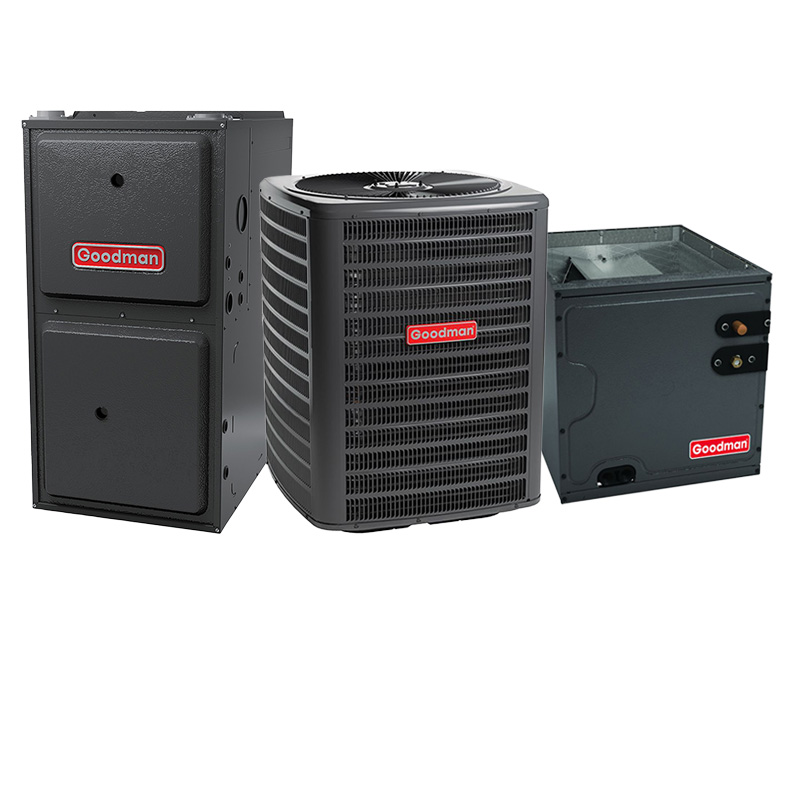
Goodman Furnace AC – 5 Ton 15.5 SEER2 AC With 80000 BTU 96% AFUE Multi-Speed ECM Gas Furnace System – Upflow | R32
View on AC Direct see your lowest price →Check current price on AC Direct →
Key features
- 15.5 SEER2 rated central air conditioner, 5-ton capacity
- 96% AFUE upflow gas furnace, 80,000 BTU output
- Multi-speed ECM blower motor for continuous airflow adjustment
- R-32 refrigerant, lower global-warming potential than R-410A
- Upflow cabinet configuration for attic or overhead duct systems
- Factory matched system for simplified equipment compatibility
About this system
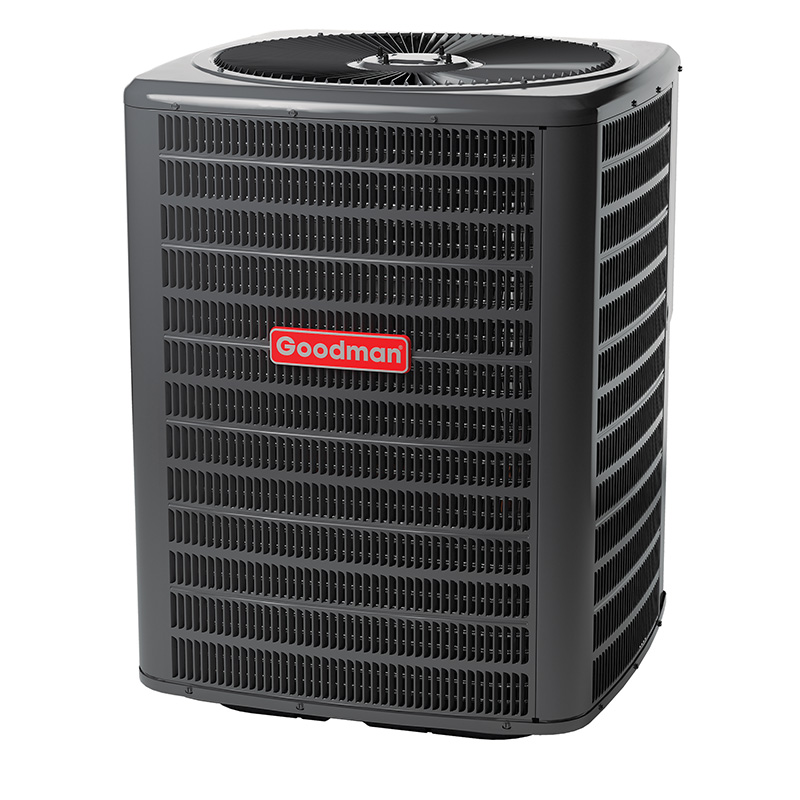
This Goodman bundle pairs a 5-ton, 15.5 SEER2 central air conditioner with an 80,000 BTU, 96% AFUE multi-speed ECM gas furnace in an upflow configuration, and it runs on R-32 refrigerant. The combination is aimed at larger homes, typically in the 2,400 to 3,200 square foot range depending on climate zone, insulation, and duct layout. The 15.5 SEER2 rating clears the current federal minimum by a comfortable margin without reaching into premium variable-speed territory, which makes the operating cost reasonable without the added complexity of inverter-driven compressors. The 96% AFUE furnace recovers nearly all of the fuel energy it consumes, a meaningful number in climates with genuine heating seasons where gas bills add up month over month.
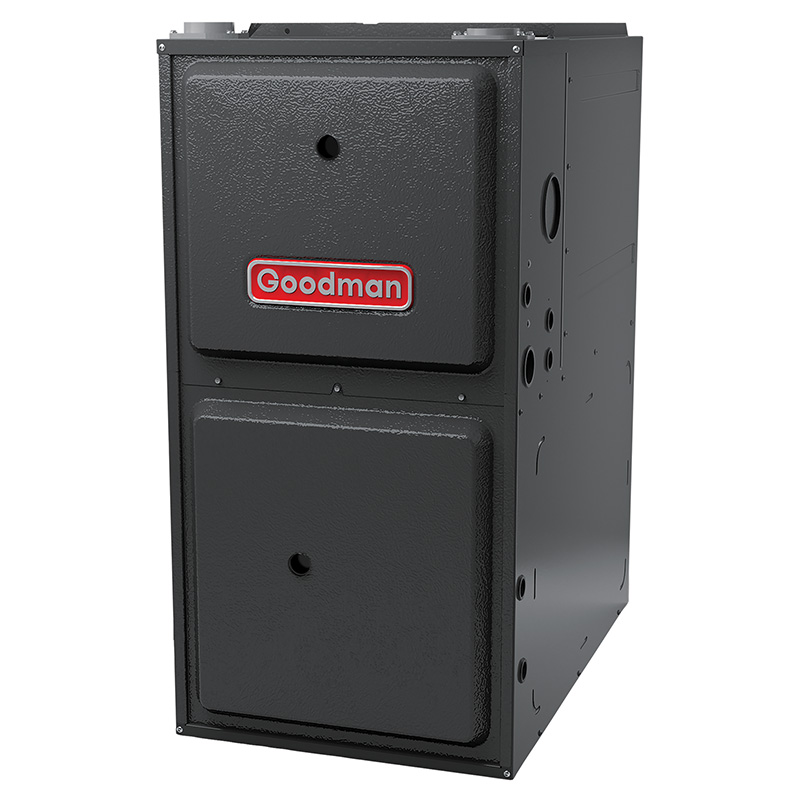
The ECM blower motor is the furnace’s most practical feature for daily comfort. Unlike a standard PSC motor that runs at fixed speeds, the ECM adjusts airflow continuously, which smooths out temperature swings, keeps humidity in check during the shoulder seasons, and draws less electricity over a full year. The upflow cabinet routes conditioned air upward into the supply plenum, the standard arrangement for homes with ductwork running through an attic or upper floors. R-32 is a lower global-warming-potential refrigerant that is becoming standard in new residential equipment, and it requires R-32 rated service equipment from any technician who works on the system down the road. Buyers should confirm their chosen installer is already set up for it before signing a contract.
This Goodman bundle delivers a respectable efficiency package at a price point that undercuts comparable Carrier, Trane, and Lennox systems by roughly 15 to 25 percent, making it a credible option for cost-conscious buyers who plan carefully on installation. The 96% AFUE furnace and 15.5 SEER2 AC are genuinely competitive specs, but the brand's documented history with capacitor failures, evaporator coil leaks, and compressor longevity shorter than premium competitors means long-term cost of ownership depends heavily on how the system is installed and serviced. It rewards buyers who invest in a quality installer and a preventive maintenance plan; it punishes those who treat it as set-and-forget.
Overall score is the average of the five ratings above.
What we like
- Price is 15 to 25 percent below comparable Trane, Lennox, and Carrier bundles at this efficiency tier
- 96% AFUE furnace recovers nearly all fuel energy, reducing annual gas costs in heating-heavy climates
- ECM blower motor improves humidity control and lowers blower electricity use compared to standard PSC motors
- 15.5 SEER2 clears current federal minimums by a solid margin without the added cost of variable-speed inverter technology
- R-32 refrigerant is increasingly standard, giving the system a longer service window before refrigerant availability becomes an issue
Trade-offs
- Dual-run capacitors are the most frequently reported failure point, typically requiring service calls around or after year 7
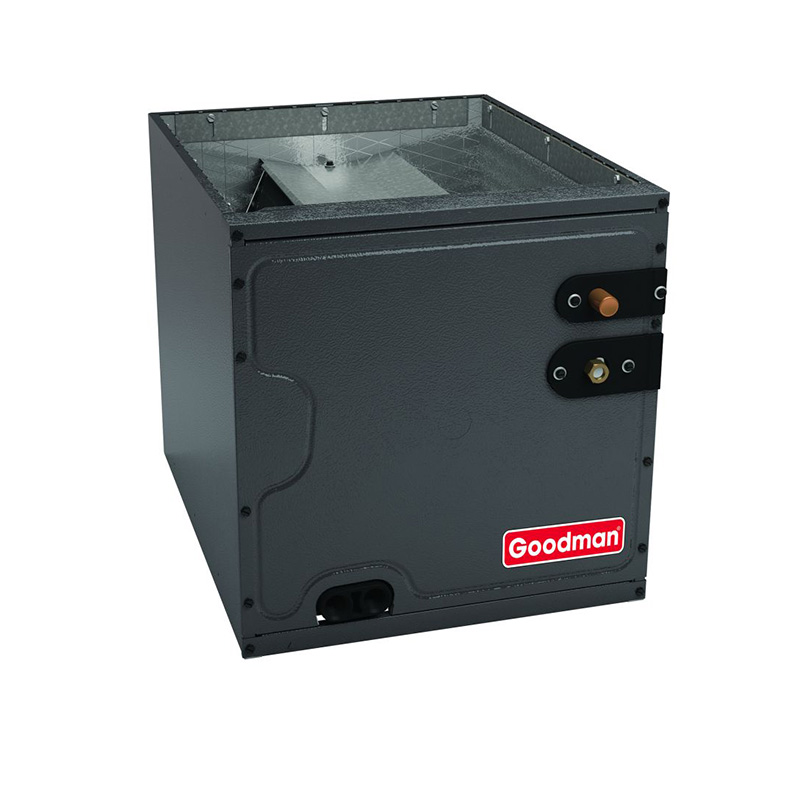
- Evaporator coil leaks appear in a meaningful share of owner reviews and can be expensive to address outside the warranty period
- Compressor lifespan averages 10 to 14 years, noticeably shorter than the 15 to 20 years documented for premium brands
- A minority of owners report refrigerant leaks within the first year, usually tied to installation or charge quality rather than the equipment itself
What homeowners and pros say about Goodman
Homeowners who follow Goodman closely on review platforms give it a split verdict. On ConsumerAffairs, where the site draws heavily from owners with complaints, Goodman sits at roughly 2.5 out of 5, and the pattern in those reviews is consistent: the first several years tend to go quietly, then repair costs begin climbing around year 7. The specific failures that come up most often are dual-run capacitor replacements, which are relatively low-cost fixes in the 300 to 600 dollar range but still unexpected calls, and evaporator coil leaks, which are a more serious expense. Compressor longevity is another recurring topic, with Goodman compressors averaging 10 to 14 years in documented accounts versus 15 to 20 for premium brand counterparts. A smaller group of owners has reported refrigerant leaks within the first year, which technicians generally attribute to installation or charge issues rather than a factory defect.
Among HVAC professionals, the conversation around Goodman tends to be more measured than the consumer complaints suggest. On Google dealer review aggregates, where working contractors and recently installed customers both leave feedback, scores run around 3.8 out of 5, with affordability as the standout praise. Pros who work on Goodman equipment regularly note that the equipment performs close to spec when it is sized and charged correctly, and that the capacitor issues, while real, are a manageable service item rather than a system-ending problem. The consensus among experienced installers is that Goodman rewards careful work and punishes shortcuts more visibly than premium brands do, which makes choosing the right contractor at least as important as choosing the equipment itself for this particular 5-ton R-32 system.
Sources: ConsumerAffairs Goodman owner reviews, AHRI Directory of Certified Product Performance, U.S. DOE appliance and equipment efficiency standards, Goodman product specification sheets.
What it costs to run
At 15.5 SEER2, cooling this 5-ton system for a typical 1200-hour cooling season at the U.S. average electricity rate of $0.17/kWh works out to roughly $790 per year in cooling, about $123 less per year than a minimum-efficiency 13.4 SEER2 unit of the same size. Your real cost depends on your climate and local rate.
Method: (60,000 BTU/hr ÷ 15.5 SEER2) × 1200 hours ÷ 1000 × $0.17/kWh. Rate source: U.S. EIA average; cooling hours: moderate-climate estimate.
How it compares
| Brand | Comparable model | SEER2 | Stage | Price position |
|---|---|---|---|---|
| Goodman | 5-Ton 15.5 SEER2 AC + 80,000 BTU 96% AFUE ECM Furnace (this system) | 15.5 | Single-stage AC, multi-speed furnace | Value pick |
| Carrier | Performance Series (24ACC636 paired with 59SP5) | 15-16 SEER2 | Single-stage AC, two-stage furnace | Typically 15 to 25 percent more than Goodman |
| Trane | S Series (4SCY5060 paired with S9X1) | 15-16 SEER2 | Single-stage AC, multi-speed furnace | Typically 15 to 25 percent more than Goodman |
| Lennox | Merit Series (14ACX paired with ML196E) | 15-16 SEER2 | Single-stage AC, multi-speed furnace | Typically 15 to 25 percent more than Goodman |
Competitor rows are comparable single-stage units at similar efficiency; price is relative position, not a quote.
Questions about this system
Will any HVAC technician be able to service this system, or does R-32 require special equipment?
R-32 requires recovery cylinders, gauges, and leak detection equipment rated specifically for it, which not every technician carries yet. Before the install, confirm your contractor and your preferred service company are already equipped for R-32 work. This is increasingly common but not yet universal, particularly with smaller independent shops.
The upflow configuration is listed, but my furnace sits in a basement with ductwork running down through the floor. Is this the right cabinet orientation?
No. Upflow means the blower pulls return air in at the bottom and discharges conditioned air upward into the supply plenum. If your ductwork runs below the unit or out through the sides in a horizontal run, you need a downflow or horizontal cabinet instead. Confirm your existing duct layout with your installer before ordering.
How worried should I be about the capacitor failures and coil leaks I keep reading about in Goodman reviews?
Dual-run capacitor failures are the most commonly reported issue with Goodman equipment and typically show up around or after year 7. A replacement is usually a 300 to 600 dollar repair, not a catastrophic cost, but it does happen more often than with premium brands. Evaporator coil leaks are more serious and more expensive outside the warranty window, so understanding exactly what your warranty covers on parts and labor before you buy is worth the time.
Is 80,000 BTU the right furnace size for my home if the AC is already sized at 5 tons?
Not necessarily. AC tonnage and furnace BTU output address different load calculations and should both be sized based on a proper Manual J load calculation for your specific home, not matched by formula. A 5-ton AC in a large home does not automatically mean 80,000 BTU of heating is correct. Ask your contractor to show you the Manual J results for both.
Goodman's ConsumerAffairs score is 2.5 out of 5, which looks alarming. Should that change my decision?
ConsumerAffairs is a complaint-skewed channel where dissatisfied owners are far more likely to leave a review than happy ones, so a low score there overstates average outcomes but does reflect real patterns. The recurring theme in those reviews is repair costs climbing after roughly year 7, which lines up with the documented failure modes. Google dealer reviews average around 3.8 out of 5, where affordability is consistently the most common praise. The honest read is that Goodman is a functional value brand where install quality and ongoing maintenance have an outsized impact on the outcome.
Specifications
| Cooling capacity | 5 Ton |
| Efficiency | 15.5 SEER2 |
| Furnace output | 80000 BTU |
| Furnace efficiency | 96% AFUE |
| Configuration | Upflow |
| Refrigerant | R-32 |