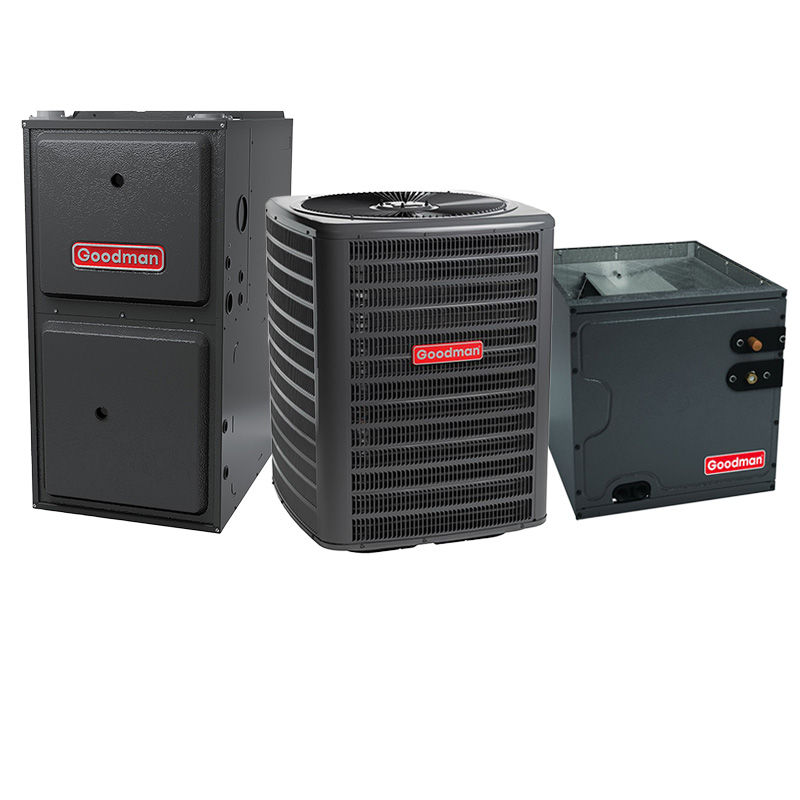
Goodman Furnace AC Combo – 1.5 Ton 14.5 SEER2 AC With 60000 BTU 97% AFUE Modulating Variable-Speed ECM Gas Furnace System – Upflow | R32
View on AC Direct see your lowest price →Check current price on AC Direct →
Key features
- 97% AFUE modulating gas furnace keeps heating bills near the top of what residential equipment can achieve
- Variable-speed ECM blower motor reduces electricity consumption and runs quieter than single-speed alternatives
- 1.5-ton capacity with 14.5 SEER2 cooling efficiency meets current federal minimums for most U.S. regions
- R-32 refrigerant: lower global warming potential than R-410A and growing technician familiarity
- Upflow configuration designed for basement or closet installs with ductwork above the unit
- Goodman pricing typically runs 15 to 25 percent below comparable Trane, Lennox, and Carrier systems
About this system
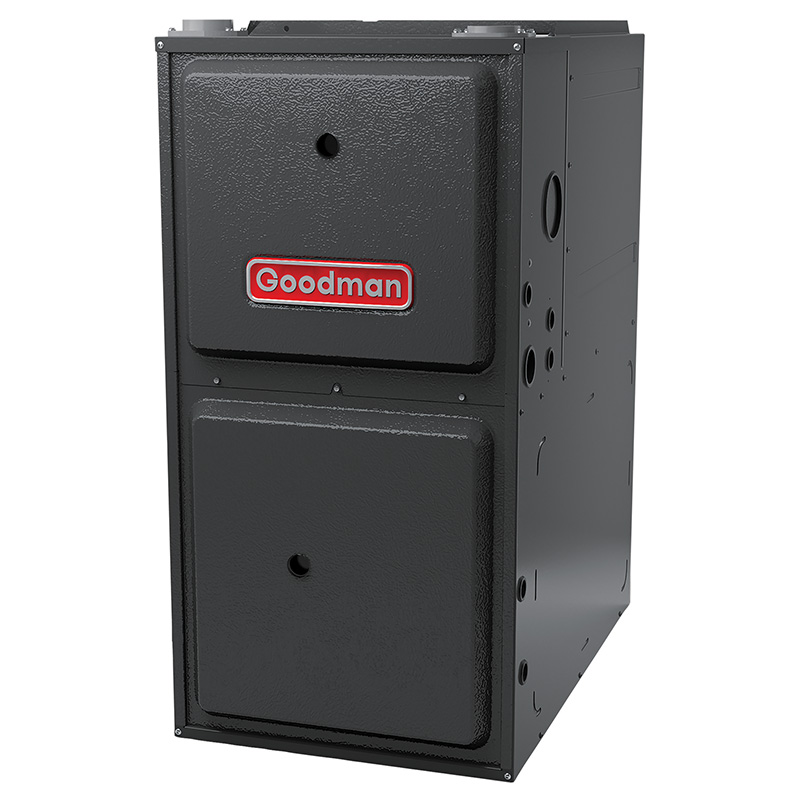
This Goodman combo pairs a 1.5-ton, 14.5 SEER2 air conditioner with a 60,000 BTU, 97% AFUE modulating gas furnace in an upflow configuration, making it a strong candidate for smaller homes, condos, or additions in the 600 to 900 square foot range that need serious heating efficiency without paying premium-brand prices. The furnace is the headline here: a 97% AFUE modulating unit with a variable-speed ECM blower is genuinely high-end technology at a value-brand price point. Modulating means the burner adjusts output in small increments rather than cycling fully on and off, which translates to steadier indoor temperatures, quieter operation, and lower gas bills compared to single- or two-stage units.
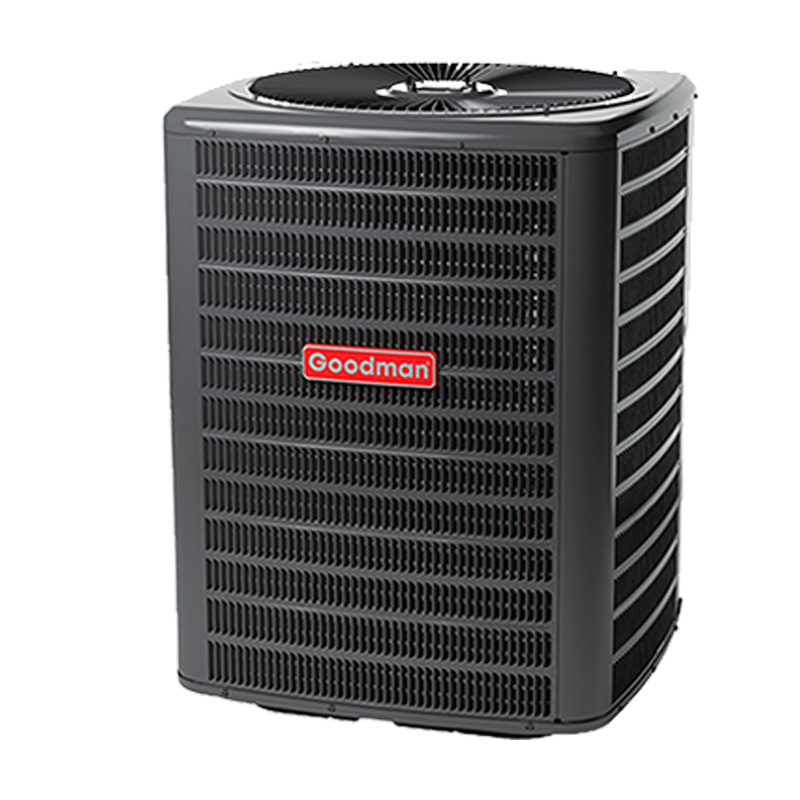
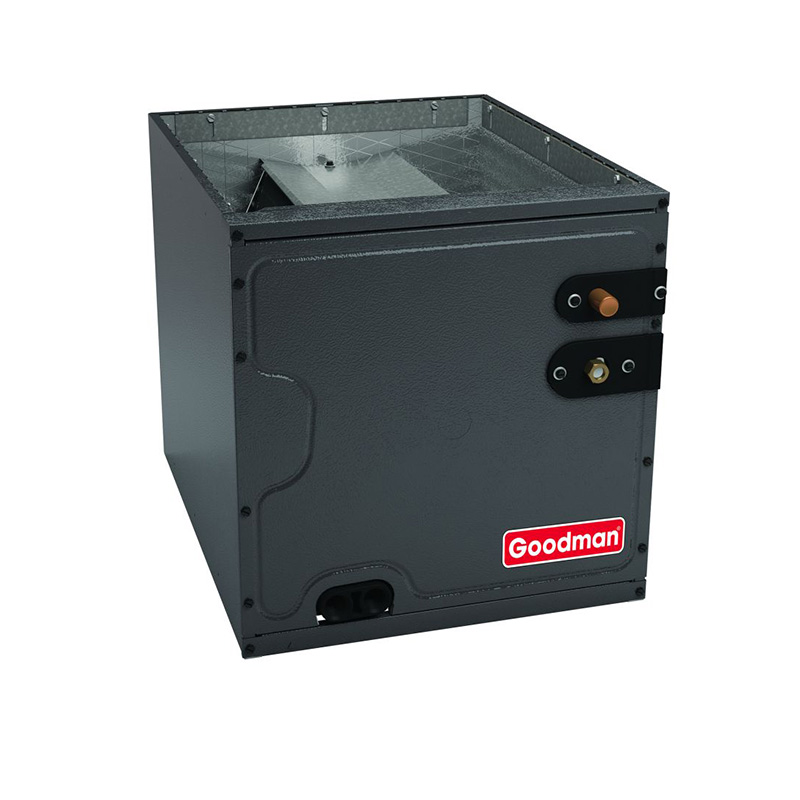
The air conditioner side lands at 14.5 SEER2, which clears the current federal minimum and sits in the entry-level efficiency tier. It is adequate for moderate climates and light cooling loads, but buyers in hot, humid regions who run their AC heavily for six or more months per year will likely want a higher SEER2 system to keep operating costs in check. The R-32 refrigerant is a forward-looking choice: it has a lower global warming potential than the R-410A it replaces and is increasingly the industry standard, meaning parts and service availability should improve over time rather than diminish. The upflow configuration suits homes where the furnace sits in a basement or utility closet with supply air directed upward into the duct system.
This combo delivers genuinely premium furnace technology at a value-brand price, and the 97% AFUE modulating furnace alone justifies serious consideration for anyone with high heating costs. The cooling side is functional rather than impressive, and long-term ownership costs depend heavily on installer quality and a bit of luck with components that Goodman owners have flagged more often than owners of premium brands.
Overall score is the average of the five ratings above.
What we like
- 97% AFUE modulating furnace is top-tier heating efficiency that cuts gas bills compared to 80% or 96% single-stage units
- Variable-speed ECM blower provides quieter, more even air distribution and lower fan electricity draw
- R-32 refrigerant positions the system well as the industry transitions away from R-410A
- Priced 15 to 25 percent below comparable Carrier, Trane, and Lennox combo systems
- Upflow layout is one of the most common residential configurations, giving installers and technicians wide familiarity with the setup
Trade-offs
- Dual-run capacitors are the most commonly reported failure point across Goodman systems, typically adding a 300 to 600 dollar repair within the first decade
- Compressor lifespan averages 10 to 14 years in owner reports, shorter than the 15 to 20 years more common among premium brands
- Evaporator coil leaks appear in a meaningful share of Goodman owner reviews, a potential mid-life expense
- 14.5 SEER2 is entry-level cooling efficiency, which may result in higher summer operating costs in hot climates compared to 16-plus SEER2 alternatives
What homeowners and pros say about Goodman
Homeowners who have lived with Goodman equipment tend to land in one of two camps, and the dividing line is usually the quality of the original installation. On ConsumerAffairs, Goodman scores around 2.5 out of 5, a platform where dissatisfied owners are far more motivated to post than happy ones, and the recurring pattern in negative reviews is repair costs climbing after roughly year seven. Google dealer reviews tell a softer story, averaging around 3.8 out of 5 across a broad range of locations, where the most repeated praise is straightforward: the system works and the price was fair. HVAC technicians who work on Goodman regularly tend to have a pragmatic view, acknowledging that the brand performs adequately when installed well but that cutting corners on refrigerant charge, line set sizing, or ductwork sealing hits Goodman harder than it hits premium brands with tighter factory tolerances.
The specific failure modes that show up repeatedly in owner accounts for Goodman systems are worth knowing before you buy this combo. Dual-run capacitors are the most commonly reported part to fail, usually a straightforward and relatively affordable fix but one that is common enough to budget for proactively. Evaporator coil leaks appear in a meaningful share of reviews and represent a more significant mid-life expense. On the compressor side, owners and techs report average lifespans in the 10 to 14 year range, which is shorter than the 15 to 20 years more commonly cited for Trane, Carrier, and Lennox units. A minority of first-year owners have also reported refrigerant leaks, which technicians typically attribute to installation or initial charge issues rather than the equipment itself. None of these trade-offs are dealbreakers given the price gap, but they are real and should inform your decision, particularly if you plan to stay in your home well past the ten-year mark.
Sources: ConsumerAffairs Goodman owner reviews, AHRI Directory of Certified Product Performance, U.S. DOE appliance and equipment efficiency standards, Goodman product specification sheets.
What it costs to run
At 14.5 SEER2, cooling this 1.5-ton system for a typical 1200-hour cooling season at the U.S. average electricity rate of $0.17/kWh works out to roughly $253 per year in cooling, about $21 less per year than a minimum-efficiency 13.4 SEER2 unit of the same size. Your real cost depends on your climate and local rate.
Method: (18,000 BTU/hr ÷ 14.5 SEER2) × 1200 hours ÷ 1000 × $0.17/kWh. Rate source: U.S. EIA average; cooling hours: moderate-climate estimate.
How it compares
| Brand | Comparable model | SEER2 | Stage | Price position |
|---|---|---|---|---|
| Goodman | This system (1.5T 14.5 SEER2 / 60K BTU 97% AFUE Modulating) | 14.5 | Modulating furnace / standard AC | Value pick |
| Carrier | Performance 14 Series (24ACC4) with 97% AFUE Infinity Modulating Furnace (59MN7) | 14.3-15 | Modulating furnace / single-stage AC | Typically 15 to 25 percent more than the Goodman equivalent |
| Trane | XR14c with S9V2 97% AFUE Variable-Speed Furnace | 14.3-15 | Modulating furnace / single-stage AC | Typically 15 to 25 percent more than the Goodman equivalent |
| Lennox | Merit 14ACX with SLP98V 98% AFUE Modulating Furnace | 14.3-15 | Modulating furnace / single-stage AC | Typically 15 to 25 percent more than the Goodman equivalent |
Competitor rows are comparable single-stage units at similar efficiency; price is relative position, not a quote.
Questions about this system
Is 1.5 tons enough for my house?
A 1.5-ton system is generally sized for homes in the 600 to 900 square foot range under typical conditions, though local climate, insulation quality, ceiling height, and window area all affect the correct load calculation. A Manual J load calculation by your installer is the only reliable way to confirm this size is right before you buy.
How much can I actually save on gas bills with a 97% AFUE furnace versus an 80% unit?
Roughly speaking, for every dollar spent on gas with an 80% AFUE furnace, you lose about 20 cents up the flue; with a 97% AFUE unit, you lose about 3 cents. In a cold climate spending 1,200 dollars a year on gas with an 80% furnace, switching to 97% AFUE could reduce that bill by 200 dollars or more annually, though actual savings depend on your local gas rates and how cold your winters are.
What is the Goodman warranty on this system and what does it actually cover?
Goodman typically offers a 10-year parts limited warranty when the equipment is registered within 60 days of installation, covering components including the compressor and heat exchanger. Labor is not included, so a repair bill still means paying a technician even inside the warranty window. Confirm registration requirements and exclusions with the specific warranty documentation that ships with your unit.
My installer mentioned Goodman has capacitor problems. Should I be worried?
Dual-run capacitor failures are the most commonly documented repair across Goodman systems and are worth taking seriously as a likely eventual cost rather than a worst-case scenario. The good news is that a capacitor swap is one of the cheaper HVAC repairs, typically in the 300 to 600 dollar range, and a competent technician can do it in under an hour. Some owners proactively ask their installer to use an upgraded capacitor from the start.
Is R-32 refrigerant harder to find service technicians for compared to R-410A?
R-32 is newer in the U.S. residential market and not every technician is yet certified or equipped to handle it, though adoption is accelerating quickly as manufacturers shift away from R-410A. When vetting installers and future service companies, confirm they have R-32 certification and the appropriate handling equipment before committing to this system.
Specifications
| Cooling capacity | 1.5 Ton |
| Efficiency | 14.5 SEER2 |
| Furnace output | 60000 BTU |
| Furnace efficiency | 97% AFUE |
| Configuration | Upflow |
| Refrigerant | R-32 |