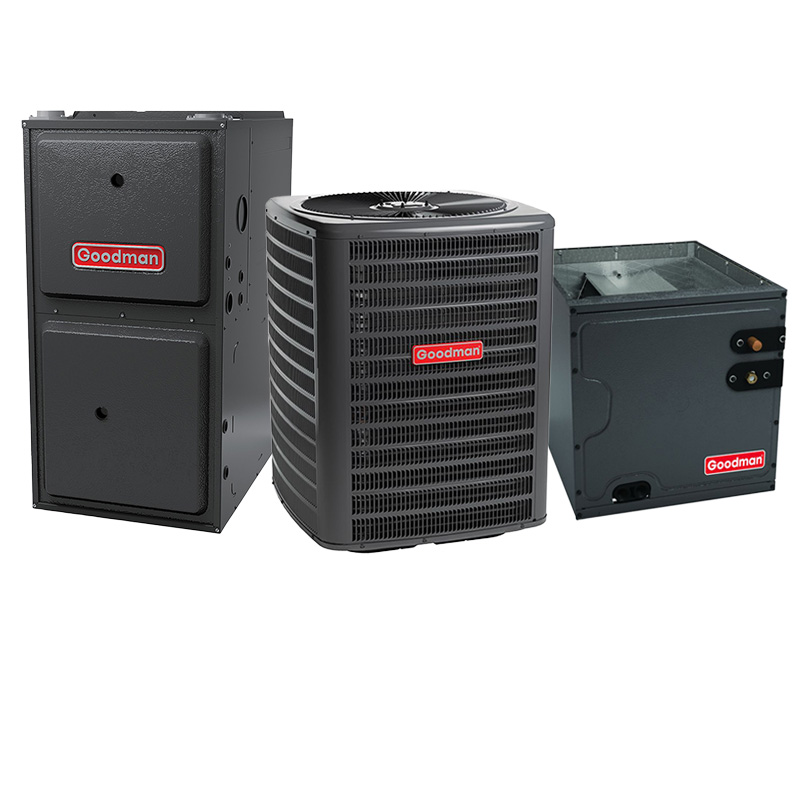
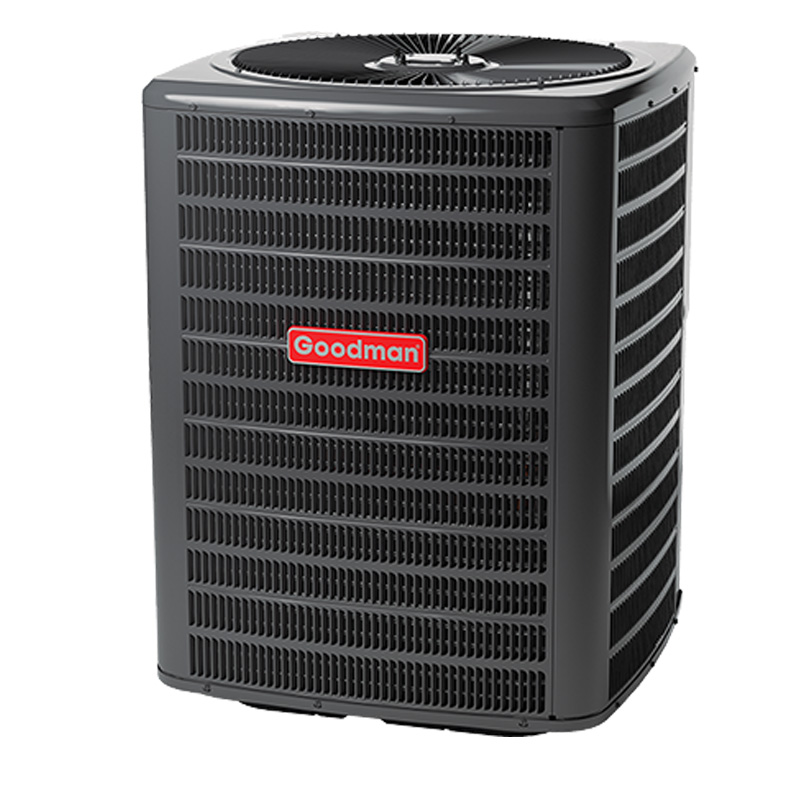
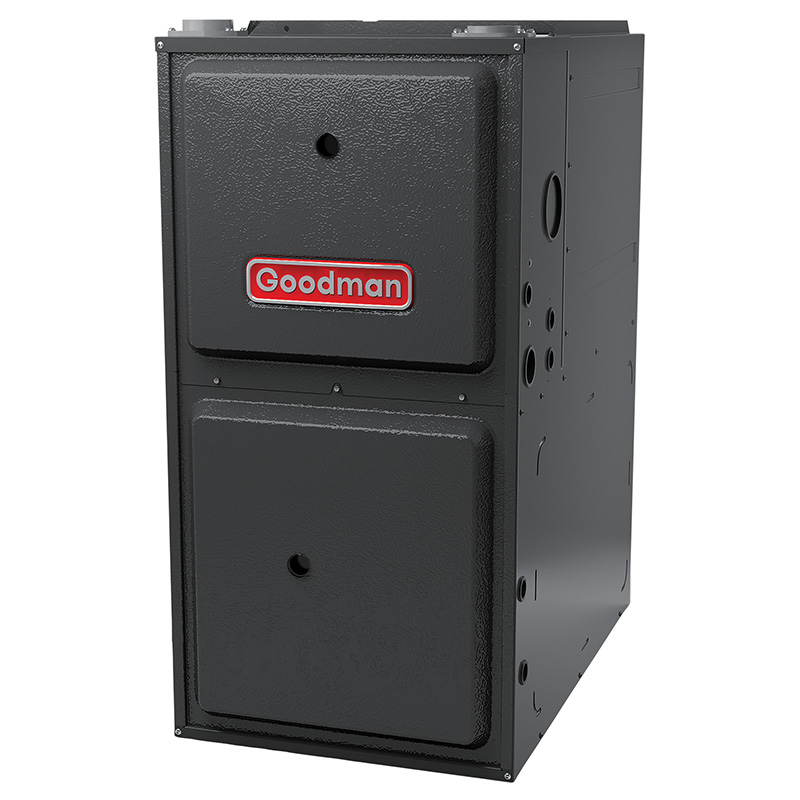
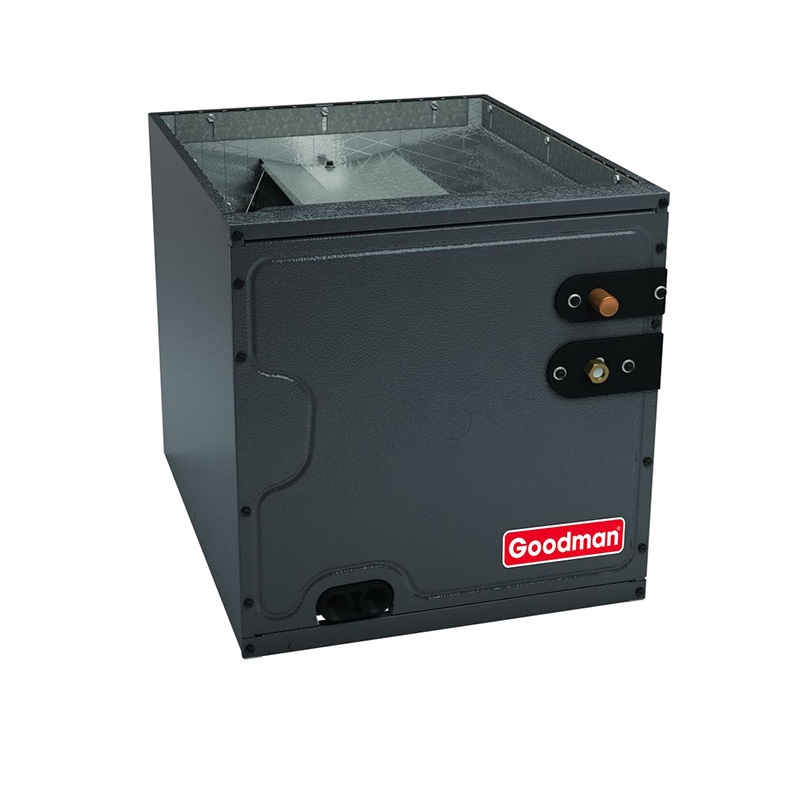
Goodman Furnace AC Combo – 1.5 Ton 15.2 SEER2 AC With 60000 BTU 97% AFUE Modulating Variable-Speed ECM Gas Furnace System – Upflow | R32
View on AC Direct see your lowest price →Check current price on AC Direct →
Key features
- 97% AFUE modulating gas furnace minimizes fuel waste and reduces temperature swings
- Variable-speed ECM blower motor lowers electricity use and operating noise
- 15.2 SEER2 cooling efficiency meets current federal minimums across all U.S. climate zones
- R-32 refrigerant replaces R-410A with a lower global-warming potential
- Upflow configuration suits basements and ground-floor mechanical rooms with upward duct runs
- 1.5-ton capacity sized for smaller homes, condos, or tight-load applications
About this system
The Goodman GLXS4BA1810 pairs a 1.5-ton, 15.2 SEER2 air conditioner with a 60,000 BTU, 97% AFUE modulating gas furnace in an upflow configuration. The result is a system aimed squarely at smaller homes, condominiums, or well-insulated ranch-style houses in mild to moderately cold climates where a 1.5-ton load is sufficient. The modulating furnace stages its heat output continuously rather than cycling fully on and off, which smooths out temperature swings and keeps the ECM blower motor running at the lowest speed needed at any given moment, reducing both noise and electricity consumption compared with a single-stage unit.
The 97% AFUE rating sits at the top tier of gas furnace efficiency, meaning nearly all the fuel burned is converted to usable heat rather than lost through the flue. R-32 refrigerant replaces older R-410A in the AC side, carrying a lower global-warming potential and slightly better thermodynamic properties. At 15.2 SEER2, the cooling efficiency clears the federal minimum for most regions but is not the highest tier available, so cooling-dominated climates may want to weigh a higher-SEER2 option. Upflow configuration is the most common residential orientation and suits homes where the air handler sits in a basement, utility closet, or ground-floor mechanical room with ductwork running upward.
This combo delivers a genuinely high-efficiency furnace and a code-compliant AC at a price point 15 to 25 percent below comparable Trane, Carrier, and Lennox systems, which is a real advantage for budget-conscious buyers. The modulating furnace is the standout component here; the 15.2 SEER2 cooling side is adequate rather than impressive. Long-term value depends heavily on installation quality and a willingness to stay ahead of Goodman's known wear items, particularly capacitors and evaporator coils.
Overall score is the average of the five ratings above.
What we like
- 97% AFUE modulating furnace is among the most fuel-efficient configurations available at any price point
- ECM variable-speed blower cuts electricity consumption and improves comfort compared with PSC motor alternatives
- R-32 refrigerant is a more environmentally responsible choice than R-410A
- Purchase price is typically 15 to 25 percent lower than equivalent Carrier, Trane, or Lennox systems
- Upflow orientation is widely understood by most residential HVAC technicians, keeping service costs straightforward
Trade-offs
- Compressor lifespan averages 10 to 14 years, shorter than the 15 to 20 years associated with premium brands
- Evaporator coil leaks are a documented recurring complaint from owners, representing a potentially costly repair
- ConsumerAffairs rating sits around 2.5 out of 5, driven largely by owners reporting escalating repair costs after year 7
- 15.2 SEER2 is the minimum-compliant efficiency tier; owners in hot climates will see higher operating costs than with a higher-SEER2 unit
What homeowners and pros say about Goodman
Homeowners who choose Goodman most often point to the upfront price gap as the deciding factor, and that praise shows up clearly in Google dealer reviews averaging around 3.8 out of 5. The modulating furnace in this particular system draws consistent appreciation for the comfort improvement it delivers compared with single-stage alternatives. Where the picture turns more complicated is after the first several years. On ConsumerAffairs, which scores Goodman around 2.5 out of 5, the recurring theme is not early failure but rather a gradual accumulation of repair bills starting around year 7 or 8. Dual-run capacitor failures are the most frequently cited issue and are generally a low-cost fix in the 300 to 600 dollar range, but evaporator coil leaks also appear with enough regularity to be worth noting as a realistic long-term cost.
HVAC technicians who service multiple brands tend to hold nuanced views. Many will install Goodman willingly, particularly when budget is a constraint, but they are consistent in saying that install quality matters more with this brand than with Carrier or Trane. That is not a knock specific to this model so much as a reflection of tighter tolerances between a good outcome and a frustrating one depending on whether the refrigerant charge, electrical connections, and duct system are done properly. Compressor longevity is the other trade-off pros tend to flag: Goodman compressors averaging 10 to 14 years versus the 15 to 20 years more commonly seen in premium brands means the true cost of ownership gap narrows over a long ownership period. For the right buyer in the right situation, this system delivers real value; for someone who wants to install and mostly forget, premium brands carry a more reassuring track record.
Sources: ConsumerAffairs Goodman owner reviews, AHRI Directory of Certified Product Performance, U.S. DOE appliance and equipment efficiency standards, Goodman product specification sheets.
What it costs to run
At 15.2 SEER2, cooling this 1.5-ton system for a typical 1200-hour cooling season at the U.S. average electricity rate of $0.17/kWh works out to roughly $242 per year in cooling, about $32 less per year than a minimum-efficiency 13.4 SEER2 unit of the same size. Your real cost depends on your climate and local rate.
Method: (18,000 BTU/hr ÷ 15.2 SEER2) × 1200 hours ÷ 1000 × $0.17/kWh. Rate source: U.S. EIA average; cooling hours: moderate-climate estimate.
How it compares
| Brand | Comparable model | SEER2 | Stage | Price position |
|---|---|---|---|---|
| Goodman | GLXS4BA1810 (this system) | 15.2 | Variable / Modulating | Value pick |
| Carrier | Performance 15 (24ACC6 series) with 58MVC furnace | 15.2 | Single-stage / Two-stage | Typically 15 to 25 percent more than this Goodman system |
| Trane | XR15 (4TTR5 series) with S9V2 furnace | 15.2 | Single-stage / Variable | Typically 15 to 25 percent more than this Goodman system |
| Lennox | Merit 15 (14ACX series) with ML296V furnace | 15.2 | Single-stage / Variable | Typically 15 to 25 percent more than this Goodman system |
Competitor rows are comparable single-stage units at similar efficiency; price is relative position, not a quote.
Questions about this system
Is a 1.5-ton unit large enough for my house?
A proper Manual J load calculation is the only reliable way to know. As a rough guide, 1.5 tons typically serves roughly 600 to 900 square feet in an average-insulation home, though climate zone, ceiling height, window area, and insulation quality all shift that range considerably. Oversizing causes short-cycling and humidity problems, so do not skip the calculation.
What does R-32 refrigerant mean for maintenance and future service costs?
R-32 is a single-component refrigerant with a lower global-warming potential than R-410A, and its thermodynamic properties can slightly improve system efficiency. It is becoming more widely stocked by HVAC distributors, so finding a technician equipped to handle it is increasingly straightforward, though some older service technicians may need updated equipment to work with it safely.
Goodman has mixed reviews online. Should I be worried about buying this system?
The concern is legitimate but worth contextualizing. Goodman scores around 2.5 out of 5 on ConsumerAffairs, a channel that skews toward dissatisfied owners, with repair costs after roughly year 7 being the most repeated complaint. Google dealer reviews average around 3.8 out of 5, where affordability is frequently praised. The documented failure modes to watch for are dual-run capacitor failures (typically a 300 to 600 dollar repair), evaporator coil leaks, and compressors that average 10 to 14 years versus 15 to 20 for premium brands. A quality installation and a service agreement can catch many of these early.
Why does the furnace efficiency (97% AFUE) matter more than it might appear on paper?
The difference between a 97% and an 80% AFUE furnace means you keep 17 cents more of every dollar of gas you burn. Over a full heating season, especially in a colder climate, that gap compounds into hundreds of dollars annually and can offset a meaningful portion of the system's price premium over lower-efficiency alternatives within a few years.
How important is the installer for a Goodman system specifically?
More important than with some premium brands, according to technicians who service multiple brands. Goodman's own documentation and the HVAC trade community consistently identify install quality as the single biggest factor in how long the equipment lasts and how efficiently it runs. Proper refrigerant charge, duct sizing, and electrical connections are especially critical; a minority of owners who reported refrigerant leaks in the first year were later found to have installation or charge errors rather than defective equipment.
Specifications
| Cooling capacity | 1.5 Ton |
| Efficiency | 15.2 SEER2 |
| Furnace output | 60000 BTU |
| Furnace efficiency | 97% AFUE |
| Configuration | Upflow |
| Refrigerant | R-32 |
| Model | GLXS4BA1810 |