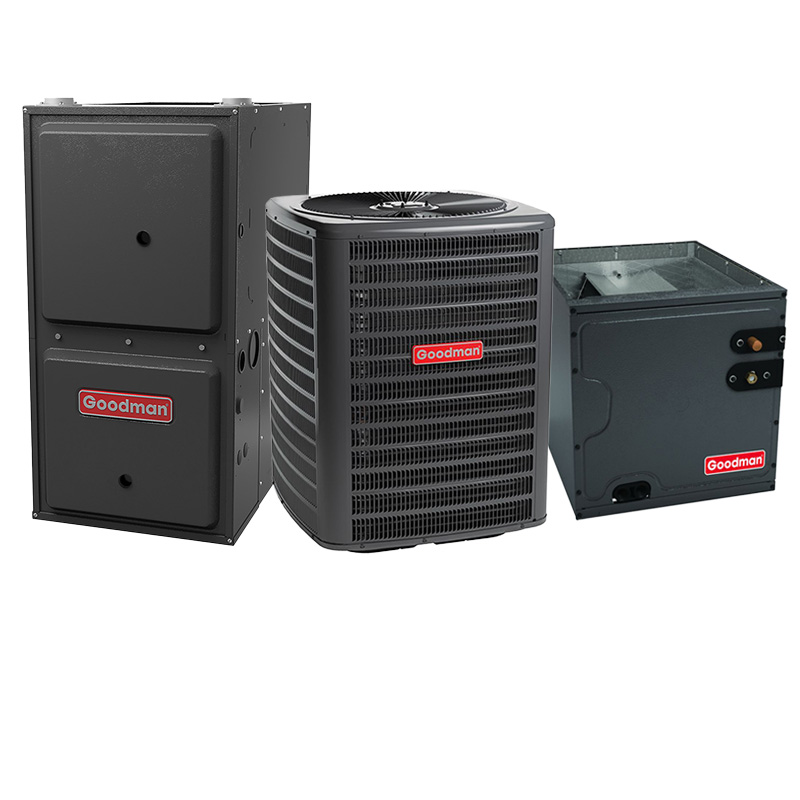
Goodman Furnace AC Combo – 1.5 Ton 14.5 SEER2 AC With 60000 BTU 97% AFUE Modulating Variable-Speed ECM Gas Furnace System – Downflow | R32
View on AC Direct see your lowest price →Check current price on AC Direct →
Key features
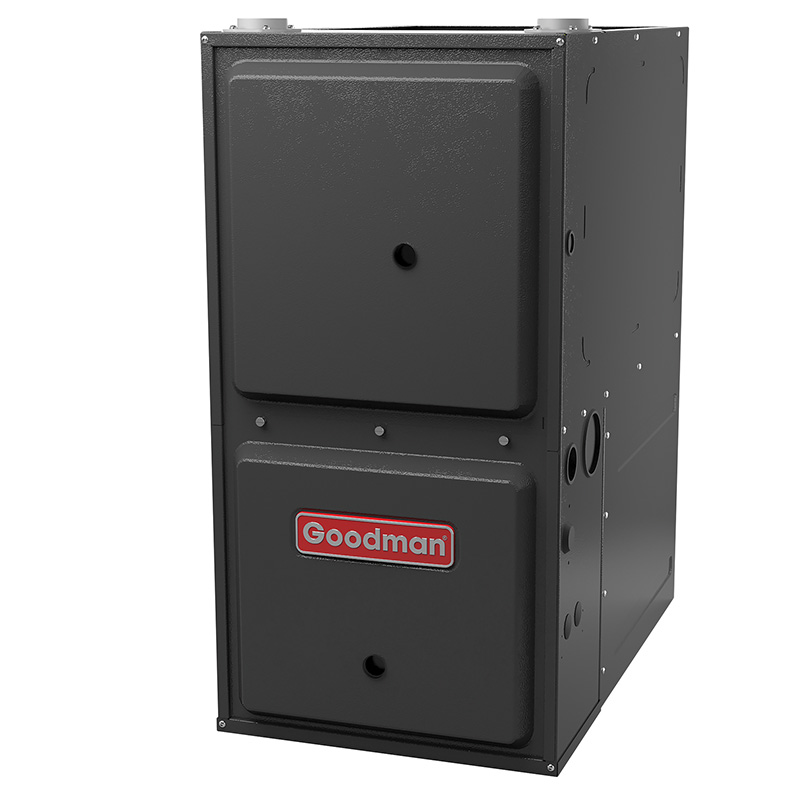
- 97% AFUE modulating gas furnace reduces fuel consumption during partial-load heating conditions
- Variable-speed ECM blower motor lowers electricity use and operates more quietly than single-speed motors
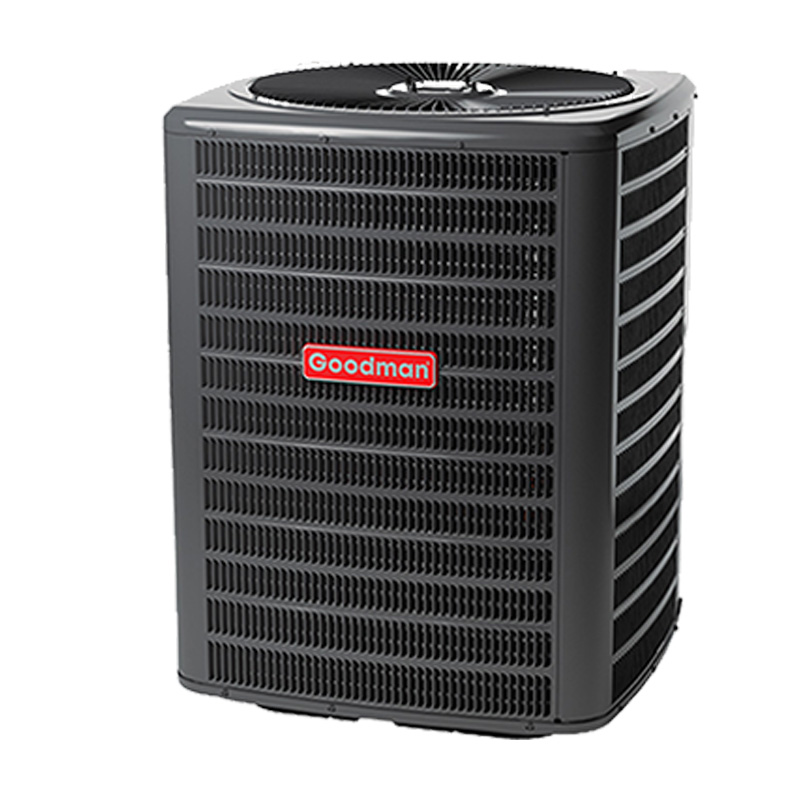
- 14.5 SEER2 air conditioner meets current federal minimum efficiency standards for most U.S. regions
- Downflow configuration designed for installations where supply air exits through floor registers
- R-32 refrigerant with lower global warming potential than R-410A; requires R-32-certified technician for service
- 1.5-ton cooling capacity sized for smaller homes, condos, or low-load spaces typically under 1,200 square feet
About this system
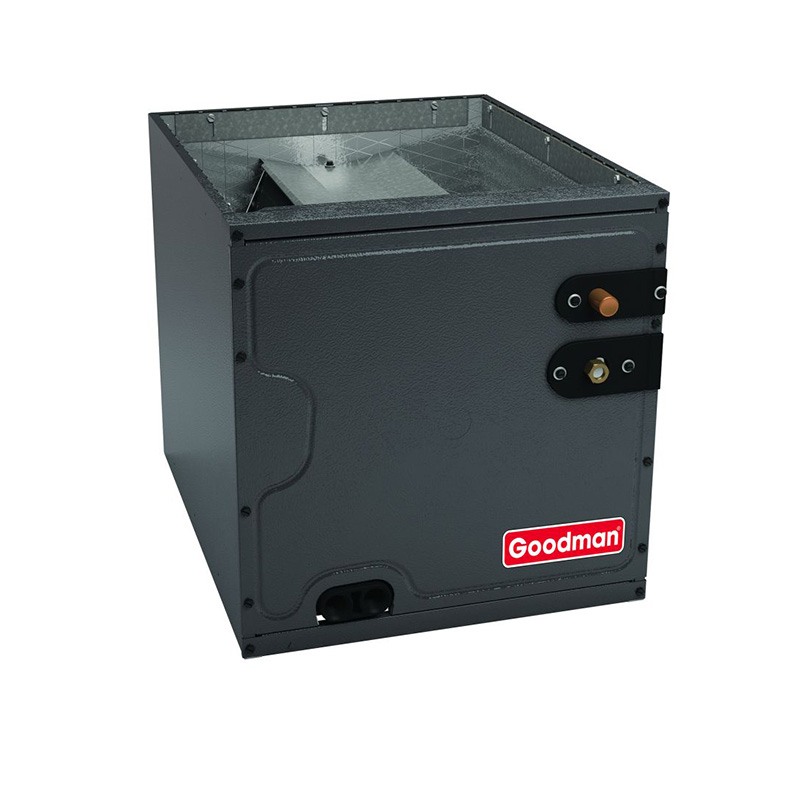
This Goodman combo pairs a 1.5-ton, 14.5 SEER2 central air conditioner with a 60,000 BTU, 97% AFUE modulating gas furnace in a downflow configuration, making it a strong candidate for homes where the air handler sits in a closet or utility space above a crawlspace or slab. The downflow setup delivers conditioned air downward through floor registers, which suits single-story homes and manufactured housing particularly well. R-32 refrigerant replaces the older R-410A in this system, offering a lower global warming potential and slightly better thermodynamic efficiency, though it does require technicians to be certified for R-32 service.
The 97% AFUE modulating furnace is the headline component here. Modulating means the burner adjusts its output in small increments rather than simply cycling on and off at full blast, which keeps indoor temperatures more stable, reduces temperature swings between cycles, and lowers gas consumption during mild weather. The variable-speed ECM blower motor works in step with that modulation, running at lower speeds most of the time to cut electricity use and move air more quietly. For a 1.5-ton system targeting smaller homes, condos, or low-load spaces under roughly 900 to 1,200 square feet depending on climate and insulation, this level of furnace sophistication is genuinely useful and not just a marketing tier bump.
Where this system asks for careful thought is on the cooling side. A 14.5 SEER2 rating sits right at the current federal minimum efficiency threshold for many regions, which means you are not paying a premium for top-tier cooling efficiency. That is a reasonable trade-off if your heating loads are higher than your cooling loads, which is common in northern climates where the high-AFUE modulating furnace will deliver the most return. Buyers in hot, humid southern climates who run the AC heavily for eight or nine months a year should weigh whether a higher SEER2 unit would pencil out better over time.
This combo delivers a genuinely high-efficiency furnace at a price point that undercuts Carrier, Trane, and Lennox by a meaningful margin, and the modulating variable-speed components are real performance upgrades rather than spec-sheet padding. The 14.5 SEER2 cooling side is entry-level, and Goodman's documented track record includes failure modes worth budgeting for, but as a value-oriented system installed by a qualified technician it represents an honest option for heating-dominant climates.
Overall score is the average of the five ratings above.
What we like
- 97% AFUE modulating furnace offers top-tier heating efficiency at a below-premium price
- Variable-speed ECM motor improves comfort consistency and reduces operating noise compared to single-speed alternatives
- Priced roughly 15 to 25 percent below comparable Trane, Carrier, and Lennox configurations
- R-32 refrigerant is more environmentally friendly than R-410A and has favorable thermodynamic properties
- Downflow design is well-suited to slab-on-grade homes and manufactured housing where floor-register layouts are standard
Trade-offs
- 14.5 SEER2 is the minimum efficiency tier; buyers in hot climates with long cooling seasons will see limited energy savings on the AC side
- Compressor lifespan averages 10 to 14 years versus 15 to 20 years typical of premium-brand compressors, according to owner reports
- Dual-run capacitor failures are the most commonly reported issue and, while usually a low-cost fix, add to long-term maintenance costs
- A minority of owners report refrigerant leaks within the first year, most often traced to install or initial charge quality rather than the equipment itself
What homeowners and pros say about Goodman
Homeowners who have lived with Goodman equipment long enough to form an informed opinion tend to land in one of two camps. Those who had a skilled installer do a thorough job, including a proper refrigerant charge and careful duct sealing, frequently report years of trouble-free operation and point to the lower purchase price as straightforward savings. Those who had a rushed or cut-rate installation are more likely to show up in places like ConsumerAffairs, where Goodman sits at roughly 2.5 out of 5 stars and the recurring story is repair bills arriving sooner than expected, often after year seven. Google dealer reviews tell a more balanced story at around 3.8 out of 5, where affordability is the most consistently praised attribute across locations.
HVAC technicians who service Goodman equipment regularly point to dual-run capacitors as the single most common call-back item, a failure that usually runs 300 to 600 dollars to fix and is not unique to Goodman but does appear more frequently in owner forums and service logs for this brand. Evaporator coil leaks show up in a meaningful share of long-term owner reports, and compressor longevity tends to run 10 to 14 years on average rather than the 15 to 20 years that premium brands can claim. On this specific combo, the 97% AFUE modulating furnace is the component technicians and owners are most likely to praise; it is a genuine high-efficiency unit, not a budget-grade heater dressed up with a higher model number, and the variable-speed ECM motor in particular draws consistent positive feedback for quiet operation. The trade-off is accepting that the brand does not carry the field reliability reputation of Trane or Carrier, which matters most if you are planning to own this equipment for 15-plus years.
Sources: ConsumerAffairs Goodman owner reviews, AHRI Directory of Certified Product Performance, U.S. DOE appliance and equipment efficiency standards, Goodman product specification sheets.
What it costs to run
At 14.5 SEER2, cooling this 1.5-ton system for a typical 1200-hour cooling season at the U.S. average electricity rate of $0.17/kWh works out to roughly $253 per year in cooling, about $21 less per year than a minimum-efficiency 13.4 SEER2 unit of the same size. Your real cost depends on your climate and local rate.
Method: (18,000 BTU/hr ÷ 14.5 SEER2) × 1200 hours ÷ 1000 × $0.17/kWh. Rate source: U.S. EIA average; cooling hours: moderate-climate estimate.
How it compares
| Brand | Comparable model | SEER2 | Stage | Price position |
|---|---|---|---|---|
| Goodman | 1.5 Ton 14.5 SEER2 / 60K BTU 97% AFUE Modulating ECM Downflow R-32 | 14.5 | Variable/Modulating | Value pick |
| Carrier | Performance 96 (59TP6) + 24ACC636A003 | 14.5-15 | Two-stage furnace / Single-stage AC | Roughly 20 to 30 percent higher than Goodman for similar capacity |
| Trane | S9V2 Variable-Speed Furnace + XR14 AC | 14-14.5 | Variable-speed furnace / Single-stage AC | Typically 25 to 35 percent higher than Goodman at this efficiency tier |
| Lennox | SL280V Furnace + XC14 AC | 14-15 | Variable-speed furnace / Single-stage AC | Generally 30 to 40 percent higher than Goodman for comparable specs |
Competitor rows are comparable single-stage units at similar efficiency; price is relative position, not a quote.
Questions about this system
Is R-32 refrigerant a problem to service in a smaller market where not every HVAC tech carries it?
R-32 is mildly flammable (A2L classification), so technicians must be certified to handle it and need specific recovery equipment. In most metro areas this is becoming routine, but in rural markets you should confirm local availability before purchase since an uncertified tech cannot legally recharge or service the system.
The furnace is 60,000 BTU but my home is under 1,000 square feet. Is that oversized?
It may be, depending on your climate zone, insulation levels, and window area. Modulating furnaces handle mild oversizing better than single-stage units because they can fire at reduced capacity, but a proper Manual J heat load calculation from your installer is the only reliable way to confirm the furnace is appropriately sized for your space.
What does 'downflow' mean, and how do I know if my home needs it?
Downflow means the furnace draws return air from the top and discharges heated or cooled air downward into floor-level ductwork. If your existing ductwork runs under the floor, or if your air handler sits in a main-floor closet above a crawlspace or basement plenum, downflow is the correct orientation. Upflow and horizontal configurations exist for attics and basements with ceiling ducts.
Goodman has mixed reviews online. Should I be worried about reliability on a combo system this size?
Goodman scores around 2.5 out of 5 on ConsumerAffairs, a complaint-heavy channel, and roughly 3.8 out of 5 across Google dealer reviews. The documented weak points are dual-run capacitor failures (typically a 300 to 600 dollar fix), evaporator coil leaks reported by a meaningful share of owners, and compressor lifespans that average 10 to 14 years rather than the 15 to 20 years seen from premium brands. Setting aside a small annual maintenance budget and using a qualified installer reduces but does not eliminate these risks.
Will the 14.5 SEER2 AC qualify for the federal energy efficiency tax credit?
As of current IRS guidance, split-system central air conditioners must meet a higher efficiency threshold (generally 16 SEER2 or above depending on configuration and region) to qualify for the 25C residential energy efficiency tax credit. A 14.5 SEER2 unit is unlikely to qualify for that credit on its own, though the high-AFUE furnace component may qualify separately. Confirm current requirements with a tax professional or the ENERGY STAR database before purchase.
Specifications
| Cooling capacity | 1.5 Ton |
| Efficiency | 14.5 SEER2 |
| Furnace output | 60000 BTU |
| Furnace efficiency | 97% AFUE |
| Configuration | Downflow |
| Refrigerant | R-32 |