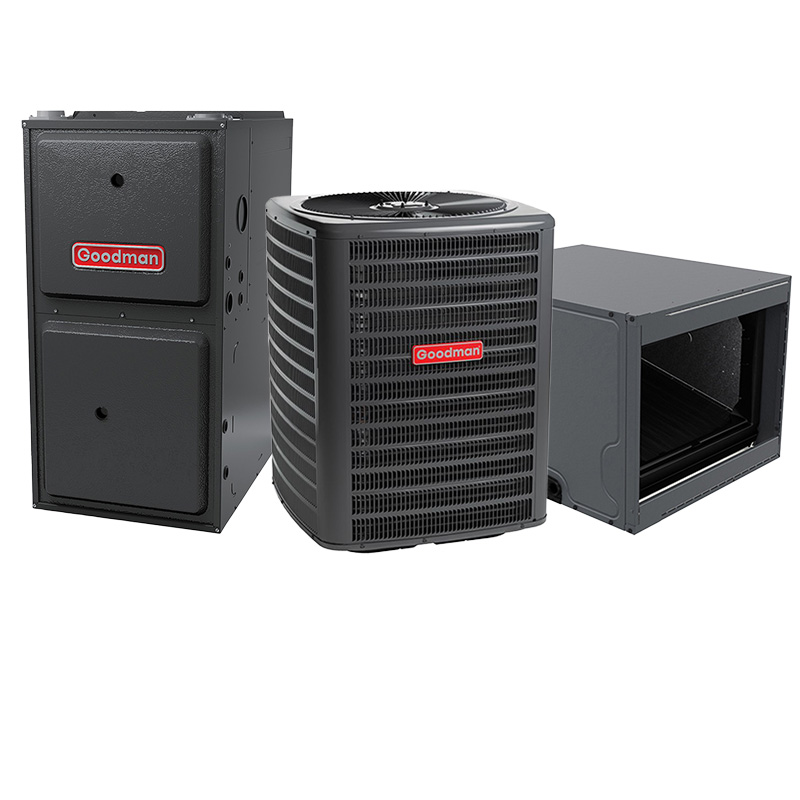
Goodman Furnace AC Combo – 1.5 Ton 14.5 SEER2 AC With 60000 BTU 97% AFUE Modulating Variable-Speed ECM Gas Furnace System – Horizontal | R32
View on AC Direct see your lowest price →Check current price on AC Direct →
Key features
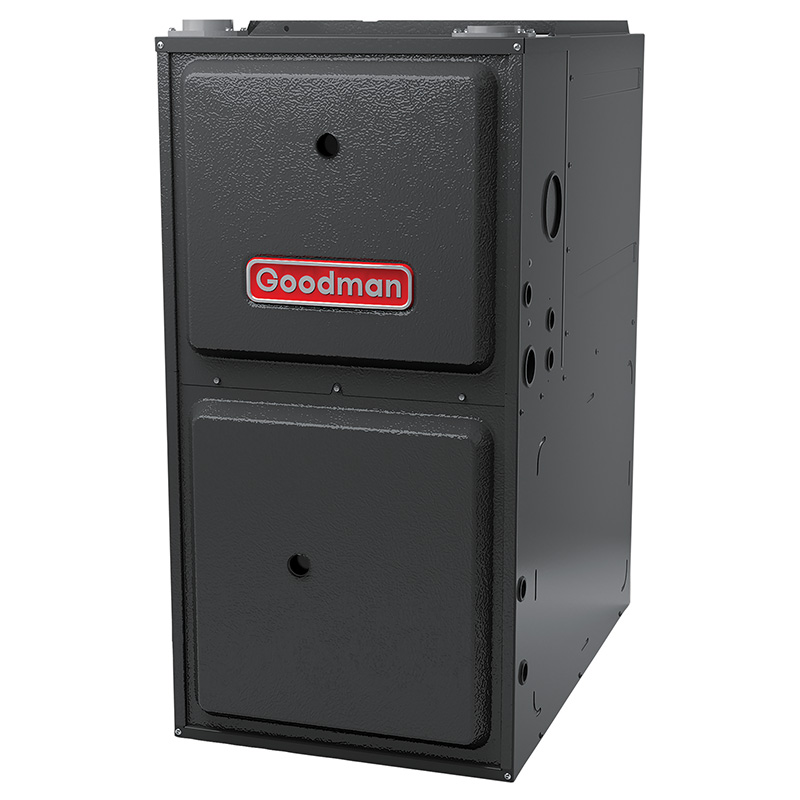
- 97% AFUE modulating gas furnace reduces fuel waste to roughly 3 cents on every dollar spent
- Variable-speed ECM blower motor adjusts airflow continuously for quieter, more even comfort
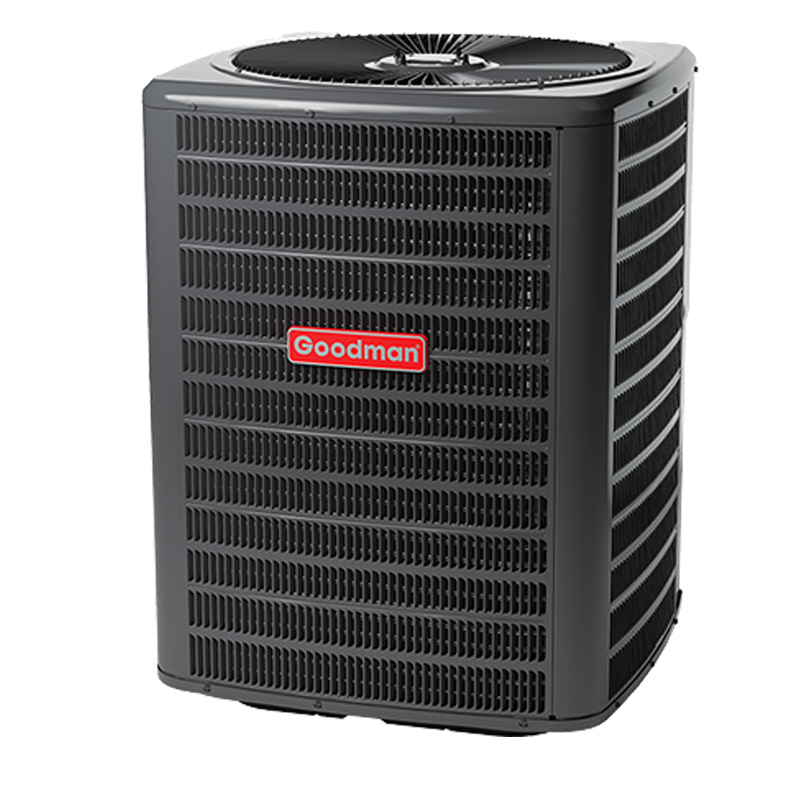
- 14.5 SEER2-rated 1.5-ton condenser meets current federal minimum efficiency standards
- R-32 refrigerant with a global-warming potential 68% lower than R-410A
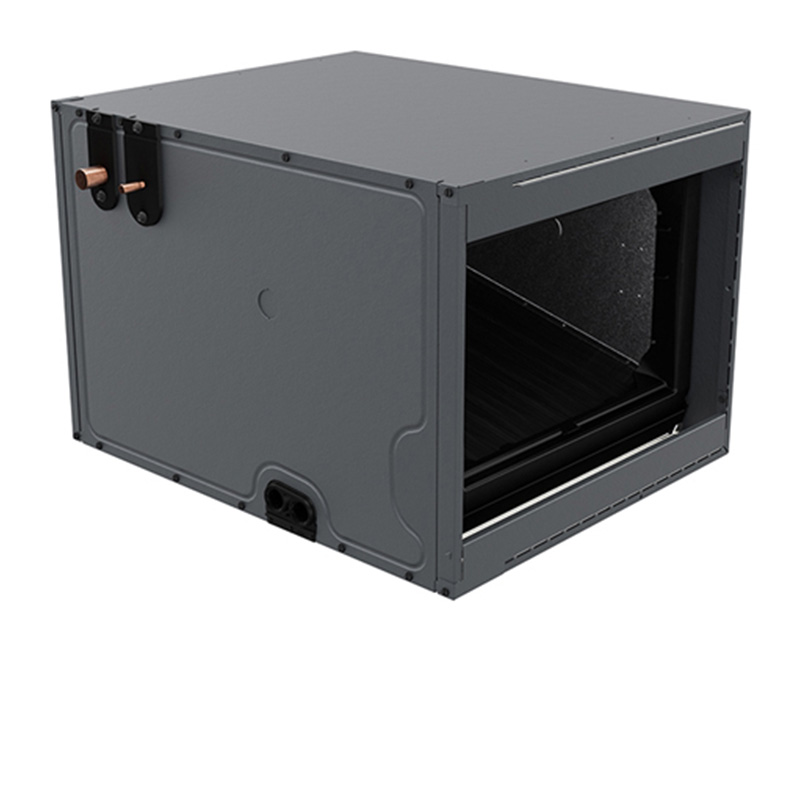
- Horizontal configuration designed for attic, crawlspace, and side-discharge installations
- Goodman 10-year parts warranty with registration within 60 days of installation
About this system
The Goodman GLXS4BA1810 pairs a 1.5-ton, 14.5 SEER2 air conditioner with a 60,000 BTU, 97% AFUE modulating gas furnace in a horizontal configuration, making it a practical choice for homes where the air handler lives in a crawlspace, attic, or closet that demands a side-discharge layout. The R-32 refrigerant charge is a meaningful step forward environmentally, carrying a global-warming potential roughly 68 percent lower than R-410A, and it is the direction the industry is moving under new EPA guidelines.
The furnace side is where this system earns its keep. A 97% AFUE modulating burner paired with a variable-speed ECM blower motor sits at the top of the efficiency tier for gas heat, converting nearly all fuel to usable warmth and adjusting output continuously rather than cycling hard on and off. That means more even temperatures room to room, lower gas bills in cold climates, and quieter operation compared to single-stage or two-stage units. At 1.5 tons, the cooling side is sized for smaller homes, typically 600 to 900 square feet depending on climate, insulation, and window load, so a proper Manual J load calculation is not optional here. Oversizing is a real risk at this tonnage and will undermine comfort and dehumidification regardless of how efficient the equipment is.
This combo delivers a genuinely high-efficiency furnace at a price point most competing brands cannot match, and R-32 future-proofs the refrigerant side. The trade-off is Goodman's documented history of capacitor and evaporator coil failures in the mid-life years and a compressor lifespan that typically trails premium brands, so the long-term value equation depends heavily on install quality and maintenance discipline.
Overall score is the average of the five ratings above.
What we like
- 97% AFUE modulating furnace is top-tier efficiency for a gas system at this price
- Variable-speed ECM motor noticeably reduces electricity consumption and blower noise
- R-32 refrigerant keeps the system compliant with evolving EPA refrigerant regulations
- Priced 15 to 25 percent below comparable Trane, Lennox, and Carrier configurations
- Horizontal layout makes it viable for installations where vertical systems simply will not fit
Trade-offs
- Dual-run capacitors are the most commonly reported failure point, typically around years 5 to 8
- Evaporator coil leaks appear in a meaningful share of owner reports and can be costly to address
- Compressor longevity averages 10 to 14 years versus 15 to 20 for premium-brand compressors
- A minority of owners report refrigerant leaks within the first year, usually tied to install or charge issues
What homeowners and pros say about Goodman
Homeowners and HVAC professionals who discuss Goodman equipment online tend to land in two camps, and this system sits squarely in that tension. On Google dealer reviews, Goodman-based installs average around 3.8 out of 5 stars across hundreds of reviews per location, where affordability and the value proposition of a 97% AFUE furnace at this price are the most consistent praise. Contractors who specialize in budget-conscious builds frequently recommend Goodman precisely because the gap between its upfront cost and that of Carrier or Trane is real money. The modulating furnace and variable-speed blower in this specific configuration are also genuinely well-regarded for comfort, with fewer complaints about cold spots and short-cycling than you see with entry-level single-stage systems.
The less flattering picture comes from ConsumerAffairs, where Goodman sits at roughly 2.5 out of 5, a platform that skews toward owners with complaints rather than satisfied customers but still surfaces recurring patterns worth noting. Dual-run capacitor failures are the most frequently mentioned repair, typically appearing after year five and usually resolved for $300 to $600. Evaporator coil leaks show up in a meaningful share of reviews and represent a more serious mid-life cost. Compressor longevity is a legitimate concern: Goodman compressors average 10 to 14 years in documented owner experience, compared to 15 to 20 years for premium brands. A minority of owners also report refrigerant issues in the first year, which experienced installers point to as a charge or leak-check failure at install rather than a manufacturing defect. The pattern across both review channels is consistent: a well-installed and well-maintained Goodman performs respectably for its price class, but it rewards attentive ownership more than a set-and-forget approach.
Sources: ConsumerAffairs Goodman owner reviews, AHRI Directory of Certified Product Performance, U.S. DOE appliance and equipment efficiency standards, Goodman product specification sheets.
What it costs to run
At 14.5 SEER2, cooling this 1.5-ton system for a typical 1200-hour cooling season at the U.S. average electricity rate of $0.17/kWh works out to roughly $253 per year in cooling, about $21 less per year than a minimum-efficiency 13.4 SEER2 unit of the same size. Your real cost depends on your climate and local rate.
Method: (18,000 BTU/hr ÷ 14.5 SEER2) × 1200 hours ÷ 1000 × $0.17/kWh. Rate source: U.S. EIA average; cooling hours: moderate-climate estimate.
How it compares
| Brand | Comparable model | SEER2 | Stage | Price position |
|---|---|---|---|---|
| Goodman | GLXS4BA1810 with GMVC97 series furnace | 14.5 | Variable/Modulating | Value pick |
| Carrier | Comfort 14 (24ACC6) with 59MN7 modulating furnace | 14.3 | Variable/Modulating | 15 to 25 percent above this Goodman system |
| Trane | XR14c (4TTR4) with XC95m modulating furnace | 14.3 | Variable/Modulating | 20 to 30 percent above this Goodman system |
| Lennox | Merit 14ACX with SLP98V variable-capacity furnace | 14.3 | Variable/Modulating | 25 to 35 percent above this Goodman system |
Competitor rows are comparable single-stage units at similar efficiency; price is relative position, not a quote.
Questions about this system
Is a 1.5-ton system actually big enough for my house?
That depends on your climate zone, insulation quality, ceiling height, and window area, not just square footage. A Manual J load calculation is the only reliable way to confirm sizing. Running an undersized system in a hot climate is inefficient and uncomfortable, but oversizing a 1.5-ton unit is equally problematic since it will short-cycle and fail to dehumidify properly.
What does the horizontal configuration mean and do I need a specific installer?
Horizontal means the air handler is oriented on its side so supply and return air move laterally rather than vertically, which is common in attic and crawlspace applications. Not every installer is equally familiar with horizontal coil orientation and proper condensate drainage in that position, so confirm your contractor has experience with horizontal installs before booking.
How does R-32 refrigerant affect service and maintenance going forward?
R-32 requires technicians to be certified to handle A2L mildly flammable refrigerants, which most licensed HVAC pros now are or are becoming. Parts availability is growing rapidly as the industry shifts away from R-410A. The practical impact on routine maintenance is minimal, but confirm your service contractor is R-32 qualified.
What is the real cost risk of Goodman's documented failure modes on this system?
Dual-run capacitor replacements typically run $300 to $600 including labor and are the most common repair. Evaporator coil leaks are more expensive, potentially $1,000 to $2,500 depending on coil availability and labor rates. The 10-year parts warranty covers the coil if you register the unit within 60 days of install, but labor is never covered under the standard warranty.
How important is install quality with a Goodman system specifically?
HVAC technicians consistently point to install quality as the single biggest factor in how long a Goodman unit lasts. Proper refrigerant charge, correct duct static pressure, and accurate condensate drainage setup in a horizontal orientation are all areas where a rushed or inexperienced install creates problems that show up within the first few years. Budget for a licensed, experienced installer rather than the lowest bid.
Specifications
| Cooling capacity | 1.5 Ton |
| Efficiency | 14.5 SEER2 |
| Furnace output | 60000 BTU |
| Furnace efficiency | 97% AFUE |
| Configuration | Horizontal |
| Refrigerant | R-32 |
| Model | GLXS4BA1810 |