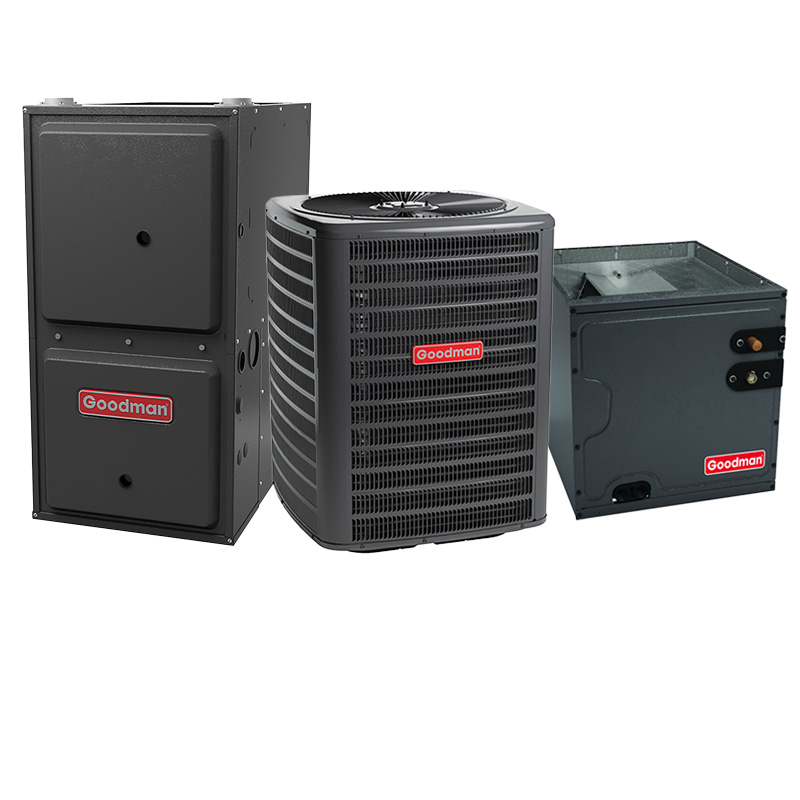
Goodman Furnace AC Combo – 1.5 Ton 15.2 SEER2 AC With 60000 BTU 97% AFUE Modulating Variable-Speed ECM Gas Furnace System – Downflow | R32
View on AC Direct see your lowest price →Check current price on AC Direct →
Key features
- 1.5-ton, 15.2 SEER2 cooling efficiency meets current federal minimum standards with moderate headroom
- 97% AFUE modulating gas furnace extracts near-maximum heat from each unit of fuel burned
- Variable-speed ECM blower motor reduces electricity draw and improves humidity control at the air handler
- Downflow configuration designed for ductwork systems routed below the unit, such as crawlspace or basement installs
- R-32 refrigerant charge: lower global-warming potential than R-410A, aligned with the industry's ongoing transition
- Modulating burner adjusts output in small steps, reducing temperature swings and short-cycling compared with single-stage furnaces
About this system
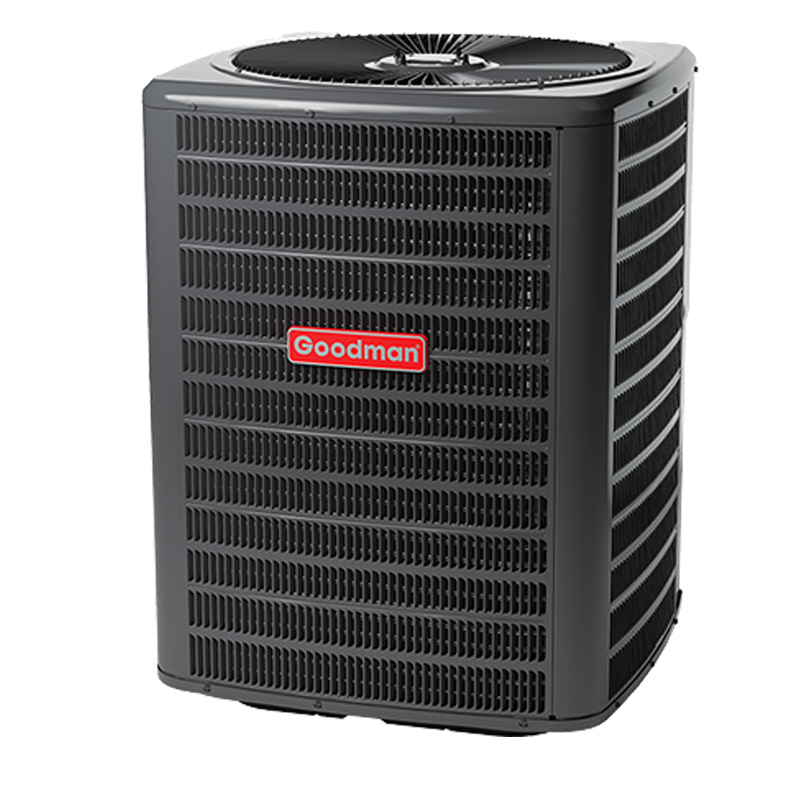
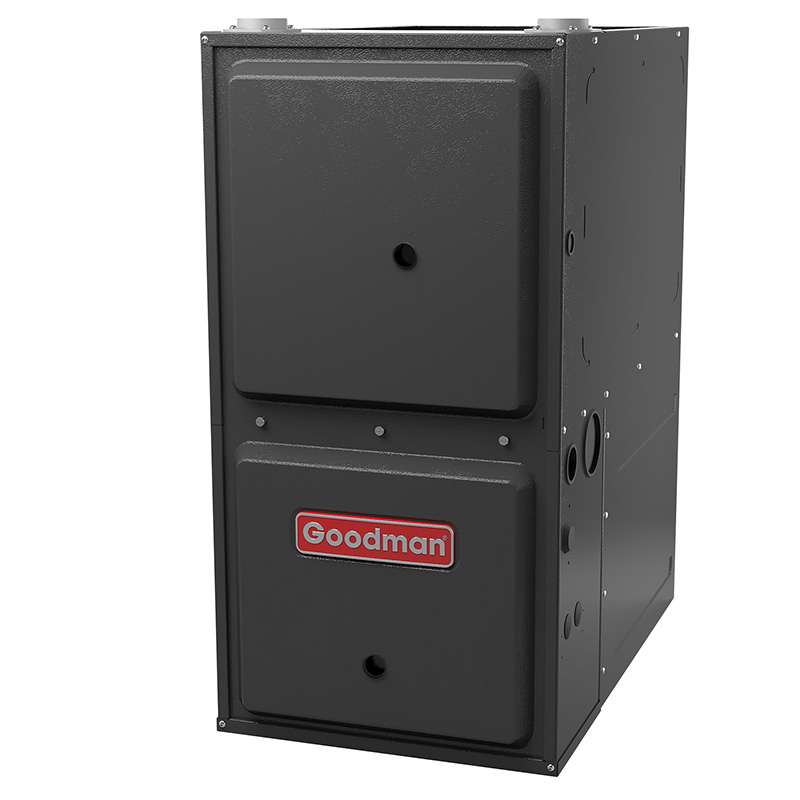
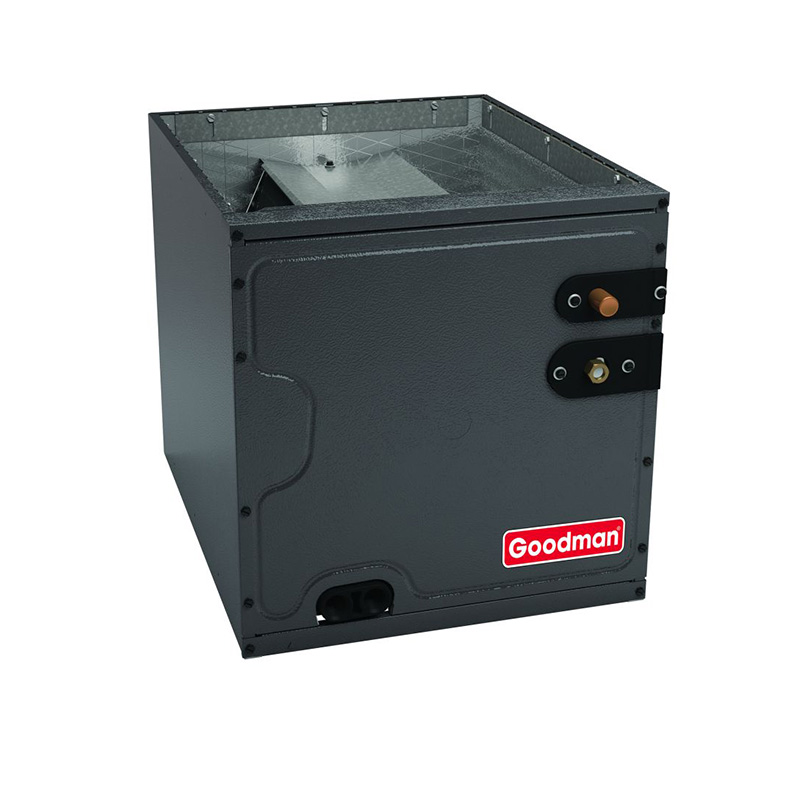
The Goodman GLXS4BA1810 pairs a 1.5-ton, 15.2 SEER2 air conditioner with a 60,000 BTU, 97% AFUE modulating gas furnace in a downflow configuration, making it a practical match for homes with ductwork routed beneath the living space, such as those built on crawlspaces or with basement systems feeding floor registers. The R-32 refrigerant charge is a forward-looking choice: R-32 carries a significantly lower global-warming potential than the R-410A it is replacing across the industry, and it is increasingly the standard for new equipment going forward.
The 97% AFUE modulating furnace is the real headline here. A modulating burner adjusts output in small increments rather than cycling between full-on and full-off, which smooths temperature swings and wrings nearly all available heat from every cubic foot of gas burned. Paired with a variable-speed ECM blower motor, this combination tends to run longer at lower capacity, improving humidity control, reducing temperature straturation across rooms, and cutting electricity consumption at the air handler compared with single-speed alternatives. For a 1.5-ton system, this is a spec sheet more commonly seen on equipment sized for smaller conditioned spaces, cottages, additions, or very well-insulated homes under roughly 900 to 1,200 square feet depending on climate zone and envelope quality.
Buyers should understand the trade-off they are making. Goodman prices this system 15 to 25 percent below comparable Trane, Lennox, and Carrier configurations, and that gap is real. The savings are front-end; the open question is long-term reliability, where Goodman’s documented track record is more mixed than premium brands. For buyers who have a trusted installer and are comfortable with the idea of budgeting for potential repairs after the first decade, the value proposition is genuine. For buyers who want to set it and forget it for 18 to 20 years, premium brands have a stronger case.
This Goodman combo delivers genuinely high-end furnace specs at a value-brand price, and the modulating furnace with variable-speed ECM is a legitimate comfort upgrade over entry-level systems. The trade-off is Goodman's documented mixed reliability history past the seven-year mark and the reality that install quality will drive outcomes more than the nameplate will.
Overall score is the average of the five ratings above.
What we like
- 97% AFUE modulating furnace is top-tier efficiency for gas heating, rivaling the best specs from premium brands
- Variable-speed ECM blower meaningfully improves humidity control and reduces air handler electricity use
- R-32 refrigerant is the industry's forward standard, reducing environmental impact and future refrigerant supply risk
- Priced 15 to 25 percent below comparable Trane, Lennox, and Carrier configurations, offering real upfront savings
- Downflow design serves a specific install need well, giving fewer product choices in this configuration
Trade-offs
- Dual-run capacitor failures are Goodman's most commonly reported issue and typically surface in years 5 to 10, adding service costs even if repair bills stay in the $300 to $600 range
- Evaporator coil leaks appear in a meaningful share of owner reviews and can be more costly to address than a capacitor swap
- Compressor lifespan averages 10 to 14 years versus 15 to 20 years for premium brands, which matters on a long-term cost-of-ownership basis
- A minority of owners report refrigerant leaks within the first year, typically tied to installation or charge errors rather than the equipment itself, underscoring the outsized role of installer quality
What homeowners and pros say about Goodman
Homeowners who have lived with Goodman equipment describe a split experience that tracks closely with the brand’s ConsumerAffairs score of roughly 2.5 out of 5 and its Google dealer review average of around 3.8 out of 5. The lower ConsumerAffairs number reflects a platform where owners are more likely to post when something goes wrong, and the recurring theme there is repair costs that begin to accumulate after roughly year 7. The higher dealer scores capture a broader population and more consistently cite Goodman’s affordability as a genuine advantage, particularly for buyers who were quoted significantly more for Carrier or Trane and needed to stay within a budget. Both data points reflect real experiences and neither should be dismissed.
HVAC technicians tend to hold a nuanced view of Goodman. Most acknowledge the value at purchase and note that a well-commissioned Goodman system can perform reliably for a decade or more. Where they get more cautious is in flagging the specific failure patterns that show up repeatedly in service calls: dual-run capacitor failures are the most commonly replaced component and typically a quick repair in the $300 to $600 range, but evaporator coil leaks and compressor wear, with average compressor lifespans running 10 to 14 years versus 15 to 20 years for premium equipment, represent the bigger long-term cost risk. A small but documented share of owners also report refrigerant leaks within the first year, which technicians attribute to installation errors rather than the equipment itself, reinforcing the consistent professional view that installer quality is the largest single variable in how any Goodman system ultimately performs.
Sources: ConsumerAffairs Goodman owner reviews, AHRI Directory of Certified Product Performance, U.S. DOE appliance and equipment efficiency standards, Goodman product specification sheets.
What it costs to run
At 15.2 SEER2, cooling this 1.5-ton system for a typical 1200-hour cooling season at the U.S. average electricity rate of $0.17/kWh works out to roughly $242 per year in cooling, about $32 less per year than a minimum-efficiency 13.4 SEER2 unit of the same size. Your real cost depends on your climate and local rate.
Method: (18,000 BTU/hr ÷ 15.2 SEER2) × 1200 hours ÷ 1000 × $0.17/kWh. Rate source: U.S. EIA average; cooling hours: moderate-climate estimate.
How it compares
| Brand | Comparable model | SEER2 | Stage | Price position |
|---|---|---|---|---|
| Goodman | GLXS4BA1810 (this system) | 15.2 | Variable/Modulating | Value pick |
| Carrier | Infinity 16 with 59MN7 Modulating Furnace | 16+ | Variable | 20 to 30 percent more than this system |
| Trane | XR15 with S9V2 Variable-Speed Furnace | 15.2 to 16 | Two-stage/Variable | 15 to 25 percent more than this system |
| Lennox | ML15XC1 with SLP98V Modulating Furnace | 15+ | Variable/Modulating | 25 to 35 percent more than this system |
Competitor rows are comparable single-stage units at similar efficiency; price is relative position, not a quote.
Questions about this system
Is 1.5 tons actually enough capacity for my home?
A 1.5-ton system is generally suited to well-insulated spaces in the 700 to 1,200 square foot range, though climate zone, ceiling height, window area, and insulation quality all shift that number. An oversized system short-cycles and undermines the modulating furnace's comfort benefits, so a proper Manual J load calculation by your installer is worth the time before purchasing.
What does downflow mean, and how do I know if my house needs it?
Downflow means the furnace discharges conditioned air from the bottom of the unit, routing it into ductwork below, which suits homes where supply ducts run under the floor in a crawlspace or basement. If your current furnace sits at floor level and blows air downward into a floor plenum, this configuration matches. If your ducts are in the attic or the air handler sits in a closet blowing upward, you need an upflow or horizontal unit instead.
What are the most likely repairs I should budget for over the first 10 years?
Based on Goodman's documented failure patterns, the dual-run capacitor is the most common service call, usually a straightforward fix in the $300 to $600 range. Evaporator coil leaks are a second documented issue and cost meaningfully more to resolve. Keeping a service contract or building a small repair reserve is a reasonable approach with any Goodman system.
Does R-32 refrigerant change anything about maintenance or service costs?
R-32 requires technicians to be certified to handle it, which is standard for any licensed HVAC tech working with newer equipment. It is mildly flammable in high concentrations, which is why it is classified A2L, but this does not create meaningful safety risk in normal residential use. Availability and pricing for R-32 are currently stable and expected to improve as more equipment ships with it.
How does the modulating furnace actually improve comfort compared with a standard single-stage unit?
A single-stage furnace runs at full output until it reaches setpoint, then shuts off completely, repeating that cycle throughout the day. A modulating furnace adjusts its flame in small increments, running longer at lower output to maintain a steadier temperature and better control humidity. Combined with the variable-speed ECM blower, the system circulates air more continuously and quietly, which most homeowners notice as fewer hot or cold swings between cycles.
Specifications
| Cooling capacity | 1.5 Ton |
| Efficiency | 15.2 SEER2 |
| Furnace output | 60000 BTU |
| Furnace efficiency | 97% AFUE |
| Configuration | Downflow |
| Refrigerant | R-32 |
| Model | GLXS4BA1810 |