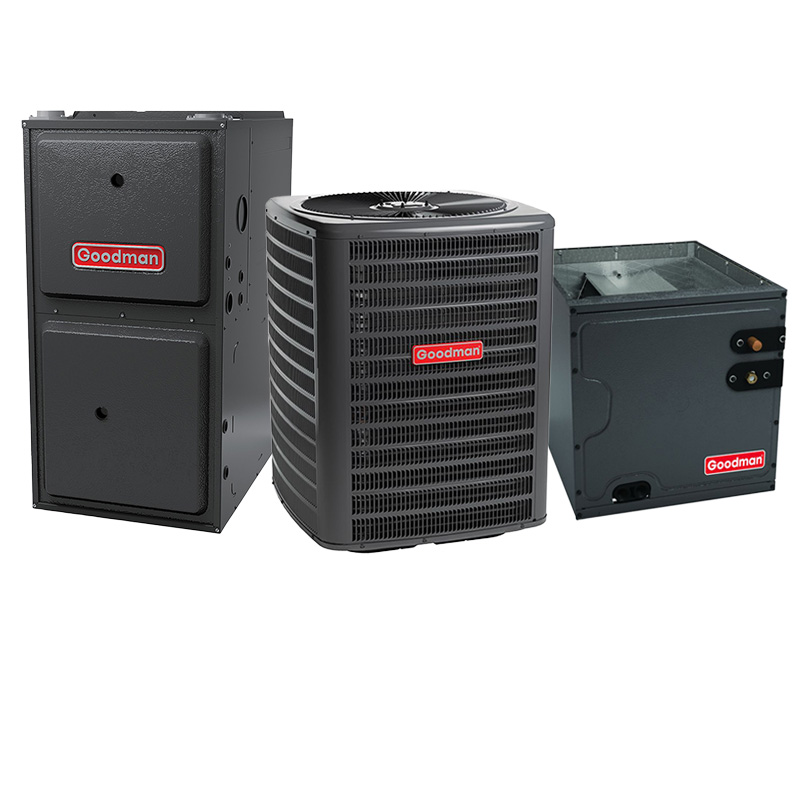
Goodman Furnace AC Combo – 2.5 Ton 14.5 SEER2 AC With 60000 BTU 97% AFUE Modulating Variable-Speed ECM Gas Furnace System – Upflow | R32
View on AC Direct see your lowest price →Check current price on AC Direct →
Key features
- 97% AFUE modulating gas furnace reduces heating fuel waste to roughly 3 cents on the dollar
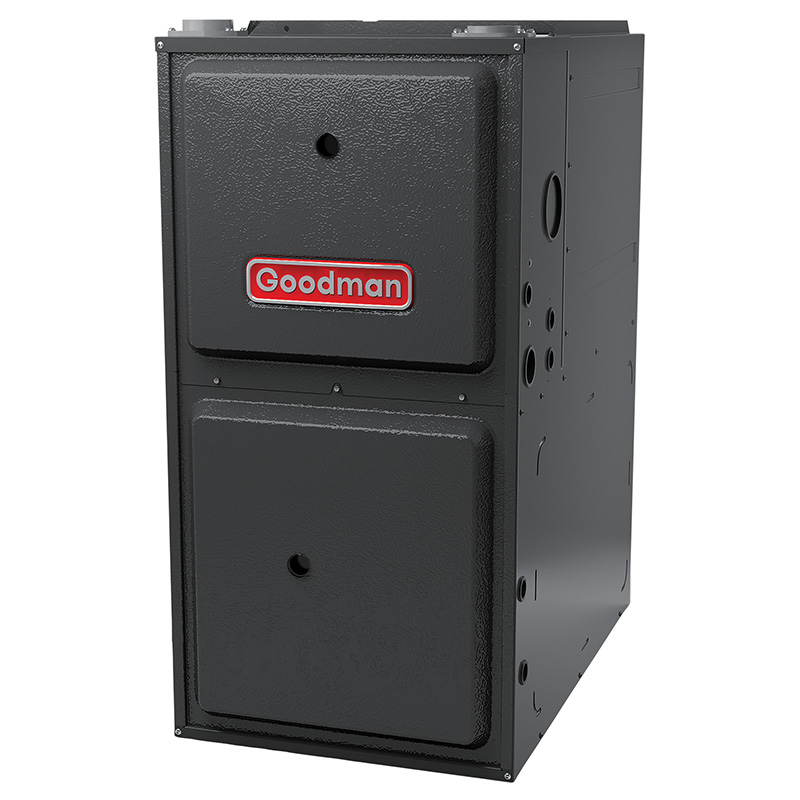
- Variable-speed ECM blower motor adjusts airflow continuously for more even temperatures and lower electricity draw
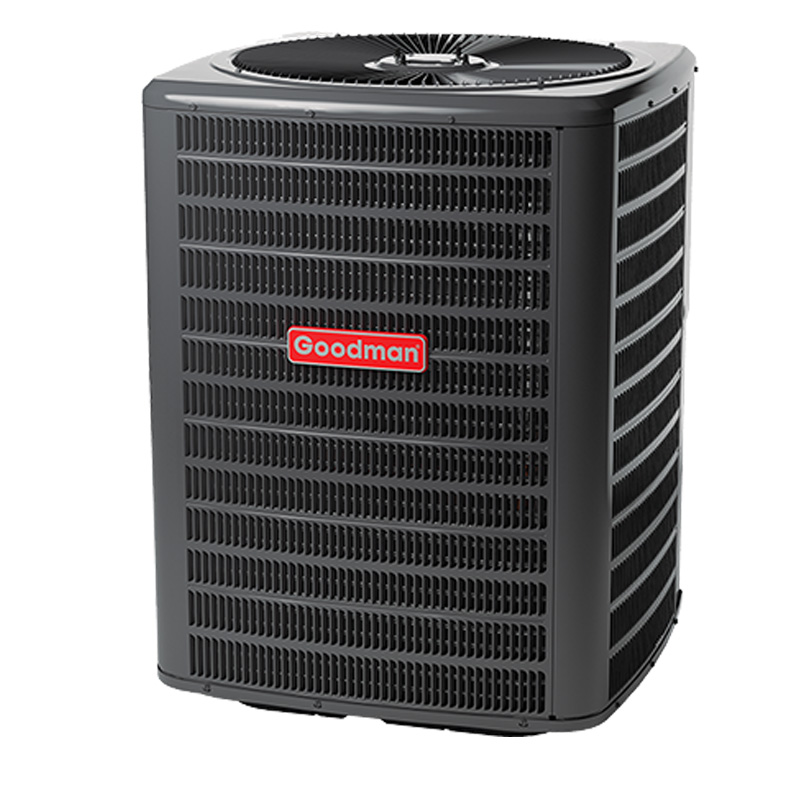
- 14.5 SEER2 cooling efficiency meets current federal minimums for most U.S. climate regions
- R-32 refrigerant with lower global warming potential than outgoing R-410A
- Upflow configuration designed for installations where the furnace sits in a basement or closet with supply air delivered upward
- 2.5-ton cooling capacity suited for approximately 1,000 to 1,600 square feet depending on local climate and insulation
About this system
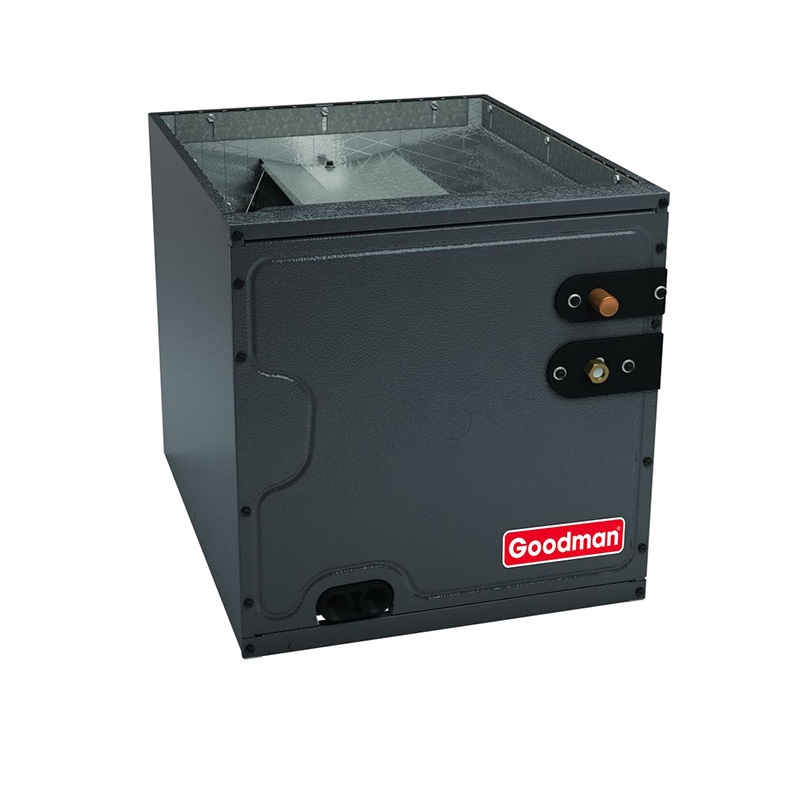
The Goodman GLXS4BA3010 pairs a 2.5-ton, 14.5 SEER2 central air conditioner with a 60,000 BTU, 97% AFUE modulating gas furnace in an upflow configuration, using R-32 refrigerant. This is a high-spec furnace side: 97% AFUE is near the ceiling of residential gas efficiency, and a modulating, variable-speed ECM blower adjusts output in small increments rather than flipping between on and full-blast, which translates to steadier indoor temperatures and quieter operation. The AC side sits at the entry tier of current efficiency standards, meeting but not exceeding the 2023 federal minimums for many regions.
The system suits homeowners replacing aging equipment in homes roughly 1,000 to 1,600 square feet with existing upflow ductwork, who want to capture serious heating-season savings through the high-AFUE furnace without paying premium-brand prices. Heating loads in cold climates will see the most return on the 97% AFUE furnace, where natural gas savings compound across long winters. Cooling performance is adequate but not exceptional; buyers in climates where air conditioning carries the bulk of the utility bill may find a higher SEER2 system pays back faster on the AC side. R-32 refrigerant has a lower global warming potential than the R-410A it replaces and is the direction the industry is moving, though it does require certified technicians and compatible equipment at service time.
This combo delivers genuine value if your priority is heating efficiency: a 97% AFUE modulating furnace at a Goodman price point is a real deal. The AC unit is competent but entry-level on efficiency, and Goodman's real-world track record means long-term costs depend heavily on who installs it and whether you budget for component repairs after year seven.
Overall score is the average of the five ratings above.
What we like
- 97% AFUE furnace is among the most efficient available and meaningfully cuts heating bills in cold climates
- Modulating variable-speed operation delivers quieter, more consistent comfort than single- or two-stage systems
- Priced roughly 15 to 25 percent below comparable Trane, Lennox, and Carrier equipment
- R-32 refrigerant is the forward-compatible choice as the industry moves away from R-410A
- ECM blower motor uses substantially less electricity than a standard PSC motor during continuous fan operation
Trade-offs
- 14.5 SEER2 is entry-level cooling efficiency; homeowners in hot climates may see limited AC payback versus higher-SEER2 alternatives
- Dual-run capacitor failures are the most frequently reported repair, typically emerging after year five and costing $300 to $600 per incident
- Evaporator coil leaks and first-year refrigerant charge issues appear in a meaningful share of owner experiences, often tied to install quality
- Compressor lifespan averages 10 to 14 years versus 15 to 20 for premium brands, meaning a full replacement cycle may arrive sooner
What homeowners and pros say about Goodman
Homeowners shopping this system find plenty of agreement that the Goodman price point is its clearest selling point, a sentiment reflected in the roughly 3.8 out of 5 Google dealer review score, where affordability is cited more than any other factor. The 97% AFUE furnace with variable-speed operation tends to earn genuine praise from owners in cold climates who notice both quieter operation and lower gas bills. Where the conversation turns cautious is after the five-to-seven year mark: Goodman’s ConsumerAffairs rating of approximately 2.5 out of 5 is complaint-skewed, but the recurring theme of rising repair costs after year seven is consistent enough to take seriously. The most reported specific failures are dual-run capacitor replacements, which are relatively routine and inexpensive, and evaporator coil leaks, which are more disruptive and costly to address.
HVAC technicians who work on Goodman equipment regularly note that the brand performs closest to its potential when installed by someone who has put in the time to properly size the system, charge the refrigerant correctly, and verify airflow through the existing ductwork. First-year refrigerant issues, which show up in a minority of owner reports, are almost always tied to installation rather than factory defect. The compressor lifespan question is real: independent data puts Goodman compressors averaging 10 to 14 years, compared to 15 to 20 years for Carrier, Trane, and Lennox. For buyers who can save meaningfully upfront and invest in a quality install, this system can be a sound choice. For buyers who want to minimize the probability of a mid-life compressor replacement, the premium brands carry a statistical edge that the price gap does not fully offset over a 15-year ownership window.
Sources: ConsumerAffairs Goodman owner reviews, AHRI Directory of Certified Product Performance, U.S. DOE appliance and equipment efficiency standards, Goodman product specification sheets.
What it costs to run
At 14.5 SEER2, cooling this 2.5-ton system for a typical 1200-hour cooling season at the U.S. average electricity rate of $0.17/kWh works out to roughly $422 per year in cooling, about $35 less per year than a minimum-efficiency 13.4 SEER2 unit of the same size. Your real cost depends on your climate and local rate.
Method: (30,000 BTU/hr ÷ 14.5 SEER2) × 1200 hours ÷ 1000 × $0.17/kWh. Rate source: U.S. EIA average; cooling hours: moderate-climate estimate.
How it compares
| Brand | Comparable model | SEER2 | Stage | Price position |
|---|---|---|---|---|
| Goodman | GLXS4BA3010 (this system) | 14.5 | Variable/Modulating | Value pick |
| Carrier | Performance 14 / 58MXA furnace combo | 14.5 | Single-stage | Typically 15 to 25 percent more than this Goodman system |
| Trane | XR14 / S9X1 furnace combo | 14.5 | Single-stage | Typically 15 to 25 percent more than this Goodman system |
| Lennox | Merit 14 / ML180 furnace combo | 14.5 | Single-stage | Typically 15 to 25 percent more than this Goodman system |
Competitor rows are comparable single-stage units at similar efficiency; price is relative position, not a quote.
Questions about this system
Is 14.5 SEER2 going to cost me more in electricity than a higher-rated unit?
Yes, compared to a 16 or 18 SEER2 system, a 14.5 SEER2 unit will use more electricity per hour of cooling. Whether the efficiency gap pays back in savings depends on how many cooling hours your climate delivers annually and the price difference between units; in mild or heating-dominant climates the payback period on a higher SEER2 upgrade can stretch beyond 10 years.
Does R-32 refrigerant cause any issues for service technicians or future repairs?
R-32 is mildly flammable, which means it requires technicians with A2L refrigerant certification and compatible recovery equipment. It is increasingly common and most larger HVAC shops are already equipped for it, but you should confirm your service provider is certified before scheduling maintenance or repairs.
The furnace is modulating, but what does that actually mean day to day?
A modulating furnace varies its gas valve and blower speed in small steps rather than switching fully on or fully off, so it tends to hold your target temperature within a tighter band and runs more quietly than a single-stage unit. It also reduces the temperature swings and cold-start blasts of air that are common complaints with standard furnaces.
How worried should I be about Goodman's reliability record for this kind of system?
Goodman's ConsumerAffairs rating sits around 2.5 out of 5, though that channel skews toward owners who had problems. The most documented failure points are dual-run capacitors (a relatively inexpensive fix at $300 to $600), evaporator coil leaks, and compressors that statistically average 10 to 14 years rather than the 15 to 20 years seen in premium brands. Install quality is the single factor technicians cite most often as the determinant of long-term reliability, so choosing an experienced installer matters more with Goodman than with some competitors.
Will this system qualify for any federal tax credits or utility rebates?
The 97% AFUE modulating furnace is likely to qualify for the 25C federal energy efficiency tax credit, which covers high-efficiency heating equipment; confirm current IRS guidance and credit caps with your tax advisor. The 14.5 SEER2 AC is at the efficiency floor and may not qualify for additional AC-specific incentives, though utility rebates vary widely by provider and are worth checking with your local utility before purchase.
Specifications
| Cooling capacity | 2.5 Ton |
| Efficiency | 14.5 SEER2 |
| Furnace output | 60000 BTU |
| Furnace efficiency | 97% AFUE |
| Configuration | Upflow |
| Refrigerant | R-32 |
| Model | GLXS4BA3010 |