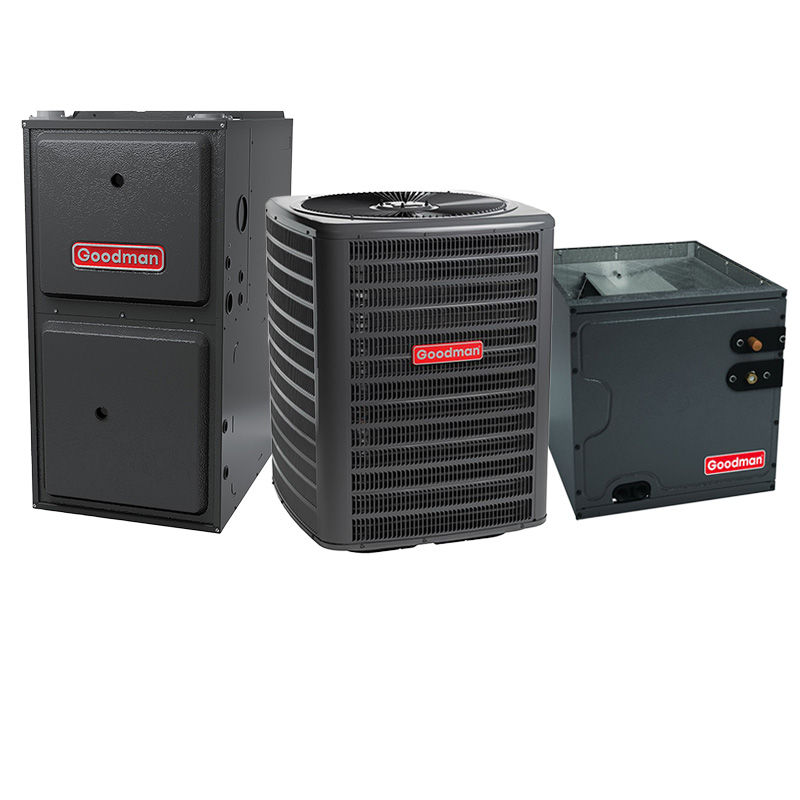
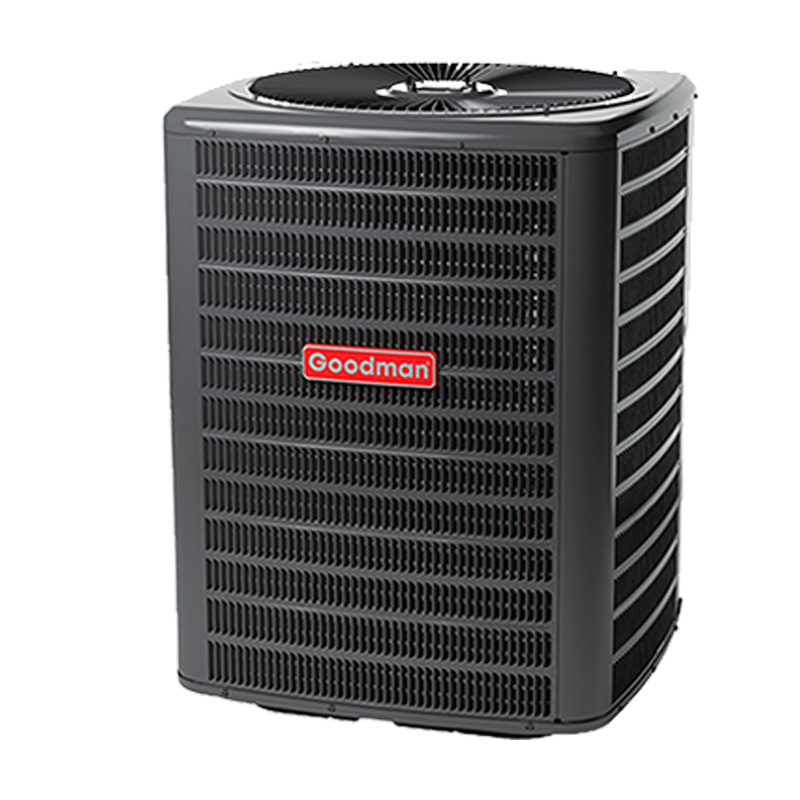
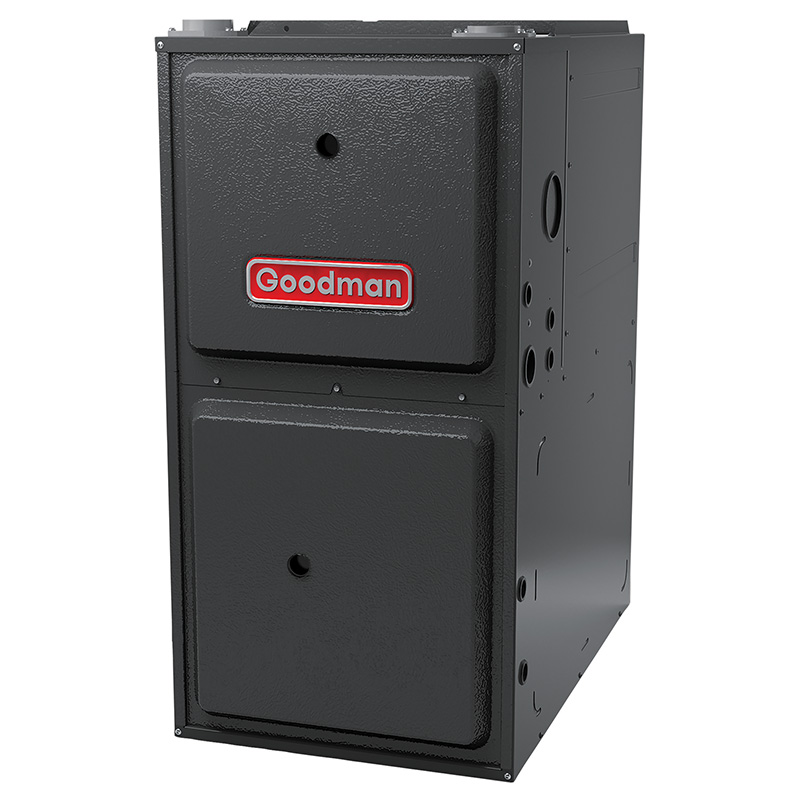
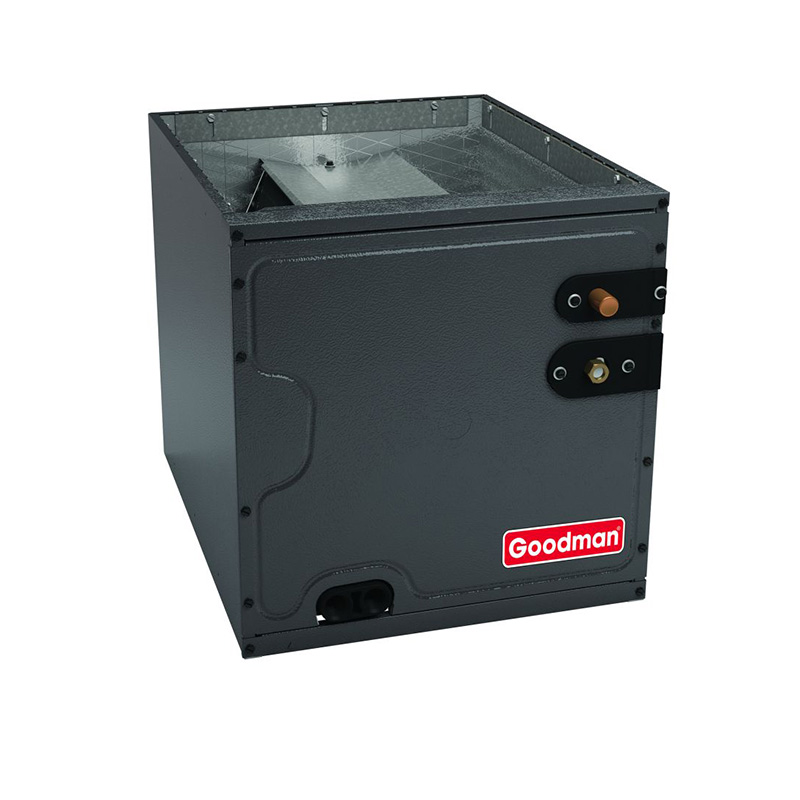
Goodman Furnace AC Combo – 2.5 Ton 14.5 SEER2 AC With 80000 BTU 97% AFUE Modulating Variable-Speed ECM Gas Furnace System – Upflow | R32
View on AC Direct see your lowest price →Check current price on AC Direct →
Key features
- 97% AFUE modulating gas furnace with variable-speed ECM blower for precise comfort and low operating noise
- 2.5-ton cooling capacity suited to roughly 1,200 to 2,000 square feet depending on climate and insulation
- 14.5 SEER2 air conditioner meets current federal minimum efficiency standards
- R-32 refrigerant with lower global warming potential than R-410A
- Upflow configuration designed for basement or closet installations where air discharges upward into ductwork
- Modulating burner adjusts heat output in small steps, reducing temperature swings compared with single- or two-stage furnaces
About this system
This Goodman combo pairs a 2.5-ton, 14.5 SEER2 central air conditioner with an 80,000 BTU, 97% AFUE modulating gas furnace in an upflow configuration. The furnace is the standout component here: a 97% AFUE rating means only 3% of fuel energy escapes as exhaust, putting it among the most efficient gas furnaces available. The modulating burner adjusts output in small increments rather than simply cycling on and off, which smooths out temperature swings and reduces cold spots. The variable-speed ECM blower motor works alongside that modulating burner to circulate air quietly and consistently, while also trimming electricity consumption compared with standard single-speed blowers. The system uses R-32 refrigerant, which has a lower global warming potential than the R-410A it replaces and is becoming the industry standard as R-410A is phased down.
The 14.5 SEER2 rating on the cooling side sits at the entry point of current federal minimum efficiency standards, so it is honest, baseline efficiency rather than a premium selling point. Where this system earns its keep is in the furnace half: a modulating, variable-speed 97% AFUE unit would cost considerably more paired with a premium brand nameplate. For a 1,200 to 2,000 square foot home in a climate with cold winters and moderate summers, this combo is a practical choice if keeping upfront cost down matters more than long-term bragging rights on cooling efficiency. Proper sizing and a skilled installation are not optional extras with Goodman equipment; they are the primary determinant of how well and how long this system performs.
This combo delivers genuine high-efficiency heating at a price well below what Carrier, Trane, or Lennox charge for comparable furnace technology, and the modulating variable-speed furnace is a real upgrade in comfort over basic <a href="https://hvac.best/glossary/two-stage/">two-stage</a> units. The 14.5 SEER2 cooling side is straightforward entry-level efficiency, and Goodman's documented track record of capacitor failures, evaporator coil leaks, and compressors that tend to reach end-of-life earlier than premium brands means buyers should budget for maintenance and strongly consider an extended warranty. Install quality is not a footnote with this brand; it is the single biggest variable in how this system performs over time.
Overall score is the average of the five ratings above.
What we like
- 97% AFUE modulating furnace delivers top-tier heating efficiency at a value-brand price
- Variable-speed ECM blower reduces electricity use and operates noticeably quieter than single-speed motors
- Priced roughly 15 to 25 percent below comparable Trane, Lennox, and Carrier systems, leaving room in the budget for a service contract
- R-32 refrigerant is future-ready as R-410A faces ongoing phase-down regulations
- Modulating heat output minimizes temperature swings and improves comfort over simpler staging options
Trade-offs
- Dual-run capacitor failures are the most commonly reported issue and typically appear within the first several years, adding unexpected service calls even if the repair cost is modest
- Evaporator coil leaks appear in a meaningful share of owner reports and can be a more disruptive, costly repair than a capacitor swap
- Compressor lifespan averages 10 to 14 years versus 15 to 20 for premium brands, meaning a replacement compressor or full outdoor unit is a realistic mid-life expense
- 14.5 SEER2 is minimum-standard cooling efficiency; homeowners in hot climates wanting lower summer utility bills should compare higher-SEER2 options before buying
What homeowners and pros say about Goodman
Homeowners who buy Goodman equipment tend to split into two camps: those who had a careful installation done by an experienced contractor and report years of trouble-free service, and those who dealt with rushed or poorly sized installs and found themselves calling for service more often than expected. On ConsumerAffairs, Goodman sits at roughly 2.5 out of 5, a score shaped by the platform’s complaint-heavy audience, where the recurring frustration is repair bills climbing after roughly year seven. Google dealer reviews tell a somewhat different story, averaging around 3.8 out of 5 across hundreds of reviews per location, with affordability cited most often as the reason buyers chose the brand. For this specific combo, the furnace side draws more consistent praise than the cooling equipment, which is consistent with the brand’s documented pattern.
HVAC technicians who service Goodman equipment regularly point to dual-run capacitor failures as the most predictable maintenance item, typically a $300 to $600 repair and not a reason to panic, but a near-certainty over a system’s life. More consequential are evaporator coil leaks, which show up in a meaningful share of owner reports and involve more labor to address. On the outdoor unit, compressors in Goodman systems tend to average 10 to 14 years in real-world service, noticeably shorter than the 15 to 20-year range that premium brands have demonstrated. A small but documented minority of owners also report refrigerant leaks within the first year, which technicians generally attribute to installation workmanship rather than factory defects. The honest takeaway for this combo is that the 97% AFUE modulating furnace represents real value, the cooling side is competent but not exceptional, and the brand rewards owners who invest in quality installation and ongoing maintenance more than it rewards those who treat HVAC as a set-and-forget purchase.
Sources: ConsumerAffairs Goodman owner reviews, AHRI Directory of Certified Product Performance, U.S. DOE appliance and equipment efficiency standards, Goodman product specification sheets.
What it costs to run
At 14.5 SEER2, cooling this 2.5-ton system for a typical 1200-hour cooling season at the U.S. average electricity rate of $0.17/kWh works out to roughly $422 per year in cooling, about $35 less per year than a minimum-efficiency 13.4 SEER2 unit of the same size. Your real cost depends on your climate and local rate.
Method: (30,000 BTU/hr ÷ 14.5 SEER2) × 1200 hours ÷ 1000 × $0.17/kWh. Rate source: U.S. EIA average; cooling hours: moderate-climate estimate.
How it compares
| Brand | Comparable model | SEER2 | Stage | Price position |
|---|---|---|---|---|
| Goodman | GSZB402510 + GMVM970803BN (this system) | 14.5 | Variable/Modulating | Value pick |
| Carrier | Performance 14 (24ACC6) + 58MVC Variable-Speed Furnace | 14.5 | Variable/Modulating | Typically 15 to 25 percent more than this Goodman system |
| Trane | XR14c + S9V2-VS Variable-Speed Furnace | 14.5 | Variable/Modulating | Typically 15 to 25 percent more than this Goodman system |
| Lennox | Merit ML14XC1 + SLP98V Variable-Speed Furnace | 14.3-14.5 | Variable/Modulating | Typically 15 to 25 percent more than this Goodman system |
Competitor rows are comparable single-stage units at similar efficiency; price is relative position, not a quote.
Questions about this system
What does the modulating furnace actually do differently from a two-stage furnace?
A two-stage furnace runs at roughly two fixed output levels, usually 65% and 100%. The modulating furnace in this system can ramp between a wide range of output levels in small steps, keeping room temperature much closer to the thermostat setting and running longer, quieter cycles instead of short blasts of heat. In practice, most owners notice fewer temperature swings and less noise from the blower.
Is R-32 refrigerant safe, and will it be harder to find a tech who can service it?
R-32 is mildly flammable, which is why it requires EPA Section 608 certified technicians who have been trained on A2L refrigerants. As of 2025 it is rapidly becoming the industry standard, so most established HVAC contractors are equipped to handle it, but it is worth confirming with your service provider before booking a call.
Goodman reviews online look pretty mixed. How worried should I be about reliability?
Goodman scores around 2.5 out of 5 on ConsumerAffairs, a channel that skews toward complaint-driven reviews, and roughly 3.8 out of 5 across Google dealer reviews where affordability is the most common praise. The documented weak points are dual-run capacitor failures (a relatively inexpensive fix, typically in the $300 to $600 range), evaporator coil leaks, and compressors that average 10 to 14 years versus 15 to 20 for premium brands. A well-executed installation and a maintenance plan address most early issues; the brand rewards good care more than some competitors do.
Will 2.5 tons be enough cooling for my house?
A Manual J load calculation by your installer is the only reliable answer, but as a rough benchmark, 2.5 tons is commonly appropriate for homes in the 1,200 to 2,000 square foot range, depending on ceiling height, insulation quality, window area, and local climate. Oversizing is as harmful as undersizing with a modulating system, so insist on a proper load calculation rather than a square-footage guess.
Should I buy an extended warranty on this system?
Goodman's standard parts warranty is 10 years on registered equipment, but it covers parts only, not labor, and labor is often where repair costs accumulate. Given the documented pattern of capacitor failures, coil leaks, and shorter average compressor lifespan compared with premium brands, a labor warranty or a service agreement from a reputable local contractor is worth pricing out before installation day.
Specifications
| Cooling capacity | 2.5 Ton |
| Efficiency | 14.5 SEER2 |
| Furnace output | 80000 BTU |
| Furnace efficiency | 97% AFUE |
| Configuration | Upflow |
| Refrigerant | R-32 |