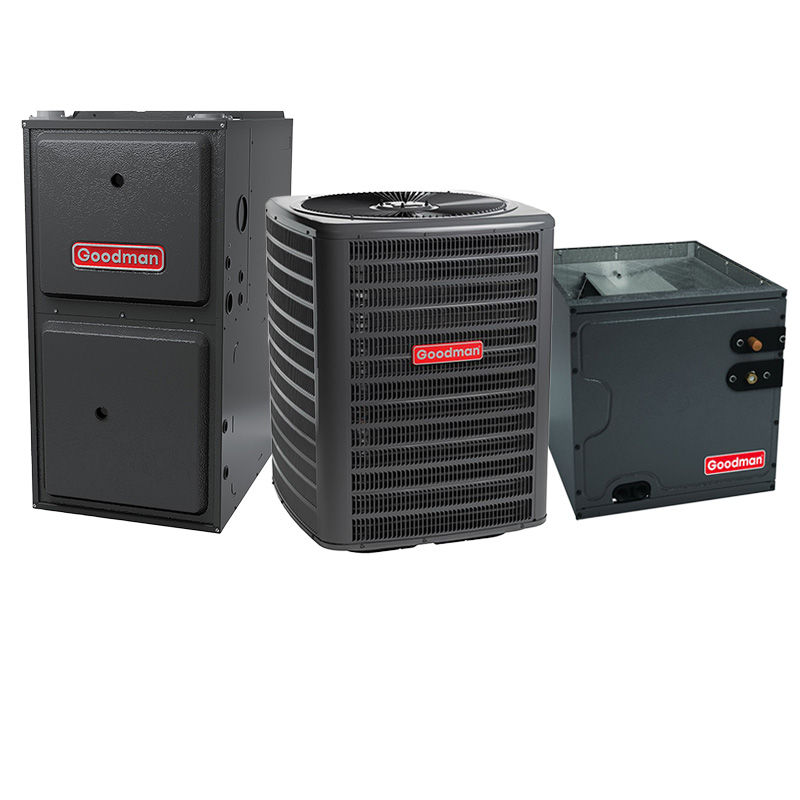
Goodman Furnace AC Combo – 2.5 Ton 14 SEER2 AC With 60000 BTU 97% AFUE Modulating Variable-Speed ECM Gas Furnace System – Upflow | R32
View on AC Direct see your lowest price →Check current price on AC Direct →
Key features
- 97% AFUE modulating gas furnace minimizes fuel waste during the heating season
- Variable-speed ECM blower motor reduces electricity use and evening-out temperature swings
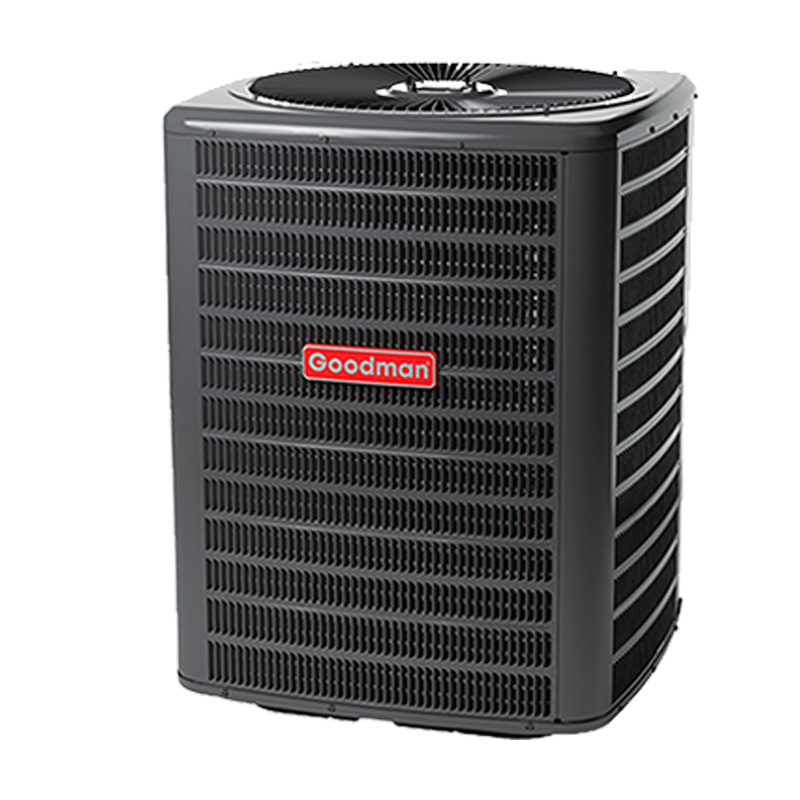
- 14 SEER2 cooling meets federal minimum efficiency standards for most U.S. regions
- R-32 refrigerant with lower global warming potential than outgoing R-410A
- Upflow configuration suits basement and closet installs with overhead duct systems
- 2.5-ton capacity sized for roughly 1,200 to 1,600 square feet depending on climate and load
About this system
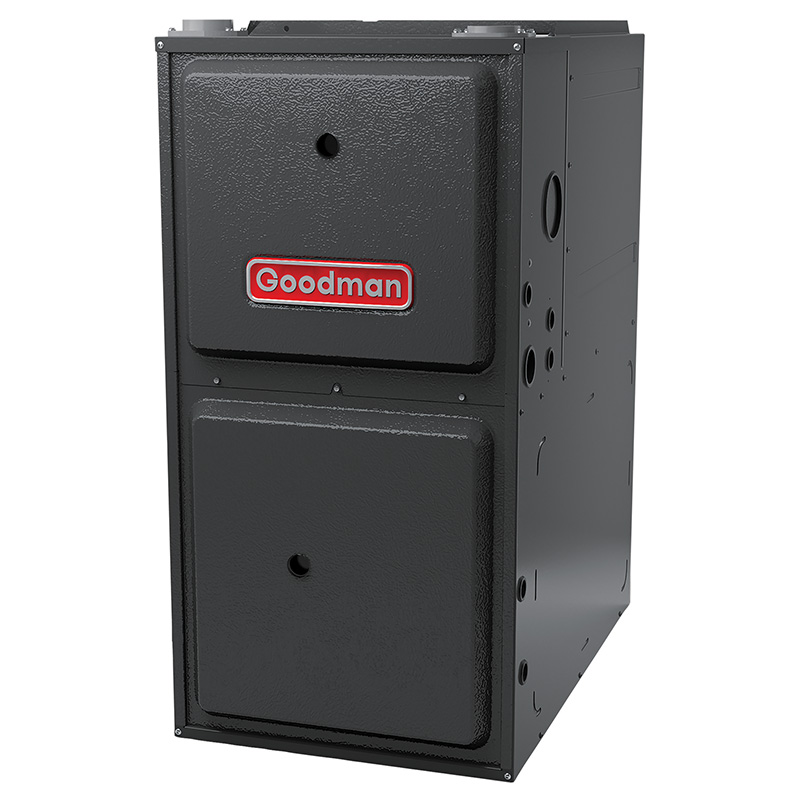
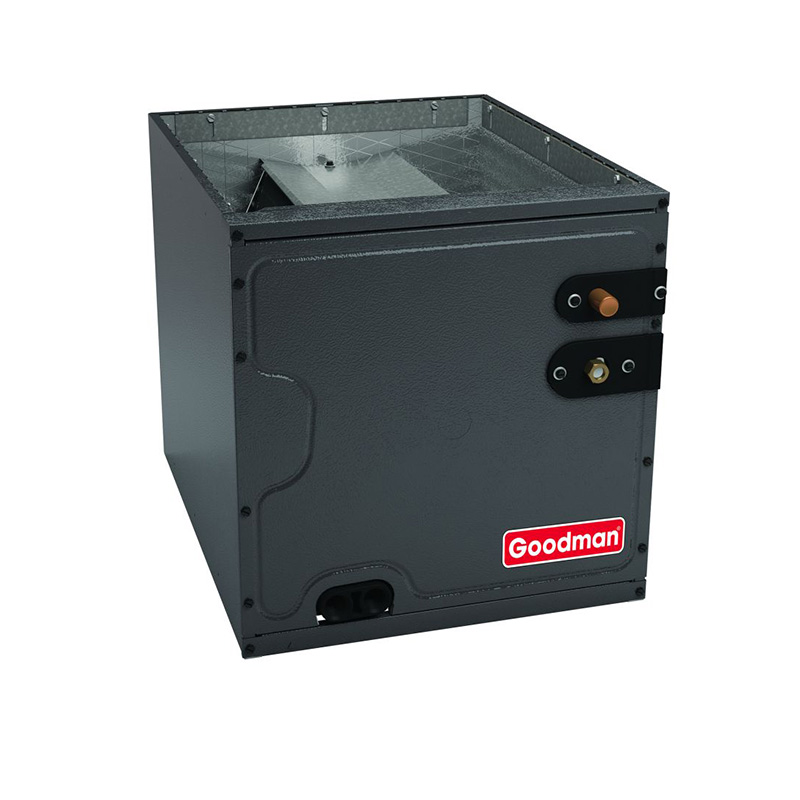
This Goodman combo pairs a 2.5-ton, 14 SEER2 central air conditioner with a 60,000 BTU, 97% AFUE modulating gas furnace in an upflow configuration. The furnace is the standout component here: a 97% AFUE rating means roughly 97 cents of every dollar spent on gas becomes usable heat, which is as efficient as residential gas furnaces get. The modulating burner adjusts output in small increments rather than cycling fully on and off, and the variable-speed ECM blower motor fine-tunes airflow to match demand, resulting in steadier indoor temperatures, quieter operation, and lower electricity draw on the air handler side. R-32 refrigerant carries a lower global warming potential than the R-410A it replaces and is becoming the industry standard in new residential equipment.
The 14 SEER2 cooling rating sits at the federal minimum baseline for most U.S. climate regions, so this is not a system chosen for cooling efficiency bragging rights. Where this combination makes the most sense is in colder climates where the furnace runs hard for six or more months and the air conditioner is secondary. A homeowner in Minnesota or Wisconsin gets a genuinely high-efficiency heating system with a code-compliant cooling unit attached, at a price point well below equivalent premium-brand configurations. The upflow cabinet is the most common residential orientation and works with standard basement or closet installations where return air enters from the bottom and supply air exits through the top into overhead ductwork.
This system delivers genuinely impressive heating efficiency through its modulating 97% AFUE furnace and variable-speed blower, bundled at a price 15 to 25 percent below comparable Trane, Carrier, and Lennox packages. The cooling side is competent but basic, and Goodman's documented history of capacitor failures, evaporator coil leaks, and compressor lifespans shorter than premium brands means long-term costs depend heavily on who installs it and how well it is maintained. For budget-conscious buyers in heating-dominant climates, it is a reasonable compromise; buyers prioritizing cooling performance or long-term worry-free ownership should weigh the alternatives carefully.
Overall score is the average of the five ratings above.
What we like
- 97% AFUE modulating furnace is at the top of residential heating efficiency, delivering real utility bill savings in cold climates
- Variable-speed ECM motor improves comfort and reduces blower electricity consumption compared to single- or two-speed alternatives
- Priced 15 to 25 percent below Trane, Lennox, and Carrier equipment with comparable furnace specs
- R-32 refrigerant is more environmentally responsible and is already widely supported by HVAC technicians
- Modulating burner reduces temperature swings and short-cycling noise compared to single-stage furnaces
Trade-offs
- 14 SEER2 is the minimum efficiency tier for cooling, leaving meaningful energy savings on the table if you run AC heavily
- Dual-run capacitors are the most commonly reported failure point, typically requiring a 300 to 600 dollar service call, often within the first decade
- Evaporator coil leaks appear in a meaningful share of owner reports, a repair that can run into the thousands if the coil needs replacement
- Compressor lifespan averages 10 to 14 years versus 15 to 20 for premium brands, meaning you may face a major repair or replacement sooner
What homeowners and pros say about Goodman
Homeowners who chose Goodman equipment often point to the initial price as the deciding factor, and that sentiment shows up clearly in Google dealer review scores that hover around 3.8 out of 5, where affordability is cited far more than any other trait. The frustration side of the ledger is visible on ConsumerAffairs, where the brand scores roughly 2.5 out of 5 and the complaints cluster around repair costs that start accumulating somewhere around year 7 or 8. For this specific system, the furnace component tends to draw less criticism than the cooling side: a 97% AFUE modulating furnace with a variable-speed ECM motor is genuinely sophisticated equipment that owners in cold climates report noticing in both comfort and gas bills. The air conditioner is where realistic expectations matter more.
HVAC technicians have a nuanced view of Goodman. Many independent contractors install it regularly and say the equipment performs acceptably when the installation is done right, with proper refrigerant charge, correct static pressure, and clean commissioning. They are also quick to note that dual-run capacitor failures are the most common service call on Goodman cooling equipment, typically a 300 to 600 dollar fix but an annoying one if it comes up twice in a decade. Evaporator coil leaks appear often enough in owner reports to be a real consideration, and techs note that Goodman compressors tend to run 10 to 14 years rather than the 15 to 20 years more common with Trane or Carrier compressors. The consensus among experienced installers: Goodman is a reasonable choice when budget is the primary constraint and the installing contractor is skilled, but it rewards attentive maintenance more than premium brands do.
Sources: ConsumerAffairs Goodman owner reviews, AHRI Directory of Certified Product Performance, U.S. DOE appliance and equipment efficiency standards, Goodman product specification sheets.
What it costs to run
At 14 SEER2, cooling this 2.5-ton system for a typical 1200-hour cooling season at the U.S. average electricity rate of $0.17/kWh works out to roughly $437 per year in cooling, about $20 less per year than a minimum-efficiency 13.4 SEER2 unit of the same size. Your real cost depends on your climate and local rate.
Method: (30,000 BTU/hr ÷ 14 SEER2) × 1200 hours ÷ 1000 × $0.17/kWh. Rate source: U.S. EIA average; cooling hours: moderate-climate estimate.
How it compares
| Brand | Comparable model | SEER2 | Stage | Price position |
|---|---|---|---|---|
| Goodman | GMVC97 / GSXH5 Series | 14 | Modulating / Variable-speed | Value pick |
| Carrier | Performance 96 / Comfort Series (24ACC6) | 14-15 | Two-stage / Single-stage | Typically 15 to 25 percent more than Goodman |
| Trane | S9V2 Furnace / XR14 AC Series | 14 | Two-stage / Single-stage | Typically 15 to 25 percent more than Goodman |
| Lennox | ML96V Furnace / XC14 AC Series | 14 | Variable / Single-stage | Typically 15 to 25 percent more than Goodman |
Competitor rows are comparable single-stage units at similar efficiency; price is relative position, not a quote.
Questions about this system
Is 14 SEER2 going to cost me more in cooling bills compared to a higher-rated unit?
Yes, compared to a 16 or 18 SEER2 system, a 14 SEER2 unit uses measurably more electricity per hour of cooling. The gap matters most if you run the AC heavily, such as in Texas or Florida. In a northern climate where the AC runs 3 to 4 months a year, the payback period on a higher-efficiency AC unit often stretches to 10 or more years, so 14 SEER2 can make financial sense there.
What does modulating mean on the furnace, and is it actually worth it?
A modulating furnace adjusts its burner output in small steps, typically from around 40% up to 100% of capacity, rather than cycling fully on or fully off. In practice this means the furnace runs longer at lower output, which keeps temperatures more even room to room, reduces cold-blast starts, and contributes to the 97% AFUE rating. For a heating-heavy climate, the comfort improvement and fuel savings are genuine and worth the added complexity over a single-stage unit.
Goodman has mixed reviews online. Should I be worried about reliability?
The concern is legitimate. Goodman scores roughly 2.5 out of 5 on ConsumerAffairs, a complaint-heavy channel where repair costs after year 7 are the recurring theme, and around 3.8 out of 5 on Google dealer reviews where affordability draws the most praise. The documented failure modes include dual-run capacitor failures (a relatively affordable fix), evaporator coil leaks, and compressors that average 10 to 14 years versus 15 to 20 for premium brands. A skilled installation, a reputable local dealer, and a commitment to annual maintenance all meaningfully reduce, but do not eliminate, these risks.
What warranty comes with this system, and how does registration work?
Goodman typically offers a 10-year parts warranty on registered units, which requires online registration within a set window after installation. Without registration the coverage usually drops to 5 years. The compressor often carries its own limited warranty term. Read the specific warranty documentation for this model because terms can vary by component, and note that labor costs for any warranty repair are almost never covered, so budget for service call fees even on a warrantied parts replacement.
My house is about 1,400 square feet. Is 2.5 tons the right size?
Square footage alone is not enough to size a system correctly. A proper Manual J load calculation accounts for ceiling height, insulation levels, window area, local climate, and duct layout. In many northern climates 2.5 tons serves roughly 1,200 to 1,600 square feet reasonably well, but a leaky older home in the same region might need more capacity while a well-insulated new build could get by with less. Ask your installing contractor to run or show you the load calculation before finalizing the equipment selection.
Specifications
| Cooling capacity | 2.5 Ton |
| Efficiency | 14 SEER2 |
| Furnace output | 60000 BTU |
| Furnace efficiency | 97% AFUE |
| Configuration | Upflow |
| Refrigerant | R-32 |