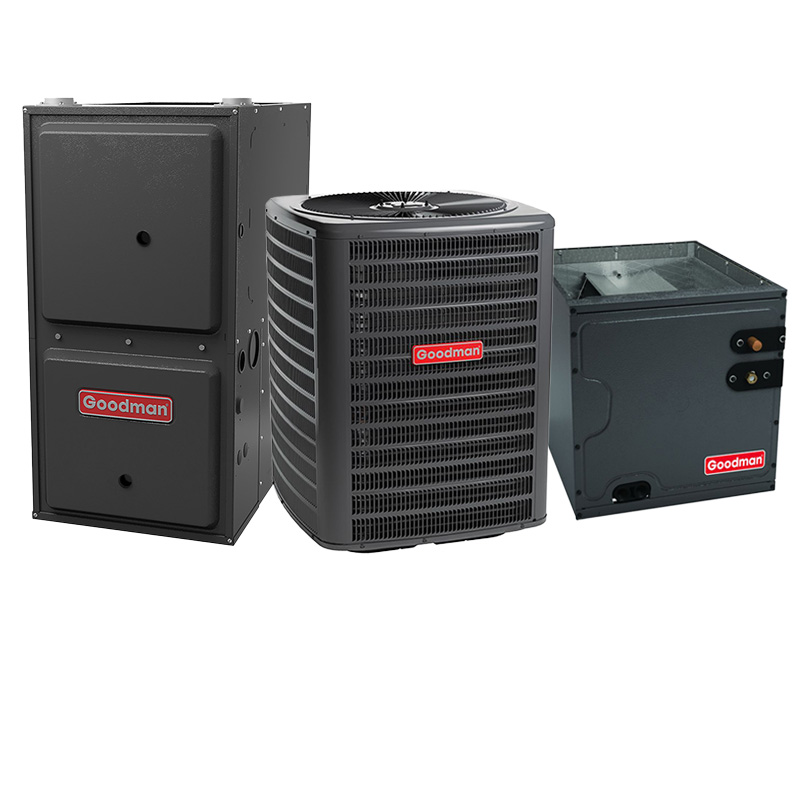
Goodman Furnace AC Combo – 2.5 Ton 14 SEER2 AC With 80000 BTU 97% AFUE Modulating Variable-Speed ECM Gas Furnace System – Downflow | R32
View on AC Direct see your lowest price →Check current price on AC Direct →
Key features
- 97% AFUE modulating gas furnace for near-maximum heating efficiency
- Variable-speed ECM blower motor reduces electricity use and operating noise
- 2.5-ton, 14 SEER2 air conditioner meets current federal minimum efficiency standards
- Downflow configuration designed for basement or raised-platform installations
- R-32 refrigerant with lower global warming potential than R-410A
- Modulating burner makes small output adjustments to reduce temperature swings
About this system
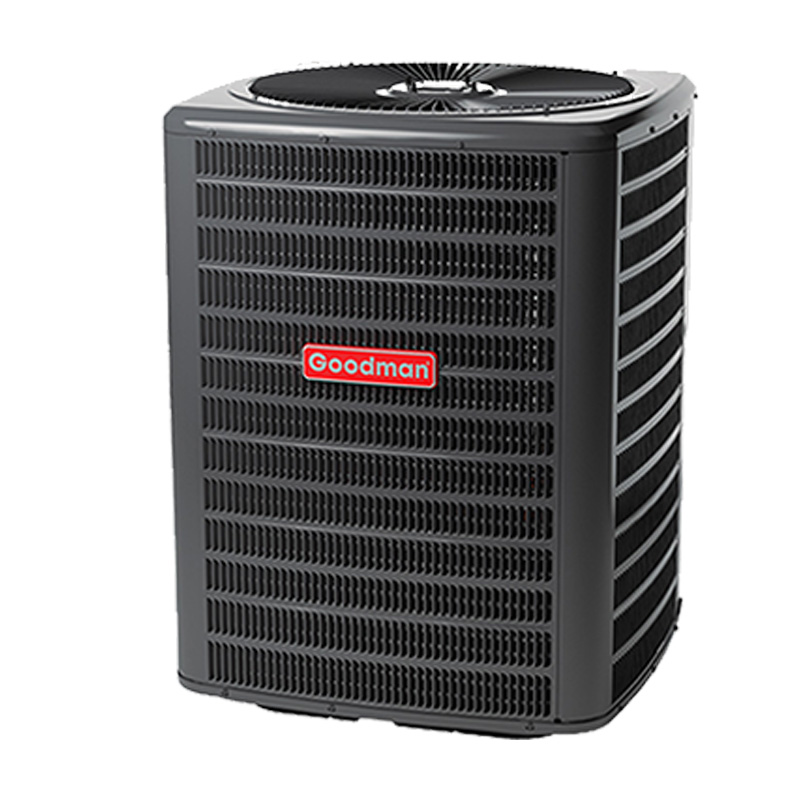
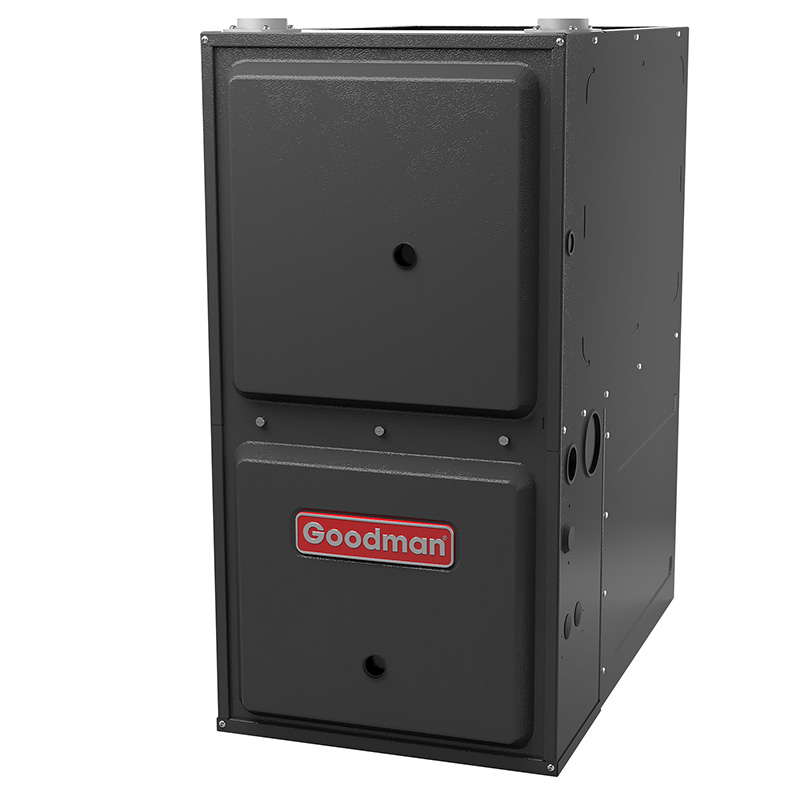
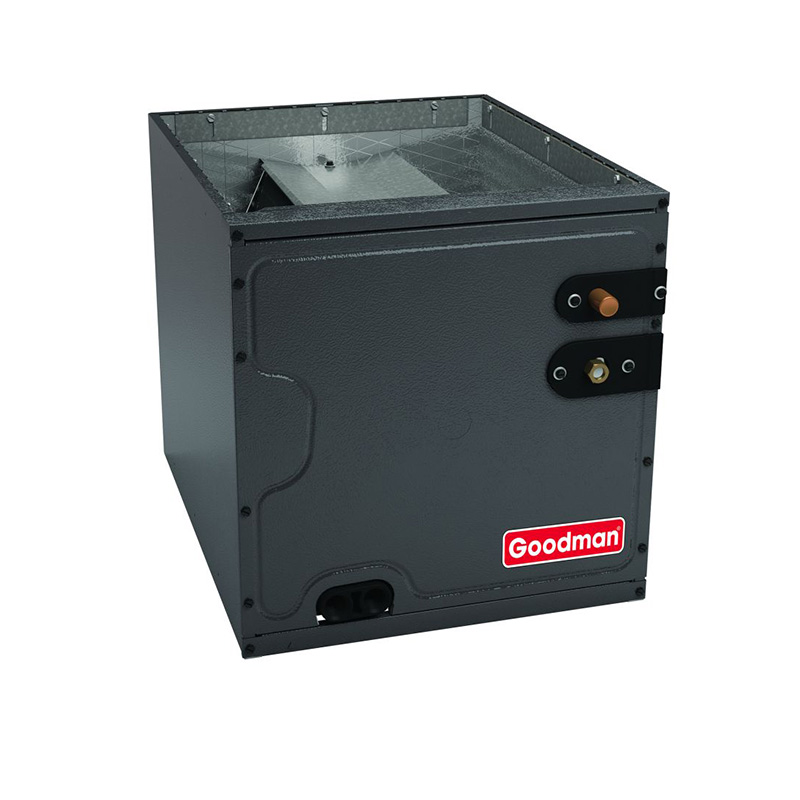
This Goodman combo pairs a 2.5-ton, 14 SEER2 central air conditioner with an 80,000 BTU, 97% AFUE modulating gas furnace in a downflow configuration, using R-32 refrigerant. The 97% AFUE rating means only 3% of combustion energy escapes as exhaust, putting this furnace near the top of residential efficiency tiers and making it a genuinely strong performer for heating costs. The modulating burner adjusts output in small increments rather than cycling fully on and off, which smooths out temperature swings and reduces short-cycling wear. The variable-speed ECM blower motor pairs well with that modulating burner, running at lower speeds most of the time to cut electricity use and move air more quietly.
The 14 SEER2 rating on the cooling side sits at the current federal minimum efficiency floor for most U.S. climate zones, so buyers looking to maximize summer energy savings may eventually want to compare higher-SEER2 options, though the furnace side of this package is where the real efficiency story lives. The downflow configuration directs conditioned air downward through floor registers, making it the right fit for basement or platform installs where the ductwork runs beneath the unit. R-32 refrigerant has a lower global warming potential than R-410A and is increasingly common in new residential equipment as the industry moves away from older refrigerants. This system suits a medium-sized home, roughly 1,200 to 1,800 square feet depending on climate, insulation, and ceiling height, where a homeowner wants a high-efficiency furnace without paying premium-brand prices.
This combo delivers a genuinely high-efficiency furnace at a price well below comparable Trane, Carrier, and Lennox systems, and the modulating variable-speed pairing earns its cost premium over basic single-stage units. The 14 SEER2 cooling side is functional but not a selling point, and long-term reliability depends heavily on who installs it and how well the system is commissioned. Buyers who can budget for a careful installation by an experienced technician get the best of what Goodman offers.
Overall score is the average of the five ratings above.
What we like
- 97% AFUE modulating furnace is a genuinely top-tier heating efficiency rating
- Variable-speed ECM motor improves comfort and lowers blower electricity costs
- Priced roughly 15 to 25 percent less than comparable Carrier, Trane, or Lennox systems
- R-32 refrigerant is more environmentally responsible than R-410A and widely serviceable
- Downflow design is straightforward for contractors experienced with basement installs
Trade-offs
- 14 SEER2 cooling efficiency is at the federal minimum floor, not a differentiator
- Dual-run capacitors are a documented early failure point, typically requiring a 300 to 600 dollar service call
- Compressor lifespan averages 10 to 14 years versus 15 to 20 years for premium brands
- A minority of owners have reported evaporator coil leaks and first-year refrigerant issues, often tied to install quality
What homeowners and pros say about Goodman
Goodman earns consistent praise for affordability, and that reputation shows up in Google dealer reviews that average around 3.8 out of 5 across locations, where price and accessibility are the most frequently cited reasons buyers chose the brand. At the same time, ConsumerAffairs scores sit closer to 2.5 out of 5, a channel that skews toward owners motivated enough by frustration to post a review. The recurring pattern in those lower-scored reviews is repair costs that begin climbing after roughly year 7, which lines up with the brand’s documented compressor lifespan of 10 to 14 years compared to 15 to 20 years for premium brands. For this specific system, the high-efficiency modulating furnace is the standout component, and most technician commentary on Goodman modulating units is positive as long as the install is done carefully.
The failure modes that come up most often in owner and technician accounts are dual-run capacitor failures, typically a low-cost repair in the 300 to 600 dollar range but inconvenient when it puts the system down in summer; evaporator coil leaks, which appear in a meaningful share of reviews; and a minority of first-year refrigerant issues that most experienced contractors attribute to installation or charge errors rather than factory defects. HVAC professionals who work on Goodman equipment regularly tend to describe it as parts that perform adequately when installed well, but less forgiving of shortcuts during commissioning than premium brands. For a downflow modulating system like this one, getting an installer with specific downflow and modulating furnace experience is not optional advice.
Sources: ConsumerAffairs Goodman owner reviews, AHRI Directory of Certified Product Performance, U.S. DOE appliance and equipment efficiency standards, Goodman product specification sheets.
What it costs to run
At 14 SEER2, cooling this 2.5-ton system for a typical 1200-hour cooling season at the U.S. average electricity rate of $0.17/kWh works out to roughly $437 per year in cooling, about $20 less per year than a minimum-efficiency 13.4 SEER2 unit of the same size. Your real cost depends on your climate and local rate.
Method: (30,000 BTU/hr ÷ 14 SEER2) × 1200 hours ÷ 1000 × $0.17/kWh. Rate source: U.S. EIA average; cooling hours: moderate-climate estimate.
How it compares
| Brand | Comparable model | SEER2 | Stage | Price position |
|---|---|---|---|---|
| Goodman | This system: 2.5T 14 SEER2 AC + 80K BTU 97% AFUE Modulating/Variable-Speed Downflow | 14 | Modulating / Variable-Speed | Value pick |
| Carrier | Performance 96 / Comfort 14 series pairing (similar AFUE and efficiency tier) | 14 | Two-stage / Variable | Typically 15 to 25 percent more than Goodman |
| Trane | S9V2 furnace paired with XR14 air conditioner | 14 | Modulating / Variable | Typically 15 to 25 percent more than Goodman |
| Lennox | SLP98V furnace paired with XC14 air conditioner | 14 | Modulating / Variable | Typically 15 to 25 percent more than Goodman |
Competitor rows are comparable single-stage units at similar efficiency; price is relative position, not a quote.
Questions about this system
Is a downflow furnace harder to install than an upflow model, and can most HVAC contractors handle it?
Downflow furnaces are less common than upflow units, so not every technician installs them regularly. Most licensed HVAC contractors can handle the configuration, but it is worth confirming experience upfront, since improper setup on a downflow unit can affect combustion venting and condensate drainage. Ask your installer specifically about downflow experience before signing a quote.
What does 97% AFUE actually mean for my gas bill compared to a standard 80% AFUE furnace?
In rough terms, a 97% AFUE furnace converts 97 cents of every dollar of gas into usable heat, while an 80% AFUE unit converts 80 cents. Depending on your climate, heating load, and local gas rates, the difference can represent a meaningful reduction in annual heating costs, with colder climates seeing the largest payback. The modulating operation adds to savings by avoiding the energy spike of constant full-capacity cycling.
How often do the dual-run capacitors typically fail, and what does a replacement cost?
Dual-run capacitors are the most commonly reported failure point in Goodman systems, with many owners seeing a failure sometime after the 5 to 7 year mark. The capacitor itself is an inexpensive part, and most service calls to diagnose and replace one run in the 300 to 600 dollar range including labor. Keeping up with annual maintenance visits can catch a weakening capacitor before it causes a no-cool or no-start situation.
What warranty does this system carry, and what do I need to do to keep it valid?
Goodman typically offers a 10-year parts limited warranty on registered systems, but you must register the equipment within a set window after installation to qualify for the full term. Unregistered units generally fall back to a shorter coverage period. The warranty covers parts but not labor, so a service call on a failed component still means paying a technician, which is worth factoring into the total cost of ownership.
Is R-32 refrigerant easy to service, and are there any safety considerations compared to R-410A?
R-32 is becoming increasingly common in residential equipment and is stocked by most wholesale HVAC suppliers, so sourcing it is not typically a problem. It is mildly flammable, which means technicians are required to follow specific handling procedures, but it is classified as A2L, a lower-flammability category, and the industry has been training around it as the transition from R-410A accelerates. Most contractors in markets where R-32 equipment is sold are already familiar with it.
Specifications
| Cooling capacity | 2.5 Ton |
| Efficiency | 14 SEER2 |
| Furnace output | 80000 BTU |
| Furnace efficiency | 97% AFUE |
| Configuration | Downflow |
| Refrigerant | R-32 |