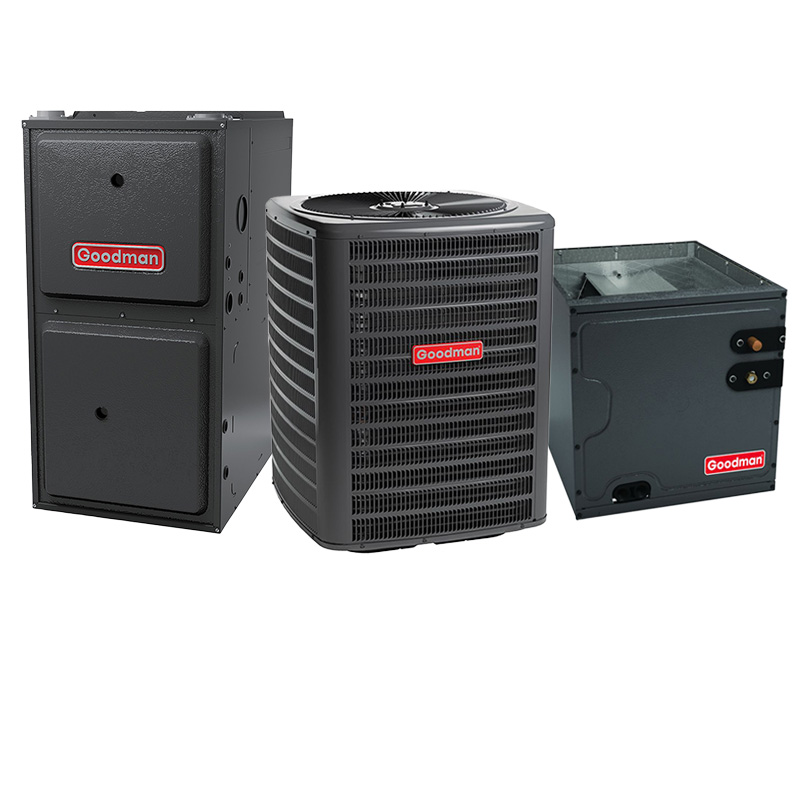
Goodman Furnace AC Combo – 2.5 Ton 15.2 SEER2 AC With 80000 BTU 97% AFUE Modulating Variable-Speed ECM Gas Furnace System – Upflow | R32
View on AC Direct see your lowest price →Check current price on AC Direct →
Key features
- 2.5-ton cooling capacity rated at 15.2 SEER2 under current DOE test standards
- 97% AFUE modulating gas furnace with 80,000 BTU input, top-tier heating efficiency
- Variable-speed ECM blower motor for quieter operation and better humidity control
- Modulating burner adjusts output incrementally to maintain steadier indoor temperatures
- R-32 refrigerant with lower global-warming potential than legacy R-410A
- Upflow configuration for basement or ground-level air handler installations
About this system
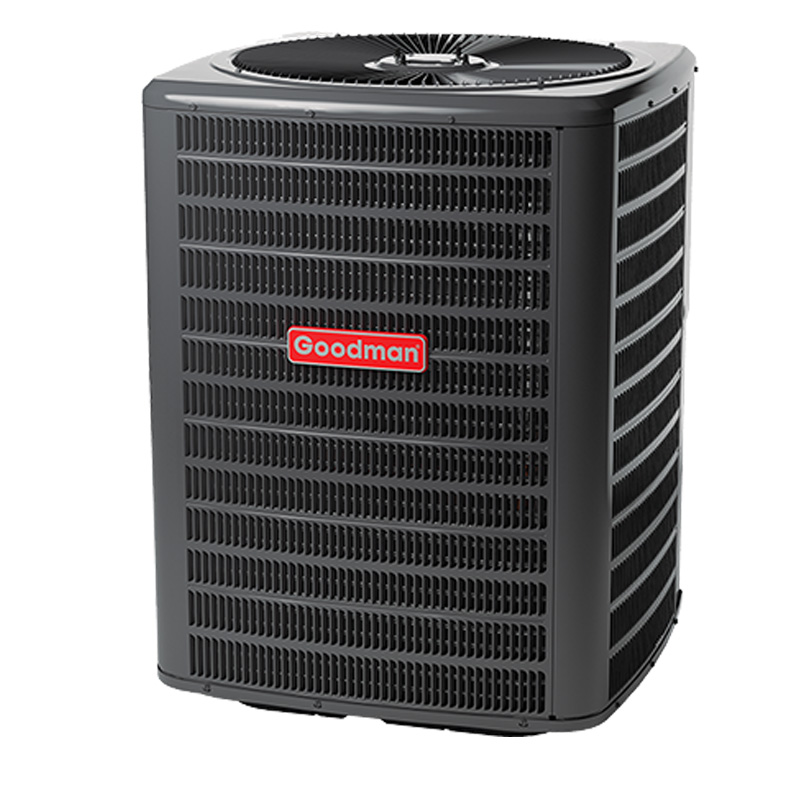
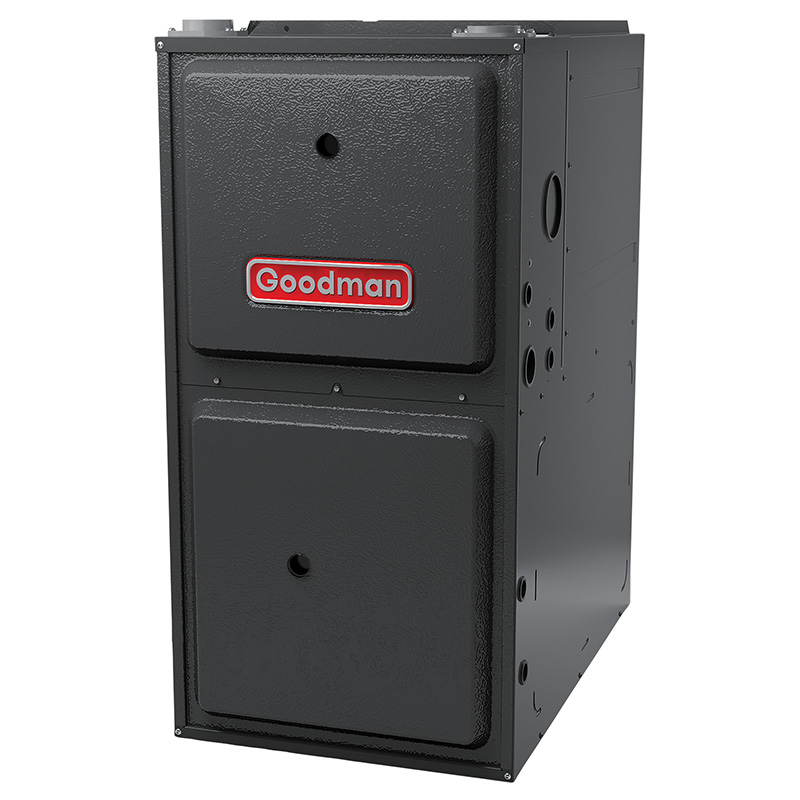
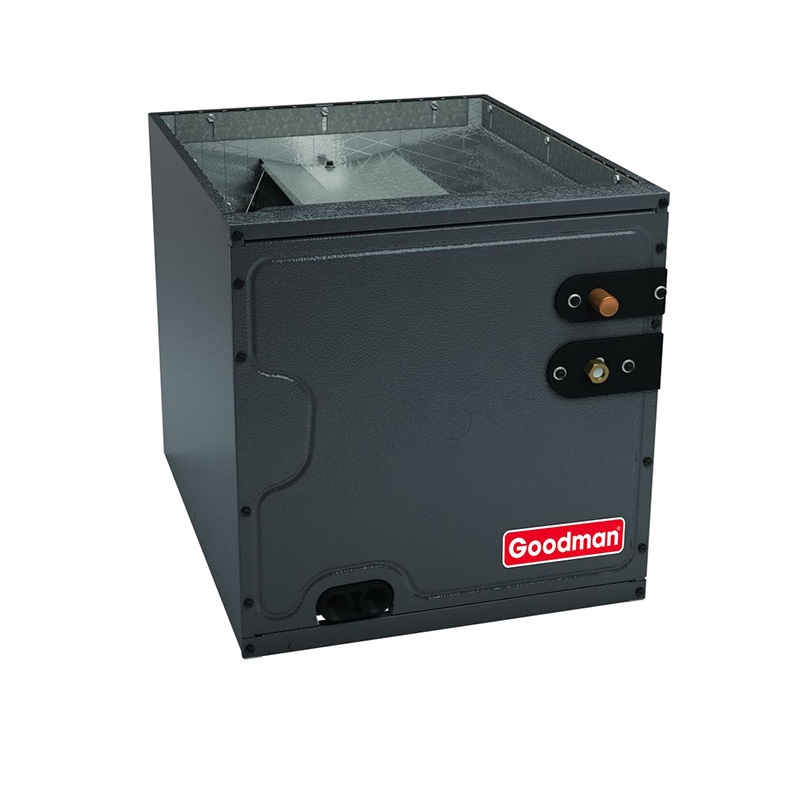
The Goodman GLXS4BA3010 pairs a 2.5-ton, 15.2 SEER2 air conditioner with an 80,000 BTU, 97% AFUE modulating gas furnace in an upflow configuration. That furnace efficiency rating sits at the top tier available for residential gas equipment, meaning roughly 97 cents of every dollar spent on gas becomes usable heat. The modulating burner adjusts output in small increments rather than simply cycling on and off, which tends to hold indoor temperatures steadier and reduces the temperature swings common with single-stage units. The variable-speed ECM blower reinforces that comfort by moving air quietly and continuously at lower speeds rather than blasting at full capacity repeatedly throughout the day.
The system uses R-32 refrigerant, a lower global-warming-potential option that is becoming more common in new residential equipment and is serviceable by any EPA 608-certified technician. The upflow configuration suits homes where the air handler sits in a basement, mechanical closet, or utility room with supply ducts running upward. At 2.5 tons, this system is typically sized for homes in the roughly 1,200 to 1,800 square foot range, though actual load calculations based on insulation, climate zone, window area, and occupancy should always drive final sizing decisions. Homeowners who want above-average comfort performance, genuinely high heating efficiency, and a lower upfront cost than premium brands will find this combination appealing, provided installation quality is not compromised.
This combo delivers genuinely premium furnace performance at a value price point, with 97% AFUE modulating heating that rivals anything in residential equipment. The trade-off is Goodman's documented reliability pattern: components like dual-run capacitors and evaporator coils require attention more often than premium brands, and long-term ownership costs can offset some of the upfront savings. For budget-conscious buyers who hire a skilled installer and stay on top of maintenance, this system offers real value.
Overall score is the average of the five ratings above.
What we like
- 97% AFUE modulating furnace is top-tier efficiency and puts meaningful savings on heating bills in cold climates
- Variable-speed ECM blower improves comfort consistency and reduces indoor humidity swings
- Priced roughly 15 to 25 percent below comparable Trane, Carrier, and Lennox systems
- R-32 refrigerant is a forward-looking refrigerant choice with lower environmental impact
- Modulating operation runs longer, quieter cycles that most homeowners find more comfortable than single-stage cycling
Trade-offs
- Dual-run capacitors are the most commonly reported failure, typically surfacing after a few seasons and costing $300 to $600 to fix
- Evaporator coil leaks appear in a meaningful share of owner reports, which can be a more involved repair
- Compressor lifespan averages 10 to 14 years versus 15 to 20 years typical of premium brands, a real long-term cost consideration
- A minority of owners report refrigerant leaks in the first year, usually traced to install quality or initial charge errors rather than equipment defects
What homeowners and pros say about Goodman
Goodman scores roughly 2.5 out of 5 on ConsumerAffairs, a platform that skews toward frustrated owners rather than satisfied ones, so that number should be read in context. The recurring theme in those reviews is repair costs that climb after about year seven, which aligns with the brand’s documented failure modes: dual-run capacitors are the most frequently cited issue and typically cost $300 to $600 to fix, evaporator coil leaks show up in a meaningful share of reports, and compressor lifespan averaging 10 to 14 years falls short of the 15 to 20 years more commonly seen with Trane or Carrier. On Google, where dealer reviews reflect a broader range of owner experiences, Goodman locations average around 3.8 out of 5 across several hundred reviews per location, with affordability cited most often as the reason buyers chose the brand in the first place.
HVAC technicians generally describe Goodman as install-dependent equipment, meaning the gap between a good outcome and a frustrating ownership experience often has more to do with who put the system in than with the equipment itself. For this particular combo, with its 97% AFUE modulating furnace, that nuance matters more than it would on a basic single-stage unit, because the variable-speed and modulating controls require accurate setup and commissioning to deliver the comfort and efficiency they are designed to provide. Pros who spec Goodman regularly tend to pair it with thorough startup procedures and annual maintenance agreements, which catch the capacitor and coil issues early before they turn into larger problems. Buyers who treat the lower purchase price as an opportunity to invest in a highly qualified installer and a maintenance plan tend to report better long-term satisfaction than those who simply chase the lowest installed price.
Sources: ConsumerAffairs Goodman owner reviews, AHRI Directory of Certified Product Performance, U.S. DOE appliance and equipment efficiency standards, Goodman product specification sheets.
What it costs to run
At 15.2 SEER2, cooling this 2.5-ton system for a typical 1200-hour cooling season at the U.S. average electricity rate of $0.17/kWh works out to roughly $403 per year in cooling, about $54 less per year than a minimum-efficiency 13.4 SEER2 unit of the same size. Your real cost depends on your climate and local rate.
Method: (30,000 BTU/hr ÷ 15.2 SEER2) × 1200 hours ÷ 1000 × $0.17/kWh. Rate source: U.S. EIA average; cooling hours: moderate-climate estimate.
How it compares
| Brand | Comparable model | SEER2 | Stage | Price position |
|---|---|---|---|---|
| Goodman | GLXS4BA3010 (this system) | 15.2 | Variable / Modulating | Value pick |
| Carrier | Performance 16 Series (24ACC6) | 15.2 to 16 | Single-stage | Typically 15 to 25 percent more than this system |
| Trane | XR15 Series | 15 to 15.2 | Single-stage | Typically 15 to 25 percent more than this system |
| Lennox | Merit ML15 Series | 15.2 | Single-stage | Typically 15 to 25 percent more than this system |
Competitor rows are comparable single-stage units at similar efficiency; price is relative position, not a quote.
Questions about this system
Is 15.2 SEER2 enough efficiency, or should I pay more for a higher SEER2 unit?
15.2 SEER2 meets or exceeds current federal minimum efficiency standards for most U.S. climate regions and will deliver noticeable savings versus older equipment. Moving to 17 or 18 SEER2 adds cost upfront and the payback period can stretch beyond 10 years in moderate climates, so 15.2 SEER2 is a reasonable middle ground unless you have very high cooling loads or live in an extremely hot climate.
What does modulating mean on the furnace, and is it worth it compared to a two-stage unit?
A modulating furnace adjusts its burner output in small steps, often as fine as 1% increments, rather than switching between just two levels. In practice this means fewer temperature swings, quieter operation, and more even heat distribution throughout the home. The comfort improvement is real and measurable, though the additional mechanical complexity is also a factor if repairs are needed down the road.
Can any HVAC technician work on R-32 refrigerant, or do I need a specialist?
Any technician holding an EPA 608 certification can legally handle R-32. It is classified as mildly flammable (A2L), so some technicians may want refresher training on safe handling procedures, but it is not exotic or difficult to source. Most established HVAC companies in major markets are already familiar with it as it has been used in mini-split systems for several years.
How often should I expect to replace the dual-run capacitor on this system?
Capacitors are the most commonly reported wear item on Goodman equipment and can fail anywhere from 3 to 10 years in depending on climate, run hours, and voltage quality. The repair typically costs between $300 and $600 including labor and is considered a routine service item rather than a major failure. Enrolling in an annual maintenance plan that includes capacitor testing can catch a weakening capacitor before it causes a no-cool situation.
This is an upflow unit. What if my ductwork is in the attic rather than the basement?
Upflow furnaces are designed to discharge heated or cooled air upward into overhead duct systems, which matches basement and main-floor closet installations with supply ducts running up through the house. If your air handler location requires air to discharge downward into a crawl space or slab-level duct system, you would need a downflow configuration instead. Using the wrong configuration is a significant installation error, so confirm your duct layout with your installer before ordering.
Specifications
| Cooling capacity | 2.5 Ton |
| Efficiency | 15.2 SEER2 |
| Furnace output | 80000 BTU |
| Furnace efficiency | 97% AFUE |
| Configuration | Upflow |
| Refrigerant | R-32 |
| Model | GLXS4BA3010 |