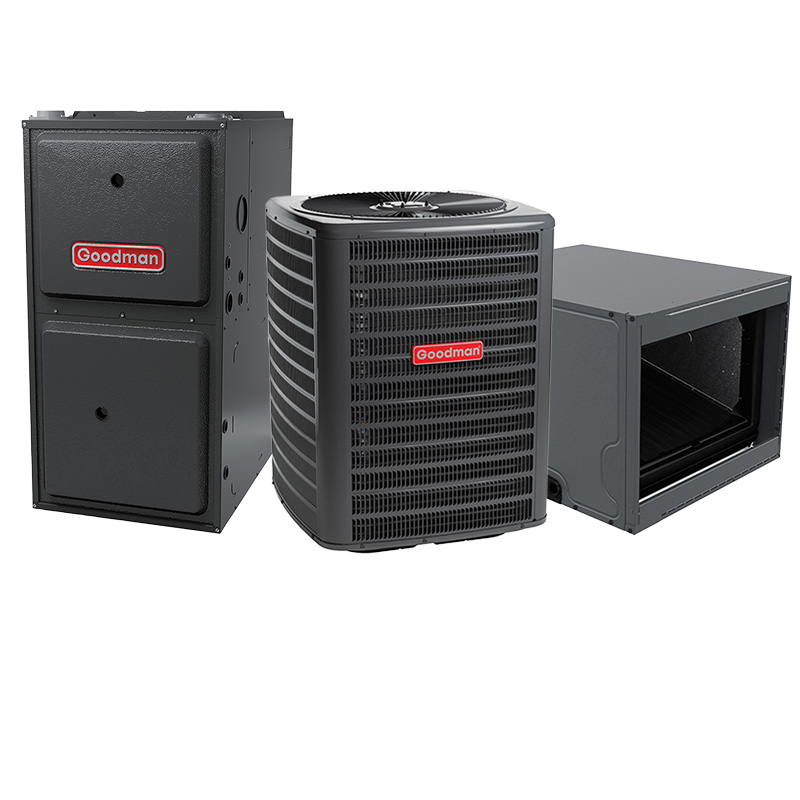
Goodman Furnace AC Combo – 2.5 Ton 14.5 SEER2 AC With 80000 BTU 97% AFUE Modulating Variable-Speed ECM Gas Furnace System – Horizontal | R32
View on AC Direct see your lowest price →Check current price on AC Direct →
Key features
- 97% AFUE modulating gas furnace converts nearly all fuel to usable heat
- Variable-speed ECM blower motor reduces electricity use and improves comfort
- 14.5 SEER2 air conditioner meets current federal minimum efficiency standards
- Horizontal configuration for attic, crawlspace, or side-discharge closet installs
- R-32 refrigerant with lower global warming potential than R-410A
- 2.5-ton cooling capacity suited to mid-size residential applications
About this system
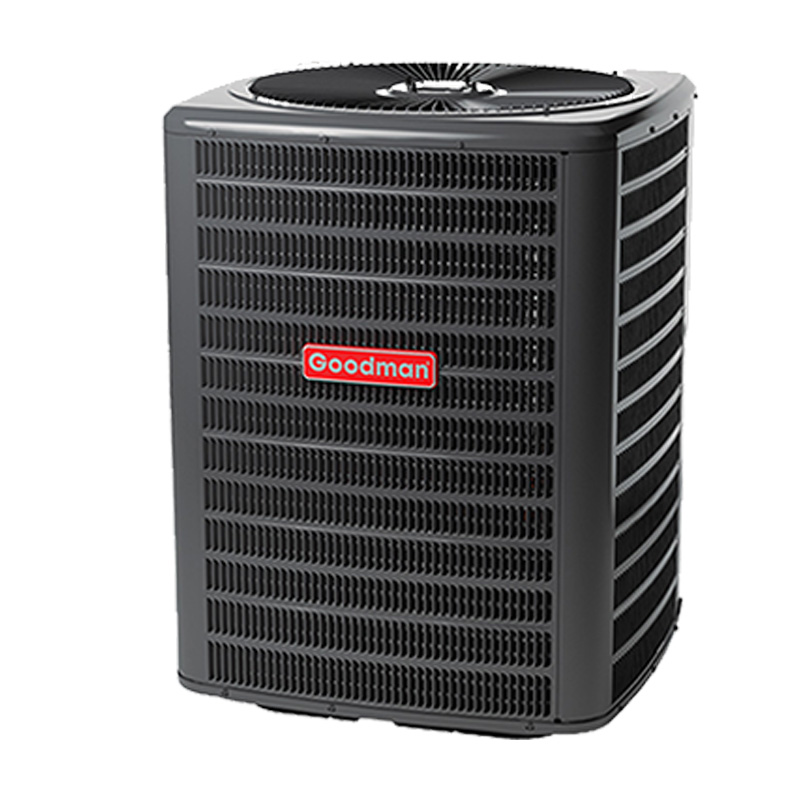
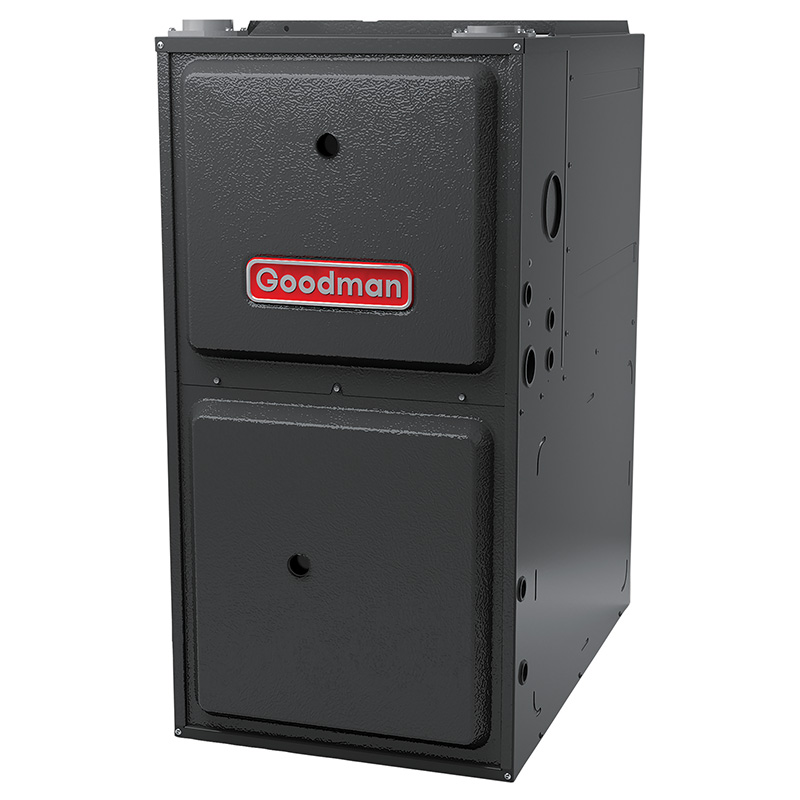
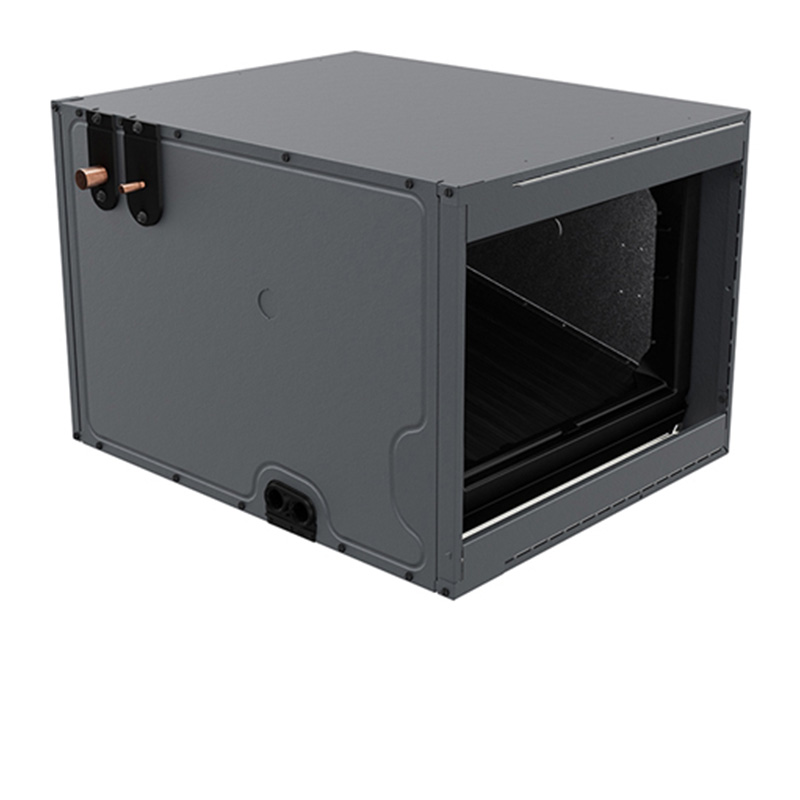
This Goodman combination system pairs a 2.5-ton, 14.5 SEER2 central air conditioner with an 80,000 BTU, 97% AFUE modulating gas furnace in a horizontal configuration, making it a practical choice for homes where equipment sits in a crawlspace, attic, or closet with side-discharge ductwork. The 97% AFUE rating sits at the top tier of residential gas efficiency, meaning nearly all of the fuel consumed is converted to heat rather than vented outside. That is a genuine operating-cost advantage over 80% or even 96% AFUE alternatives, particularly in climates with long, cold heating seasons.
The modulating burner and variable-speed ECM blower motor are meaningful upgrades over standard single-stage or two-stage equipment. A modulating furnace adjusts its output in small increments rather than cycling fully on and off, which tends to produce steadier room temperatures, quieter operation, and better humidity management during both heating and cooling seasons. The ECM motor also draws significantly less electricity than a standard PSC blower, which adds up over thousands of run hours per year. On the cooling side, 14.5 SEER2 is a solid entry into the current minimum-efficiency tier under updated federal standards, though it is not a high-efficiency unit. R-32 refrigerant is the newer low-global-warming-potential alternative to R-410A, and this system’s compatibility with it is a forward-looking consideration for long-term serviceability. This package suits homeowners replacing aging equipment in medium-sized homes, roughly 1,200 to 1,800 square feet depending on climate and insulation, who want high heating efficiency without paying premium-brand prices.
This system offers a genuinely high-efficiency furnace paired with a competent if not exceptional air conditioner, at a price point well below comparable Trane, Carrier, or Lennox equipment. The modulating furnace and ECM blower are real comfort and efficiency upgrades that justify considering this package, but Goodman's documented reliability history means long-term performance depends heavily on installation quality and on being prepared for potential component repairs after year seven.
Overall score is the average of the five ratings above.
What we like
- 97% AFUE modulating furnace is top-tier heating efficiency and can cut fuel bills meaningfully versus 80% units
- Variable-speed ECM blower improves comfort, humidity control, and lowers blower electricity costs
- Priced roughly 15 to 25 percent below comparable Carrier, Trane, and Lennox systems
- R-32 refrigerant is a forward-looking choice that aligns with refrigerant regulations trending away from R-410A
- Horizontal configuration opens up installation locations that upflow units cannot serve
Trade-offs
- Compressor lifespan averages 10 to 14 years, shorter than the 15 to 20 years typical of premium brands
- Dual-run capacitor failures are the most frequently reported service call and, while inexpensive to fix, add up in time and inconvenience
- Evaporator coil leaks appear in a meaningful share of owner reviews, a potential costly repair outside warranty
- 14.5 SEER2 is at the lower end of current efficiency tiers; homeowners in hot climates will see higher cooling bills than with a 16+ SEER2 system
What homeowners and pros say about Goodman
Homeowners who have lived with Goodman equipment share a fairly consistent picture across review channels. On Google dealer reviews, the brand averages around 3.8 out of 5, where the most frequently cited positive is straightforward: the price made the decision easier. On ConsumerAffairs, the score drops to roughly 2.5 out of 5, a channel where people tend to post when something goes wrong, and the pattern there is clear: costs start climbing after about year seven, with dual-run capacitor failures being the single most common service call. Capacitor replacements are a relatively quick and low-cost fix in the 300 to 600 dollar range, but they are cited often enough to be worth anticipating. Evaporator coil leaks and, in a smaller share of cases, refrigerant leaks within the first year (typically tied to installation or initial charge errors) also appear in the owner feedback.
HVAC technicians who work on Goodman equipment regularly make a point that the brand is not uniquely problematic but that it leaves less margin for error on installation. A well-installed Goodman unit in a suitable application, sized correctly and commissioned properly, tends to perform as specified. The modulating furnace and ECM blower in this particular system represent the better end of Goodman’s lineup, and those components do attract fewer complaints than the company’s base single-stage equipment. The honest trade-off is that Goodman compressors typically reach the end of their service life between 10 and 14 years, compared to 15 to 20 years for premium brands, which matters when weighing the upfront savings against the total cost of ownership over a 15-year horizon.
Sources: ConsumerAffairs Goodman owner reviews, AHRI Directory of Certified Product Performance, U.S. DOE appliance and equipment efficiency standards, Goodman product specification sheets.
What it costs to run
At 14.5 SEER2, cooling this 2.5-ton system for a typical 1200-hour cooling season at the U.S. average electricity rate of $0.17/kWh works out to roughly $422 per year in cooling, about $35 less per year than a minimum-efficiency 13.4 SEER2 unit of the same size. Your real cost depends on your climate and local rate.
Method: (30,000 BTU/hr ÷ 14.5 SEER2) × 1200 hours ÷ 1000 × $0.17/kWh. Rate source: U.S. EIA average; cooling hours: moderate-climate estimate.
How it compares
| Brand | Comparable model | SEER2 | Stage | Price position |
|---|---|---|---|---|
| Goodman | 2.5T 14.5 SEER2 / 80K BTU 97% AFUE Modulating Horizontal | 14.5 | Modulating / Variable-speed | Value pick |
| Carrier | Performance 96 / 24ACC636 series | 14.5–15 | Two-stage / Variable-speed | Approximately 15 to 25 percent above this Goodman package |
| Trane | S9X2 Furnace / XR14 AC combo | 14.5–15 | Two-stage / Variable-speed | Approximately 20 to 30 percent above this Goodman package |
| Lennox | SL280V Furnace / XC14 AC combo | 14.5–15 | Two-stage / Variable-speed | Approximately 20 to 35 percent above this Goodman package |
Competitor rows are comparable single-stage units at similar efficiency; price is relative position, not a quote.
Questions about this system
Is 14.5 SEER2 enough for a hot Southern climate, or should I pay more for a higher-efficiency AC?
In climates like the Gulf Coast or Southwest where AC runs six or more months a year, a 16 or 17 SEER2 unit will produce a noticeable difference in summer electricity bills over the life of the system. The 14.5 SEER2 unit here is code-compliant and functional, but homeowners in high-cooling-load regions should calculate the payback period on a higher-efficiency option before committing.
What does the modulating furnace actually do differently compared to a two-stage furnace?
A two-stage furnace runs at one of two fixed output levels, typically around 65% and 100%. A modulating furnace adjusts its heat output in small steps across a wide range, which means it more precisely matches the heat loss of your home on any given day, resulting in steadier temperatures, fewer cold blasts, and often better dehumidification when paired with the variable-speed ECM blower.
Why does the horizontal configuration matter and what are the install implications?
Horizontal furnaces are designed to lie on their side, which is necessary for attics, crawlspaces, and some closet arrangements where there is no vertical clearance. The trade-off is that horizontal installs are generally more complex to execute correctly, and because Goodman's documented reliability leans heavily on install quality, choosing an experienced technician familiar with horizontal applications is especially important for this unit.
What are the most common repairs I should budget for over the first 10 years?
Based on documented failure patterns, dual-run capacitors are the most frequently reported issue and typically cost 300 to 600 dollars to repair. Evaporator coil leaks appear in a meaningful share of owner experiences and can be significantly more expensive. Goodman compressors average 10 to 14 years, so budgeting for a potential compressor or full-system replacement in that window is prudent.
Does R-32 refrigerant affect who can service this system or what parts cost?
R-32 requires technicians to use equipment certified for that refrigerant and to follow handling procedures specific to it, since it is mildly flammable. Most established HVAC contractors are already equipped or transitioning to handle R-32, but it is worth confirming with your service provider before purchase. Over time, R-32 availability and serviceability are expected to improve as the industry moves away from R-410A.
Specifications
| Cooling capacity | 2.5 Ton |
| Efficiency | 14.5 SEER2 |
| Furnace output | 80000 BTU |
| Furnace efficiency | 97% AFUE |
| Configuration | Horizontal |
| Refrigerant | R-32 |