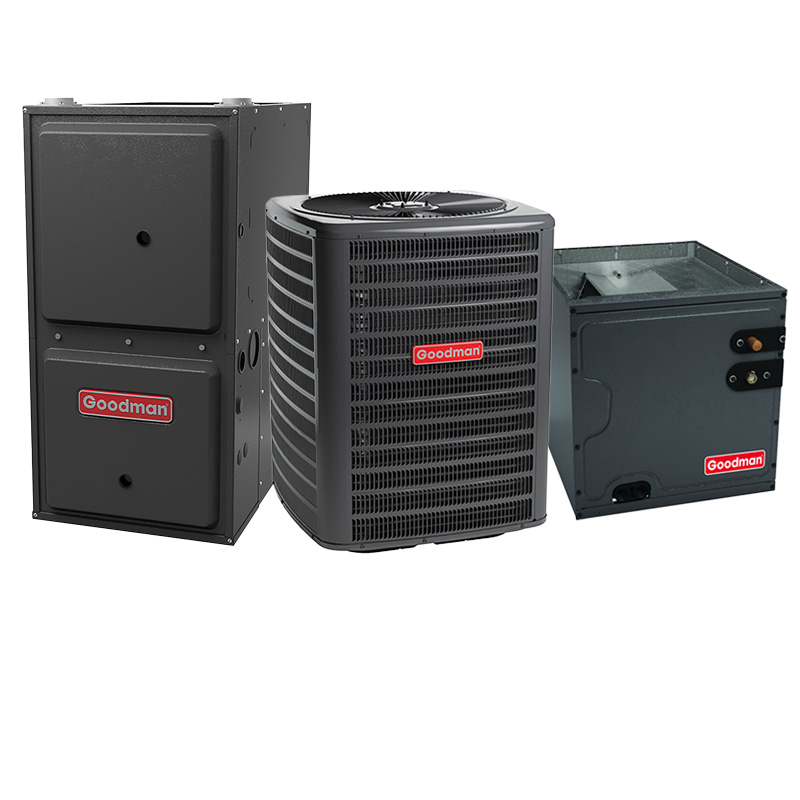
Goodman Furnace AC Combo – 2.5 Ton 15.2 SEER2 AC With 80000 BTU 97% AFUE Modulating Variable-Speed ECM Gas Furnace System – Downflow | R32
View on AC Direct see your lowest price →Check current price on AC Direct →
Key features
- 2.5-ton cooling capacity rated at 15.2 SEER2 using R-32 refrigerant
- 80,000 BTU modulating gas furnace at 97% AFUE for near-maximum fuel efficiency
- Variable-speed ECM blower motor reduces electricity use and improves airflow consistency
- Downflow cabinet configuration for upper-closet or platform installations
- Modulating burner stages output in fine increments to hold steady indoor temperatures
- R-32 refrigerant with lower global warming potential than R-410A
About this system
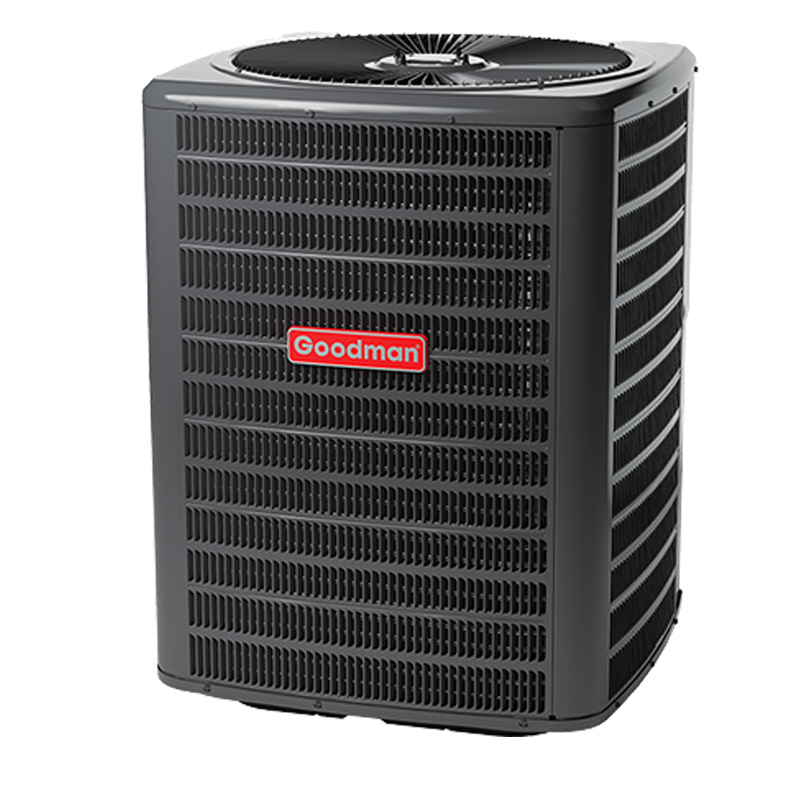
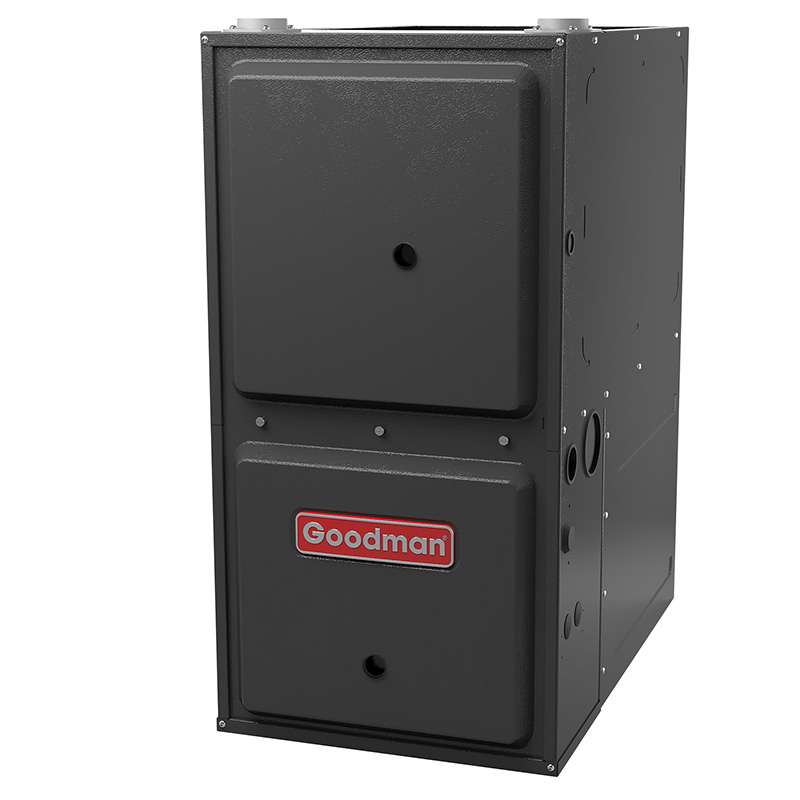
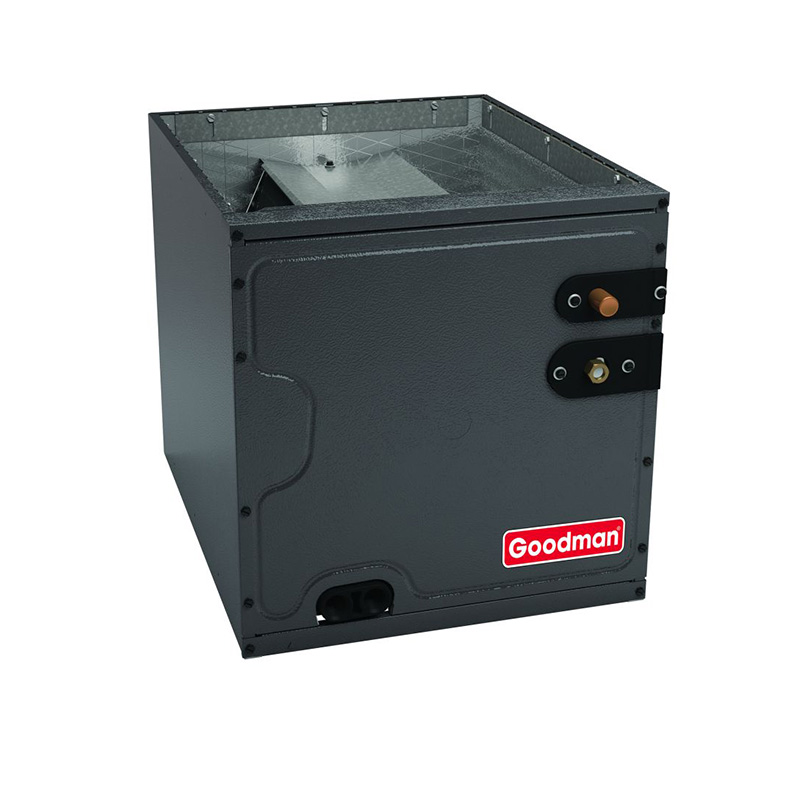
The Goodman GLXS4BA3010 pairs a 2.5-ton, 15.2 SEER2 split-system air conditioner with an 80,000 BTU, 97% AFUE modulating gas furnace in a downflow configuration. The furnace’s modulating burner adjusts heat output in small increments rather than simply cycling on and off, which keeps indoor temperatures more consistent and makes it one of the more comfortable heating options at this price tier. The variable-speed ECM blower motor reinforces that comfort story by running at lower speeds most of the time, cutting electricity draw and reducing the blowing sensation that fixed-speed systems produce.
At 15.2 SEER2 the cooling side sits at the entry point of the mid-efficiency range, meeting current federal minimums in most climate zones and qualifying for utility rebates in many areas. R-32 refrigerant carries a lower global warming potential than the R-410A it replaces and is now standard across new Goodman equipment. The downflow cabinet orientation means conditioned air exits the bottom of the unit and flows down through the duct system, which suits homes where the furnace sits in an upper-floor mechanical closet, a hallway utility space, or a platform installation above a crawlspace. Buyers who need an upflow or horizontal configuration will need a different model.
This system is a practical fit for small-to-medium homes, roughly 1,200 to 1,600 square feet depending on climate and insulation, where budget matters more than premium-brand peace of mind. The 97% AFUE rating captures nearly all the fuel energy as usable heat, so monthly gas bills reflect the furnace’s efficiency rather than brand prestige. That said, Goodman equipment performs best when a qualified technician does a Manual J load calculation, sets the refrigerant charge precisely, and commissions the variable-speed controls correctly. Skipping those steps is the most common reason owners end up disappointed with any Goodman system.
This Goodman combo delivers genuinely high-efficiency heating and solid mid-efficiency cooling at a price point well below comparable Trane, Lennox, or Carrier systems. The 97% AFUE modulating furnace is the standout component, while the 15.2 SEER2 cooling side is capable but unremarkable. Long-term ownership cost depends heavily on install quality and whether you land a good technician, so budget for that upfront.
Overall score is the average of the five ratings above.
What we like
- 97% AFUE modulating furnace is among the most fuel-efficient options available at this price
- Variable-speed ECM blower improves comfort and lowers blower electricity consumption
- R-32 refrigerant is future-ready and already code-compliant in all U.S. climate zones
- Priced roughly 15 to 25 percent below equivalent Trane, Lennox, and Carrier configurations
- Modulating operation reduces temperature swings and short-cycling compared to single-stage systems
Trade-offs
- Dual-run capacitors are the most frequently reported failure point, typically in year 3 to 7, though repairs usually run $300 to $600
- Evaporator coil leaks appear in a meaningful share of owner reports and can be costly to address out of warranty
- Compressor lifespan averages 10 to 14 years versus 15 to 20 years for premium brands, which affects long-run cost calculations
- Downflow-only cabinet limits installation flexibility; homes needing upflow or horizontal orientation must look elsewhere
What homeowners and pros say about Goodman
Homeowners who post about Goodman equipment online tend to cluster at the extremes. On ConsumerAffairs, where the format attracts complaints, Goodman scores around 2.5 out of 5, and the pattern in those reviews is consistent: units that work fine for the first several years start accumulating repair bills after roughly year 7, with dual-run capacitor failures being the most commonly named fix and evaporator coil leaks showing up as a more expensive secondary complaint. On Google dealer review pages, which capture a broader cross-section of customers, ratings land closer to 3.8 out of 5, and the word that appears most often in positive feedback is affordability. The gap between those two scores reflects both the channel bias and a real split in owner experience.
HVAC technicians who service multiple brands are generally pragmatic about Goodman. They note that compressors in Goodman systems tend to reach end of life somewhere in the 10-to-14-year range, meaningfully shorter than the 15-to-20-year expectation from Trane, Carrier, or Lennox compressors at similar efficiency levels. First-year refrigerant leaks come up occasionally in tech forums, and the consensus is that the cause is almost always an install or charge error rather than a factory defect, which reinforces the field-wide view that Goodman’s ceiling is set by whoever puts it in. For a system like this one, where the modulating furnace and variable-speed blower require careful commissioning to perform as rated, that context matters before signing an install contract.
Sources: ConsumerAffairs Goodman owner reviews, AHRI Directory of Certified Product Performance, U.S. DOE appliance and equipment efficiency standards, Goodman product specification sheets.
What it costs to run
At 15.2 SEER2, cooling this 2.5-ton system for a typical 1200-hour cooling season at the U.S. average electricity rate of $0.17/kWh works out to roughly $403 per year in cooling, about $54 less per year than a minimum-efficiency 13.4 SEER2 unit of the same size. Your real cost depends on your climate and local rate.
Method: (30,000 BTU/hr ÷ 15.2 SEER2) × 1200 hours ÷ 1000 × $0.17/kWh. Rate source: U.S. EIA average; cooling hours: moderate-climate estimate.
How it compares
| Brand | Comparable model | SEER2 | Stage | Price position |
|---|---|---|---|---|
| Goodman | GLXS4BA3010 (this system) | 15.2 | Variable / Modulating | Value pick |
| Carrier | Performance 16 / 96% Gas Furnace bundle (CNPVP + 59TP6) | 16 | Two-stage | Roughly 20 to 25 percent more than this Goodman |
| Trane | XR15 / S9V2 Variable-Speed bundle | 15.2 | Single-stage AC / Variable-speed furnace | Roughly 20 to 30 percent more than this Goodman |
| Lennox | Merit ML15 / SL280V bundle | 15 | Single-stage AC / Variable-speed furnace | Roughly 15 to 25 percent more than this Goodman |
Competitor rows are comparable single-stage units at similar efficiency; price is relative position, not a quote.
Questions about this system
Does the downflow configuration mean this furnace can only be installed pointing down, and what happens if my closet needs horizontal airflow?
Yes, downflow means the supply air exits through the bottom of the cabinet, making it suitable for platform-mounted or upper-closet installs where ducts run below the unit. If your layout requires horizontal or upflow orientation you will need a different Goodman model, as cabinet orientation is fixed and cannot be field-converted on this unit.
What does the modulating burner actually do differently from a two-stage furnace?
A two-stage furnace switches between roughly 65% and 100% of capacity. A modulating burner adjusts output continuously across a much wider range, typically from around 40% up to full capacity, which keeps the indoor temperature closer to the setpoint with fewer noticeable swings. Paired with the variable-speed ECM blower, this system runs at lower speeds most of the time rather than cycling hard on and off.
Is R-32 refrigerant harder to find or more expensive to service than R-410A?
R-32 availability is increasing rapidly as manufacturers transition away from R-410A, and most HVAC wholesalers now stock it. Because R-32 is mildly flammable (classified A2L), technicians need appropriate training and tools, which is standard among certified contractors today. Recharge costs are broadly similar to R-410A at this point.
How concerned should I be about the capacitor and coil leak issues mentioned in owner reviews?
Dual-run capacitor failure is common across many brands but shows up frequently in Goodman owner feedback, usually presenting as the AC not starting or the outdoor fan stopping. It is generally a quick, low-cost repair in the $300 to $600 range when caught promptly. Evaporator coil leaks are more serious and more expensive to fix, so confirming your installer pressure-tests the system and sets the charge correctly at startup is worth the conversation before work begins.
What warranty comes with this system and what do I need to do to keep it valid?
Goodman typically offers a 10-year parts warranty on registered equipment, including the compressor and heat exchanger, provided you register the unit within a set window after installation. Failure to register usually drops coverage to five years, and the warranty requires installation by a licensed HVAC contractor. Always confirm current warranty terms at registration since Goodman periodically updates coverage details.
Specifications
| Cooling capacity | 2.5 Ton |
| Efficiency | 15.2 SEER2 |
| Furnace output | 80000 BTU |
| Furnace efficiency | 97% AFUE |
| Configuration | Downflow |
| Refrigerant | R-32 |
| Model | GLXS4BA3010 |