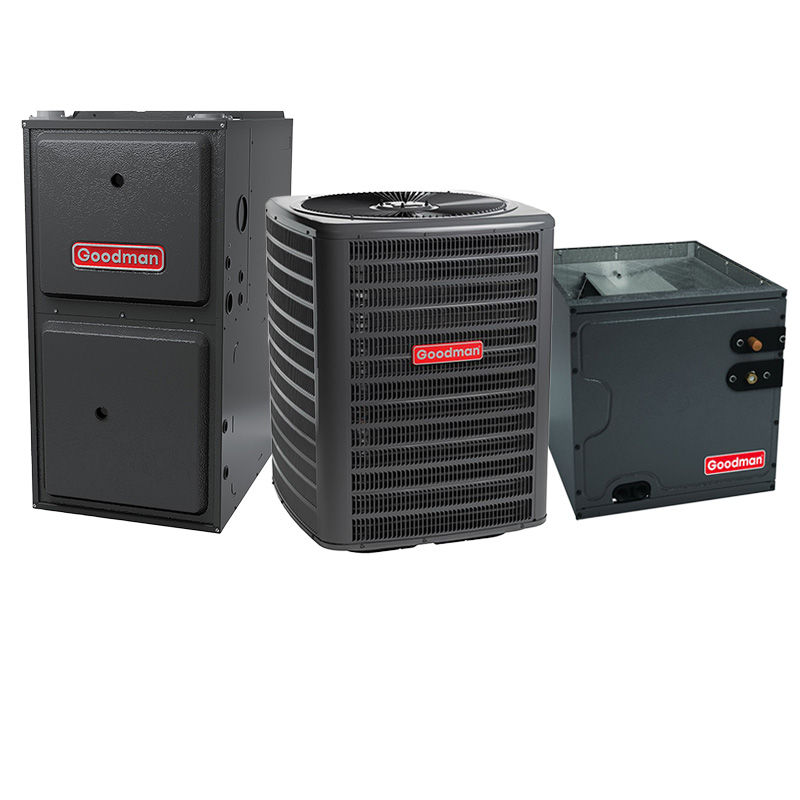
Goodman Furnace AC Combo – 2 Ton 14.3 SEER2 AC With 80000 BTU 97% AFUE Modulating Variable-Speed ECM Gas Furnace System – Upflow | R32
View on AC Direct see your lowest price →Check current price on AC Direct →
Key features
- 97% AFUE modulating gas furnace recovers nearly all combustion energy as usable heat
- Variable-speed ECM blower motor reduces electricity use and improves airflow consistency
- 14.3 SEER2 cooling efficiency meets 2023 federal minimum standards for most U.S. regions
- R-32 refrigerant offers a lower global-warming potential than the outgoing R-410A standard
- Upflow configuration suits basement or closet installations with overhead duct systems
- 2-ton capacity sized for approximately 800-to-1,200 square feet depending on climate and insulation
About this system
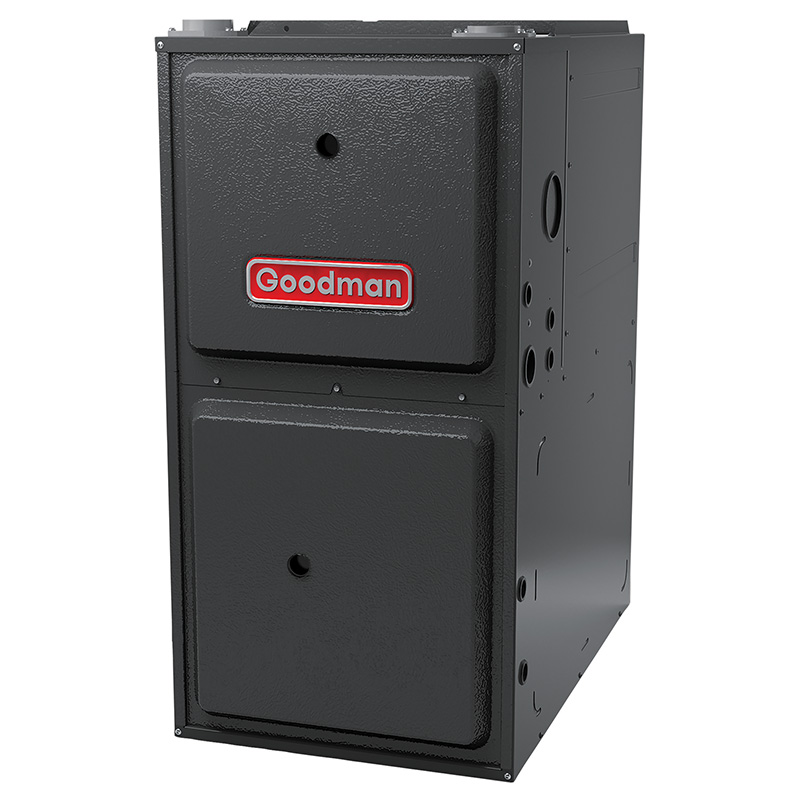
This Goodman combo pairs a 2-ton, 14.3 SEER2 central air conditioner with an 80,000 BTU, 97% AFUE modulating gas furnace in an upflow configuration, making it a practical fit for smaller homes or well-insulated spaces in the 800-to-1,200 square foot range that need both reliable summer cooling and high-efficiency winter heating. The furnace’s 97% AFUE rating sits at the top of the efficiency scale for gas heat, meaning nearly all of the fuel burned becomes usable warmth rather than flue loss. The modulating burner and variable-speed ECM blower work together to adjust output in small increments rather than cycling hard on and off, which typically results in steadier indoor temperatures and lower operating noise compared to single- or two-stage equipment.
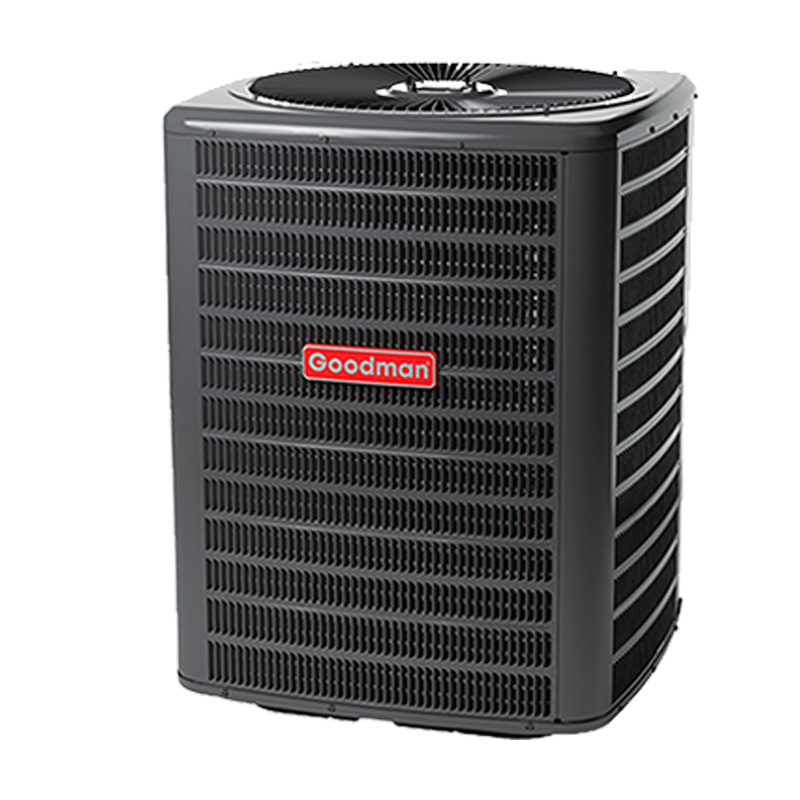
The air conditioner side runs on R-32 refrigerant, a lower global-warming-potential option that is becoming the industry standard as older R-410A systems are phased out. At 14.3 SEER2, efficiency is solid but not exceptional. Homeowners in hot climates who run the AC heavily from May through September will save more on gas bills from the 97% AFUE furnace than they will distinguish themselves on cooling costs versus a 16 or 17 SEER2 alternative. The upflow configuration means the furnace draws return air from the bottom and pushes conditioned air upward, the most common setup for systems installed in a basement or closet serving duct runs through the floors and walls above. This is a well-matched, workhorse combination suited to budget-conscious buyers who want premium-tier furnace efficiency without paying a premium-brand price.
This combo delivers genuinely high furnace efficiency at a price point that undercuts major brands by a meaningful margin, and the modulating furnace hardware is legitimately capable. The trade-off is that Goodman's ownership track record shows more repair activity after year seven than premium competitors, so the value equation depends on how long you plan to stay in the home and how much you budget for possible maintenance.
Overall score is the average of the five ratings above.
What we like
- 97% AFUE is top-tier furnace efficiency and will produce real annual gas savings over 80% or 90% AFUE units
- Modulating burner and ECM blower deliver quieter, more even heating than single-stage alternatives
- R-32 refrigerant is future-proofed against the ongoing R-410A phase-out
- Purchase price typically runs 15 to 25 percent below comparable Trane, Carrier, or Lennox systems
- Upflow layout is a straightforward replacement fit for the most common residential furnace configuration
Trade-offs
- Dual-run capacitors are the most frequently reported failure point, typically requiring a 300-to-600 dollar service call within the first decade
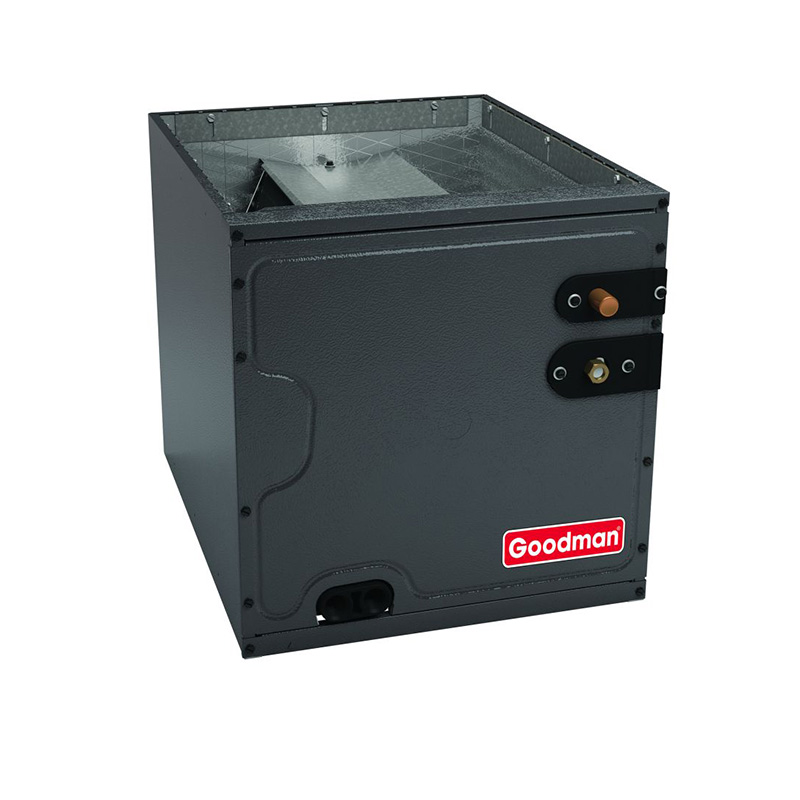
- Evaporator coil leaks appear in a notable share of owner reports, a more costly repair than a capacitor swap
- Compressor lifespan averages 10 to 14 years versus 15 to 20 years reported for premium brands, which affects long-term cost of ownership
- A minority of owners report refrigerant leaks in the first year, most often traced to install quality rather than the equipment itself, underlining how dependent performance is on the installing contractor
What homeowners and pros say about Goodman
Homeowners who share feedback on Goodman equipment tend to split into two camps. Those who had a skilled contractor handle installation often report years of uneventful service and point to the lower purchase price as a clear win. Those who ran into problems frequently describe repair bills that started climbing around the seventh or eighth year of ownership, a pattern consistent with Goodman’s ConsumerAffairs score of roughly 2.5 out of 5, which skews toward dissatisfied owners motivated to leave a review. On Google dealer review pages, where the audience is broader, Goodman installations average closer to 3.8 out of 5, with affordability cited most often as the reason buyers chose the brand.
HVAC technicians tend to describe Goodman as workable equipment whose longevity depends heavily on who installs it and how well it is maintained. The dual-run capacitor is the component they see fail most often, a repair that is relatively inexpensive but still requires a service call. Evaporator coil leaks are a documented concern in owner reports and represent a more involved fix. On the compressor side, technicians generally expect Goodman compressors to average 10 to 14 years of service, a shorter horizon than the 15 to 20 years more commonly cited for Trane, Carrier, or Lennox equipment. For this specific system, pros note that the 97% AFUE modulating furnace is a genuinely capable piece of hardware, and that buyers who commission a proper Manual J load calculation, hire a certified R-32 installer, and keep up with annual maintenance are the ones who tend to have the better ownership experiences.
Sources: ConsumerAffairs Goodman owner reviews, AHRI Directory of Certified Product Performance, U.S. DOE appliance and equipment efficiency standards, Goodman product specification sheets.
What it costs to run
At 14.3 SEER2, cooling this 2-ton system for a typical 1200-hour cooling season at the U.S. average electricity rate of $0.17/kWh works out to roughly $342 per year in cooling, about $23 less per year than a minimum-efficiency 13.4 SEER2 unit of the same size. Your real cost depends on your climate and local rate.
Method: (24,000 BTU/hr ÷ 14.3 SEER2) × 1200 hours ÷ 1000 × $0.17/kWh. Rate source: U.S. EIA average; cooling hours: moderate-climate estimate.
How it compares
| Brand | Comparable model | SEER2 | Stage | Price position |
|---|---|---|---|---|
| Goodman | GLXS3BA24 + GCVM971004CX (this system) | 14.3 | Modulating / Variable-speed | Value pick |
| Carrier | Comfort 14 Series (CA14NA + 58SB) | 14.3 | Single-stage | Typically 15 to 25 percent more than this Goodman system |
| Trane | XR14c + S9V2 | 14.3 | Single-stage / Two-stage | Typically 15 to 25 percent more than this Goodman system |
| Lennox | Merit 14ACX + ML196V | 14.3 | Single-stage / Variable-speed | Typically 15 to 25 percent more than this Goodman system |
Competitor rows are comparable single-stage units at similar efficiency; price is relative position, not a quote.
Questions about this system
Is 2 tons the right size for my home, or do I need a load calculation first?
A proper Manual J load calculation is the only reliable way to confirm sizing for your specific home. As a rough guide, 2 tons suits approximately 800 to 1,200 square feet in a moderate climate, but ceiling height, insulation levels, window area, and local climate all shift that range significantly. Oversizing a system causes short-cycling, which hurts humidity control and can accelerate component wear.
What does 97% AFUE actually save me compared to an 80% AFUE furnace?
For every dollar spent on gas, a 97% AFUE furnace converts about 97 cents into heat versus 80 cents for an 80% unit. On a 1,000-dollar annual gas bill, that gap is roughly 170 dollars per year. Actual savings depend on your local gas rates, how cold your winters are, and how well your home is insulated.
Why does install quality matter so much for this specific system?
Goodman's own documented ownership patterns, and the brand's ratings on consumer review channels, show that performance and longevity are heavily tied to how well the system is installed and charged. A minority of early refrigerant leak reports are typically traced back to improper line-set connections or refrigerant charge rather than factory defects. Hiring a licensed, experienced HVAC contractor and verifying the refrigerant charge at startup is not optional with this equipment.
What should I know about R-32 refrigerant before buying this system?
R-32 is mildly flammable, which means not every technician is yet certified to handle it. Before you buy, confirm that your chosen installer has R-32 certification and that service technicians in your area can work with it. Parts and refrigerant availability are growing quickly as R-410A is phased out, but in some rural markets access may still be limited.
What are the most likely repairs in the first 10 years and what do they cost?
Dual-run capacitors are the most commonly reported failure on Goodman equipment and are generally a quick fix in the 300-to-600 dollar range including labor. Evaporator coil leaks are a more significant repair that can run into the low thousands depending on labor rates and whether the coil must be replaced. Purchasing an extended labor warranty or a home warranty that covers HVAC systems is worth considering given these documented failure patterns.
Specifications
| Cooling capacity | 2 Ton |
| Efficiency | 14.3 SEER2 |
| Furnace output | 80000 BTU |
| Furnace efficiency | 97% AFUE |
| Configuration | Upflow |
| Refrigerant | R-32 |