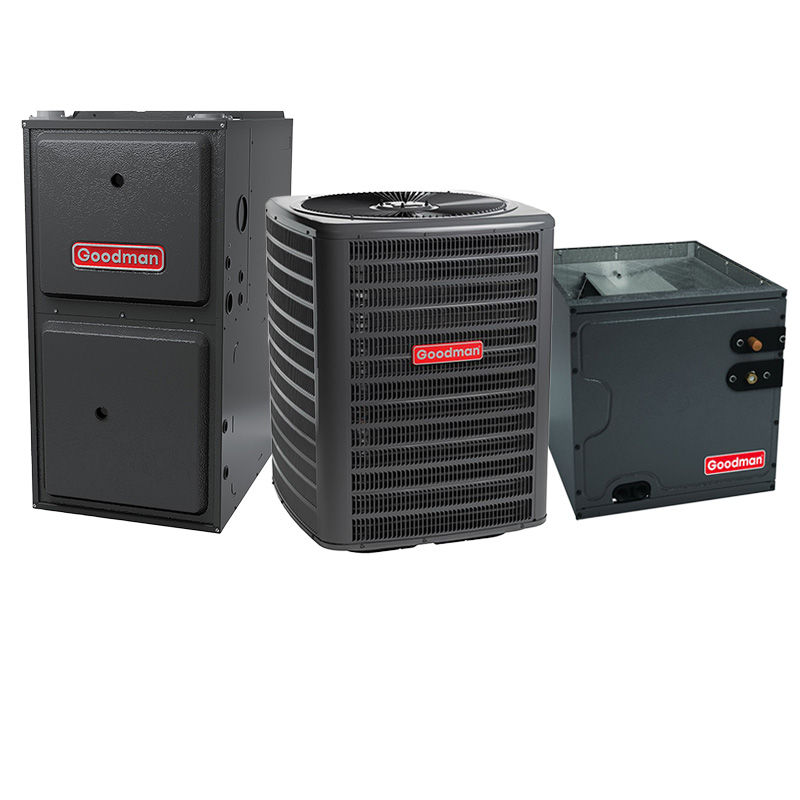
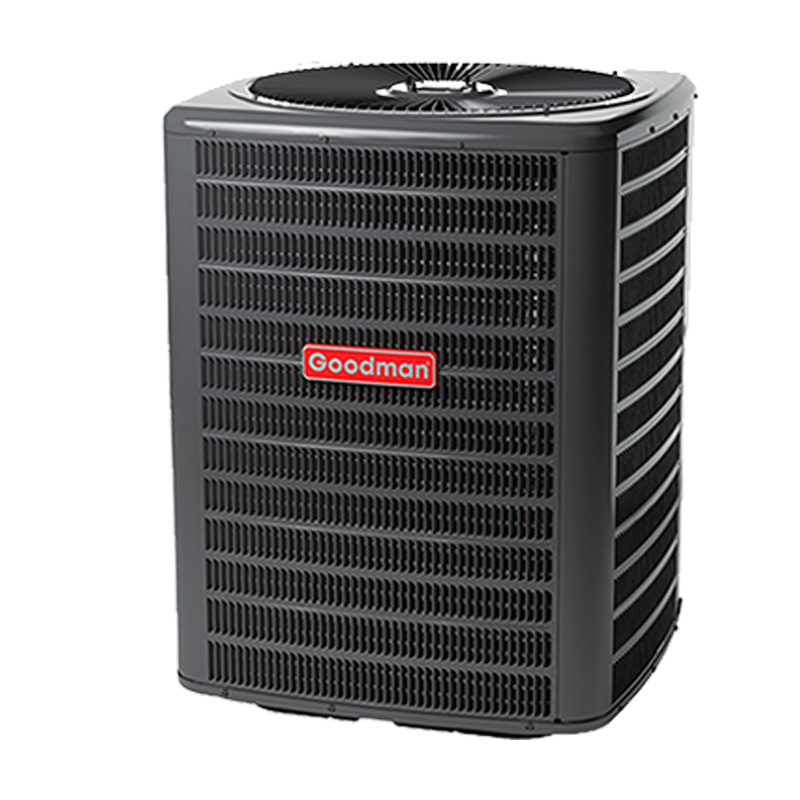
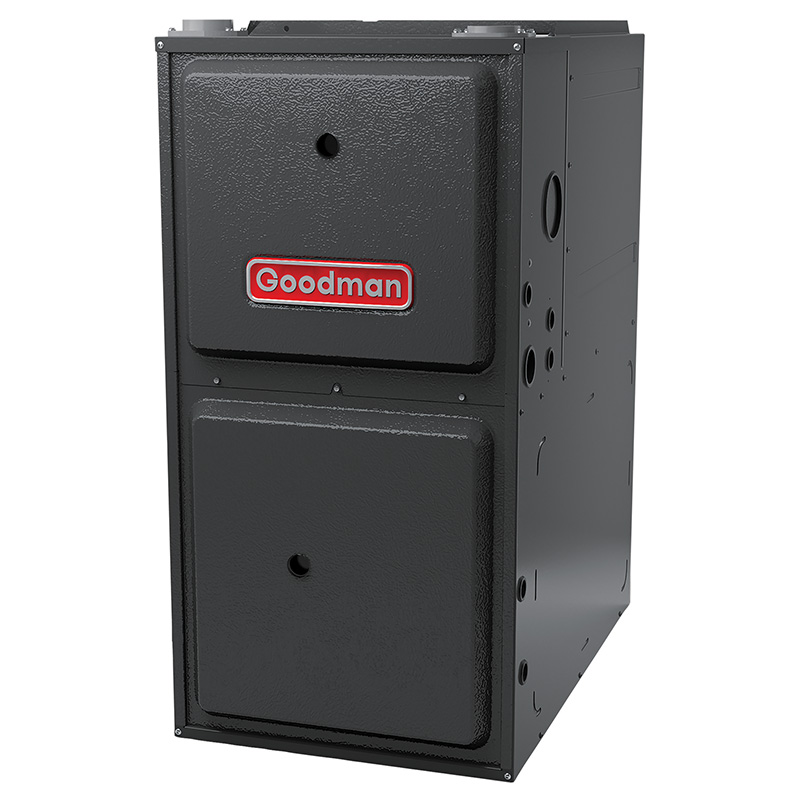
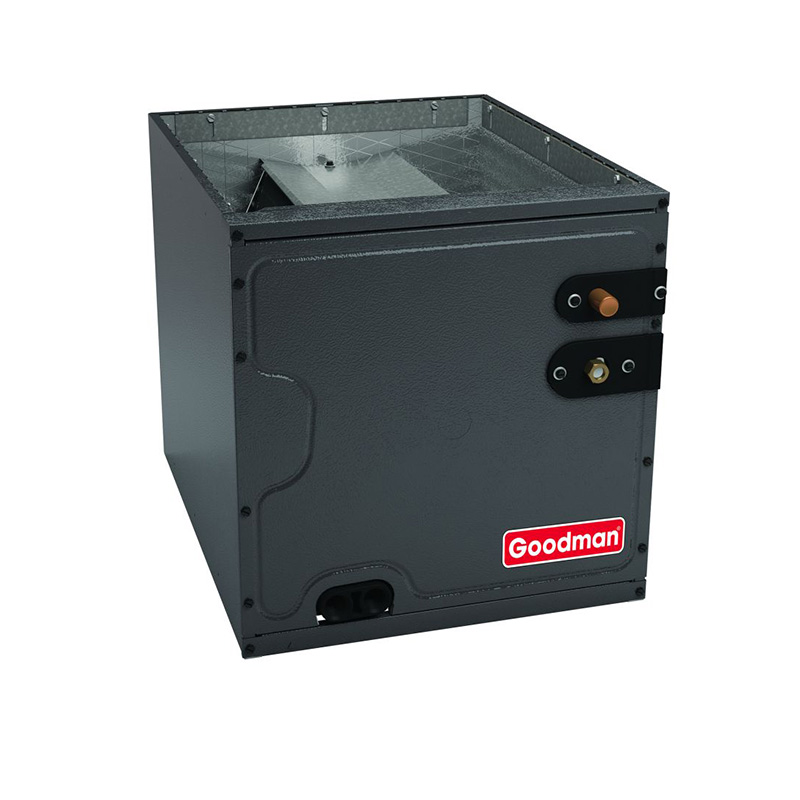
Goodman Furnace AC Combo – 2 Ton 14 SEER2 AC With 60000 BTU 97% AFUE Modulating Variable-Speed ECM Gas Furnace System – Upflow | R32
View on AC Direct see your lowest price →Check current price on AC Direct →
Key features
- 97% AFUE modulating gas furnace for near-maximum fuel efficiency
- Variable-speed ECM blower motor reduces electricity use and noise
- 14 SEER2 air conditioner meets current federal minimum efficiency standards
- R-32 refrigerant with lower global-warming potential than R-410A
- Upflow configuration suits basement, utility closet, and ground-level air handler installs
- Modulating burner adjusts output continuously to reduce temperature swings
About this system
This Goodman combo pairs a 2-ton, 14 SEER2 central air conditioner with a 60,000 BTU, 97% AFUE modulating gas furnace in an upflow configuration. The result is a system that covers roughly 900 to 1,200 square feet of well-insulated living space, though actual sizing depends on climate, ceiling height, and building envelope. The AC side meets the current federal minimum efficiency threshold for most U.S. regions without exceeding it, while the furnace side punches well above average: 97% AFUE means only about 3% of fuel escapes up the flue, which translates to meaningfully lower gas bills compared to an 80% or even 96% AFUE unit over a heating season.
The furnace’s modulating burner and variable-speed ECM blower motor are the real story here. Instead of running at full blast and cycling off, the furnace adjusts its output continuously to match demand, which reduces temperature swings, runs more quietly, and improves humidity control during heating season. The ECM blower also moves more air per watt than a standard PSC motor, which shows up on the electric bill over time. The system uses R-32 refrigerant, a lower global-warming-potential option compared to R-410A, which is now being phased out. Upflow orientation means the air handler sits at floor level and discharges warm or cool air upward, the most common configuration for basement or closet installations in homes with ductwork in the ceiling or second floor.
This combo delivers a genuinely high-efficiency furnace paired with an entry-level AC, making it a practical choice for buyers who want to cut heating costs without paying premium-brand prices. The furnace specs are legitimately strong; the AC is baseline-adequate. Long-term performance will hinge heavily on installation quality and how proactively a homeowner maintains the system.
Overall score is the average of the five ratings above.
What we like
- 97% AFUE is among the highest available and will reduce gas bills noticeably versus mid-efficiency furnaces
- Modulating furnace and variable-speed blower improve comfort and humidity control during heating season
- Priced roughly 15 to 25 percent below comparable Trane, Lennox, and Carrier systems
- R-32 refrigerant is a forward-looking choice as R-410A equipment exits the market
- ECM blower motor lowers operating electricity costs compared to single-speed PSC motors
Trade-offs
- 14 SEER2 is the minimum tier; homeowners in hot climates will see limited cooling-season savings compared to a 16 or 18 SEER2 unit
- Dual-run capacitors are a documented early failure point, and evaporator coil leaks appear in a meaningful share of owner reports
- Compressor lifespan averages 10 to 14 years versus 15 to 20 for premium brands, meaning potential replacement costs sooner
- A minority of owners report refrigerant leaks within the first year, typically tied to installation or initial charge issues rather than the equipment itself
What homeowners and pros say about Goodman
Homeowners who share feedback on Goodman equipment tend to split along a clear line. Early years are generally positive: the equipment cools and heats as advertised, the price made the installation affordable, and many owners report no issues in the first five or six years. The ConsumerAffairs score of roughly 2.5 out of 5 reflects a platform that skews toward complaints, but the recurring theme there is worth noting: repair costs climbing after year seven, often tied to the documented failure modes that show up in owner reports across channels. Google dealer reviews average closer to 3.8 out of 5, where affordability is the most consistent praise, suggesting that buyers who go in with realistic expectations tend to be reasonably satisfied.
Among HVAC technicians, Goodman has a reputation as a brand where the installer matters as much as the equipment. The specific failure modes that pros flag most often on the AC side are dual-run capacitors, which are a low-cost fix in the 300 to 600 dollar range when caught early, and evaporator coil leaks, which are more involved and expensive to address. Compressor longevity averaging 10 to 14 years versus the 15 to 20 years commonly attributed to premium brands is the longer-term consideration buyers should price into their decision. For the furnace in this combo, the 97% AFUE and modulating operation are legitimately premium-level specs at a value-level price, which is the clearest argument in this system’s favor for homeowners in colder climates where the furnace carries most of the annual workload.
Sources: ConsumerAffairs Goodman owner reviews, AHRI Directory of Certified Product Performance, U.S. DOE appliance and equipment efficiency standards, Goodman product specification sheets.
What it costs to run
At 14 SEER2, cooling this 2-ton system for a typical 1200-hour cooling season at the U.S. average electricity rate of $0.17/kWh works out to roughly $350 per year in cooling, about $15 less per year than a minimum-efficiency 13.4 SEER2 unit of the same size. Your real cost depends on your climate and local rate.
Method: (24,000 BTU/hr ÷ 14 SEER2) × 1200 hours ÷ 1000 × $0.17/kWh. Rate source: U.S. EIA average; cooling hours: moderate-climate estimate.
How it compares
| Brand | Comparable model | SEER2 | Stage | Price position |
|---|---|---|---|---|
| Goodman | GMVC97 / GSXH6 (this system) | 14 | Modulating / Variable | Value pick |
| Carrier | Performance 14 / 59SC5 Series | 14 | Single-stage / Two-stage | Typically 15 to 25 percent more than this Goodman system |
| Trane | XR14c / S9X2 Series | 14 | Single-stage / Two-stage | Typically 15 to 25 percent more than this Goodman system |
| Lennox | Merit 14ACX / ML296V Series | 14 | Single-stage / Variable | Typically 15 to 25 percent more than this Goodman system |
Competitor rows are comparable single-stage units at similar efficiency; price is relative position, not a quote.
Questions about this system
Does Goodman's warranty require professional registration, and what does it actually cover?
Yes, Goodman's limited lifetime heat exchanger warranty and the extended parts warranty (typically 10 years on covered components) require the equipment to be registered online within a set window after installation. Without registration, coverage typically drops to five years on parts. The warranty covers defective parts but does not include labor, refrigerant, or diagnostic costs, so a repair inside the warranty period can still carry a significant out-of-pocket bill.
Why is the AC rated 14 SEER2 when the furnace is so high-efficiency? Does that mismatch matter?
The two ratings measure completely separate things: SEER2 measures cooling efficiency and AFUE measures heating efficiency, so there is no technical mismatch. Choosing a higher-SEER2 condenser in the future is possible because the furnace coil and blower are compatible with upgraded outdoor units, but any swap should be verified for system compatibility by an HVAC technician.
What is involved in servicing R-32 equipment, and will local technicians have the right tools?
R-32 is mildly flammable (A2L classification) and requires technicians to use approved recovery equipment and follow specific handling procedures. Most established HVAC shops are already equipped for R-32 work as the industry transitions away from R-410A, but it is worth confirming your service provider is certified before signing a maintenance agreement.
How often should the dual-run capacitor be inspected, given that it is the most commonly reported failure on Goodman equipment?
Capacitors should be tested as part of any annual tune-up; a technician can check capacitance with a multimeter in a few minutes. Because capacitor failure is the most documented early repair on Goodman AC units, proactive annual testing is a low-cost way to catch a weakening capacitor before it causes a no-cool call or, worse, stresses the compressor.
Is a 2-ton unit the right size for my home, or should I go up to 2.5 tons?
Two tons is generally appropriate for roughly 900 to 1,200 square feet in a moderately insulated home in a mixed climate, but the only reliable way to confirm sizing is a Manual J load calculation performed by your installer. Oversizing is a common mistake that causes short-cycling, poor humidity removal, and accelerated wear, so resist the temptation to size up without a proper load analysis.
Specifications
| Cooling capacity | 2 Ton |
| Efficiency | 14 SEER2 |
| Furnace output | 60000 BTU |
| Furnace efficiency | 97% AFUE |
| Configuration | Upflow |
| Refrigerant | R-32 |