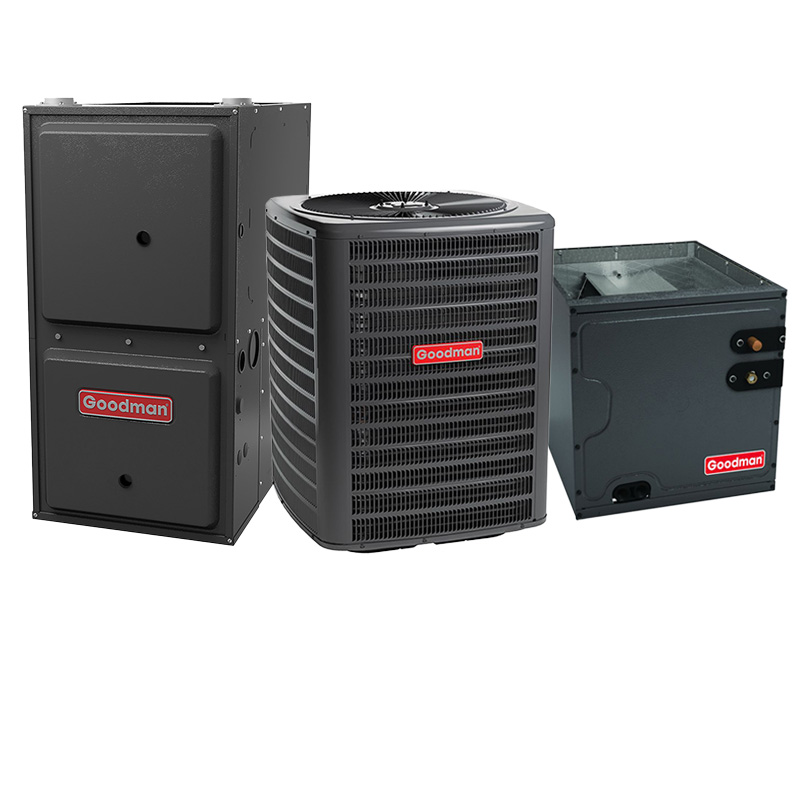
Goodman Furnace AC Combo – 2 Ton 14 SEER2 AC With 80000 BTU 97% AFUE Modulating Variable-Speed ECM Gas Furnace System – Downflow | R32
View on AC Direct see your lowest price →Check current price on AC Direct →
Key features
- 97% AFUE modulating gas furnace with variable-speed ECM blower for precise, quiet comfort
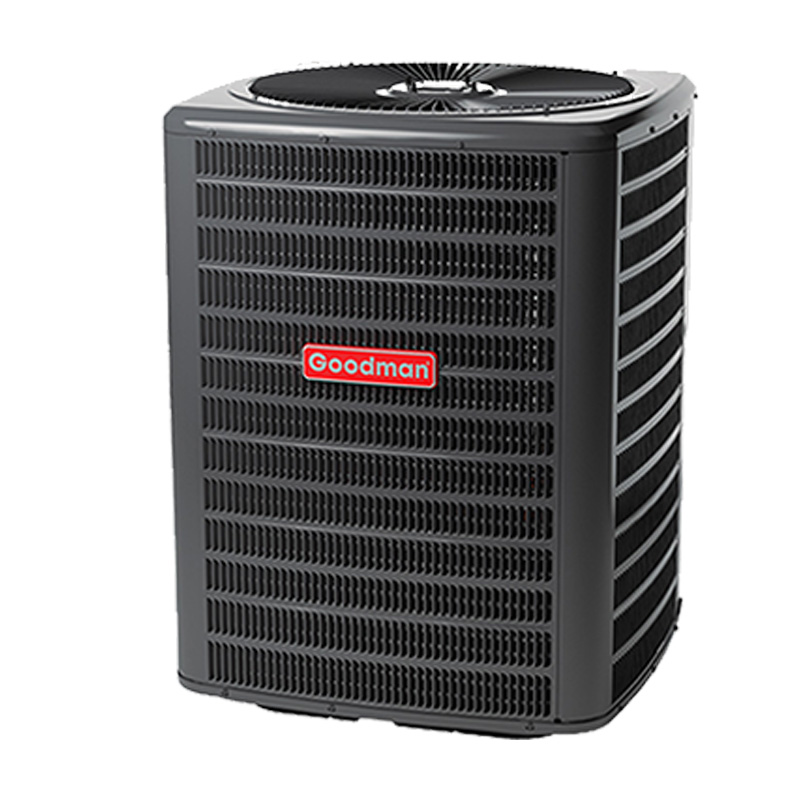
- 2-ton, 14 SEER2 central air conditioner meeting current federal efficiency minimums
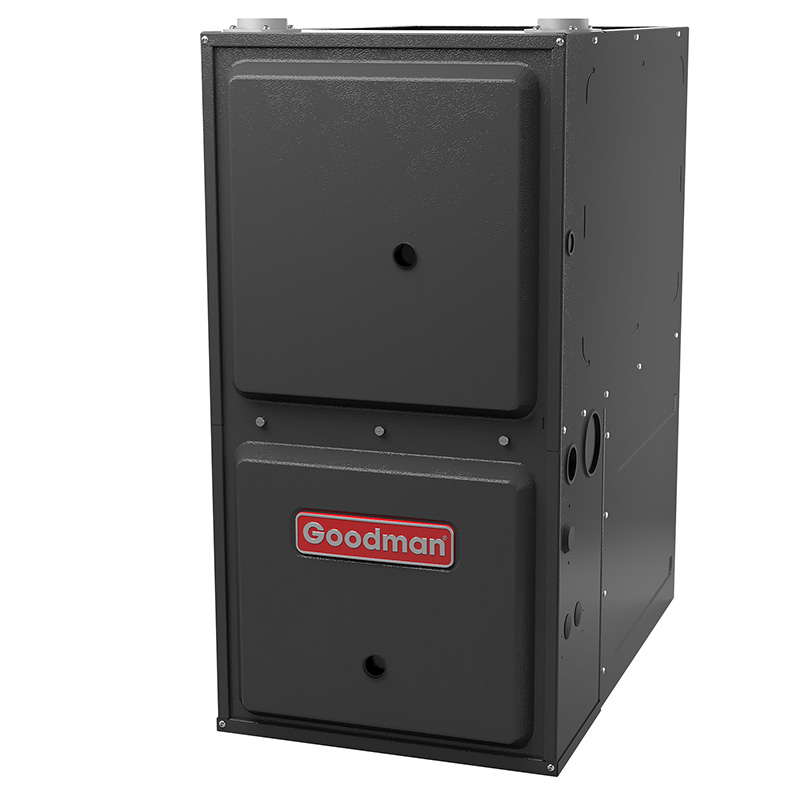
- Downflow cabinet orientation for homes with underfloor or slab-level duct systems
- R-32 refrigerant with lower global warming potential than outgoing R-410A systems
- Modulating gas valve adjusts heat output in small increments rather than full on/off cycling
- ECM blower motor reduces electricity consumption compared to standard PSC motors
About this system
This Goodman combo pairs a 2-ton, 14 SEER2 central air conditioner with an 80,000 BTU, 97% AFUE modulating gas furnace in a downflow configuration, using R-32 refrigerant. The furnace is the clear standout here: a 97% AFUE rating means roughly 97 cents of every dollar in gas becomes usable heat, and the modulating, variable-speed ECM setup lets the system ramp up and down rather than simply cycling on and off. That means steadier temperatures, quieter operation, and lower humidity swings compared to single-stage or two-stage units. The ECM blower motor also draws significantly less electricity than a standard PSC motor, adding a secondary efficiency benefit.
The 14 SEER2 cooling side is solid but not exceptional. It meets current federal minimum efficiency standards for most U.S. climate regions and will outperform older equipment by a meaningful margin, but buyers in hot climates who want the lowest possible summer utility bills may wish to step up to a 16 SEER2 or higher system. The downflow configuration positions supply air at the bottom of the cabinet, making this the right fit for homes with ductwork running under a main floor slab or in a basement where the furnace sits above the ducts. It is not a universal fit, so confirming your duct layout before purchasing is essential. R-32 refrigerant has a lower global warming potential than R-410A and has become the industry standard for new equipment as R-410A is phased down under EPA regulations.
This system is best understood as a high-efficiency heating package at a value price point. The furnace spec is genuinely premium-tier; the cooling spec is entry-level. For a small home or a mild-to-moderate cooling climate, that trade-off makes a lot of sense. Anyone in a region where the furnace runs heavily from October through April will get the most out of what this combo offers.
This combo delivers a genuinely high-efficiency furnace spec at a price that undercuts comparable Carrier, Trane, and Lennox packages by 15 to 25 percent, making it a strong value play for heating-dominant climates. The 14 SEER2 cooling side is adequate but unremarkable, and Goodman's documented track record of capacitor failures and shorter compressor lifespans means you should plan for maintenance costs after year 7. Install quality will determine more about how long this system lasts than almost any other factor.
Overall score is the average of the five ratings above.
What we like
- 97% AFUE modulating furnace is a top-tier efficiency spec for a value-brand price
- Variable-speed ECM blower delivers noticeably steadier temperatures and lower humidity levels than single-stage alternatives
- R-32 refrigerant is future-proof as the industry moves away from R-410A
- Lower upfront cost than comparable Trane, Lennox, or Carrier systems at the same furnace efficiency
- Downflow configuration is well suited to slab-on-grade and basement-duct homes where few other options exist
Trade-offs
- 14 SEER2 cooling efficiency is the federal minimum for many regions and will not yield the lowest possible summer energy bills in hot climates
- Dual-run capacitor failures are the most commonly reported issue, typically appearing in mid-life and costing $300 to $600 per repair
- Compressor lifespan averages 10 to 14 years versus 15 to 20 for premium-brand competitors, increasing long-term replacement risk
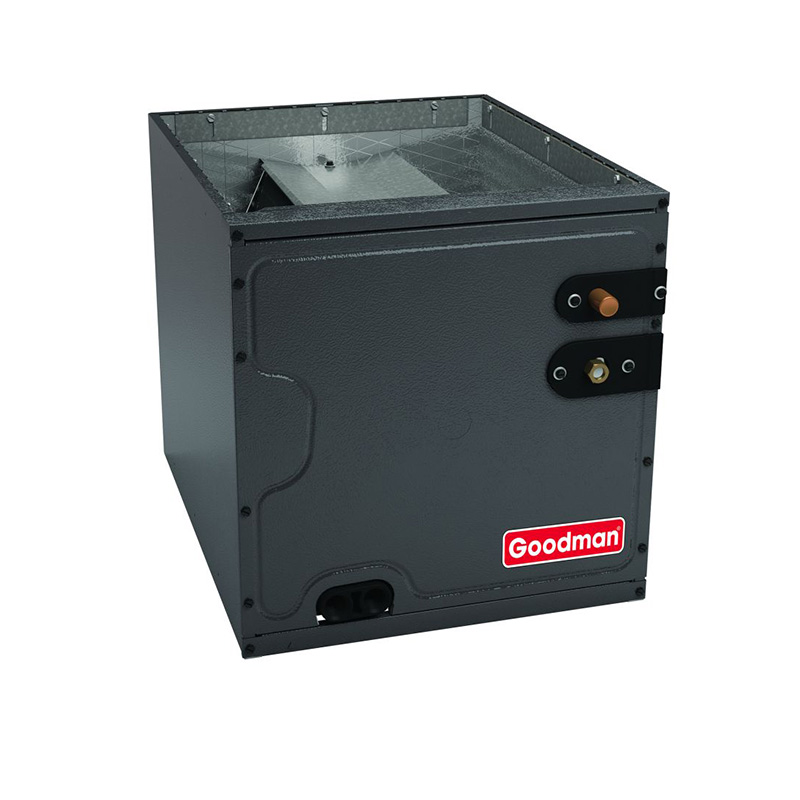
- Evaporator coil leaks appear in a meaningful share of owner reports, and a minority of owners have reported refrigerant charge issues within the first year
What homeowners and pros say about Goodman
Homeowners who review Goodman equipment tend to sort into two camps. Those who had a careful installation by an experienced contractor and keep up with seasonal maintenance often report years of trouble-free service and highlight the price savings over name-brand alternatives. Those who ran into problems frequently trace the root cause to installation shortcuts or deferred maintenance rather than a factory defect, which aligns with the technician consensus that install quality is the dominant factor in how a Goodman system ages. On ConsumerAffairs, Goodman scores around 2.5 out of 5, a channel that skews toward people writing at their most frustrated, and the recurring complaint is repair bills that climb after roughly year 7. Google dealer reviews, which capture a broader range of experiences, average around 3.8 out of 5, with affordability cited most often as the reason people chose the brand.
HVAC professionals who work on Goodman equipment regularly point to dual-run capacitor failures as the most predictable service call, typically a $300 to $600 fix that shows up in mid-life and is more annoying than catastrophic. Evaporator coil leaks appear often enough in owner feedback to be worth watching, and a small number of owners have reported refrigerant issues within the first year that were ultimately traced to charge problems at installation. Compressor longevity is where the value equation gets more complicated: Goodman compressors tend to average 10 to 14 years in real-world reports, compared to 15 to 20 for Trane, Lennox, and Carrier, which matters when you are running the numbers on total cost of ownership. For this specific system, where the 97% AFUE modulating furnace is doing the heavy lifting in a heating-dominant home, those cooling-side durability considerations are real but may be secondary to the upfront savings and the heating efficiency gains.
Sources: ConsumerAffairs Goodman owner reviews, AHRI Directory of Certified Product Performance, U.S. DOE appliance and equipment efficiency standards, Goodman product specification sheets.
What it costs to run
At 14 SEER2, cooling this 2-ton system for a typical 1200-hour cooling season at the U.S. average electricity rate of $0.17/kWh works out to roughly $350 per year in cooling, about $15 less per year than a minimum-efficiency 13.4 SEER2 unit of the same size. Your real cost depends on your climate and local rate.
Method: (24,000 BTU/hr ÷ 14 SEER2) × 1200 hours ÷ 1000 × $0.17/kWh. Rate source: U.S. EIA average; cooling hours: moderate-climate estimate.
How it compares
| Brand | Comparable model | SEER2 | Stage | Price position |
|---|---|---|---|---|
| Goodman | GSZB402410 + GCVM971005CN (or equivalent combo) | 14 | Variable/Modulating | Value pick |
| Carrier | Comfort 14 Series (24ACC4) | 14 | Single-stage | Typically 15 to 25 percent more than Goodman |
| Trane | XR14c Series | 14 | Single-stage | Typically 15 to 25 percent more than Goodman |
| Lennox | Merit ML14XC1 Series | 14 | Single-stage | Typically 15 to 25 percent more than Goodman |
Competitor rows are comparable single-stage units at similar efficiency; price is relative position, not a quote.
Questions about this system
Is a downflow furnace the right configuration for my home?
Downflow furnaces discharge air from the bottom of the cabinet, so they are designed for installations where supply ducts run beneath the unit, such as in slab-on-grade homes or certain basement setups. If your ductwork exits from the top or side of the furnace location, you would need a different orientation. Confirm your duct layout with your installer before ordering.
What does 'modulating' actually mean for day-to-day comfort compared to a standard furnace?
A modulating furnace adjusts its gas valve output in small steps rather than running at full capacity or shutting off entirely. In practice this means fewer temperature swings between cycles, quieter operation, and better humidity control in winter. The difference is most noticeable in homes where a standard furnace previously caused hot and cold spots or frequent on-off cycling.
How does R-32 refrigerant affect ownership and servicing?
R-32 has a lower global warming potential than R-410A and is now the direction the industry is moving under EPA phase-down rules, so parts and service availability are expected to improve over time rather than diminish. It does require technicians certified to handle it and specific compatible equipment, so confirm your service company has experience with R-32 systems before scheduling any refrigerant work.
What maintenance should I budget for given Goodman's documented failure patterns?
Dual-run capacitor failure is the most commonly reported issue with Goodman equipment and typically runs $300 to $600 to repair. Setting aside a small annual maintenance budget and having the capacitor checked during seasonal tune-ups can catch this before it becomes a no-cool emergency. Evaporator coil leak inspections are also worth adding to routine service after year five.
Will 2 tons and 80,000 BTU be the right size for my home?
Sizing depends on your climate, insulation levels, window area, and square footage, and cannot be reliably determined from rule-of-thumb estimates alone. A Manual J load calculation performed by your installing contractor is the only accurate way to confirm whether this capacity is correct for your specific home. Installing an oversized or undersized system is one of the most common causes of premature equipment failure and comfort complaints.
Specifications
| Cooling capacity | 2 Ton |
| Efficiency | 14 SEER2 |
| Furnace output | 80000 BTU |
| Furnace efficiency | 97% AFUE |
| Configuration | Downflow |
| Refrigerant | R-32 |