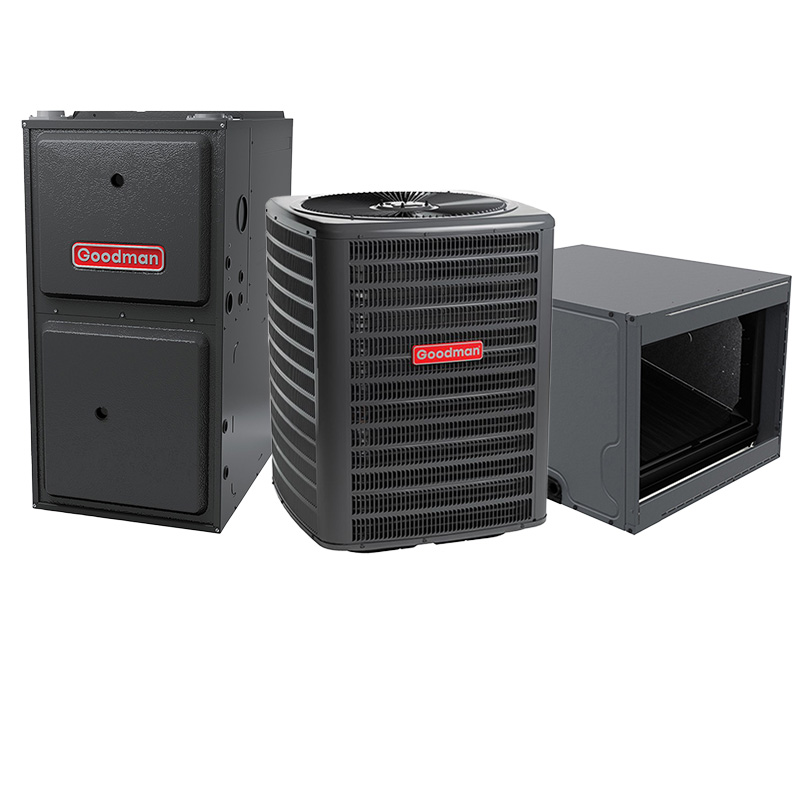
Goodman Furnace AC Combo – 2 Ton 15.2 SEER2 AC With 60000 BTU 97% AFUE Modulating Variable-Speed ECM Gas Furnace System – Horizontal | R32
View on AC Direct see your lowest price →Check current price on AC Direct →
Key features
- 15.2 SEER2 cooling efficiency meets and marginally exceeds current federal minimum standards for most U.S. regions
- 97% AFUE modulating gas furnace with variable-speed ECM blower for precise, quiet heating
- Horizontal configuration designed for attic, crawl space, or side-load closet installations
- R-32 refrigerant with lower global-warming potential than R-410A and improving service availability
- 2-ton (24,000 BTU/hr) cooling capacity suited to smaller homes or well-insulated spaces
- Modulating burner adjusts output in small increments to reduce temperature swings and short-cycling
About this system
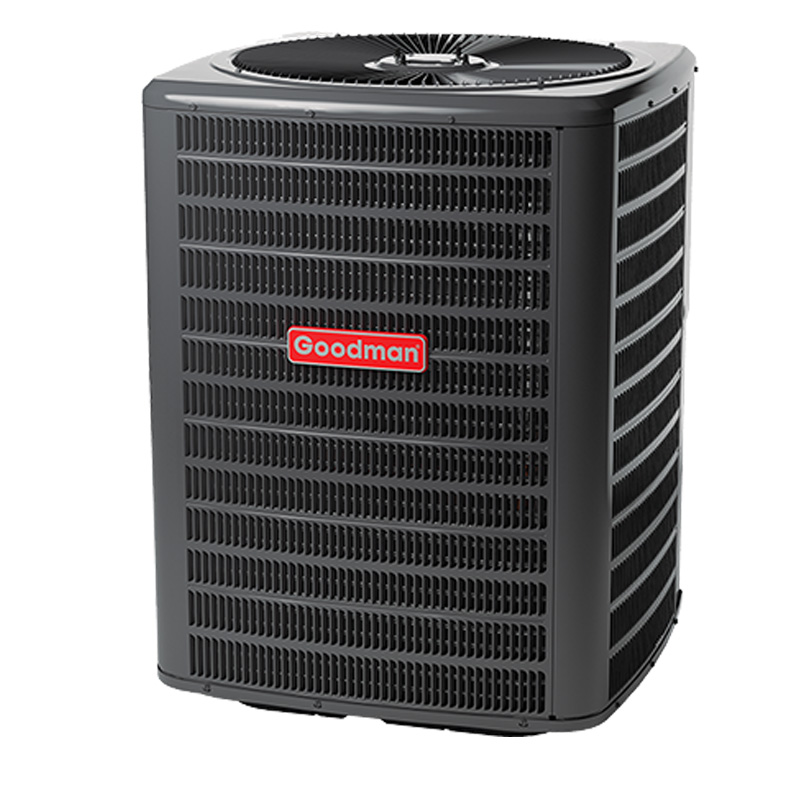
The Goodman GLXS4BA2410 pairs a 2-ton, 15.2 SEER2 air conditioner with a 60,000 BTU, 97% AFUE modulating gas furnace in a horizontal configuration, making it a strong candidate for homes where ductwork runs through a crawl space, attic, or utility closet with limited vertical clearance. The R-32 refrigerant charge is a forward-looking detail: R-32 has a lower global-warming potential than R-410A and is becoming the industry standard, so servicing this system five or ten years from now should be straightforward as the refrigerant supply matures.
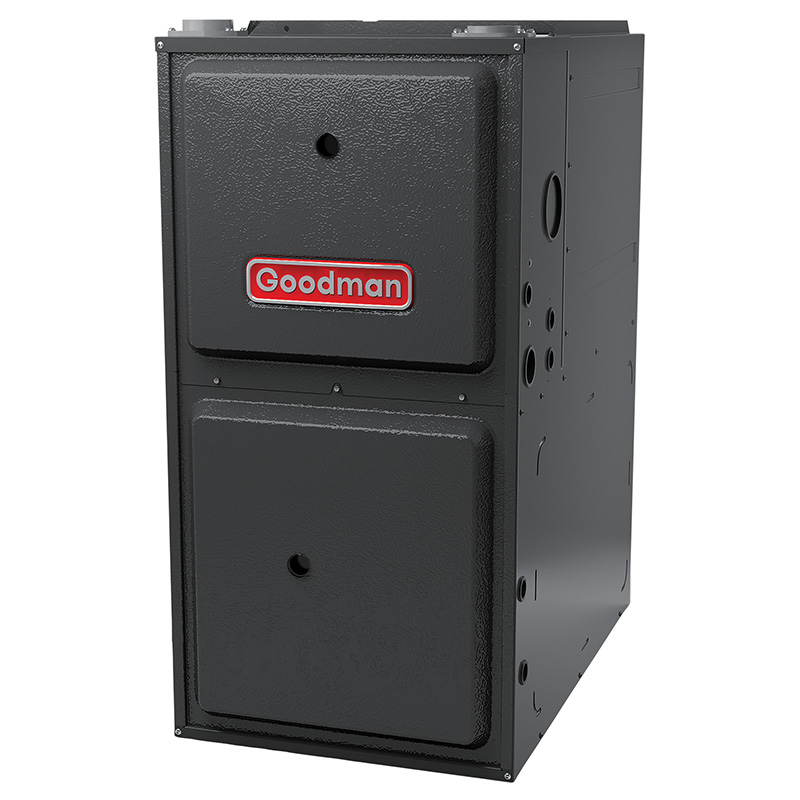
The furnace side is where this combo earns its keep. A 97% AFUE rating means only three cents of every fuel dollar escapes as waste heat, and the modulating burner paired with a variable-speed ECM blower motor means the system rarely runs at full capacity. Instead, it ramps up and down to match the actual load, which translates to steadier indoor temperatures, quieter operation, and meaningful reductions in monthly gas and electric bills compared to single-stage or two-stage alternatives. For a 2-ton system, this level of furnace sophistication is genuinely uncommon at the price point Goodman occupies.
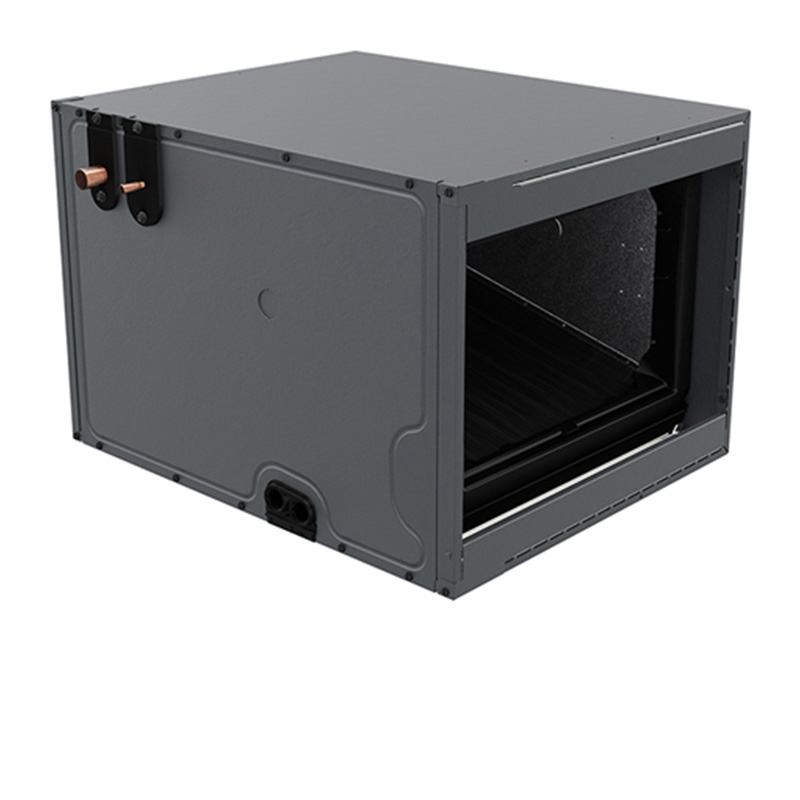
The horizontal configuration does add installation complexity: the unit must be correctly pitched for condensate drainage, and the coil cabinet orientation matters for airflow balance. This is not a system that rewards shortcuts at installation. Buyers in smaller homes or well-insulated newer construction in mild climates will get the most from the modest 2-ton cooling capacity, while the 60,000 BTU furnace is well-suited to homes in the 1,200 to 1,600 square-foot range in moderate heating climates, assuming average insulation.
This combo delivers a genuinely high-spec furnace at a price that undercuts premium brands by 15 to 25 percent, and the modulating variable-speed setup is a real upgrade over what most budget buyers settle for. The trade-off is Goodman's documented reliability ceiling: capacitors, coil leaks, and compressor longevity below premium-brand averages mean the savings gap narrows if service costs climb after year seven. Buyers who prioritize upfront value and commit to annual maintenance will find this system hard to beat at its price; buyers who want to install and largely forget for 18 to 20 years should look higher up the brand ladder.
Overall score is the average of the five ratings above.
What we like
- 97% AFUE modulating furnace is top-tier efficiency rarely found at Goodman's price point
- Variable-speed ECM blower reduces energy use and delivers noticeably quieter, more even airflow
- R-32 refrigerant is future-proof as the industry moves away from R-410A
- 15 to 25 percent lower purchase price than comparable Carrier, Trane, or Lennox systems
- Horizontal configuration opens up install locations that vertical units simply cannot fit
Trade-offs
- Dual-run capacitors are the most commonly reported failure, typically after years 5 to 7, adding 300 to 600 dollars per repair visit
- Evaporator coil leaks appear in a meaningful share of owner reviews and can be costly to address
- Compressor lifespan averages 10 to 14 years versus 15 to 20 years for premium-brand compressors, shortening the effective system life
- A minority of owners report refrigerant leaks in year one, usually tied to installation or initial charge issues rather than the hardware itself
What homeowners and pros say about Goodman
Homeowners who choose Goodman generally do so with clear eyes: the brand carries a ConsumerAffairs score of around 2.5 out of 5, a channel that skews toward frustrated owners reporting repair costs that begin climbing noticeably after the seven-year mark. The recurring complaints center on dual-run capacitor failures, evaporator coil leaks, and compressor longevity that averages 10 to 14 years rather than the 15 to 20 years owners of premium brands tend to see. A minority of first-year owners have also reported refrigerant leaks, which most HVAC technicians attribute to installation quality or initial charge errors rather than a defect in the hardware itself. At Google dealer review level, Goodman scores closer to 3.8 out of 5 across locations with several hundred reviews each, and the most consistent praise in those reviews is straightforward: the price makes the equipment accessible to households that could not otherwise afford a high-efficiency system.
HVAC technicians tend to have a similarly split view. Many appreciate that Goodman parts are widely stocked and relatively inexpensive, which keeps service calls manageable when something like a capacitor goes. The more pointed criticism from experienced installers is that Goodman equipment rewards careful, thorough installation more than most brands and punishes shortcuts more visibly. For a horizontal system using R-32 and a modulating furnace, that point carries extra weight: this is not a plug-and-play configuration, and the long-term performance of this particular combo depends heavily on the contractor who installs it. Buyers who treat the savings on purchase price as an opportunity to hire a more experienced installer, rather than a second savings opportunity, tend to report better outcomes.
Sources: ConsumerAffairs Goodman owner reviews, AHRI Directory of Certified Product Performance, U.S. DOE appliance and equipment efficiency standards, Goodman product specification sheets.
What it costs to run
At 15.2 SEER2, cooling this 2-ton system for a typical 1200-hour cooling season at the U.S. average electricity rate of $0.17/kWh works out to roughly $322 per year in cooling, about $43 less per year than a minimum-efficiency 13.4 SEER2 unit of the same size. Your real cost depends on your climate and local rate.
Method: (24,000 BTU/hr ÷ 15.2 SEER2) × 1200 hours ÷ 1000 × $0.17/kWh. Rate source: U.S. EIA average; cooling hours: moderate-climate estimate.
How it compares
| Brand | Comparable model | SEER2 | Stage | Price position |
|---|---|---|---|---|
| Goodman | GLXS4BA2410 (this system) | 15.2 | Variable / Modulating | Value pick |
| Carrier | Performance 16 / 96% Gas Furnace (24ACC6 series with 59TP6) | 15.2 – 16 | Two-stage | Typically 15 to 25 percent more than this Goodman system |
| Trane | XR15 / S9X2 96% Gas Furnace | 15 – 15.6 | Two-stage | Typically 15 to 25 percent more than this Goodman system |
| Lennox | Merit 16ACX / ML296V Gas Furnace | 15.2 – 16 | Single-stage AC, variable-speed furnace | Typically 15 to 25 percent more than this Goodman system |
Competitor rows are comparable single-stage units at similar efficiency; price is relative position, not a quote.
Questions about this system
Why does a horizontal configuration matter, and is it harder to install than a standard upflow setup?
Horizontal units are designed to lie on their side, which is necessary when vertical space is unavailable, such as in low-clearance attics or crawl spaces. They are more complex to install correctly because the coil cabinet must be pitched slightly for condensate to drain properly and airflow must be balanced for the orientation. Budget for a more experienced installer and confirm they have done horizontal R-32 systems before.
The furnace is 97% AFUE and modulating. What does that actually mean for my gas bill?
97% AFUE means 97 cents of every dollar of gas burned becomes usable heat, compared to roughly 80 cents for an 80% AFUE unit. The modulating burner adjusts output in small steps rather than switching fully on or off, which reduces short-cycling and keeps temperatures steadier. The combined effect is a meaningful reduction in gas consumption versus a standard 80% single-stage furnace, with the exact savings depending on your local gas rates and how cold your winters get.
What is the most likely repair I will face in the first ten years, and what will it cost?
Dual-run capacitors are the most commonly reported failure point on Goodman equipment and typically show up after years five to seven. A capacitor replacement generally runs 300 to 600 dollars including labor. Evaporator coil leaks are a secondary concern and are more expensive to address, so keeping up with annual maintenance and refrigerant checks is worth it.
Is R-32 refrigerant easy to service, and do most HVAC technicians have the equipment for it?
R-32 is becoming increasingly common as manufacturers transition away from R-410A, and most newer recovery and charging equipment is compatible with it. Availability and technician familiarity are improving quickly. That said, if you live in a rural area with limited HVAC service options, it is worth confirming your local contractor has R-32 certified equipment before purchasing.
Is 2 tons and 60,000 BTU the right size for my home, and how do I know?
A proper Manual J load calculation is the only reliable way to confirm sizing for your specific home, accounting for square footage, insulation levels, window area, local climate, and ceiling height. As a rough reference, 2-ton cooling capacity and 60,000 BTU heating is commonly appropriate for well-insulated homes in the 1,200 to 1,600 square-foot range in moderate climates. Oversizing the system is a common and costly mistake, so insist on a load calculation from your installer before committing.
Specifications
| Cooling capacity | 2 Ton |
| Efficiency | 15.2 SEER2 |
| Furnace output | 60000 BTU |
| Furnace efficiency | 97% AFUE |
| Configuration | Horizontal |
| Refrigerant | R-32 |
| Model | GLXS4BA2410 |