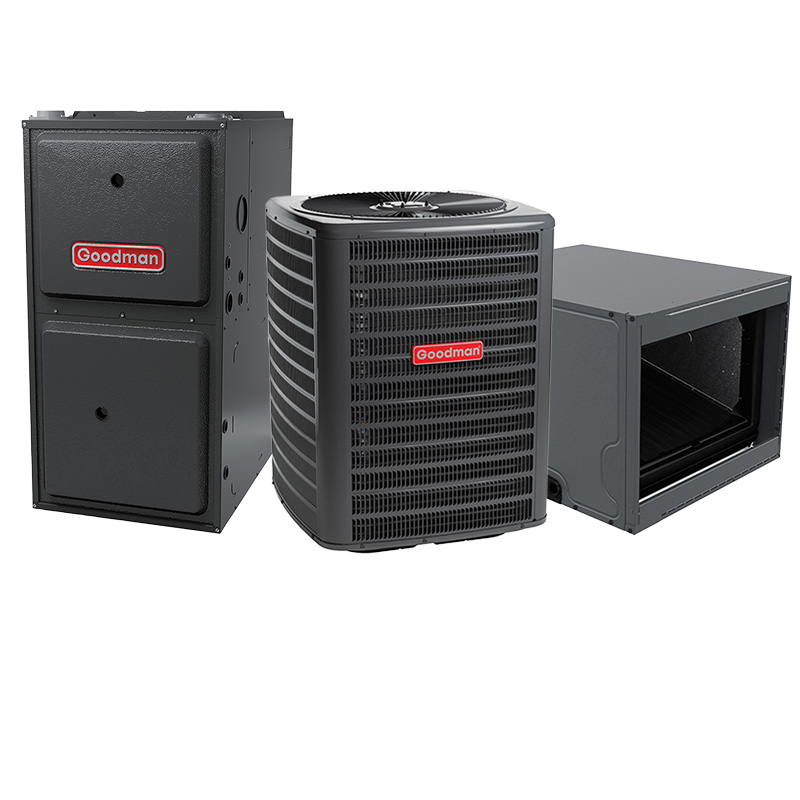
Goodman Furnace AC Combo – 2 Ton 14.3 SEER2 AC With 80000 BTU 97% AFUE Modulating Variable-Speed ECM Gas Furnace System – Horizontal | R32
View on AC Direct see your lowest price →Check current price on AC Direct →
Key features
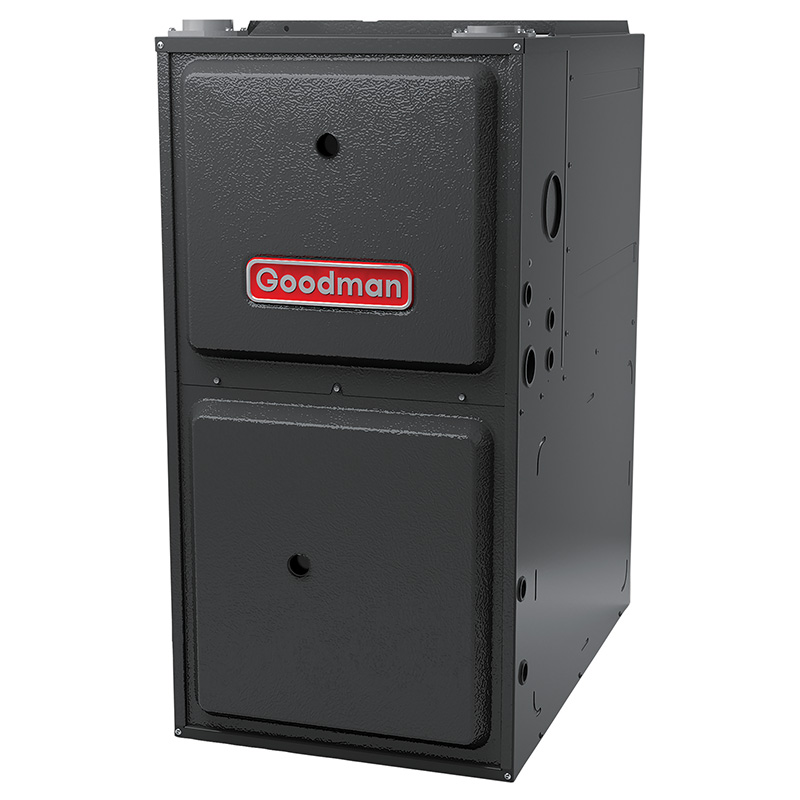
- 97% AFUE modulating gas furnace with variable-speed ECM blower motor
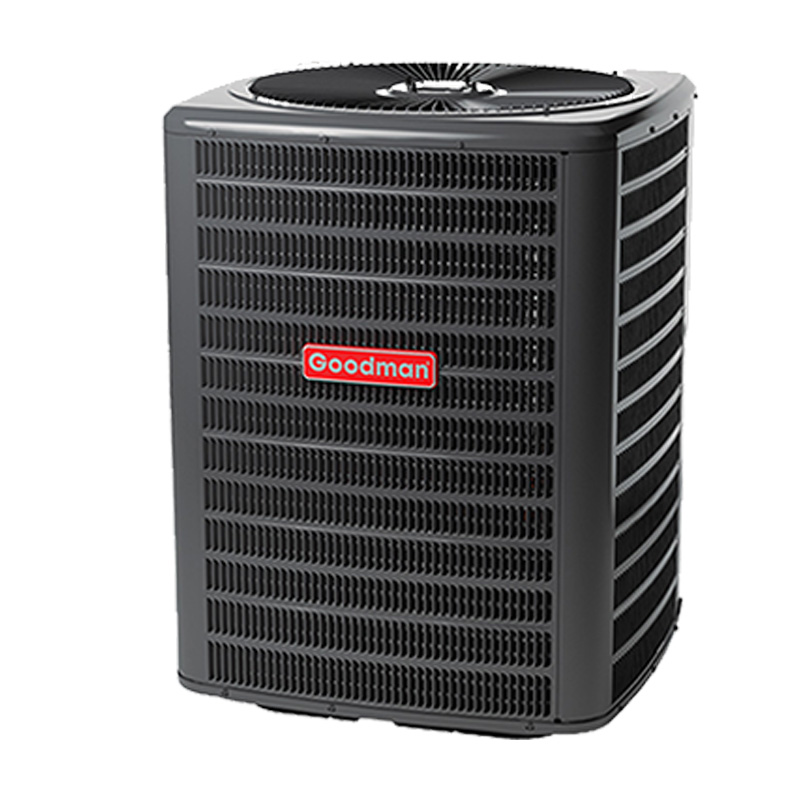
- 2-ton / 14.3 SEER2 air conditioner using R-32 refrigerant
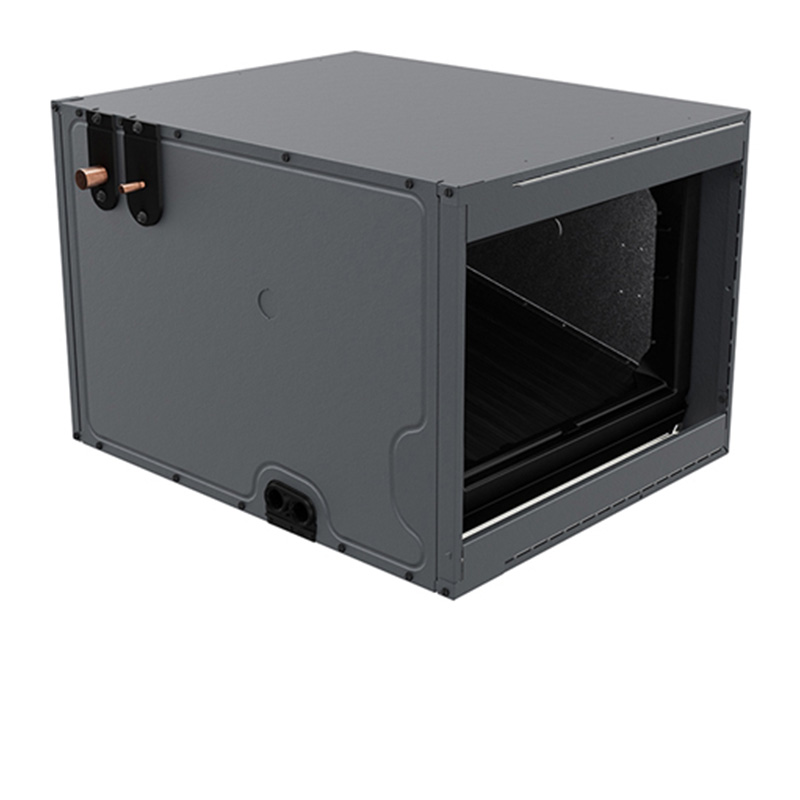
- Horizontal discharge configuration for attic or crawl-space installations
- Modulating burner adjusts heat output incrementally for steadier indoor temps
- ECM blower motor reduces electrical draw and lowers operating noise at part load
- R-32 refrigerant has lower global-warming potential than R-410A and is increasingly serviceable
About this system
This Goodman combo pairs a 2-ton, 14.3 SEER2 central air conditioner with an 80,000 BTU, 97% AFUE modulating gas furnace in a horizontal configuration, making it a practical match for crawl-space installs, attic air handlers, or any application where a side-discharge layout is required. The R-32 refrigerant charge is a forward-looking choice: R-32 has a lower global-warming potential than the R-410A it replaces and is becoming the industry standard, so finding service technicians and refrigerant will only get easier over time.
The furnace is the standout component here. A 97% AFUE modulating burner with a variable-speed ECM blower is genuinely high-spec territory. Modulating means the burner adjusts output in small increments rather than cycling hard on and off, which smooths out temperature swings, reduces cold-air blasts at start-up, and keeps combustion efficiency high across a range of outdoor conditions. The ECM motor draws significantly less electricity than a standard PSC motor and runs quieter at part load. For a home in a cold climate with high gas bills, the furnace side of this system can deliver real, measurable savings over an 80% unit.
The air conditioning side is more modest. A 14.3 SEER2 rating sits right at the federal minimum threshold for many northern U.S. regions, which means it meets code but does not push into the mid-efficiency range. For a smaller 2-ton load, cooling costs will be reasonable, but homeowners in hot southern climates or those prioritizing summer efficiency may find a 16+ SEER2 unit worth the additional investment. This system earns its place as a budget-conscious, cold-climate-first setup where the furnace does the heavy lifting most of the year.
This system makes the most sense in a cold climate where a top-tier furnace does the bulk of the seasonal work and a code-minimum AC handles shorter cooling seasons. The 97% AFUE modulating furnace is a genuine high-efficiency component that can cut heating bills measurably, but the 14.3 SEER2 AC is unremarkable and will not satisfy buyers focused on cooling performance. Goodman's value pricing makes the combination attractive, provided you budget for the install quality and long-term maintenance that the brand's track record demands.
Overall score is the average of the five ratings above.
What we like
- 97% AFUE modulating furnace is a legitimately high-efficiency unit, not a marketing tier
- Variable-speed ECM motor improves comfort and lowers electricity use at part load
- Horizontal config opens up install locations unavailable to vertical-only systems
- R-32 refrigerant is the emerging industry standard, keeping future service straightforward
- Priced 15 to 25 percent below comparable Trane, Lennox, and Carrier packages
Trade-offs
- 14.3 SEER2 cooling efficiency is code-minimum in many regions and trails mid-tier competitors
- Compressor longevity averages 10 to 14 years, shorter than the 15 to 20 years typical of premium brands
- Dual-run capacitor failures are the most commonly reported repair, typically emerging after year 7
- Evaporator coil leaks appear in a notable share of owner reports, and a minority of units show refrigerant leaks in the first year tied to install or charge issues
What homeowners and pros say about Goodman
Homeowners who discuss Goodman online tend to split along a predictable line: those who got a clean install from a skilled contractor are largely satisfied and point to the lower purchase price as a genuine win, while those who ran into trouble cite mounting repair costs that eventually erode the upfront savings. On ConsumerAffairs, Goodman scores around 2.5 out of 5, a number skewed by the fact that dissatisfied owners are far more likely to leave reviews on complaint-heavy platforms. The recurring theme in those negative reviews is repair costs climbing after roughly year 7, with dual-run capacitor failures and evaporator coil leaks named most often. Google dealer reviews paint a more balanced picture, averaging around 3.8 out of 5 across locations, with affordability cited as the top reason buyers chose the brand.
HVAC technicians who work on Goodman equipment regularly tend to respect the modulating furnace technology at this price point while flagging the AC side as the weaker half of the package. The compressor longevity gap is a real consideration: Goodman compressors average 10 to 14 years in the field versus 15 to 20 years for premium-brand units, which matters when planning long-term ownership costs. The first-year refrigerant leak reports are almost universally linked to install or charge issues rather than factory problems, reinforcing the industry consensus that this brand rewards careful installation and penalizes sloppy work more than its premium competitors do. For a buyer who vets the installer as carefully as the equipment, this high-AFUE combo represents solid value; for someone who just wants the lowest quote and moves on, the risk profile is higher.
Sources: ConsumerAffairs Goodman owner reviews, AHRI Directory of Certified Product Performance, U.S. DOE appliance and equipment efficiency standards, Goodman product specification sheets.
What it costs to run
At 14.3 SEER2, cooling this 2-ton system for a typical 1200-hour cooling season at the U.S. average electricity rate of $0.17/kWh works out to roughly $342 per year in cooling, about $23 less per year than a minimum-efficiency 13.4 SEER2 unit of the same size. Your real cost depends on your climate and local rate.
Method: (24,000 BTU/hr ÷ 14.3 SEER2) × 1200 hours ÷ 1000 × $0.17/kWh. Rate source: U.S. EIA average; cooling hours: moderate-climate estimate.
How it compares
| Brand | Comparable model | SEER2 | Stage | Price position |
|---|---|---|---|---|
| Goodman | 2-Ton 14.3 SEER2 AC + 80,000 BTU 97% AFUE Modulating ECM Furnace (Horizontal, R-32) | 14.3 | Modulating (furnace) / Single-stage (AC) | Value pick |
| Carrier | Performance 96 Furnace + Comfort 14 AC (24ACC4) | 14.0-14.5 | Two-stage (furnace) / Single-stage (AC) | 15 to 25 percent higher than this Goodman package |
| Trane | S9V2 Furnace + XR14 AC | 14.0-14.5 | Variable-speed (furnace) / Single-stage (AC) | 20 to 30 percent higher than this Goodman package |
| Lennox | SLP98V Furnace + 14ACX AC | 14.0-14.5 | Modulating (furnace) / Single-stage (AC) | 25 to 35 percent higher than this Goodman package |
Competitor rows are comparable single-stage units at similar efficiency; price is relative position, not a quote.
Questions about this system
Is 14.3 SEER2 going to pass code for my area, and is it worth upgrading?
14.3 SEER2 meets the federal minimum for northern U.S. regions but falls below the 15 SEER2 minimum required in southern states, so confirm your local standard before ordering. If you are in a cooling-heavy climate or plan to stay in the home long-term, stepping up to a 16+ SEER2 unit typically pays back the cost difference within several years of lower utility bills.
What does 'modulating' mean on the furnace, and does it actually matter?
A modulating burner adjusts its flame in small steps rather than switching fully on or off, so it runs at the exact output your home needs at any given moment. In practice this means fewer temperature swings, quieter starts, and consistently high efficiency because the burner rarely operates at wasteful high-fire when low-fire would do. For a 97% AFUE unit the modulating feature is the main reason it earns that rating in real-world conditions rather than only in lab tests.
What are the most likely repairs I should budget for over the system's life?
The dual-run capacitor on the AC side is Goodman's most frequently reported failure and typically costs 300 to 600 dollars to fix, often showing up after year 7. Evaporator coil leaks are documented in a meaningful share of owner reviews and are more expensive to address. Compressors on Goodman units average 10 to 14 years of service life, so budgeting for a possible compressor replacement or system swap in that window is prudent.
Why does this system use R-32 instead of R-410A, and does that affect servicing?
R-32 is replacing R-410A across the industry because it has a lower global-warming potential and slightly better efficiency as a refrigerant. Most newer EPA-certified technicians are already handling R-32, and availability will improve over time as R-410A is phased down. The practical impact for you is minimal today, but it means the system is not stuck on a refrigerant heading toward obsolescence.
How important is installer quality with a Goodman system specifically?
Very important. HVAC technicians consistently cite install quality as the single biggest predictor of how long a Goodman unit lasts and how reliably it performs. The documented first-year refrigerant leaks that show up in owner reviews are almost always attributed to improper charging or connection issues at installation, not factory defects. Choosing a licensed contractor with Goodman experience and verifying the refrigerant charge after install is not optional with this brand.
Specifications
| Cooling capacity | 2 Ton |
| Efficiency | 14.3 SEER2 |
| Furnace output | 80000 BTU |
| Furnace efficiency | 97% AFUE |
| Configuration | Horizontal |
| Refrigerant | R-32 |