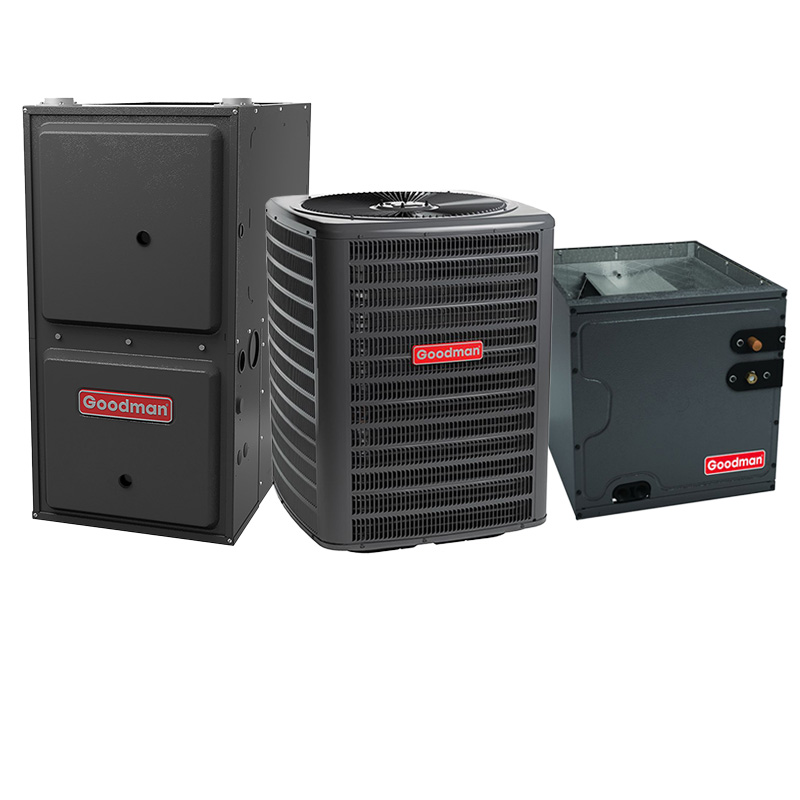
Goodman Furnace AC Combo – 2 Ton 15.2 SEER2 AC With 80000 BTU 97% AFUE Modulating Variable-Speed ECM Gas Furnace System – Downflow | R32
View on AC Direct see your lowest price →Check current price on AC Direct →
Key features
- 15.2 SEER2 cooling efficiency meets current federal minimum standards
- 97% AFUE modulating gas furnace with variable-speed ECM blower motor
- Downflow configuration for slab-on-grade and closet installations
- R-32 refrigerant with lower global-warming potential than R-410A
- Modulating burner adjusts heat output continuously for tighter temperature control
- Goodman 10-year parts warranty when registered within 60 days of install
About this system
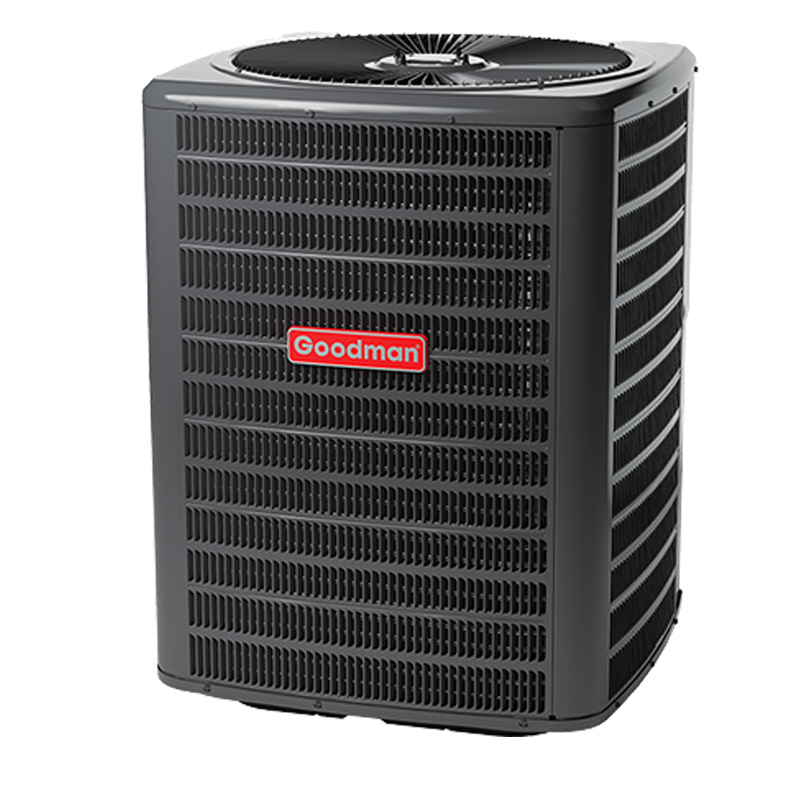
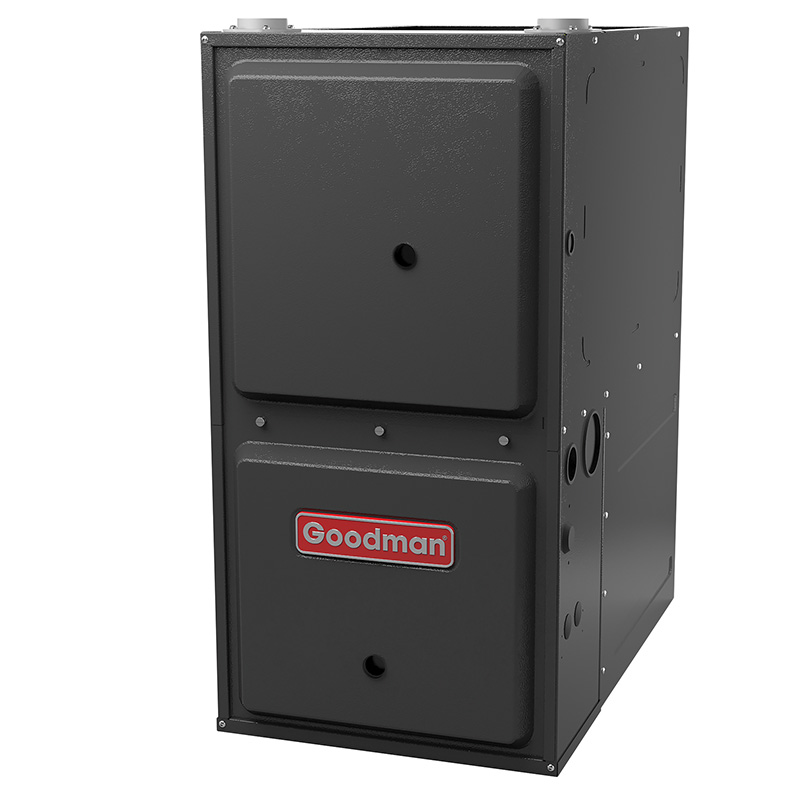
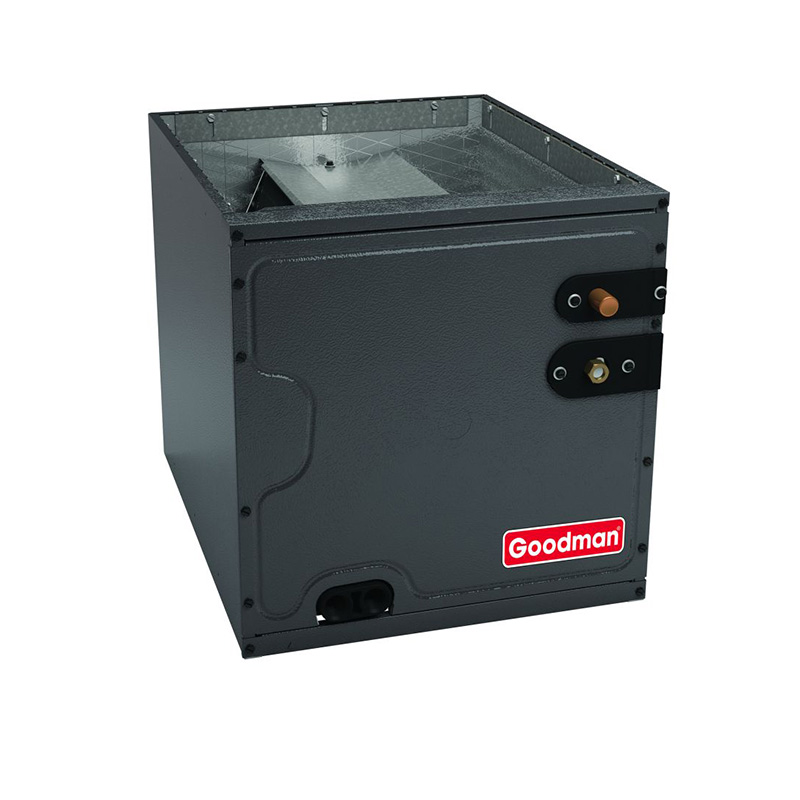
The Goodman GLXS4BA2410 pairs a 2-ton, 15.2 SEER2 central air conditioner with an 80,000 BTU, 97% AFUE modulating gas furnace in a downflow configuration that suits homes where the air handler sits above the living space and supply air flows downward, common in slab-on-grade houses, closet installs, and some manufactured homes. The furnace’s modulating burner and variable-speed ECM blower motor work together to hold room temperature within a tight band by adjusting heat output continuously rather than just cycling on and off at full blast, which also keeps humidity more consistent and cuts down on the temperature swings that single-stage equipment produces.
The system runs on R-32 refrigerant, a lower global-warming-potential refrigerant that is becoming the industry standard as the HVAC sector moves away from R-410A. At 97% AFUE the furnace sits near the top of the efficiency range for gas equipment, meaning roughly 97 cents of every fuel dollar goes to useful heat. At 15.2 SEER2, the cooling side meets current federal minimum standards for most regions without much headroom above them. This combination makes sense for homeowners who heat far more than they cool, where the furnace efficiency pays the biggest dividends, and who want modulating comfort without paying the premium that Trane, Carrier, or Lennox charge for equivalent technology.
This Goodman combo delivers high-efficiency modulating comfort at a price point roughly 15 to 25 percent below comparable Trane, Carrier, and Lennox systems, making it one of the more accessible paths to a 97% AFUE furnace with variable-speed airflow. The trade-off is that Goodman's documented reliability record, particularly around capacitors, evaporator coil leaks, and shorter average compressor lifespan, means the long-run cost advantage narrows if service calls pile up after year seven. It rewards buyers who choose a skilled installer and plan for routine maintenance.
Overall score is the average of the five ratings above.
What we like
- 97% AFUE modulating furnace delivers near-top-tier heating efficiency at a value-brand price
- Variable-speed ECM blower reduces energy use and improves comfort consistency over single-speed equipment
- R-32 refrigerant positions the system for longer regulatory life as R-410A is phased out
- Downflow design serves a specific installation need that limits competitive options at this price
- 10-year registered parts warranty is competitive with premium brands on paper coverage
Trade-offs
- 15.2 SEER2 is at the efficiency floor, not a standout, so cooling operating costs won't beat better-equipped competitors
- Dual-run capacitor failures are the most common documented service call, typically costing 300 to 600 dollars and appearing more frequently after year seven
- Evaporator coil leaks appear in a meaningful share of owner reports, a repair that can run into the thousands depending on labor market
- Compressor lifespan averages 10 to 14 years versus 15 to 20 for premium brands, which affects total cost of ownership calculations
What homeowners and pros say about Goodman
Homeowners who choose Goodman equipment tend to land in two camps: those who are pleased they got a functional, efficient system without overpaying, and those who found themselves writing service checks after the seven-year mark and wondering whether the upfront savings held up. On ConsumerAffairs, Goodman scores around 2.5 out of 5, a channel skewed toward people motivated to complain, where the recurring theme is repair costs climbing in the second half of the unit’s life. Google dealer reviews tell a warmer story, averaging around 3.8 out of 5 across hundreds of location reviews, where affordability is the most frequently cited reason for satisfaction.
HVAC pros who work on Goodman equipment regularly point to the dual-run capacitor as the most predictable service call, a relatively inexpensive fix in the 300 to 600 dollar range but one that shows up more often on Goodman units than on premium-brand equipment of the same age. Evaporator coil leaks are a more serious recurring complaint, and compressor lifespan averaging 10 to 14 years falls short of the 15 to 20 years that technicians associate with Trane or Lennox compressors. For this specific system, the modulating furnace and variable-speed ECM blower are genuine premium features at a non-premium price, and pros who install them correctly report solid comfort performance. The consensus is that Goodman rewards careful installation and proactive maintenance, and punishes neglect more readily than higher-grade equipment would.
Sources: ConsumerAffairs Goodman owner reviews, AHRI Directory of Certified Product Performance, U.S. DOE appliance and equipment efficiency standards, Goodman product specification sheets.
What it costs to run
At 15.2 SEER2, cooling this 2-ton system for a typical 1200-hour cooling season at the U.S. average electricity rate of $0.17/kWh works out to roughly $322 per year in cooling, about $43 less per year than a minimum-efficiency 13.4 SEER2 unit of the same size. Your real cost depends on your climate and local rate.
Method: (24,000 BTU/hr ÷ 15.2 SEER2) × 1200 hours ÷ 1000 × $0.17/kWh. Rate source: U.S. EIA average; cooling hours: moderate-climate estimate.
How it compares
| Brand | Comparable model | SEER2 | Stage | Price position |
|---|---|---|---|---|
| Goodman | GLXS4BA2410 (this system) | 15.2 | Variable/Modulating | Value pick |
| Carrier | Performance 96 / 24ACC636A003 + 59TP6 | 16.0 | Two-stage | Typically 20 to 25 percent more than this Goodman |
| Trane | S9V2 + XR15 (4TTR5024) | 15.2 | Variable/Modulating | Typically 20 to 30 percent more than this Goodman |
| Lennox | ML196V + 14ACX (Merit Series) | 15.2 | Variable | Typically 25 to 35 percent more than this Goodman |
Competitor rows are comparable single-stage units at similar efficiency; price is relative position, not a quote.
Questions about this system
Is downflow the right configuration for my house, and can I convert it?
Downflow means the furnace draws return air from the top and pushes conditioned air downward into the duct system below, which suits slab-on-grade homes and closet installs where ductwork runs under the floor. Most downflow units cannot be field-converted to upflow or horizontal without a different cabinet, so confirm your existing duct layout before ordering.
What does a modulating furnace actually do differently from a two-stage furnace?
A two-stage furnace runs at roughly 65% or 100% of capacity, while a modulating furnace adjusts output in small increments across a wide range to match actual heat loss. In practice this means fewer large temperature swings, quieter operation at low fire, and better humidity control during shoulder seasons.
Why does this system use R-32 instead of R-410A?
R-32 has a global-warming potential roughly 68% lower than R-410A and is being adopted industry-wide ahead of EPA regulations that are tightening refrigerant standards. It also operates at similar pressures to R-410A, so compatible equipment and recovery equipment are widely available, though technicians need R-32-specific certification to service it.
What are the most likely repair costs I should budget for over the first ten years?
The most commonly reported failure on Goodman equipment is the dual-run capacitor, which typically costs 300 to 600 dollars to replace and is a straightforward repair. Evaporator coil leaks are a more serious documented failure that can cost significantly more depending on parts and local labor rates, and they appear in a meaningful number of owner reviews, so budgeting a service contract or reserve fund after year five is reasonable.
How important is installer choice with this system specifically?
Very important. HVAC technicians consistently cite installation quality as the single biggest factor in how long a Goodman unit lasts. A minority of owners report refrigerant leaks in the first year, and most of those trace back to installation or charging errors rather than factory defects. Getting a proper Manual J load calculation, correct refrigerant charge, and verified airflow at startup meaningfully changes the odds of a trouble-free run.
Specifications
| Cooling capacity | 2 Ton |
| Efficiency | 15.2 SEER2 |
| Furnace output | 80000 BTU |
| Furnace efficiency | 97% AFUE |
| Configuration | Downflow |
| Refrigerant | R-32 |
| Model | GLXS4BA2410 |