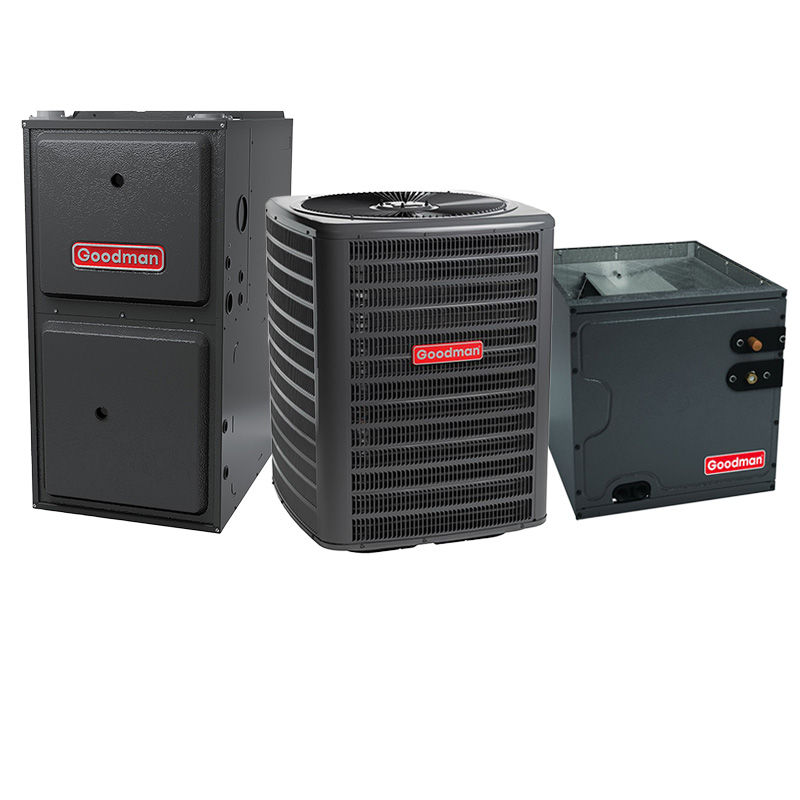
Goodman Furnace AC Combo – 3.5 Ton 13.8 SEER2 AC With 80000 BTU 97% AFUE Modulating Variable-Speed ECM Gas Furnace System – Upflow | R32
View on AC Direct see your lowest price →Check current price on AC Direct →
Key features
- 97% AFUE modulating gas furnace for top-tier heating efficiency
- Variable-speed ECM blower motor reduces electricity use and noise
- 3.5-ton cooling capacity suited to roughly 1,600 to 2,200 sq ft depending on climate and insulation
- 13.8 SEER2 AC meets current federal minimum efficiency standards
- R-32 refrigerant with a lower global-warming potential than R-410A
- Upflow configuration for basement or ground-level utility closet installations
About this system
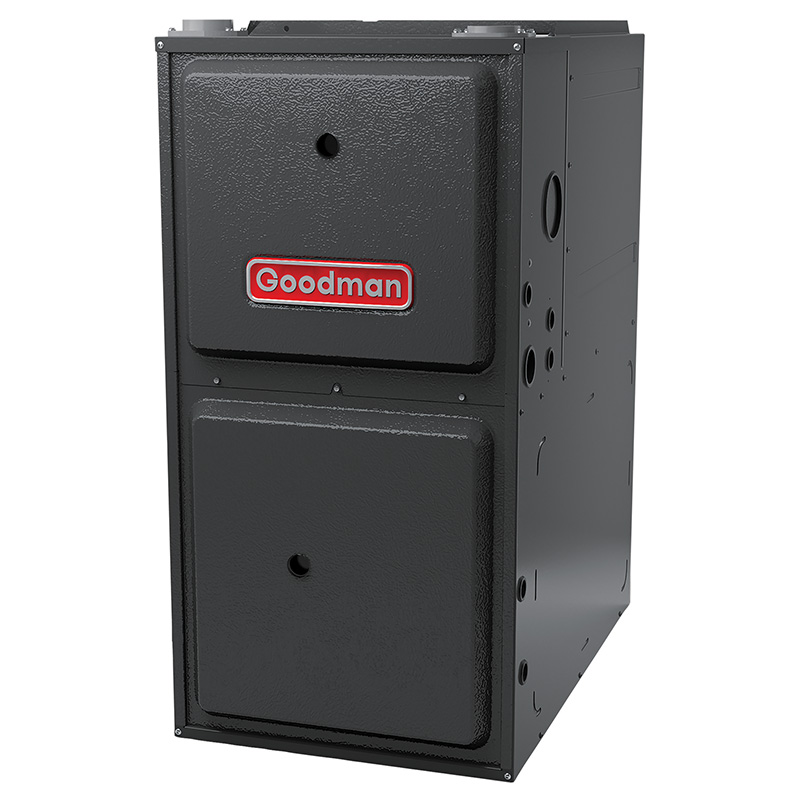
This Goodman combo pairs a 3.5-ton, 13.8 SEER2 central air conditioner with an 80,000 BTU, 97% AFUE modulating gas furnace in an upflow configuration. The furnace is the headline component here: a 97% AFUE rating sits at the top tier of residential gas efficiency, and the modulating burner adjusts heat output in small increments rather than simply cycling on and off, which translates to steadier room temperatures and quieter operation compared to single- or two-stage units. The variable-speed ECM blower motor compounds those comfort benefits while drawing significantly less electricity than a standard PSC motor. Together, these two components represent a significant step up in comfort technology even if the brand sits at the value end of the market.
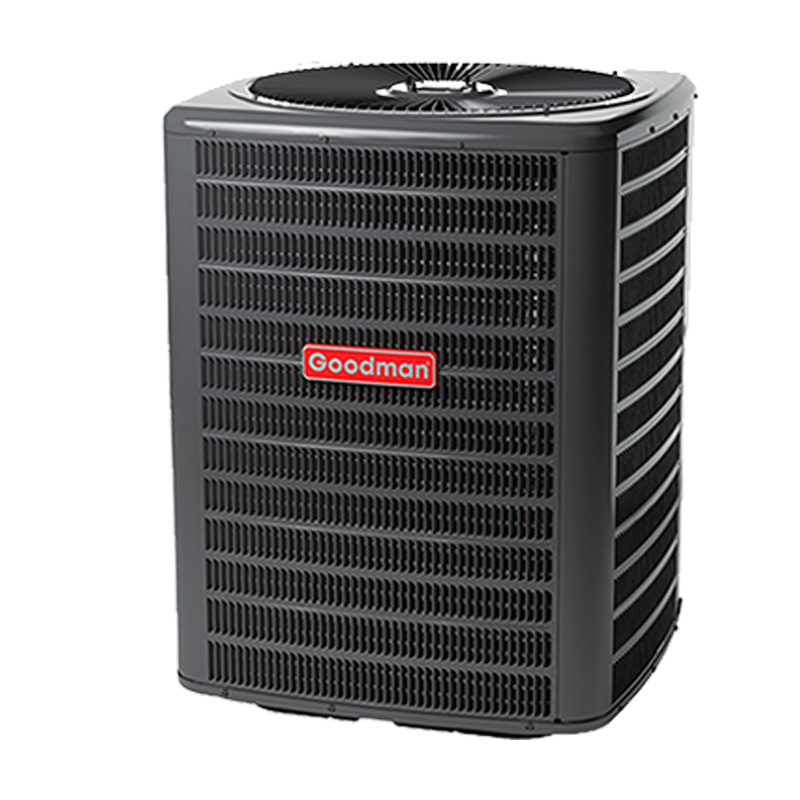
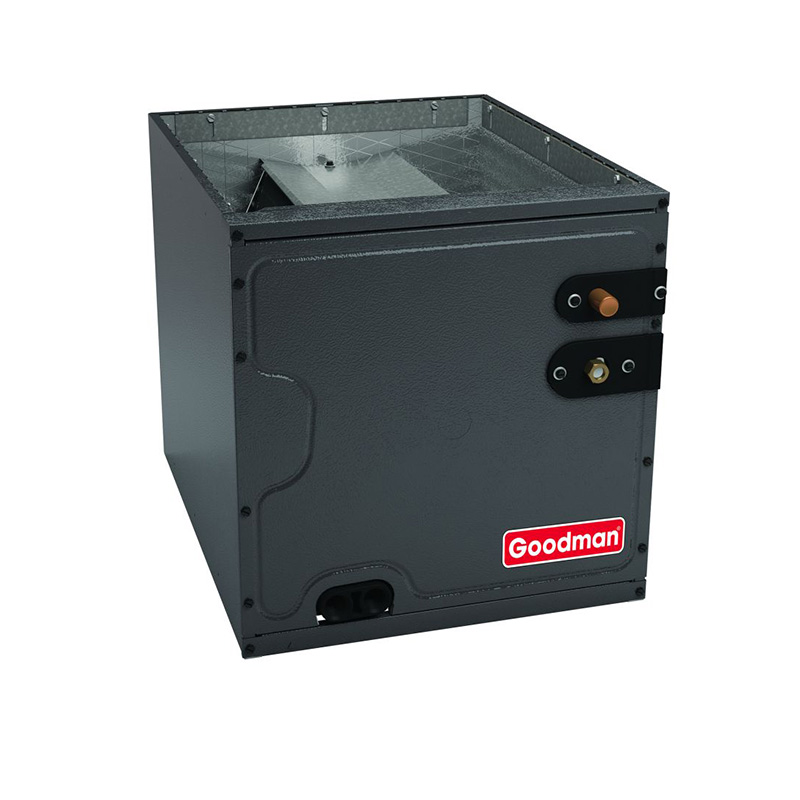
The air conditioner side runs on R-32 refrigerant, a lower global-warming-potential option that is becoming more common as the industry moves away from R-410A. At 13.8 SEER2, efficiency is compliant with current federal minimums for most U.S. climate regions but is not a high-efficiency unit; buyers in hot climates who run their AC heavily from May through September may want to weigh the long-term operating cost gap against a 16 or 18 SEER2 system. The upflow configuration suits homes with a furnace in a basement or ground-level utility closet where air is drawn in at the bottom and discharged upward into the duct system. This is one of the most common residential setups, so finding a qualified installer is generally straightforward.
This system suits homeowners who want premium furnace performance on a budget and live in a heating-dominant climate where the furnace runs far more hours per year than the air conditioner. It is a less compelling choice if your primary concern is cooling efficiency or if you are in a region where summer electric bills are the dominant operating cost.
This combo delivers genuinely high-end furnace technology at a value price point, making it a smart buy for heating-dominated climates where the modulating burner and ECM motor pay off in comfort and gas savings over time. The air conditioner is entry-level on efficiency, and Goodman's real-world track record introduces some reliability uncertainty that buyers should factor into their decision alongside the lower upfront cost. Install quality is the single most important variable in how this system performs and how long it lasts.
Overall score is the average of the five ratings above.
What we like
- 97% AFUE modulating furnace is top-tier efficiency and comfort for the price
- Variable-speed ECM blower improves humidity control and lowers blower electricity costs
- Priced roughly 15 to 25 percent below comparable Trane, Lennox, and Carrier systems
- R-32 refrigerant is a more environmentally responsible choice than R-410A
- Upflow design is one of the most common configurations, so parts and service technicians are widely available
Trade-offs
- 13.8 SEER2 is minimum-compliant cooling efficiency; high-AC-use households will pay more to operate it than a 16+ SEER2 system
- Dual-run capacitors are a documented early failure point, and evaporator coil leaks appear in a meaningful share of owner reports
- Compressor lifespan averages 10 to 14 years versus 15 to 20 years for premium brands, which affects long-term cost calculations
- A minority of owners report refrigerant leaks in the first year, typically traced to install or factory charge issues rather than the unit itself
What homeowners and pros say about Goodman
Homeowners who praise Goodman on Google dealer reviews, where the brand averages around 3.8 out of 5 stars across multiple locations, consistently point to the upfront price as the deciding factor, and many report years of trouble-free operation when a careful installer set the system up correctly. The pattern on ConsumerAffairs is less encouraging, where Goodman scores roughly 2.5 out of 5, and the recurring theme is repair costs that begin climbing after about year seven. Those two data points are not necessarily contradictory: a well-installed Goodman often performs reasonably, while one that was rushed through commissioning or lives in a high-humidity environment is more likely to surface the brand’s documented weak points sooner. For this particular system, the furnace side carries the most upside since modulating, variable-speed equipment tends to draw fewer complaints than simpler single-stage gear.
HVAC technicians who work on Goodman equipment regularly tend to describe it as serviceable and predictable rather than exceptional. The dual-run capacitor is the component they replace most often, a repair that typically runs between 300 and 600 dollars and is rarely a major ordeal. Evaporator coil leaks and compressor failures are the more consequential concerns: Goodman compressors have been documented averaging 10 to 14 years of service life versus 15 to 20 years for Trane, Lennox, and Carrier, and coil leaks show up often enough in owner feedback that they represent a genuine, if not universal, risk. A small share of owners also report refrigerant leaks within the first year, which technicians generally attribute to install-side issues rather than a factory defect. The practical takeaway is that the quality of the company that installs and commissions this system matters as much as the equipment itself.
Sources: ConsumerAffairs Goodman owner reviews, AHRI Directory of Certified Product Performance, U.S. DOE appliance and equipment efficiency standards, Goodman product specification sheets.
What it costs to run
At 13.8 SEER2, cooling this 3.5-ton system for a typical 1200-hour cooling season at the U.S. average electricity rate of $0.17/kWh works out to roughly $621 per year in cooling, about $18 less per year than a minimum-efficiency 13.4 SEER2 unit of the same size. Your real cost depends on your climate and local rate.
Method: (42,000 BTU/hr ÷ 13.8 SEER2) × 1200 hours ÷ 1000 × $0.17/kWh. Rate source: U.S. EIA average; cooling hours: moderate-climate estimate.
How it compares
| Brand | Comparable model | SEER2 | Stage | Price position |
|---|---|---|---|---|
| Goodman | 3.5T 13.8 SEER2 AC / 80K BTU 97% AFUE Modulating ECM Furnace | 13.8 | Modulating / Variable-speed | Value pick |
| Carrier | Performance 13 (24ACC3 series) with 58MVC modulating furnace | 13.8-14.0 | Modulating / Variable-speed | Typically 15 to 25 percent more than Goodman |
| Trane | XR13c condenser with S9V2 variable-speed furnace | 13.8-14.0 | Modulating / Variable-speed | Typically 15 to 25 percent more than Goodman |
| Lennox | Merit 14ACX condenser with SLP98V modulating furnace | 13.8-14.3 | Modulating / Variable-speed | Typically 15 to 25 percent more than Goodman |
Competitor rows are comparable single-stage units at similar efficiency; price is relative position, not a quote.
Questions about this system
Is 13.8 SEER2 going to cost me significantly more to run than a higher-efficiency AC?
In a heating-dominant climate where the AC runs three to four months a year, the difference versus a 16 SEER2 unit is real but modest on an annual basis. In a hot climate with six or more months of cooling, the operating cost gap widens enough that the higher-efficiency unit can recoup its price premium within several years, so it is worth running the numbers for your specific location and utility rate.
What does modulating mean on the furnace, and is it actually worth it?
A modulating furnace adjusts its burner output in small steps rather than simply turning full-on or full-off, so it maintains a steadier indoor temperature and runs longer, quieter cycles. Combined with the variable-speed ECM blower, most homeowners notice meaningfully better comfort and humidity control compared to single-stage equipment, and the 97% AFUE means very little heat energy is lost up the flue.
How concerned should I be about the evaporator coil leak issue reported by some Goodman owners?
Coil leaks are a documented failure mode in owner reviews, not an isolated complaint. The risk is not unique to Goodman, but it appears at a higher rate than with premium brands. Asking your installer to pressure-test the coil at startup and confirming the refrigerant charge is correct are the best first-line protections, since early leaks are often tied to install rather than the coil itself.
What warranty does this system come with, and what do I need to do to keep it valid?
Goodman typically offers a 10-year parts limited warranty when the equipment is registered within a set window after installation, dropping to a shorter period if registration is missed. The warranty generally does not cover labor, which is a significant out-of-pocket exposure if a major component like the heat exchanger or compressor fails outside the first year or two. Confirm the current warranty terms with your dealer at the time of purchase, as coverage details can vary by model and registration date.
Does switching to R-32 refrigerant affect serviceability or cost if the system ever needs a recharge?
R-32 is increasingly available through HVAC supply channels, but it is not yet as universally stocked as R-410A was at its peak. It is mildly flammable (A2L classification), which means some older technicians may be less familiar with handling procedures, though it is fully serviceable by any certified HVAC technician with current training. Pricing is generally comparable to R-410A at this point, but availability can vary by region.
Specifications
| Cooling capacity | 3.5 Ton |
| Efficiency | 13.8 SEER2 |
| Furnace output | 80000 BTU |
| Furnace efficiency | 97% AFUE |
| Configuration | Upflow |
| Refrigerant | R-32 |