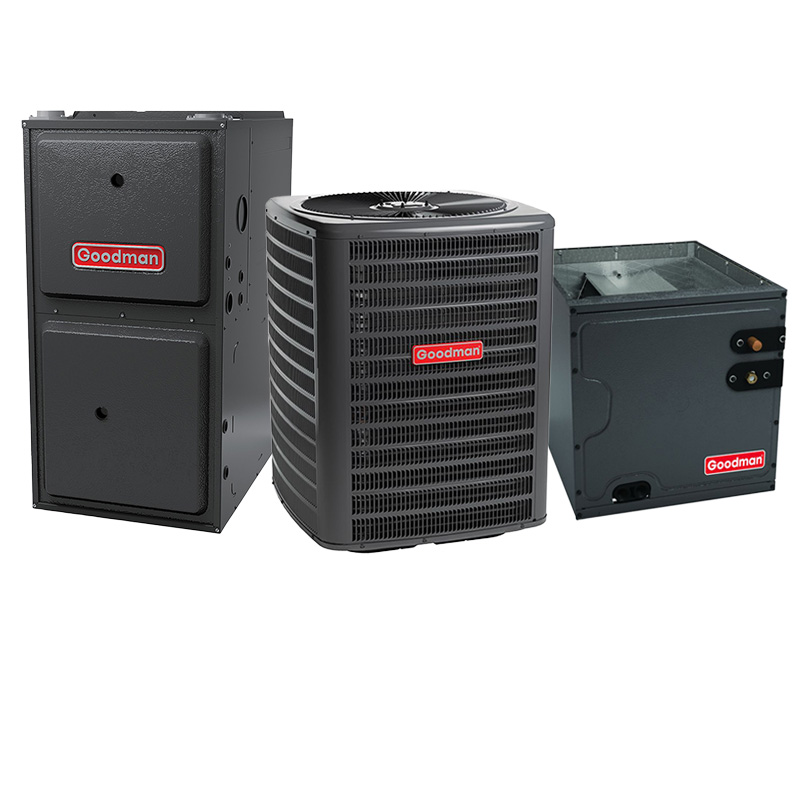
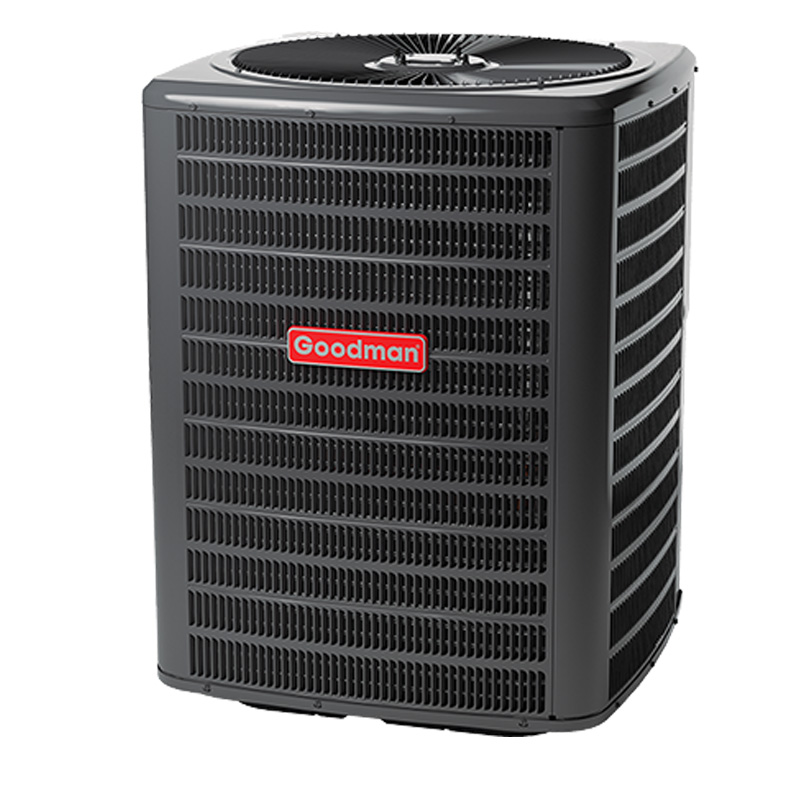
Goodman Furnace AC Combo – 3.5 Ton 15.2 SEER2 AC With 100000 BTU 97% AFUE Modulating Variable-Speed ECM Gas Furnace System – Upflow | R32
View on AC Direct see your lowest price →Check current price on AC Direct →
Key features
- 3.5-ton cooling capacity rated at 15.2 SEER2 for mid-tier efficiency
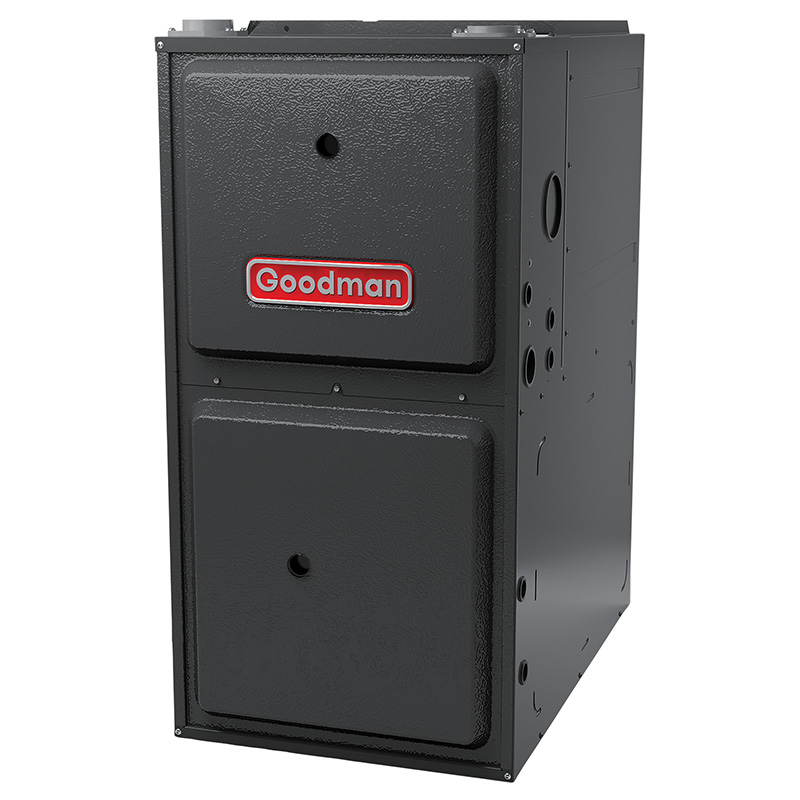
- 97% AFUE modulating gas furnace with stepless burner modulation for even heat distribution
- Variable-speed ECM blower motor reduces electricity consumption and blower noise
- R-32 refrigerant with lower global warming potential than R-410A
- Upflow cabinet orientation for basement or closet installations with overhead duct systems
- 100,000 BTU heating capacity suited to larger or colder-climate homes
About this system
The Goodman GLXS4BA4210 pairs a 3.5-ton, 15.2 SEER2 air conditioner with a 100,000 BTU, 97% AFUE modulating gas furnace in an upflow configuration. The furnace side is the headline here: modulating burners adjust output in small increments rather than cycling fully on or off, which means more consistent indoor temperatures, quieter operation during mild weather, and near-maximum use of every cubic foot of gas. A variable-speed ECM blower motor complements that by ramping airflow to match demand, cutting electricity use compared with a standard PSC motor and reducing the blower noise that single-stage systems are known for.
The 15.2 SEER2 rating on the cooling side clears the federal minimum comfortably and earns the system solid mid-efficiency standing, though it stops short of the 18-plus SEER2 tier where energy savings become more compelling over a 10-to-15-year horizon. R-32 refrigerant is the practical trade-off for future serviceability: it has a lower global warming potential than R-410A and is becoming the industry standard, so replacement refrigerant and technician familiarity should improve over time. The upflow configuration suits homes where the air handler sits in a basement or utility closet and supply air rises into the duct system above it, a very common layout in Northern climates. This system is best suited to homeowners in the 2,000 to 2,800 square-foot range who want a meaningful step up in comfort over single-stage equipment without paying premium-brand prices for the hardware.
The Goodman GLXS4BA4210 delivers a genuinely capable modulating furnace and variable-speed blower at a price point that undercuts comparable Carrier, Trane, and Lennox packages by a meaningful margin. The comfort technology is real, but the brand's documented reliability history and install-quality sensitivity mean the long-term value of that savings depends heavily on who puts the system in and how it is maintained. Buyers willing to invest in a thorough installation and a service plan will get the best return; those expecting set-it-and-forget-it performance over 15-plus years should weigh the premium-brand alternatives honestly.
Overall score is the average of the five ratings above.
What we like
- Modulating furnace provides finer temperature control and quieter cycling than single- or two-stage units
- Variable-speed ECM motor meaningfully lowers fan electricity costs over the system's life
- 97% AFUE is among the highest efficiency tiers available for gas heating
- R-32 refrigerant positions the system well for evolving industry service standards
- Hardware cost runs 15 to 25 percent below comparable premium-brand systems, lowering the upfront barrier
Trade-offs
- Dual-run capacitors are the most commonly reported failure, typically adding a $300 to $600 repair bill around or after year 7
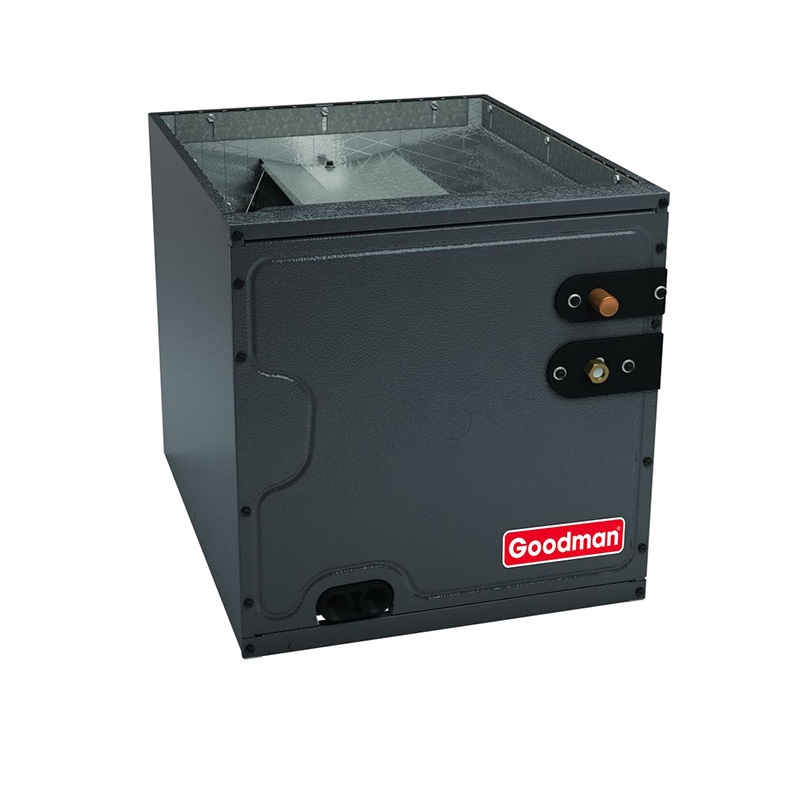
- Evaporator coil leaks appear in a meaningful share of owner reviews and can be costly out of warranty
- Compressor lifespan averages 10 to 14 years versus 15 to 20 for premium brands, a real long-term cost consideration
- A minority of first-year refrigerant leak reports suggest the system's final performance is unusually sensitive to installation quality and proper charging
What homeowners and pros say about Goodman
Goodman earns around 3.8 out of 5 across Google dealer reviews, where the most consistent praise centers on affordability and the accessibility of local dealers who stock parts. That score reflects a real middle ground: buyers who had a skilled installer and kept up with annual service often report years of trouble-free operation, while those who did not end up in the complaint pool that drags the ConsumerAffairs score down to roughly 2.5 out of 5. That ConsumerAffairs figure is complaint-skewed by nature, but the recurring theme there is telling: repair costs tend to climb noticeably after about year 7, which aligns with the brand’s documented pattern of dual-run capacitor failures showing up in that window, a $300 to $600 fix when caught, more disruptive if ignored.
HVAC technicians tend to have a pragmatic view of Goodman: the parts are widely available, the diagnostics are straightforward, and the modulating furnace and variable-speed blower on this particular configuration represent genuinely modern technology at a lower price than the premium brands charge for the same feature set. The documented concerns they flag most are evaporator coil leaks, which appear in enough owner accounts to be a real risk rather than an outlier, and compressor longevity that averages 10 to 14 years rather than the 15 to 20 years premium-brand compressors typically deliver. A small but notable share of first-year refrigerant leak reports also surfaces in owner accounts, which technicians consistently attribute to installation or initial charge errors rather than a factory defect. The consensus is that this system rewards careful installation and consistent maintenance, and punishes shortcuts more than premium-tier equipment does.
Sources: ConsumerAffairs Goodman owner reviews, AHRI Directory of Certified Product Performance, U.S. DOE appliance and equipment efficiency standards, Goodman product specification sheets.
What it costs to run
At 15.2 SEER2, cooling this 3.5-ton system for a typical 1200-hour cooling season at the U.S. average electricity rate of $0.17/kWh works out to roughly $564 per year in cooling, about $75 less per year than a minimum-efficiency 13.4 SEER2 unit of the same size. Your real cost depends on your climate and local rate.
Method: (42,000 BTU/hr ÷ 15.2 SEER2) × 1200 hours ÷ 1000 × $0.17/kWh. Rate source: U.S. EIA average; cooling hours: moderate-climate estimate.
How it compares
| Brand | Comparable model | SEER2 | Stage | Price position |
|---|---|---|---|---|
| Goodman | GLXS4BA4210 (this system) | 15.2 | Variable / Modulating | Value pick |
| Carrier | Performance 16 / 59MN7 series (AC + gas furnace bundle) | 16 | Two-stage | Typically 15 to 25 percent more than this Goodman package |
| Trane | XR15 / S9V2 series (AC + gas furnace bundle) | 15.2 to 16 | Two-stage | Typically 15 to 25 percent more than this Goodman package |
| Lennox | Merit 16ACX / ML296V series (AC + gas furnace bundle) | 16 | Two-stage / Variable-speed blower | Typically 15 to 25 percent more than this Goodman package |
Competitor rows are comparable single-stage units at similar efficiency; price is relative position, not a quote.
Questions about this system
Is 15.2 SEER2 good enough to qualify for a federal tax credit or utility rebates?
For split systems, the current federal Inflation Reduction Act efficiency threshold for the 25C tax credit is 16 SEER2 in Northern climate zones, so this unit at 15.2 SEER2 does not qualify on its own. Many utility rebate programs use lower thresholds, so it is worth checking your local provider directly. The 97% AFUE furnace may qualify separately as a high-efficiency heating component, so consult a tax professional with the specific model documentation.
What does 'modulating' actually mean compared to two-stage, and is the difference noticeable indoors?
A two-stage furnace operates at roughly 65% and 100% of capacity, while a modulating furnace adjusts output in small steps, sometimes as fine as 1% increments, to closely match what the space actually needs. Most homeowners notice fewer temperature swings, more consistent airflow, and quieter operation during mild weather when the furnace is running at low fire. The practical comfort difference is real, particularly in shoulder seasons.
My house has an older R-22 or R-410A system. Can I reuse the existing line set with this R-32 unit?
Reusing an existing line set with R-32 requires a thorough inspection and flush, because residual oil from older refrigerants is incompatible with R-32 systems. Many installers will recommend replacing the line set outright, and some manufacturers require it to maintain warranty coverage. Budget for that possibility when getting installation quotes.
How worried should I be about the documented capacitor and coil leak issues?
Dual-run capacitor failures are very common across all brands but appear frequently in Goodman owner reports, typically surfacing after year 7 and costing $300 to $600 to repair. Evaporator coil leaks show up in a meaningful share of Goodman reviews and are more expensive to address, especially outside the warranty window. Keeping the system on a maintenance plan that includes annual capacitor checks and coil inspections is the practical way to catch both issues before they become emergency calls.
What warranty does Goodman provide on this system, and what does registration require?
Goodman typically offers a 10-year parts warranty on registered equipment, which requires online registration within a set period after installation. Failure to register usually drops coverage to a shorter base warranty, often 5 years on parts. The compressor may carry an extended warranty under certain conditions, but the warranty does not cover labor, refrigerant, or diagnostic costs, which is a meaningful out-of-pocket exposure if a coil or compressor fails after the install-labor warranty from your contractor has expired.
Specifications
| Cooling capacity | 3.5 Ton |
| Efficiency | 15.2 SEER2 |
| Furnace output | 100000 BTU |
| Furnace efficiency | 97% AFUE |
| Configuration | Upflow |
| Refrigerant | R-32 |
| Model | GLXS4BA4210 |