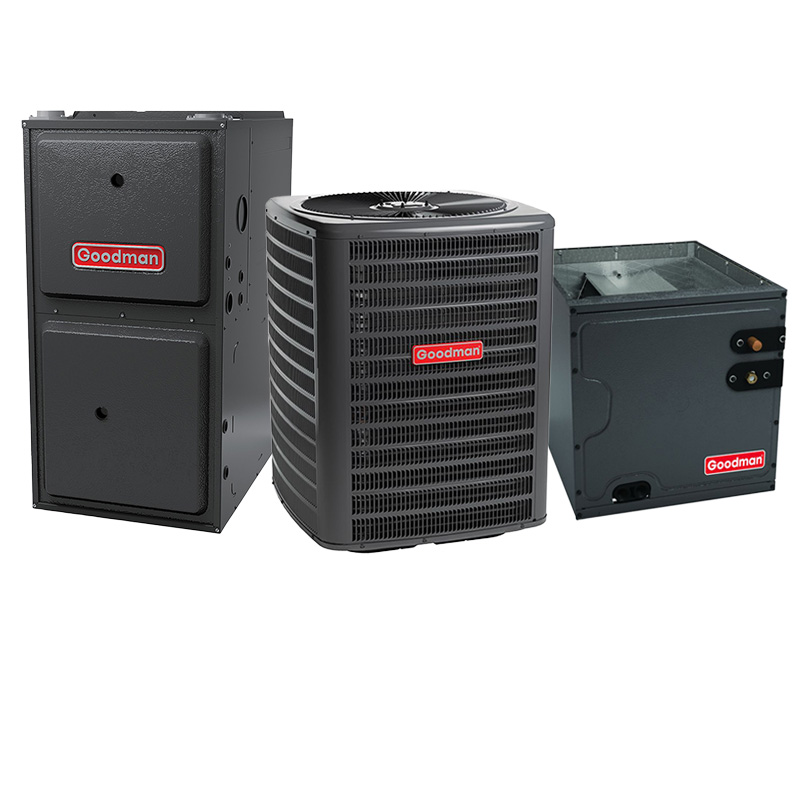
Goodman Furnace AC Combo – 3.5 Ton 15.2 SEER2 AC With 80000 BTU 97% AFUE Modulating Variable-Speed ECM Gas Furnace System – Upflow | R32
View on AC Direct see your lowest price →Check current price on AC Direct →
Key features
- 3.5-ton cooling capacity rated at 15.2 SEER2 for above-minimum efficiency
- 97% AFUE modulating gas furnace with variable-speed ECM blower motor
- R-32 refrigerant charge with lower global warming potential than R-410A
- Upflow configuration designed for basement or ground-level mechanical room installs
- Modulating burner adjusts output continuously for tighter temperature control
- 80,000 BTU heating capacity suited to mid-size homes in cold climates
About this system
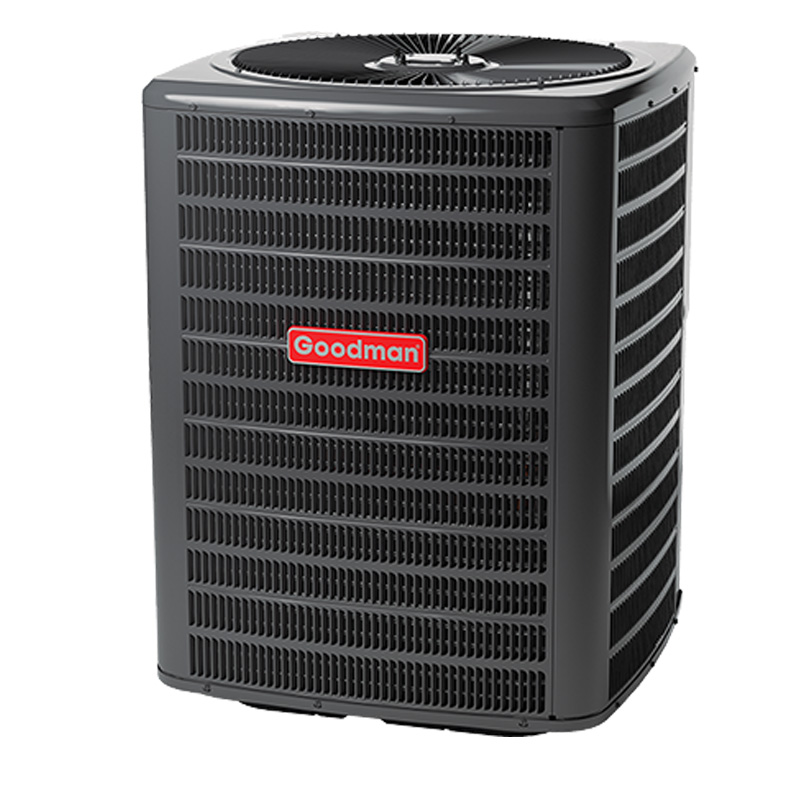
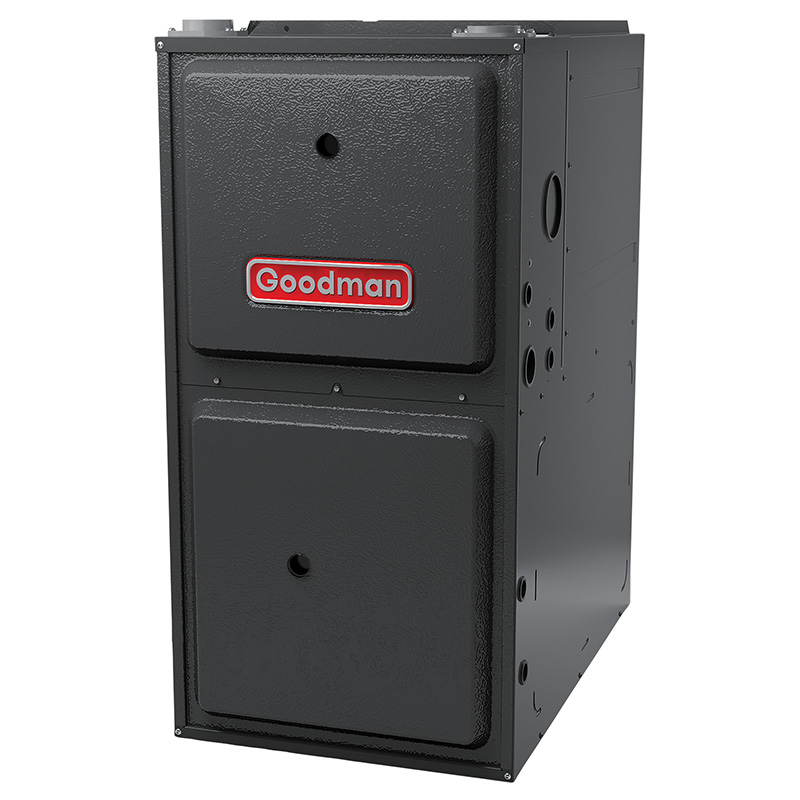
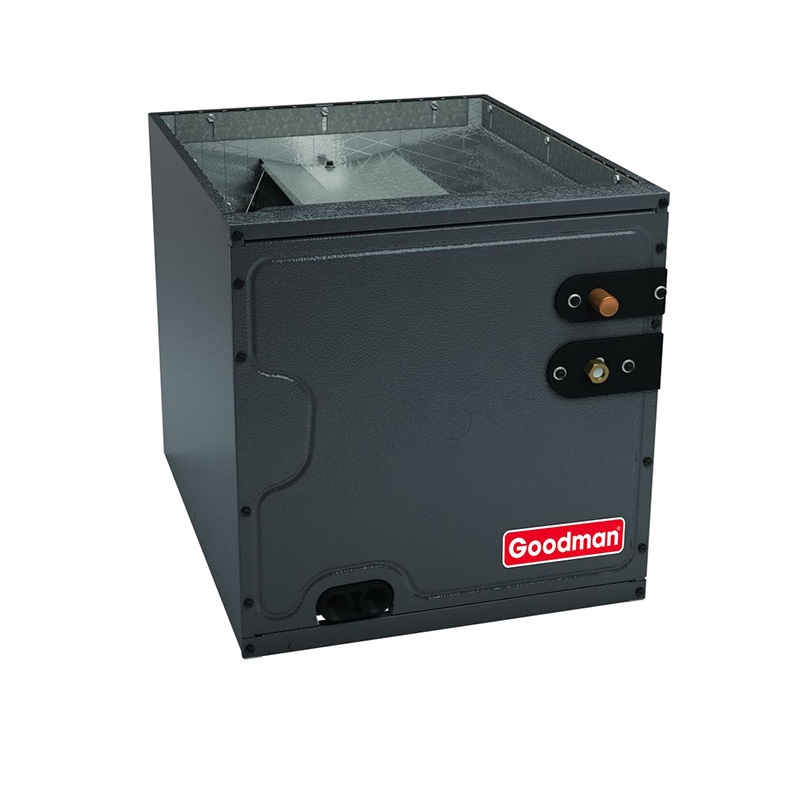
The Goodman GLXS4BA4210 pairs a 3.5-ton, 15.2 SEER2 air conditioner with an 80,000 BTU, 97% AFUE modulating gas furnace in an upflow configuration, making it a strong candidate for homes in the 1,800 to 2,400 square foot range that need both serious heating efficiency and reliable summer cooling. The furnace’s modulating burner and variable-speed ECM blower are the real standouts here: instead of running at full blast and cycling off, the system continuously adjusts output in small increments, which keeps temperatures steady, reduces temperature swings between rooms, and significantly cuts gas bills compared to an 80% AFUE single-stage unit.
The R-32 refrigerant charge is a meaningful upgrade over older R-410A systems. R-32 has a lower global warming potential and requires a smaller charge by weight, which can make servicing slightly simpler, though not all technicians are yet fully equipped for it, so confirming your installer is certified for R-32 before booking is worth the five-minute call. At 15.2 SEER2, the AC lands just above the federal minimum threshold for most U.S. climate zones, meaning it qualifies for installation legally everywhere but is not at the top tier of efficiency. For homeowners prioritizing upfront value while still getting a near-premium furnace, that trade-off is often a reasonable one.
This is an upflow-only system, so it requires a basement, crawlspace, or mechanical room installation where air enters from the bottom and exits from the top. It is not suitable for attic installations or horizontal runs without separate components. The combination of modulating heat and a variable-speed blower does place real demands on installation precision, including correct static pressure, refrigerant charge, and gas pressure settings, making contractor selection critical to long-term satisfaction.
This Goodman combo delivers a genuinely high-performance furnace paired with a competent but not standout AC unit, all at a price point meaningfully below Carrier, Trane, and Lennox equivalents. The 97% AFUE modulating furnace is the system's strongest asset and will generate real heating savings over a standard 80% unit. The trade-off is Goodman's documented mid-tier reliability record and its heavier-than-average dependence on installation quality, which means your installer's skill level matters as much as the equipment itself.
Overall score is the average of the five ratings above.
What we like
- 97% AFUE modulating furnace delivers near-top-tier heating efficiency and consistent comfort
- Variable-speed ECM blower reduces electricity consumption and improves airflow balance
- Priced 15 to 25 percent below comparable systems from Trane, Carrier, and Lennox
- R-32 refrigerant is more environmentally responsible and future-compatible than R-410A
- Modulating operation significantly reduces temperature swings and cycling noise
Trade-offs
- Dual-run capacitors are the most commonly reported failure point, typically after year 5 to 7, though repair costs are usually modest at 300 to 600 dollars
- Evaporator coil leaks appear in a meaningful share of owner reviews, which can be a more costly repair
- Compressor lifespan averages 10 to 14 years versus 15 to 20 years for premium-brand compressors
- A minority of owners report refrigerant leaks within the first year, most often tied to installation or charge issues rather than product defects
What homeowners and pros say about Goodman
Homeowners who bought Goodman systems tend to cluster around two experiences. Those who had their unit installed by an experienced, detail-oriented technician often report years of trouble-free operation and credit the brand’s affordability for letting them stretch their budget toward better installation labor. Those who ran into problems frequently describe issues surfacing around year 7 or beyond, particularly around capacitor failures and, in some cases, refrigerant leaks or coil issues. Goodman’s ConsumerAffairs rating sits at roughly 2.5 out of 5, though that platform draws a disproportionate share of frustrated owners rather than satisfied ones. Google dealer reviews across installation companies average closer to 3.8 out of 5, where affordability is the most frequently mentioned reason for the positive marks.
HVAC technicians who work on a broad range of brands tend to describe Goodman as a workhorse that rewards a clean, properly commissioned installation and punishes shortcuts. The documented failure modes they mention most often are dual-run capacitors, which are inexpensive and quick to swap, and evaporator coil leaks, which are more involved. Compressor lifespan on Goodman equipment generally runs in the 10 to 14 year range, shorter than the 15 to 20 years more commonly associated with premium brands. For the GLXS4BA4210 specifically, the 97% AFUE modulating furnace tends to draw more respect from technicians than the AC side, simply because a high-efficiency modulating furnace at this price point is unusual and the comfort benefits of variable operation are concrete and measurable.
Sources: ConsumerAffairs Goodman owner reviews, AHRI Directory of Certified Product Performance, U.S. DOE appliance and equipment efficiency standards, Goodman product specification sheets.
What it costs to run
At 15.2 SEER2, cooling this 3.5-ton system for a typical 1200-hour cooling season at the U.S. average electricity rate of $0.17/kWh works out to roughly $564 per year in cooling, about $75 less per year than a minimum-efficiency 13.4 SEER2 unit of the same size. Your real cost depends on your climate and local rate.
Method: (42,000 BTU/hr ÷ 15.2 SEER2) × 1200 hours ÷ 1000 × $0.17/kWh. Rate source: U.S. EIA average; cooling hours: moderate-climate estimate.
How it compares
| Brand | Comparable model | SEER2 | Stage | Price position |
|---|---|---|---|---|
| Goodman | GLXS4BA4210 | 15.2 | Variable/Modulating | Value pick |
| Carrier | Comfort 15 Series (24ACC6) | 15.2 | Single-stage | Typically 15 to 25 percent more than Goodman |
| Trane | XR15 Series | 15.0 to 15.5 | Single-stage | Typically 15 to 25 percent more than Goodman |
| Lennox | Merit ML15 Series | 15.0 to 15.5 | Single-stage | Typically 15 to 25 percent more than Goodman |
Competitor rows are comparable single-stage units at similar efficiency; price is relative position, not a quote.
Questions about this system
Is 15.2 SEER2 good enough, or should I pay more for a higher-efficiency AC unit?
15.2 SEER2 meets or exceeds the federal minimum in every U.S. climate zone and will run noticeably more efficiently than the units it typically replaces. For most homes, the payback period on a significantly higher-SEER2 unit stretches to 8 to 12 years, so the 15.2 rating is a reasonable choice unless you are in an extreme cooling climate with very high run hours.
What are the most common repairs I should budget for with a Goodman system?
Dual-run capacitors are the most frequently reported failure, typically a straightforward repair in the 300 to 600 dollar range. Evaporator coil leaks are documented in a meaningful share of owner reviews and can cost significantly more to address. Setting aside a small service fund after year 6 or 7 is a practical approach.
Does my HVAC contractor need special certification to work with R-32 refrigerant?
Yes. R-32 is classified as mildly flammable (A2L), so technicians need specific handling training and, in many jurisdictions, updated EPA Section 608 certification covering A2L refrigerants. Confirm your installer is qualified before scheduling work, since not every local technician has updated their certification yet.
Can this system be installed horizontally or in an attic?
No. This is an upflow-only furnace, meaning airflow enters from the bottom and exits from the top. Attic, horizontal, or downflow installations require a different furnace model. If your home's ductwork is configured for anything other than a basement or ground-floor mechanical room, this specific system is not the right fit.
How much does the modulating furnace actually save compared to a standard 80% AFUE unit?
Moving from 80% to 97% AFUE means roughly 17 cents of every dollar spent on gas previously lost as exhaust heat is now used to heat your home. On an annual gas bill of 1,200 dollars, that could represent 150 to 200 dollars in savings per year, though actual figures depend heavily on local gas prices, climate, and how well the system is sized and sealed.
Specifications
| Cooling capacity | 3.5 Ton |
| Efficiency | 15.2 SEER2 |
| Furnace output | 80000 BTU |
| Furnace efficiency | 97% AFUE |
| Configuration | Upflow |
| Refrigerant | R-32 |
| Model | GLXS4BA4210 |