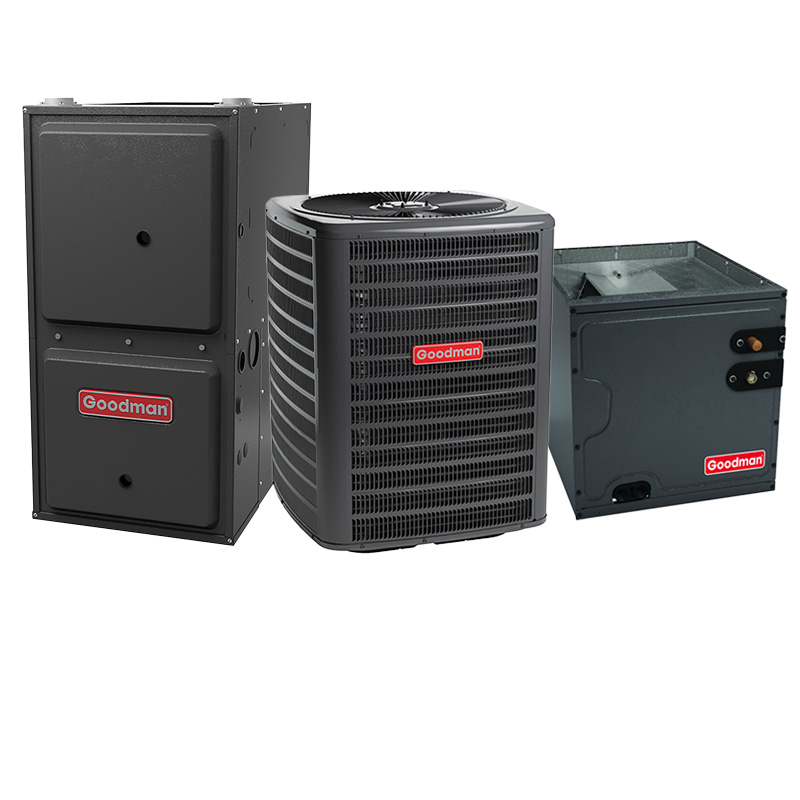
Goodman Furnace AC Combo – 3.5 Ton 15.2 SEER2 AC With 100000 BTU 97% AFUE Modulating Variable-Speed ECM Gas Furnace System – Downflow | R32
View on AC Direct see your lowest price →Check current price on AC Direct →
Key features
- 3.5-ton, 15.2 SEER2 split-system AC with R-32 refrigerant
- 100,000 BTU modulating gas furnace with 97% AFUE efficiency
- Variable-speed ECM blower motor for quieter, steadier airflow
- Downflow configuration for closet or basement installations with floor-supply ducts
- Modulating burner reduces temperature swings and short-cycling
- R-32 refrigerant with lower global-warming potential than R-410A
About this system
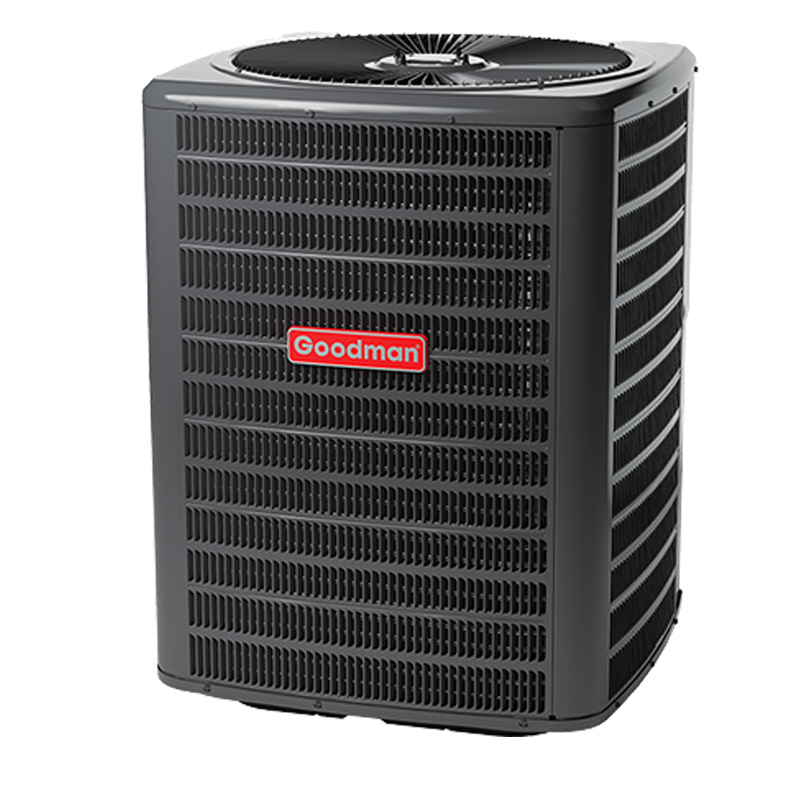
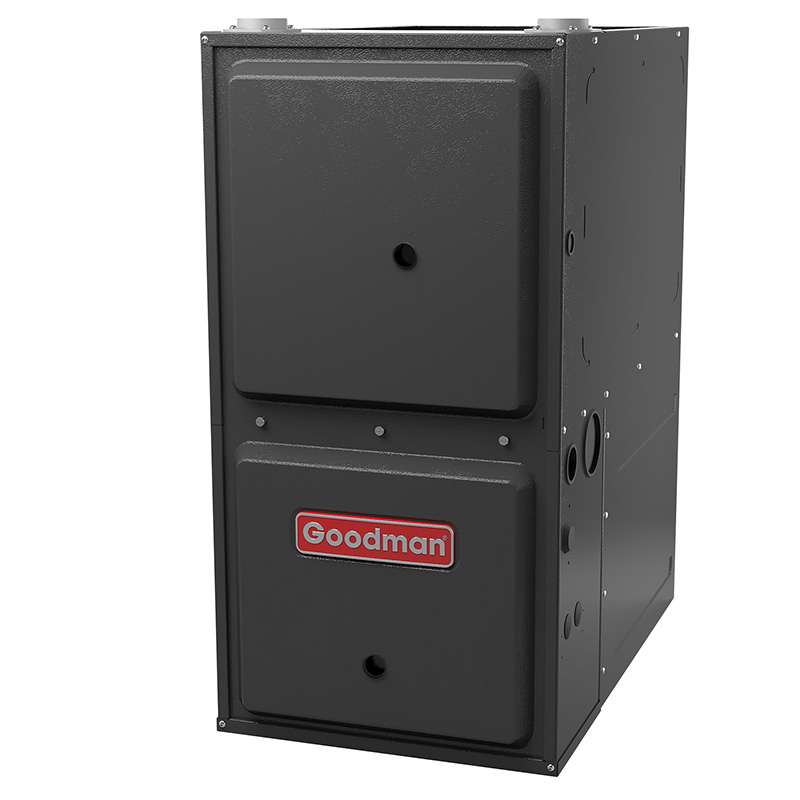
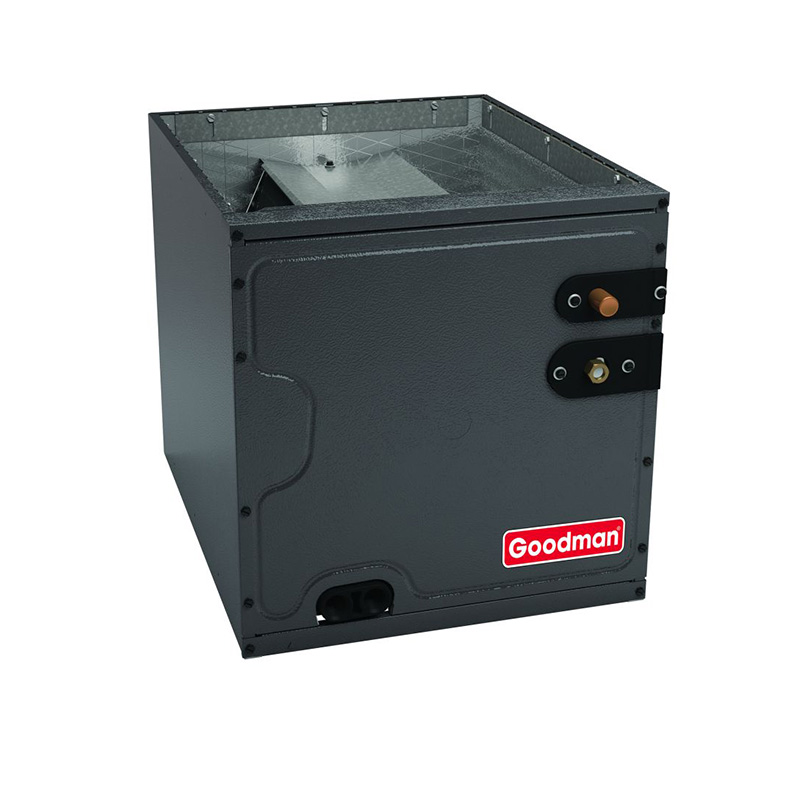
The Goodman GLXS4BA4210 pairs a 3.5-ton, 15.2 SEER2 air conditioner with a 100,000 BTU, 97% AFUE modulating gas furnace in a downflow configuration, making it a strong candidate for homes where the air handler sits in a utility closet or basement with supply ducts running down through the floor. The furnace’s modulating burner and variable-speed ECM blower motor work together to run at partial capacity most of the time, which keeps temperature swings tight, reduces short-cycling noise, and trims gas bills compared to single- or two-stage furnaces. At 97% AFUE, only 3 cents of every dollar spent on gas escapes as exhaust.
The 15.2 SEER2 cooling rating lands just above the federal minimum for most northern U.S. regions and sits in the mid-efficiency tier nationally. It is not a top-tier efficiency system, but it delivers meaningful operating savings over older 13 or 14 SEER equipment. The switch to R-32 refrigerant is worth noting: R-32 has a lower global-warming potential than the R-410A it replaces, and its higher energy density can mean slightly better heat transfer, though real-world efficiency gains are modest. One practical note is that R-32 service requires technicians who are certified and equipped for it, which is still a narrower pool in some markets.
This combo suits medium-to-large homes in mixed or cold climates where heating load is the dominant concern and where a high-AFUE, modulating furnace will pay back its cost over time. The downflow configuration is a specific requirement, not a universal fit, so confirm your duct layout before purchasing. Buyers comfortable with Goodman’s value-brand trade-offs and who hire an experienced installer will likely get solid performance; buyers who want the top-end reliability of a premium brand will need to weigh the price difference carefully.
This Goodman combo delivers genuinely high-end furnace technology, a modulating burner and variable-speed ECM, at a price point well below comparable Trane, Lennox, or Carrier systems, which is its core appeal. The 97% AFUE furnace is a legitimate efficiency standout, and the 15.2 SEER2 AC is adequate without being exceptional. The honest trade-off is that Goodman's documented reliability history, including capacitor failures, evaporator coil leaks, and compressor lifespans shorter than premium rivals, means long-run costs depend heavily on how well the system is installed and maintained.
Overall score is the average of the five ratings above.
What we like
- 97% AFUE modulating furnace is best-in-class efficiency territory and will cut gas bills noticeably vs. 80% or even 96% AFUE units
- Variable-speed ECM motor improves comfort and dehumidification while reducing electricity draw from the blower
- Priced roughly 15 to 25 percent below equivalent Trane, Lennox, or Carrier systems, leaving room in the budget for a quality install
- R-32 refrigerant is better positioned for long-term regulatory stability than R-410A
- Modulating burner minimizes temperature swings and is notably quieter during low-fire operation
Trade-offs
- Dual-run capacitors are the most commonly reported failure point across Goodman systems, typically surfacing within the first several years of use
- Evaporator coil leaks appear in a meaningful share of owner reviews, which can mean refrigerant loss and repair bills
- Compressor longevity averages 10 to 14 years in documented experience, notably shorter than the 15 to 20 years often seen with premium brands
- Downflow-only configuration limits this unit to homes with specific duct layouts; the R-32 refrigerant also requires a certified technician for any service work, which may be harder to find in some areas
What homeowners and pros say about Goodman
Among homeowners who have logged reviews, Goodman earns roughly 2.5 out of 5 on ConsumerAffairs, a platform where dissatisfied buyers are substantially more likely to post than satisfied ones. The recurring complaint there is repair costs that climb after the seven-year mark, often tied to the documented failure modes: dual-run capacitors going out, evaporator coil refrigerant leaks, and compressors that may not reach the 15-to-20-year lifespan owners expect from premium brands. Google dealer reviews paint a more balanced picture, averaging around 3.8 out of 5 across many locations, where the most common praise is straightforward: the equipment is affordable, and when it is installed correctly it runs well. The gap between those two scores reflects how much install quality shapes the Goodman experience.
HVAC technicians tend to hold a pragmatic view of the brand. Many note that Goodman’s parts are widely stocked, which means a capacitor swap or contractor replacement is rarely a multi-week wait. The concern pros voice more often is that the brand attracts cost-focused buyers who sometimes also opt for the lowest-bid installer, and that combination compresses reliability. For a system like this one, with modulating furnace controls, a variable-speed motor, and R-32 refrigerant that requires specific handling, cutting corners on the install is a real risk. Technicians who respect the brand’s value position consistently emphasize that a thorough startup, proper refrigerant charge verification, and correct static pressure setup are not optional extras; they are what separates a Goodman that runs well for 12 years from one that generates a repair call in year four.
Sources: ConsumerAffairs Goodman owner reviews, AHRI Directory of Certified Product Performance, U.S. DOE appliance and equipment efficiency standards, Goodman product specification sheets.
What it costs to run
At 15.2 SEER2, cooling this 3.5-ton system for a typical 1200-hour cooling season at the U.S. average electricity rate of $0.17/kWh works out to roughly $564 per year in cooling, about $75 less per year than a minimum-efficiency 13.4 SEER2 unit of the same size. Your real cost depends on your climate and local rate.
Method: (42,000 BTU/hr ÷ 15.2 SEER2) × 1200 hours ÷ 1000 × $0.17/kWh. Rate source: U.S. EIA average; cooling hours: moderate-climate estimate.
How it compares
| Brand | Comparable model | SEER2 | Stage | Price position |
|---|---|---|---|---|
| Goodman | GLXS4BA4210 (this system) | 15.2 | Variable/Modulating | Value pick |
| Trane | XV80 / XR15 series combo | 15.0-15.5 | Variable/Two-stage | Approximately 20 to 30 percent more than this Goodman |
| Carrier | Infinity 98 / Performance 15 series combo | 15.0-16.0 | Variable/Modulating | Approximately 25 to 35 percent more than this Goodman |
| Lennox | SLP98V / XC15 series combo | 15.0-16.0 | Variable/Modulating | Approximately 25 to 40 percent more than this Goodman |
Competitor rows are comparable single-stage units at similar efficiency; price is relative position, not a quote.
Questions about this system
Is the downflow configuration a hard requirement, or can this unit be installed in other orientations?
Downflow is a hard requirement for this model. In a downflow setup, the furnace sits above the coil and air exits through the bottom into floor-supply ducts. Installing it in an upflow or horizontal position will void the warranty and can create serious safety and drainage problems. Confirm your existing duct layout matches before ordering.
What does the R-32 refrigerant change mean for future service calls?
R-32 requires technicians who are trained and equipped specifically for it, including proper recovery equipment, since it is mildly flammable under certain conditions. In most metro areas this is increasingly common, but in rural markets the pool of qualified techs is smaller. Ask your installer to confirm R-32 certification before booking service.
How often do Goodman dual-run capacitors actually fail, and what does it cost to fix?
Capacitor failure is the single most commonly reported repair across Goodman cooling equipment, and it tends to show up anywhere from year three onward. The good news is that it is usually a straightforward fix: a replacement capacitor and a service call typically run in the 300 to 600 dollar range. Keeping a spare capacitor on hand or scheduling annual tune-ups that include capacitor checks can catch the issue before it becomes an emergency no-cool situation.
Does the modulating furnace really make a noticeable comfort difference compared to a two-stage unit?
In most homes, yes. A modulating furnace can run at many increments between roughly 40 and 100 percent of full capacity, so it tends to hold setpoint temperatures within half a degree rather than the one- to two-degree swings common with two-stage units. It also runs longer, lower-intensity cycles that improve air circulation and humidity control. The variable-speed ECM blower reinforces that benefit on the cooling side as well.
What warranty comes with this system, and what are the registration requirements?
Goodman typically offers a 10-year parts warranty on registered equipment and a lifetime heat exchanger warranty on qualifying furnaces, but you must register the product within a defined window after installation to receive the full coverage. Failing to register usually drops the parts warranty to five years. Read the registration instructions that ship with the unit and complete the process promptly, since missing the deadline is a common and costly oversight.
Specifications
| Cooling capacity | 3.5 Ton |
| Efficiency | 15.2 SEER2 |
| Furnace output | 100000 BTU |
| Furnace efficiency | 97% AFUE |
| Configuration | Downflow |
| Refrigerant | R-32 |
| Model | GLXS4BA4210 |