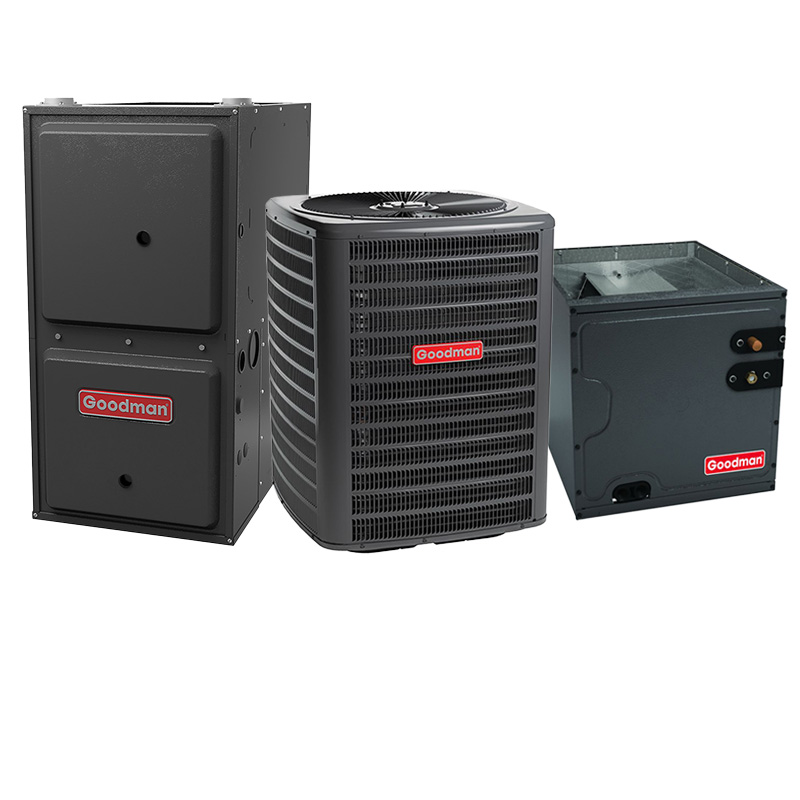
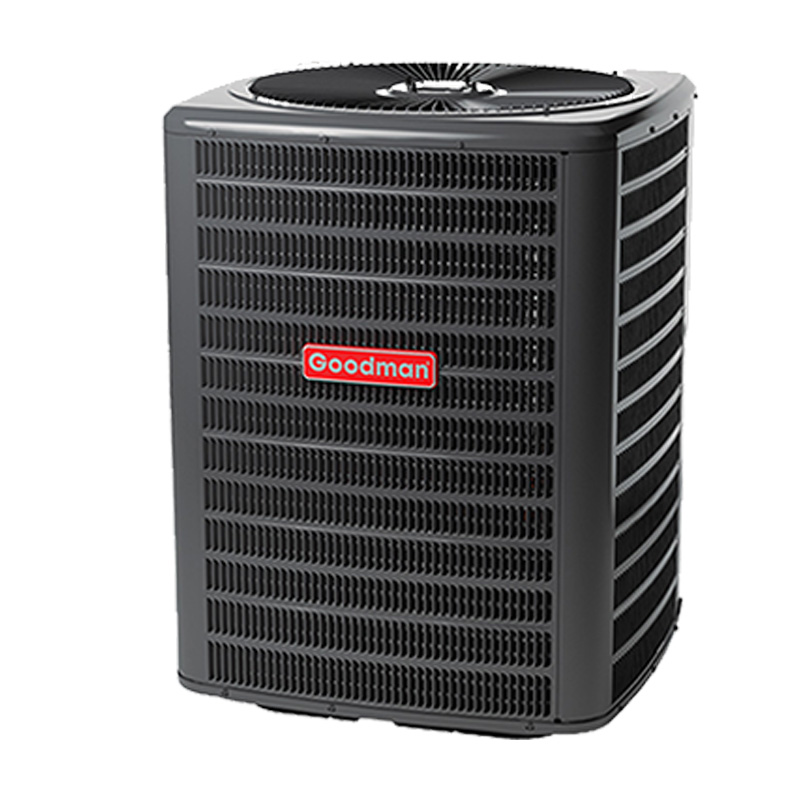
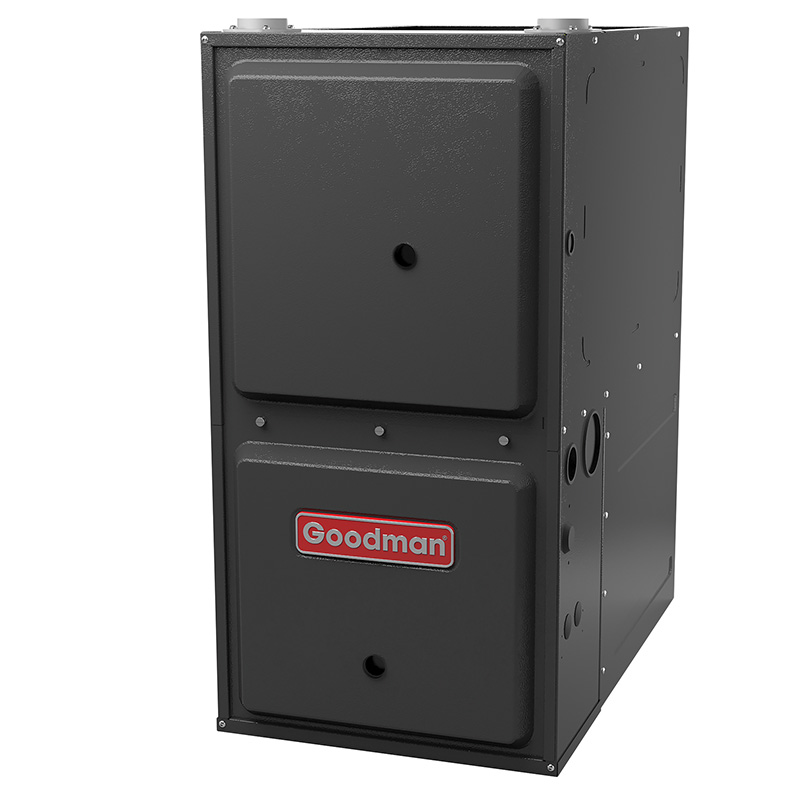
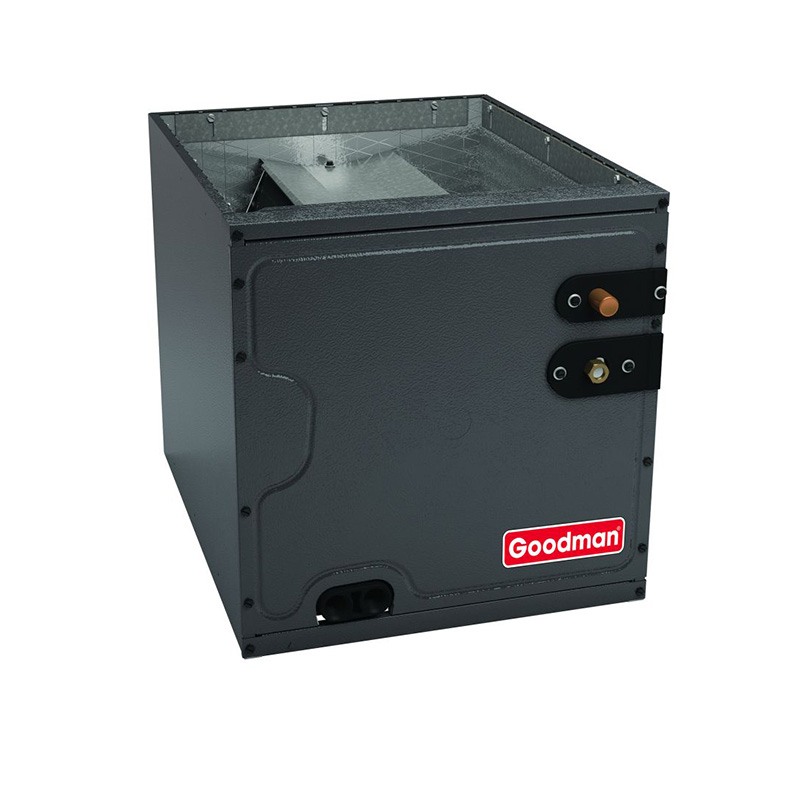
Goodman Furnace AC Combo – 3.5 Ton 13.8 SEER2 AC With 80000 BTU 97% AFUE Modulating Variable-Speed ECM Gas Furnace System – Downflow | R32
View on AC Direct see your lowest price →Check current price on AC Direct →
Key features
- 97% AFUE modulating gas furnace with variable-speed ECM blower for precise, quiet comfort
- 3.5-ton cooling capacity suited to roughly 1,600 to 2,200 sq ft depending on climate and insulation
- 13.8 SEER2 efficiency rating meets or exceeds federal minimums across all U.S. climate regions
- R-32 refrigerant: lower global warming potential than R-410A, increasingly required by state regulations
- Downflow configuration designed for installations where supply air discharges downward into floor ducts
- Modulating burner adjusts heat output in small steps, reducing temperature swings and short-cycling
About this system
This Goodman combo pairs a 3.5-ton, 13.8 SEER2 air conditioner with an 80,000 BTU, 97% AFUE modulating gas furnace in a downflow configuration, making it a strong candidate for homes where the air handler sits above a crawlspace or basement and supply air flows downward. The R-32 refrigerant charge is a notable forward-looking choice: R-32 has a lower global warming potential than the R-410A it replaces, and its higher energy density means slightly smaller refrigerant charges are needed. Buyers in states with stricter environmental regulations will appreciate that this system is already compliant with evolving standards.
The furnace end of this package is where the specs genuinely impress. A 97% AFUE rating means only 3% of combustion energy escapes as exhaust, which is as efficient as residential gas furnaces get. The modulating burner adjusts heat output in small increments rather than cycling fully on and off, and the variable-speed ECM blower motor ramps airflow up and down to match demand. Together, those two features mean steadier indoor temperatures, quieter operation, and meaningfully lower gas bills compared to single-stage or two-stage equipment. The cooling side at 13.8 SEER2 sits just above the federal minimum for most regions, so it is efficient enough to pass muster but not a standout performer on the AC side the way the furnace is on the heating side.
This system suits mid-to-larger homes in climates where heating loads dominate and cooling is secondary. Downflow furnaces are less common than upflow units, so confirming your duct layout before ordering is essential. Anyone replacing aging equipment in an existing downflow application, or building out a basement mechanical room, will find this combo a cost-effective way to get top-tier heating efficiency without paying premium-brand prices.
This combo earns its keep on the furnace side, where 97% AFUE and true modulating operation are genuinely premium features at a value-brand price. The AC at 13.8 SEER2 is functional but not efficient by today's standards, and Goodman's documented reliability record means budgeting for possible capacitor replacements and watching the evaporator coil after year five is a realistic expectation, not worst-case thinking. Buyers who want top-shelf cooling efficiency or the longest compressor lifespan should look at higher SEER2 options from Goodman or step up to a premium brand.
Overall score is the average of the five ratings above.
What we like
- 97% AFUE is among the highest available for residential gas furnaces, cutting heating bills substantially versus 80% units
- Modulating furnace plus variable-speed ECM delivers noticeably steadier temperatures and lower noise than single-stage systems
- R-32 refrigerant is more environmentally responsible and positions the system ahead of likely future regulatory requirements
- Priced 15 to 25 percent below comparable Trane, Lennox, and Carrier equipment, leaving room in the budget for quality installation
- Downflow design is ideal for homes with existing downflow duct layouts, avoiding costly duct reconfiguration
Trade-offs
- 13.8 SEER2 cooling efficiency is near the regulatory floor; homeowners in hot climates will see higher summer utility bills than with a 16+ SEER2 system
- Dual-run capacitors are the most frequently reported failure point on Goodman equipment, typically requiring service within the first decade
- Compressor lifespan averages 10 to 14 years versus 15 to 20 years for premium brands, a real long-term cost factor
- Evaporator coil leaks appear in a meaningful share of owner reviews, and a small number of owners report refrigerant issues within the first year that point to install or charge problems
What homeowners and pros say about Goodman
Homeowners who chose Goodman equipment cite affordability as the main draw, and that tracks with Google dealer review scores that average around 3.8 out of 5 across hundreds of dealer locations. Satisfaction tends to be highest in the first few years, when the equipment runs reliably and the price savings versus Trane or Carrier feel justified. The picture shifts over time: ConsumerAffairs scores land around 2.5 out of 5, a channel that skews toward unhappy owners, and the recurring complaint is that repair costs start accumulating after roughly year seven, eroding the initial savings.
HVAC technicians are candid about where Goodman equipment tends to fall short. Dual-run capacitors are the most commonly cited failure point, usually a straightforward repair in the 300 to 600 dollar range but one that comes up more often than on premium brands. Evaporator coil leaks appear in a meaningful share of owner reviews, and compressors on Goodman equipment tend to average 10 to 14 years of service life compared to 15 to 20 years on Trane, Lennox, or Carrier units. A small number of owners have also reported refrigerant issues within the first year, which technicians generally attribute to install or charge problems rather than a factory defect. The consistent message from experienced installers is that Goodman equipment rewards careful, code-correct installation and punishes shortcuts more than premium brands do.
Sources: ConsumerAffairs Goodman owner reviews, AHRI Directory of Certified Product Performance, U.S. DOE appliance and equipment efficiency standards, Goodman product specification sheets.
What it costs to run
At 13.8 SEER2, cooling this 3.5-ton system for a typical 1200-hour cooling season at the U.S. average electricity rate of $0.17/kWh works out to roughly $621 per year in cooling, about $18 less per year than a minimum-efficiency 13.4 SEER2 unit of the same size. Your real cost depends on your climate and local rate.
Method: (42,000 BTU/hr ÷ 13.8 SEER2) × 1200 hours ÷ 1000 × $0.17/kWh. Rate source: U.S. EIA average; cooling hours: moderate-climate estimate.
How it compares
| Brand | Comparable model | SEER2 | Stage | Price position |
|---|---|---|---|---|
| Goodman | GMVC97 + GSXH5 (this system) | 13.8 | Modulating / Variable | Value pick |
| Carrier | Infinity 96 (59MN7) + Performance 14 (24ACC4) | 14.0 | Modulating / Variable | 20 to 30 percent higher than this system |
| Trane | S9V2 Furnace + XR14 Air Conditioner | 14.0 | Two-stage / Single-stage | 20 to 30 percent higher than this system |
| Lennox | SLP99V Furnace + XC14 Air Conditioner | 14.3 | Modulating / Single-stage | 25 to 35 percent higher than this system |
Competitor rows are comparable single-stage units at similar efficiency; price is relative position, not a quote.
Questions about this system
Is a downflow furnace going to work with my existing ductwork?
Only if your current system is also a downflow configuration, meaning the supply plenum exits through the bottom of the unit into floor or under-slab ducts. Switching from an upflow or horizontal setup to downflow typically requires significant duct modification and is rarely cost-effective. Confirm your existing furnace orientation before ordering.
Will 13.8 SEER2 be enough, or should I pay more for a higher-efficiency AC?
In heating-dominant climates where the AC runs three months or fewer per year, 13.8 SEER2 is a reasonable choice and the savings from a higher-rated unit may take many years to recoup. In hot climates where cooling runs six months or more, upgrading to a 16 SEER2 or higher unit can meaningfully lower summer bills and is worth pricing out.
Why does this system use R-32 refrigerant, and does that affect servicing?
R-32 has roughly one-third the global warming potential of R-410A and requires a smaller charge by weight, which is why manufacturers are moving to it ahead of regulatory deadlines. Servicing does require R-32-certified technicians and compatible equipment, so confirm your local HVAC contractors are already stocked and certified before scheduling future maintenance.
What maintenance should I plan for to avoid the documented Goodman failure points?
Annual tune-ups that include checking the dual-run capacitor are the single most cost-effective step, since capacitor failure is Goodman's most common repair call and catching early degradation before it kills the compressor is worthwhile. Ask your tech to inspect the evaporator coil for refrigerant oil residue at each visit, which is an early sign of a developing coil leak.
How does the modulating furnace actually change day-to-day comfort compared to a two-stage unit?
A two-stage furnace runs at a fixed low or high fire rate, while a modulating furnace adjusts output in small increments to hold the thermostat setpoint closely. In practice, this means fewer and shorter temperature swings, longer lower-output run cycles that distribute heat more evenly, and noticeably quieter operation because the blower rarely runs at full speed.
Specifications
| Cooling capacity | 3.5 Ton |
| Efficiency | 13.8 SEER2 |
| Furnace output | 80000 BTU |
| Furnace efficiency | 97% AFUE |
| Configuration | Downflow |
| Refrigerant | R-32 |