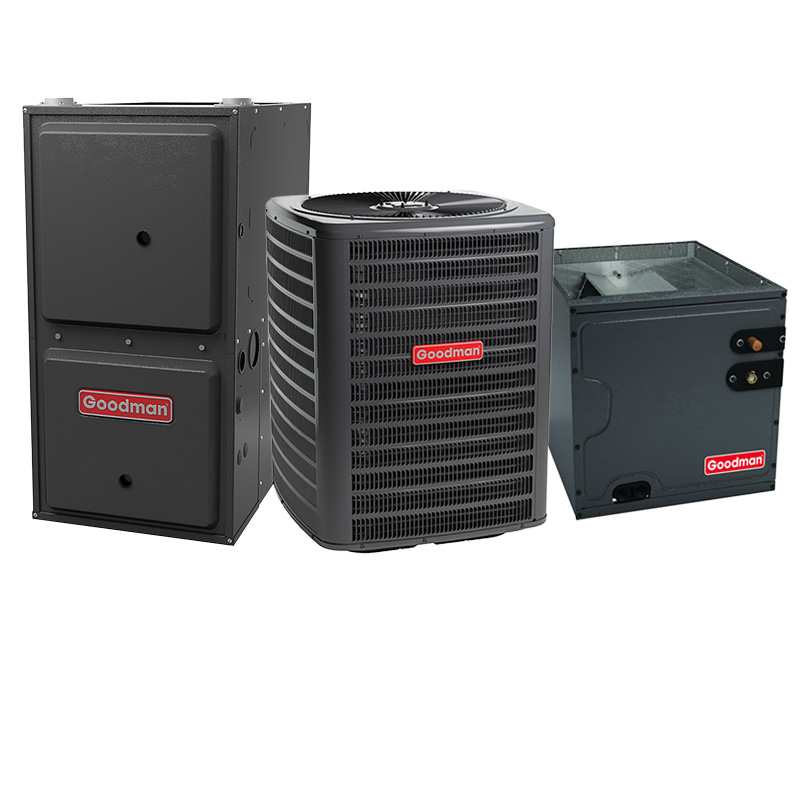
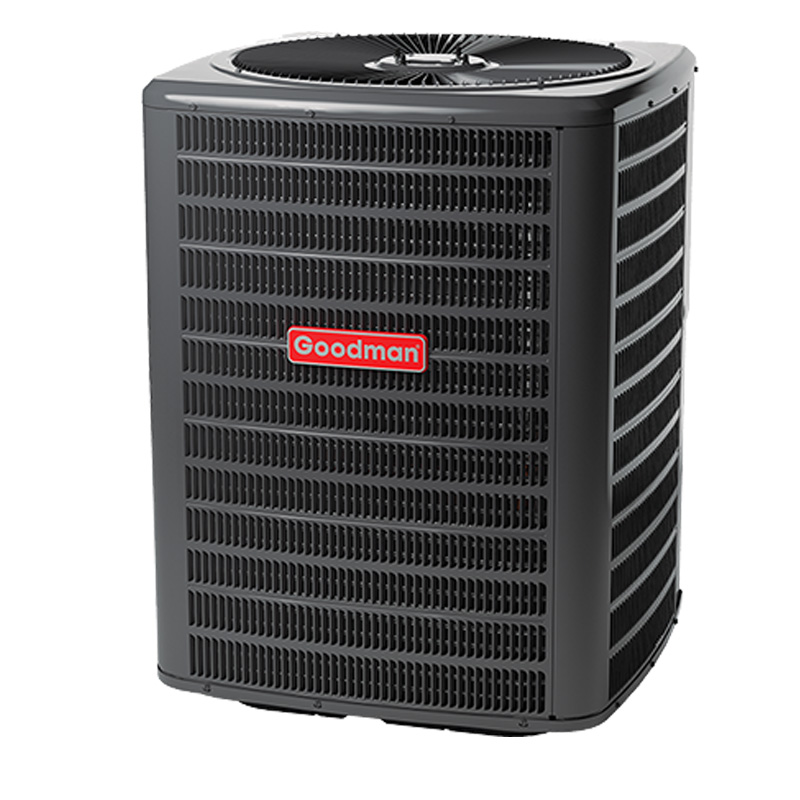
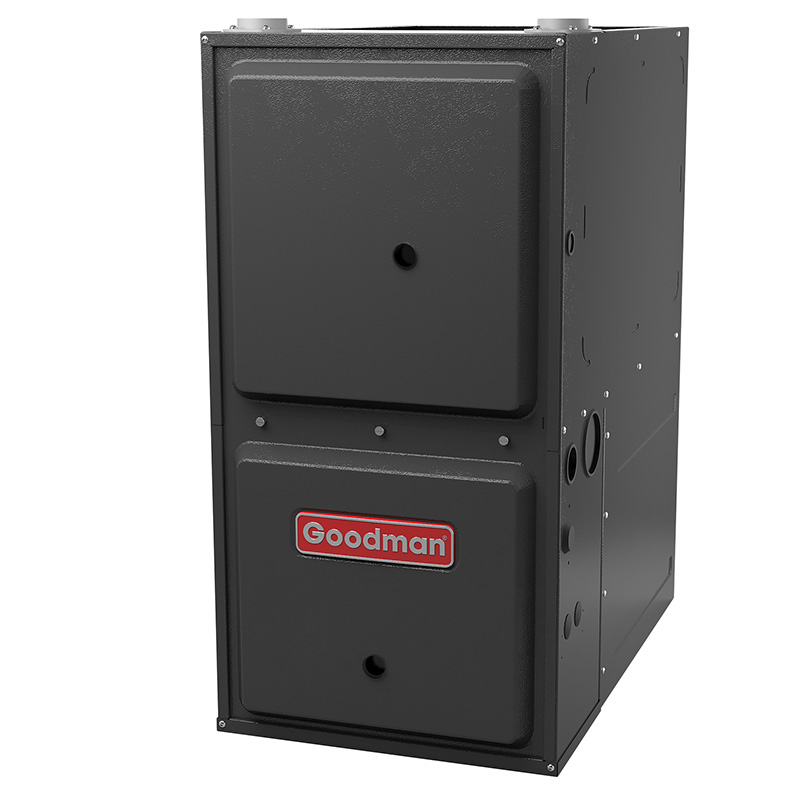
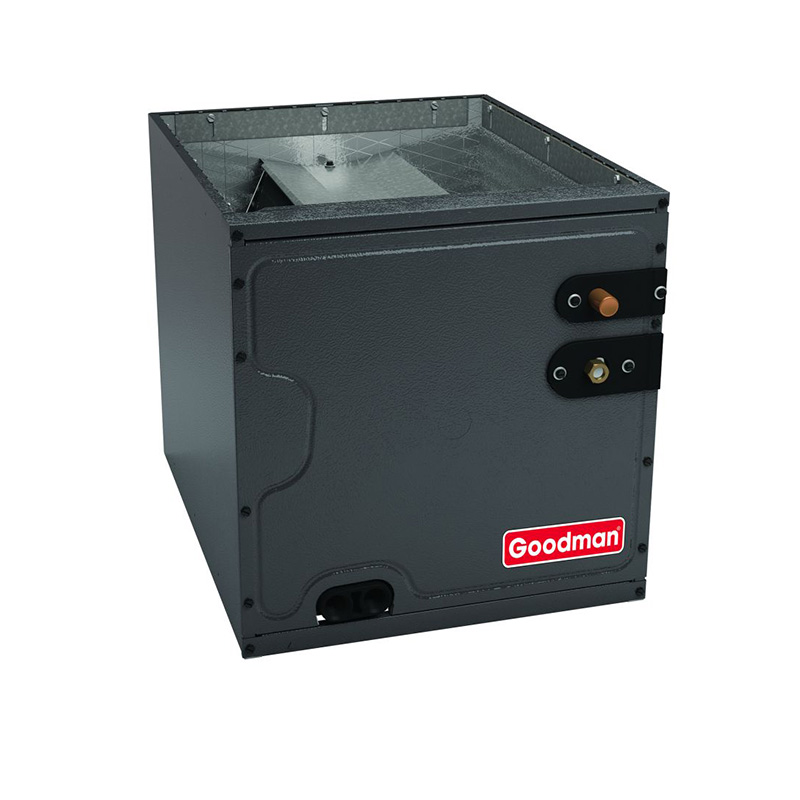
Goodman Furnace AC Combo – 3 Ton 14.5 SEER2 AC With 60000 BTU 97% AFUE Modulating Variable-Speed ECM Gas Furnace System – Downflow | R32
View on AC Direct see your lowest price →Check current price on AC Direct →
Key features
- 97% AFUE modulating gas furnace reduces fuel waste by adjusting burner output continuously
- Variable-speed ECM blower motor lowers electricity use and maintains steady airflow
- 14.5 SEER2 cooling efficiency meets or exceeds federal minimums for most U.S. regions
- R-32 refrigerant with lower global-warming potential than legacy R-410A systems
- Downflow configuration designed for specific duct layouts requiring downward air delivery
- 3-ton cooling capacity suited for homes roughly 1,400 to 1,800 square feet depending on climate and insulation
About this system
This Goodman combo pairs a 3-ton, 14.5 SEER2 central air conditioner with a 60,000 BTU, 97% AFUE modulating gas furnace in a downflow configuration, using R-32 refrigerant. The result is a system aimed at homeowners who want genuine high-efficiency heating without paying premium-brand prices. A 97% AFUE modulating furnace is near the top of what residential gas equipment can deliver, meaning the burner adjusts its output continuously rather than cycling fully on and off, which smooths temperature swings and cuts fuel waste. The variable-speed ECM blower motor further trims electricity consumption and keeps airflow consistent throughout the day.
The 14.5 SEER2 cooling rating lands just above the federally mandated minimums for most U.S. regions, so it is honest entry-level efficiency on the cooling side rather than a high-efficiency showcase. The downflow orientation is a practical requirement for specific duct layouts, typically horizontal runs in crawl spaces or installations where supply air needs to flow downward from the unit, so confirm your duct configuration before purchasing. R-32 refrigerant carries a lower global-warming potential than the older R-410A it replaces, though technicians will need R-32 certification and compatible equipment to service it. This system suits budget-aware homeowners in moderate climates who prioritize heating efficiency and are comfortable with entry-level cooling performance.
This combo delivers genuinely high heating efficiency at a price point that undercuts major brands by 15 to 25 percent, making it a reasonable choice for budget-focused buyers who can source a skilled installer. The cooling side is adequate but unremarkable at 14.5 SEER2, and Goodman's documented history of capacitor failures, coil leaks, and shorter compressor lifespans means long-term costs can erode the upfront savings if repair luck runs against you.
Overall score is the average of the five ratings above.
What we like
- 97% AFUE modulating furnace is a top-tier heating efficiency rating at a value price
- Variable-speed ECM blower improves comfort and reduces electricity consumption versus single-speed alternatives
- R-32 refrigerant is environmentally preferable and increasingly supported by technicians
- Priced roughly 15 to 25 percent below comparable Carrier, Trane, and Lennox systems
- Modulating burner reduces temperature swings and can extend heat exchanger life compared to single-stage units
Trade-offs
- Dual-run capacitor failures are the most documented recurring issue, typically costing 300 to 600 dollars per repair
- Evaporator coil leaks appear in a meaningful share of owner reports, a potentially expensive fix outside warranty
- Compressor lifespan averages 10 to 14 years versus 15 to 20 years for premium-brand compressors
- 14.5 SEER2 on the cooling side is modest efficiency, limiting electricity savings during hot seasons
What homeowners and pros say about Goodman
Homeowners who track Goodman on ConsumerAffairs give it roughly 2.5 out of 5 stars, a score shaped heavily by people who sought out a review site specifically after a frustrating repair experience. The recurring pattern in those complaints is repair costs climbing after year 7, with dual-run capacitor failures and evaporator coil leaks cited most often. Google dealer reviews tell a somewhat softer story, averaging around 3.8 out of 5 across multiple locations, where affordability and adequate performance are the most consistent praise. For a system with a 97% AFUE modulating furnace, the heating side rarely draws complaints. The friction shows up on the cooling side, particularly coil leaks and, less commonly, refrigerant charge issues within the first year that typically trace back to installation rather than the equipment itself.
HVAC technicians who work on Goodman regularly tend to describe it as serviceable equipment that rewards a careful install and punishes a careless one more than premium brands do. The compressor lifespan gap is the detail professionals flag most often: Goodman compressors averaging 10 to 14 years versus 15 to 20 for top-tier brands means the value calculation depends on how long you plan to stay in the home and how much you weight that tail-end risk. The capacitor issue is almost universally described as a nuisance rather than a crisis, a known maintenance item rather than a fundamental flaw. For this particular configuration, with a genuinely high-performance furnace anchoring the system, the advice from the field is consistent: spend what you save on the equipment on a thorough commissioning from an experienced installer and you improve your odds considerably.
Sources: ConsumerAffairs Goodman owner reviews, AHRI Directory of Certified Product Performance, U.S. DOE appliance and equipment efficiency standards, Goodman product specification sheets.
What it costs to run
At 14.5 SEER2, cooling this 3-ton system for a typical 1200-hour cooling season at the U.S. average electricity rate of $0.17/kWh works out to roughly $506 per year in cooling, about $42 less per year than a minimum-efficiency 13.4 SEER2 unit of the same size. Your real cost depends on your climate and local rate.
Method: (36,000 BTU/hr ÷ 14.5 SEER2) × 1200 hours ÷ 1000 × $0.17/kWh. Rate source: U.S. EIA average; cooling hours: moderate-climate estimate.
How it compares
| Brand | Comparable model | SEER2 | Stage | Price position |
|---|---|---|---|---|
| Goodman | GLXS4BA3610 (this system) | 14.5 | Modulating / Variable-speed | Value pick |
| Carrier | Comfort 24ACC6 with 59MN7 furnace | 14.5–15 | Single-stage / Variable-speed furnace | Typically 15 to 25 percent more than Goodman |
| Trane | XR14c with S9V2 furnace | 14.5 | Single-stage / Variable-speed furnace | Typically 15 to 25 percent more than Goodman |
| Lennox | Merit 14ACX with ML296V furnace | 14.5–15 | Single-stage / Variable-speed furnace | Typically 15 to 25 percent more than Goodman |
Competitor rows are comparable single-stage units at similar efficiency; price is relative position, not a quote.
Questions about this system
Is a downflow furnace going to work with my existing ductwork?
Downflow units discharge air from the bottom of the cabinet, which suits systems where supply ducts run beneath the unit, common in crawl-space installations or certain platform setups. If your existing ductwork is configured for upflow or horizontal delivery, this unit will not work without significant duct modification. Confirm your current furnace orientation before ordering.
Do I need a specially certified technician to work on an R-32 system?
Yes. R-32 is classified as mildly flammable (A2L), so technicians must have specific R-32 training and use compatible recovery and charging equipment. Most established HVAC companies are already equipped, but it is worth confirming before scheduling service, especially in rural areas where tooling may lag.
What does 'modulating' actually mean for day-to-day comfort compared to a standard furnace?
A modulating furnace adjusts its heat output in small increments, sometimes as low as 40 percent of full capacity, rather than switching fully on and off. In practice this means fewer hot-cold swings, quieter operation at low fire, and more even temperatures room to room. It also runs longer at lower output, which pairs well with the variable-speed blower.
How serious is the capacitor failure issue, and is it worth worrying about before buying?
Dual-run capacitor failures are the most commonly reported repair on Goodman equipment, but they are also one of the cheaper HVAC fixes, typically 300 to 600 dollars including labor. Most owners encounter this between years 5 and 9. It is not a system-ending failure, but budgeting for at least one capacitor replacement over the system's life is a realistic expectation.
The 14.5 SEER2 rating seems low for a system with a 97% AFUE furnace. Is that a mismatch?
Not exactly a mismatch, but it does reflect different priorities. The furnace is near the top of its efficiency class while the AC is at the lower end of the efficiency spectrum. If cooling costs are your primary concern, you may want to step up to a higher SEER2 unit. If heating bills dominate your energy spend, as they do in colder climates, the furnace efficiency matters far more and this pairing makes practical sense.
Specifications
| Cooling capacity | 3 Ton |
| Efficiency | 14.5 SEER2 |
| Furnace output | 60000 BTU |
| Furnace efficiency | 97% AFUE |
| Configuration | Downflow |
| Refrigerant | R-32 |
| Model | GLXS4BA3610 |