Goodman Furnace AC Combo – 3 Ton 14 SEER2 AC With 100000 BTU 97% AFUE Modulating Variable-Speed ECM Gas Furnace System – Horizontal | R32
View on AC Direct see your lowest price →Check current price on AC Direct →
Key features
- 97% AFUE modulating gas furnace reduces fuel waste and temperature swings
- Variable-speed ECM blower motor cuts electricity use during partial-load operation
- 14 SEER2-rated air conditioner meets current federal minimum efficiency standards
- R-32 refrigerant with lower global-warming potential than legacy R-410A
- Horizontal cabinet configuration for attic, crawlspace, or side-mount installs
- 3-ton cooling capacity suited to roughly 1,400 to 2,000 sq ft depending on climate and insulation
About this system
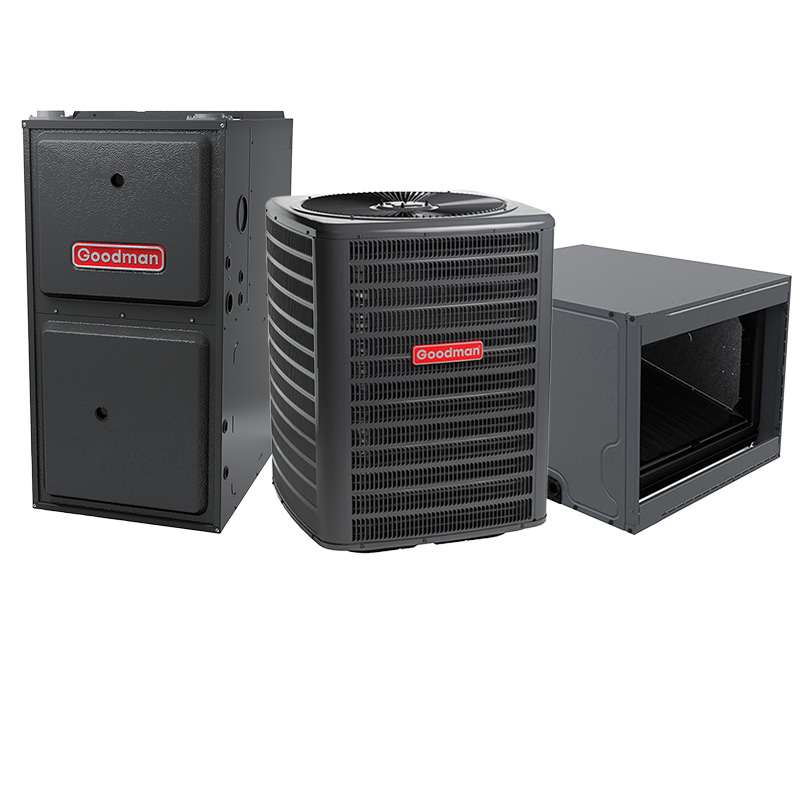
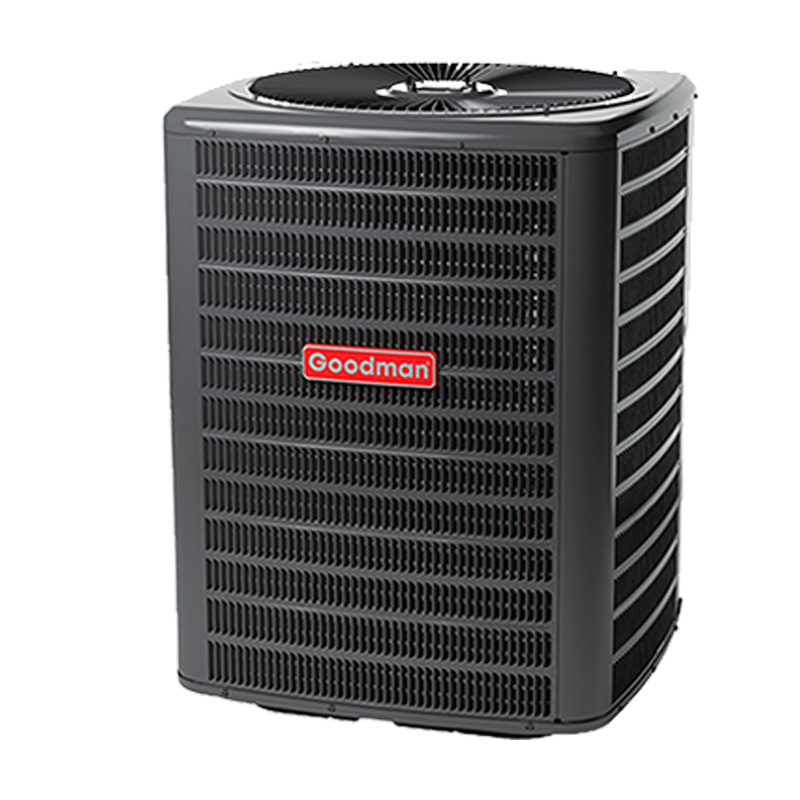
This Goodman combo pairs a 3-ton, 14 SEER2 central air conditioner with a 100,000 BTU, 97% AFUE modulating gas furnace in a horizontal configuration, making it a practical choice for homes where the air handler must sit on its side, such as in a crawlspace, attic, or tight mechanical closet. The R-32 refrigerant charge is a meaningful upgrade over older R-410A systems: R-32 carries a lower global-warming potential and slightly better thermodynamic efficiency, which is why manufacturers are transitioning to it ahead of federal requirements.
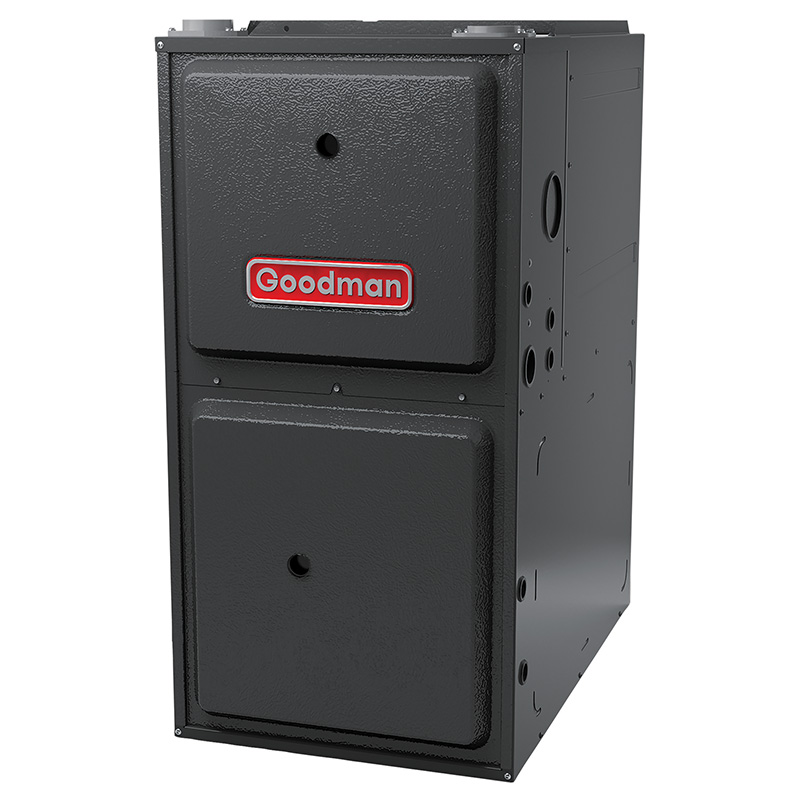
The furnace is the standout component here. A 97% AFUE modulating burner with a variable-speed ECM blower is genuinely high-end technology, regardless of brand. Modulating operation means the burner adjusts output in small increments rather than simply firing at full blast, which reduces temperature swings, lowers fuel consumption, and keeps the blower running quietly at lower speeds most of the time. Paired with an ECM motor, the system draws significantly less electricity during fan-only or partial-heat cycles compared to a PSC motor. For a cold-climate household, that furnace spec alone justifies serious consideration. The 14 SEER2 cooling side is solidly code-compliant and efficient, though it sits at the entry tier for SEER2 ratings and will not compete with 16 or 18 SEER2 systems on summer utility bills.
This system suits a homeowner who wants to spend meaningfully on heating efficiency without paying premium-brand markups, and who either has a qualified contractor lined up or is buying through a dealer who handles installation. The horizontal configuration narrows the eligible install pool, so confirming your contractor is experienced with side-discharge or horizontal-cabinet setups before purchasing matters more here than with a standard upflow unit.
The furnace in this combo is genuinely impressive for the price point: modulating, 97% AFUE, and ECM-driven. The 14 SEER2 cooling side is competent but unspectacular, and long-term durability hinges heavily on install quality and early maintenance, two areas where Goodman's ownership record shows real variability.
Overall score is the average of the five ratings above.
What we like
- 97% AFUE modulating furnace delivers premium heating performance at a value-brand price
- ECM variable-speed motor reduces electricity draw and fan noise significantly
- R-32 refrigerant is a forward-looking choice with lower environmental impact
- Priced roughly 15 to 25 percent below comparable Trane, Carrier, and Lennox configurations
- Horizontal cabinet opens the system to install locations other configurations cannot reach
Trade-offs
- Dual-run capacitors are the most frequently reported failure point, typically requiring a 300 to 600 dollar service call
- Evaporator coil leaks appear in a meaningful share of owner reports, a cost that compounds if refrigerant must also be replaced
- Compressor lifespan averages 10 to 14 years versus 15 to 20 years for premium brands, meaning a mid-system compressor replacement is a real financial scenario
- 14 SEER2 is the efficiency floor, not the ceiling: homeowners in hot climates with high cooling loads will see larger savings from stepping up to 16 or 18 SEER2
What homeowners and pros say about Goodman
Homeowners who have owned Goodman systems long enough to share structured feedback break into two fairly distinct camps. On ConsumerAffairs, which scores Goodman at roughly 2.5 out of 5, the recurring pattern is a system that runs acceptably for the first few years and then begins generating service calls: dual-run capacitor failures are the single most commonly cited repair, a relatively inexpensive fix in the 300 to 600 dollar range but frustrating when it repeats. Evaporator coil leaks show up in a meaningful share of those same reviews, and a minority of owners report refrigerant loss within the first year, which technicians typically trace back to charge errors or fitting issues at install rather than the equipment itself. Google dealer reviews tell a more measured story, averaging around 3.8 out of 5 across locations, where the most consistent praise is straightforward: the price is genuinely lower than comparable Trane, Carrier, and Lennox equipment, and for buyers who can get a clean installation, the system works.
HVAC technicians generally describe Goodman as functional but not forgiving. The modulating furnace and ECM blower in this particular combo are components that techs associate with better brands, so this configuration is a step above a typical entry-level Goodman package. The concern pros raise most consistently is compressor longevity: Goodman compressors average roughly 10 to 14 years in documented failure patterns, compared to 15 to 20 years for premium brands, which means a mid-ownership compressor replacement is a realistic line item to budget for rather than a worst-case outlier. The honest picture is a system that rewards buyers who pair it with a meticulous installer and proactive annual maintenance, and that creates above-average ownership frustration when either of those elements is missing.
Sources: ConsumerAffairs Goodman owner reviews, AHRI Directory of Certified Product Performance, U.S. DOE appliance and equipment efficiency standards, Goodman product specification sheets.
What it costs to run
At 14 SEER2, cooling this 3-ton system for a typical 1200-hour cooling season at the U.S. average electricity rate of $0.17/kWh works out to roughly $525 per year in cooling, about $23 less per year than a minimum-efficiency 13.4 SEER2 unit of the same size. Your real cost depends on your climate and local rate.
Method: (36,000 BTU/hr ÷ 14 SEER2) × 1200 hours ÷ 1000 × $0.17/kWh. Rate source: U.S. EIA average; cooling hours: moderate-climate estimate.
How it compares
| Brand | Comparable model | SEER2 | Stage | Price position |
|---|---|---|---|---|
| Goodman | This system (3T 14 SEER2 / 97% AFUE Modulating ECM Horizontal R-32) | 14 | Modulating / Variable | Value pick |
| Carrier | Performance 14 Series (24ACC4 + 59TP6) | 14 | Single-stage / Two-stage | Typically 15 to 25 percent more than this Goodman system |
| Trane | XR14c + S9X2 (80% AFUE) or XC14 + XC95m (96% AFUE) | 14 | Single-stage / Variable | Typically 15 to 25 percent more than this Goodman system |
| Lennox | Merit 14ACX + ML296V (96% AFUE Variable) | 14 | Single-stage / Variable | Typically 15 to 25 percent more than this Goodman system |
Competitor rows are comparable single-stage units at similar efficiency; price is relative position, not a quote.
Questions about this system
Why does the horizontal configuration matter, and can a standard HVAC contractor install it?
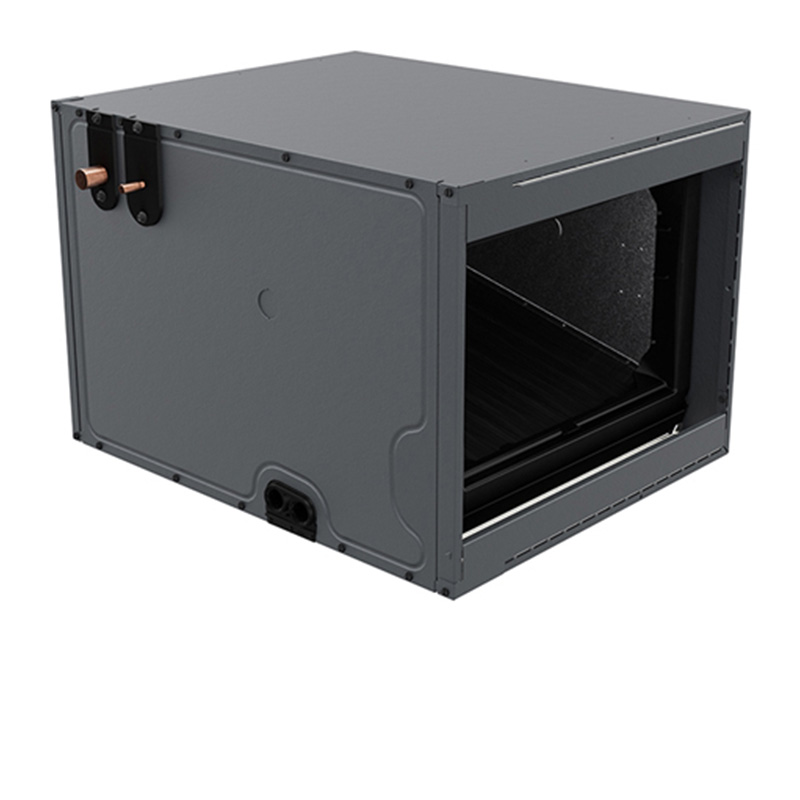
A horizontal cabinet is designed to be mounted on its side, typically in attics, crawlspaces, or mechanical chases where vertical clearance is limited. Not every contractor installs horizontal units regularly, so it is worth confirming your technician's experience before purchasing, since improper leveling or drain pan setup in horizontal applications is a documented source of moisture problems.
Is R-32 refrigerant harder or more expensive to service than R-410A?
R-32 requires EPA Section 608 certification just as R-410A does, but not every technician has stocked it yet, so finding a service tech with the correct refrigerant on hand may take a little more effort in some markets. Costs per pound are currently comparable, and availability is increasing as more systems ship with R-32.
What does a modulating furnace actually do differently in day-to-day use?
Instead of switching between full fire and off, a modulating burner adjusts its output in small increments, typically between about 40 and 100 percent of rated capacity, to match the actual heat demand at that moment. The result is fewer wide temperature swings, quieter and longer low-speed blower cycles, and lower gas consumption on mild days.
Goodman's ConsumerAffairs score is low. Should that concern me?
ConsumerAffairs is a complaint-skewed channel where dissatisfied owners are far more motivated to post than satisfied ones, so the roughly 2.5 out of 5 score overstates failure rates but does reflect real patterns: repair costs climbing after year 7 and the specific failure modes mentioned in dealer-level reviews. Weigh it alongside the roughly 3.8 out of 5 Google dealer scores, which include a broader range of experiences and frequently cite affordability as a genuine positive.
What size home does a 3-ton, 100,000 BTU system typically fit?
A rough rule of thumb places 3-ton cooling in the 1,400 to 2,000 square foot range, but climate zone, ceiling height, insulation quality, and window area all shift that estimate significantly. The 100,000 BTU furnace is generous for that cooling footprint and is better sized for colder climates or poorly insulated homes; a proper Manual J heat load calculation by your contractor is the only reliable way to confirm fit before purchasing.
Specifications
| Cooling capacity | 3 Ton |
| Efficiency | 14 SEER2 |
| Furnace output | 100000 BTU |
| Furnace efficiency | 97% AFUE |
| Configuration | Horizontal |
| Refrigerant | R-32 |