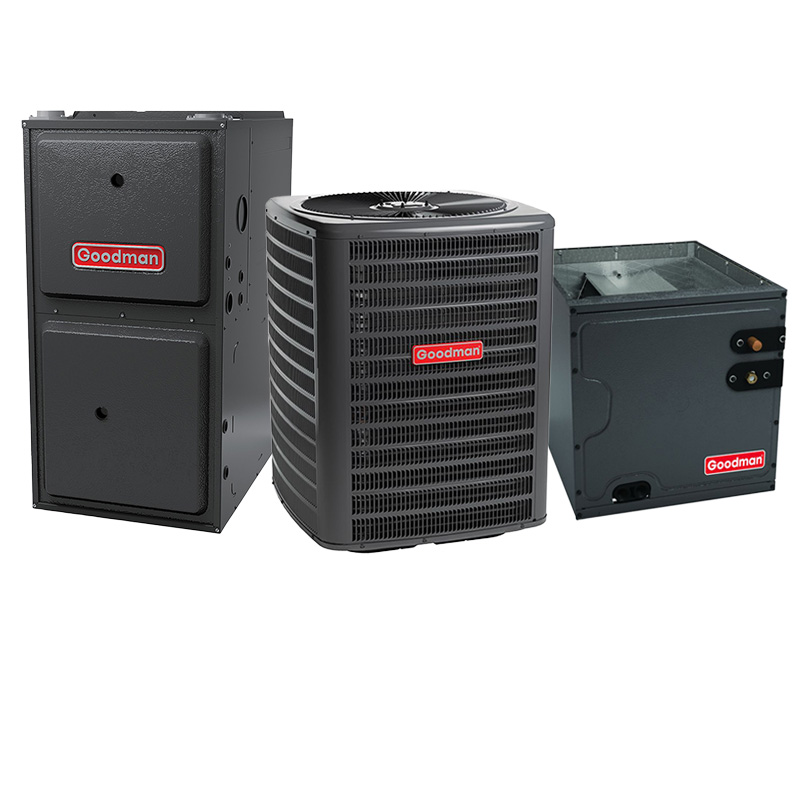
Goodman Furnace AC Combo – 3 Ton 15.2 SEER2 AC With 80000 BTU 97% AFUE Modulating Variable-Speed ECM Gas Furnace System – Upflow | R32
View on AC Direct see your lowest price →Check current price on AC Direct →
Key features
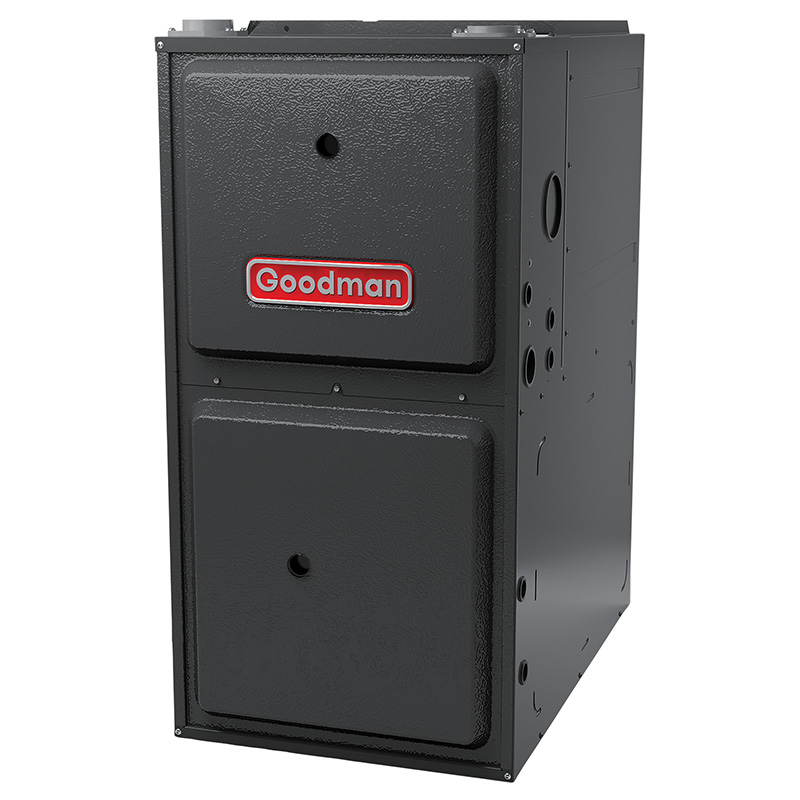
- 97% AFUE modulating gas furnace with variable-speed ECM blower for precise, efficient heating
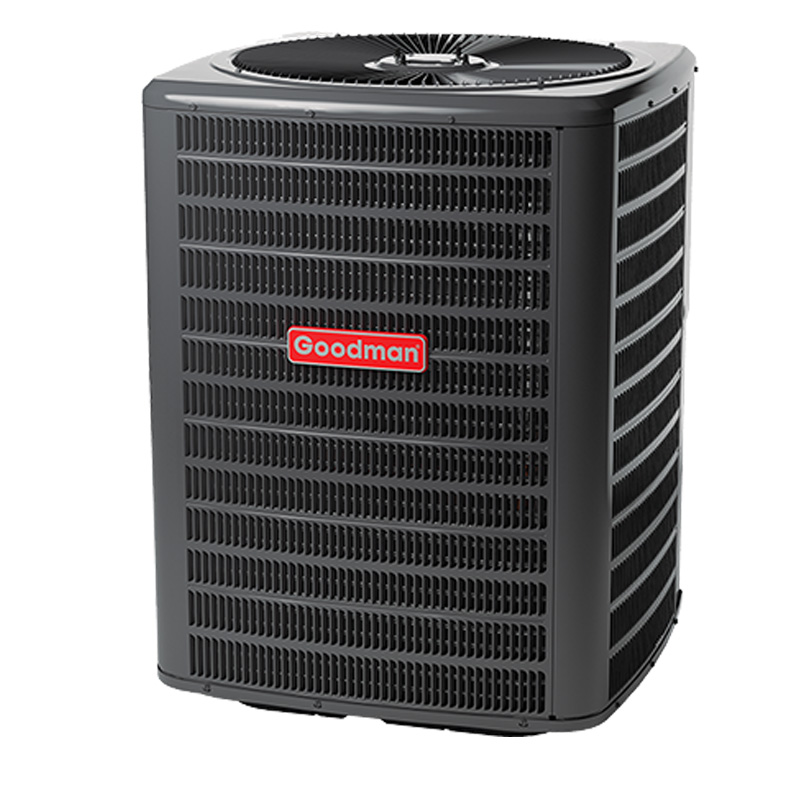
- 3-ton, 15.2 SEER2 cooling meets current federal efficiency standards for most U.S. regions
- R-32 refrigerant with lower global warming potential than legacy R-410A systems
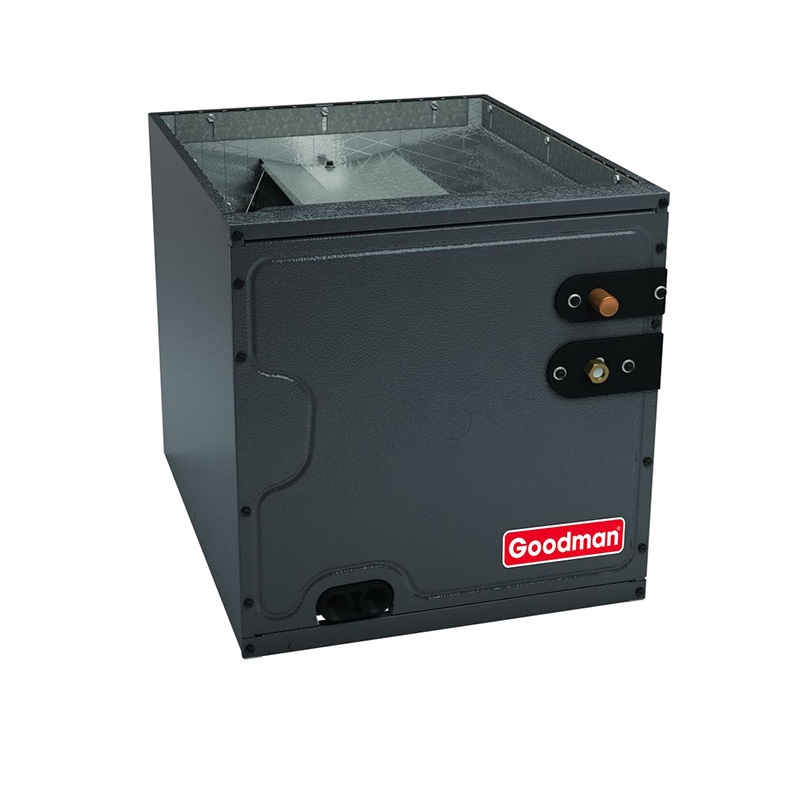
- Upflow cabinet design compatible with standard basement, utility closet, and garage installs
- 80,000 BTU heating capacity suits typical homes in the 1,500 to 2,200 sq ft range (climate-dependent)
- Priced approximately 15 to 25 percent below comparable Trane, Carrier, and Lennox configurations
About this system
The Goodman GLXS4BA3610 pairs a 3-ton, 15.2 SEER2 air conditioner running on R-32 refrigerant with an 80,000 BTU, 97% AFUE modulating gas furnace in an upflow configuration. That furnace spec is the headline here: modulating burners and a variable-speed ECM blower motor are premium-tier features that allow the system to run at partial capacity for most of the heating season, trimming fuel bills and keeping indoor temperatures remarkably even compared with single- or two-stage units. A 97% AFUE rating means only about 3 cents of every fuel dollar escapes as exhaust, which puts this furnace in the top tier for gas efficiency regardless of brand.
The 15.2 SEER2 cooling side is a competent mid-efficiency rating that clears the federal minimums now in effect for northern and southern regions, though it sits modestly in the range rather than at the top of it. R-32 refrigerant is a forward-looking choice: it has a lower global warming potential than R-410A and is becoming the industry standard, so parts availability should improve over time rather than shrink. Upflow configuration suits most basement and closet installs where the air handler sits below the ductwork. Together, the system is aimed at budget-aware homeowners who want a genuinely high-efficiency furnace without paying Carrier or Lennox prices for the full package.
This system delivers genuinely premium furnace technology at a value price point, and the 97% AFUE modulating furnace is the real draw. The cooling side is solid but not class-leading, and long-term reliability depends heavily on installer quality and a willingness to budget for component repairs after year seven or so.
Overall score is the average of the five ratings above.
What we like
- 97% AFUE modulating furnace is among the most efficient gas heating options available at any price
- Variable-speed ECM blower improves comfort, reduces temperature swings, and lowers electricity use compared with single-speed blowers
- R-32 refrigerant is future-oriented and has a better environmental profile than R-410A
- Package price runs 15 to 25 percent below comparable premium-brand configurations, leaving real money for a quality install
- 15.2 SEER2 satisfies current federal minimums and will not require an efficiency upgrade for compliance
Trade-offs
- Dual-run capacitors are the most commonly reported failure point in Goodman equipment, typically needing replacement in the 300 to 600 dollar range
- Evaporator coil leaks appear in a notable share of owner reviews, a more disruptive and costly repair than a capacitor swap
- Compressor lifespan averages 10 to 14 years versus 15 to 20 years typical of Carrier, Trane, or Lennox compressors
- A minority of owners report refrigerant leaks in the first year, most traced to installation or initial charge issues rather than factory defects
What homeowners and pros say about Goodman
Homeowners who have installed Goodman equipment tend to split into two camps. Those who had experienced contractors handle the work and registered their warranties often report years of reliable, uneventful service and praise the brand’s affordability. The brand’s Google dealer reviews average around 3.8 out of 5 across hundreds of locations, with competitive pricing cited most often as the reason for satisfaction. The other camp, represented more heavily in complaint-weighted channels like ConsumerAffairs where the brand sits around 2.5 out of 5, points to repair costs that start accumulating after roughly year seven: most frequently dual-run capacitor failures in the 300 to 600 dollar range, but also evaporator coil leaks that are harder and costlier to resolve. A minority of owners report refrigerant issues within the first year, which technicians generally attribute to installation or initial charge problems rather than factory faults.
HVAC professionals who work on Goodman equipment regularly say the same thing: the hardware is acceptable for the price, but the outcome is almost entirely determined by the quality of the install. For a modulating variable-speed furnace like the one in this package, that observation carries extra weight, since commissioning a modulating system correctly takes more skill and time than setting up a single-stage unit. Compressor longevity is a real conversation in the trade: Goodman compressors tend to average 10 to 14 years, a shorter window than the 15 to 20 years technicians typically see from Carrier, Trane, or Lennox equipment. For buyers who go in with clear eyes about those trade-offs, factor in a quality install and a basic service agreement, and keep the savings from the purchase price in mind, this system can deliver strong value over its service life.
Sources: ConsumerAffairs Goodman owner reviews, AHRI Directory of Certified Product Performance, U.S. DOE appliance and equipment efficiency standards, Goodman product specification sheets.
What it costs to run
At 15.2 SEER2, cooling this 3-ton system for a typical 1200-hour cooling season at the U.S. average electricity rate of $0.17/kWh works out to roughly $483 per year in cooling, about $65 less per year than a minimum-efficiency 13.4 SEER2 unit of the same size. Your real cost depends on your climate and local rate.
Method: (36,000 BTU/hr ÷ 15.2 SEER2) × 1200 hours ÷ 1000 × $0.17/kWh. Rate source: U.S. EIA average; cooling hours: moderate-climate estimate.
How it compares
| Brand | Comparable model | SEER2 | Stage | Price position |
|---|---|---|---|---|
| Goodman | GLXS4BA3610 (this system) | 15.2 | Variable / Modulating | Value pick |
| Carrier | Performance 16 (24ACC6) with 80% or 96% Comfort series furnace | 15.2 to 16 | Two-stage | Typically 15 to 25 percent more than this Goodman package |
| Trane | XR15 (4TTR5) paired with S9V2 variable-speed furnace | 15 to 15.2 | Two-stage / Variable | Typically 15 to 25 percent more than this Goodman package |
| Lennox | Merit ML15XC1 with SLP98V variable-capacity furnace | 15 to 15.5 | Single-stage AC / Variable furnace | Typically 15 to 25 percent more than this Goodman package |
Competitor rows are comparable single-stage units at similar efficiency; price is relative position, not a quote.
Questions about this system
Does R-32 refrigerant require any special handling compared with R-410A, and will local technicians know how to work with it?
R-32 is mildly flammable (A2L classification), so technicians need specific certification and equipment to handle it safely. Adoption is growing quickly, but you should confirm your service contractor is R-32 certified before booking any future repairs or refrigerant work.
What warranty comes with this system and what do I need to do to keep it valid?
Goodman generally offers a 10-year parts limited warranty on registered equipment, but registration must typically be completed within a set window after installation and the unit must be installed by a licensed HVAC contractor. Failure to register usually drops coverage to five years, so registering promptly is worth doing.
How much will the modulating furnace actually cut my heating bills compared with a standard two-stage unit?
The difference between a 97% AFUE modulating furnace and a mid-efficiency 80% AFUE two-stage unit can translate to meaningful savings over a heating season, with the AFUE gap accounting for the largest share. The variable-speed blower also reduces electricity consumption compared with a PSC motor, though actual savings vary by climate, home size, and utility rates.
What are the most common repairs I should budget for over the first 10 years of ownership?
Based on Goodman's documented failure patterns, dual-run capacitors are the most frequent service call, typically costing 300 to 600 dollars to replace. Evaporator coil leaks appear in a meaningful share of owner reports and are more expensive to address. Setting aside a small annual service reserve is a reasonable approach.
Is this system oversized, undersized, or about right for my home, and do I really need a load calculation?
A 3-ton, 80,000 BTU system is a common fit for homes roughly in the 1,500 to 2,200 square foot range, but climate, insulation, window area, and ceiling height all shift that number significantly. A Manual J load calculation by your installer is the only reliable way to confirm sizing, and skipping it is one of the most common causes of poor comfort and shortened equipment life.
Specifications
| Cooling capacity | 3 Ton |
| Efficiency | 15.2 SEER2 |
| Furnace output | 80000 BTU |
| Furnace efficiency | 97% AFUE |
| Configuration | Upflow |
| Refrigerant | R-32 |
| Model | GLXS4BA3610 |