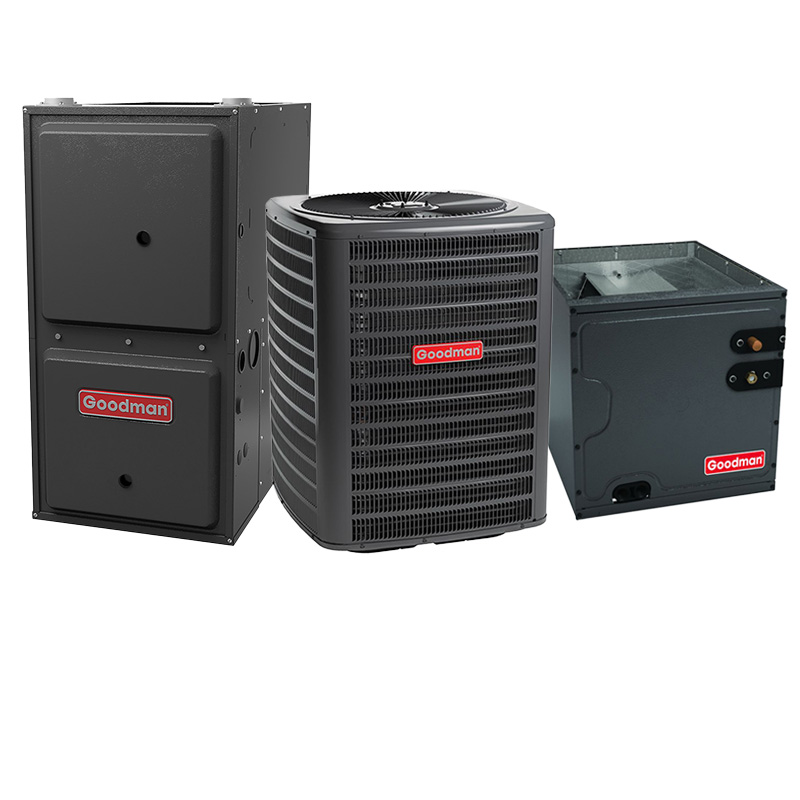
Goodman Furnace AC Combo – 3 Ton 14 SEER2 AC With 100000 BTU 97% AFUE Modulating Variable-Speed ECM Gas Furnace System – Downflow | R32
View on AC Direct see your lowest price →Check current price on AC Direct →
Key features
- 97% AFUE modulating gas furnace, near-maximum fuel efficiency for residential equipment
- Variable-speed ECM blower motor reduces energy use and temperature swings
- 3-ton, 14 SEER2 cooling capacity meets current federal efficiency minimums
- Downflow configuration designed for under-unit duct systems in crawlspace or slab homes
- R-32 refrigerant with lower global-warming potential than legacy R-410A
- 100,000 BTU heating capacity suited for mid-size homes in moderate to cold climates
About this system
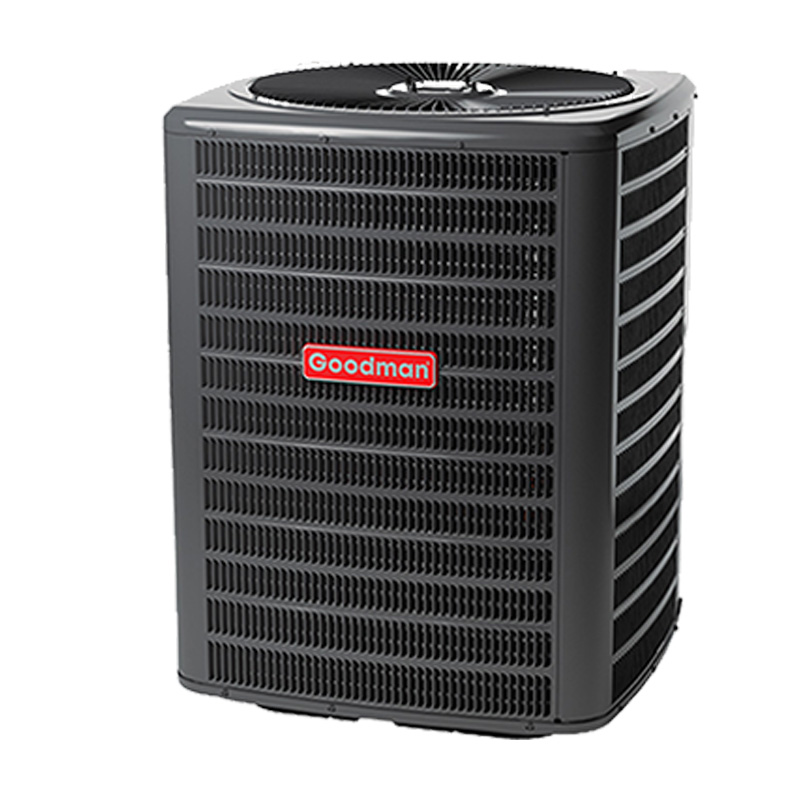
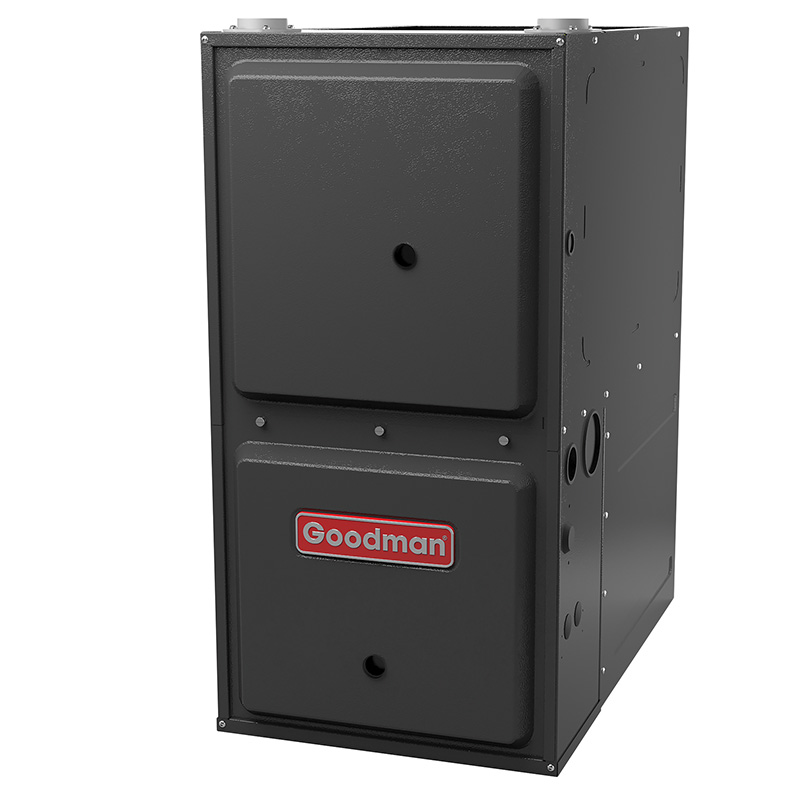
This Goodman combo pairs a 3-ton, 14 SEER2 central air conditioner with a 100,000 BTU, 97% AFUE modulating gas furnace in a downflow configuration, using R-32 refrigerant. The furnace side is where this system earns its keep: a 97% AFUE rating means nearly all the fuel burned becomes usable heat, which is about as efficient as residential gas furnaces get. The modulating burner adjusts output in small increments rather than cycling fully on and off, and the variable-speed ECM blower motor responds in kind, which keeps temperatures steadier and reduces the short-cycling noise common in single-stage equipment.
The 14 SEER2 cooling rating sits at the lower end of today’s efficiency range. It meets current federal minimums for most regions and will cost more to run on a hot summer day than a 16 or 18 SEER2 system, but it also costs less upfront. The downflow configuration sends conditioned air downward through the supply plenum, making it the right choice for homes where ducts run beneath the unit, such as crawlspace or slab installations with a dedicated furnace closet. R-32 refrigerant carries a lower global-warming potential than the R-410A it replaces and is the direction the industry is moving, so this system is better positioned for long-term serviceability than older R-410A inventory. Together, the specs suit a mid-size home, roughly 1,400 to 2,000 square feet depending on climate and insulation, where heating efficiency matters more than cooling efficiency.
This system delivers a genuinely premium furnace paired with entry-level cooling efficiency, making it a smart buy for heating-dominant climates where keeping gas bills low matters more than squeezing out extra SEER2 points. Goodman prices it well below Trane, Carrier, and Lennox at comparable specs, but the brand's real-world reliability record is uneven and leans heavily on how carefully it is installed and maintained. Buyers who choose an experienced installer and stay current on maintenance can get solid value here; those who cut corners on the install side tend to be the ones posting the negative reviews.
Overall score is the average of the five ratings above.
What we like
- 97% AFUE furnace is at the top of the residential efficiency tier, cutting heating costs significantly versus 80% AFUE equipment
- Modulating burner and variable-speed ECM blower produce quieter, more even comfort than single-stage systems
- R-32 refrigerant is future-oriented and already widely stocked by most HVAC distributors
- Priced 15 to 25 percent below comparable Trane, Carrier, and Lennox systems, lowering the upfront cost substantially
- Downflow orientation is purpose-built for crawlspace and slab homes, reducing duct modification at install
Trade-offs
- 14 SEER2 cooling is the minimum allowed in most regions; homeowners in hot climates will see higher summer utility bills compared to 16-plus SEER2 alternatives
- Dual-run capacitors are the most frequently reported failure point; budget for a possible repair in the 300 to 600 dollar range after the first several years
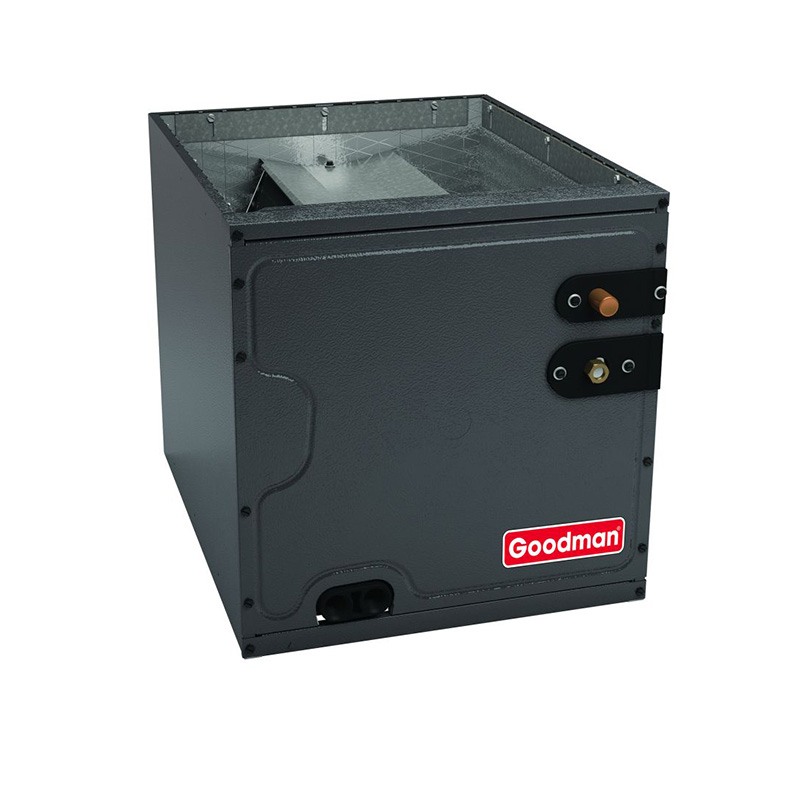
- Evaporator coil leaks show up in a meaningful share of owner accounts, and compressor lifespan averages 10 to 14 years versus 15 to 20 for premium brands
- A minority of owners report refrigerant leaks within the first year, which typically points to install or initial charge issues rather than a product defect but still creates early headaches
What homeowners and pros say about Goodman
Homeowners who chose a Goodman system most often cite the upfront price as the deciding factor, and that sentiment shows up in Google dealer reviews where the brand averages around 3.8 out of 5 stars. Affordability is the most repeated compliment, and buyers who invested in a careful install from a skilled technician tend to report trouble-free operation through the warranty period. The picture shifts in longer-term accounts. ConsumerAffairs scores Goodman at roughly 2.5 out of 5, a channel weighted toward people motivated to post by a bad experience, and the pattern in those reviews is consistent: systems that run well for the first several years start accumulating repair costs around year 7 or beyond. The specific failure modes that come up most often are dual-run capacitor failures, which are relatively inexpensive to fix in the 300 to 600 dollar range, and evaporator coil leaks, which are more disruptive and costly.
HVAC technicians tend to view Goodman as serviceable equipment whose longevity is heavily determined by the installer rather than the factory. Compressor lifespan averaging 10 to 14 years versus the 15 to 20 years typical of Trane, Carrier, or Lennox is a real gap, and pros who specialize in premium installs sometimes steer clients away from the brand for that reason alone. At the same time, techs who work in cost-sensitive markets point out that a well-installed Goodman with a capacitor swap at year 8 still beats the total cost of a premium brand for many homeowners. For this specific system, the 97% AFUE modulating furnace is where Goodman put its engineering effort, and the field feedback on high-efficiency Goodman furnaces is notably better than on the cooling side of the lineup.
Sources: ConsumerAffairs Goodman owner reviews, AHRI Directory of Certified Product Performance, U.S. DOE appliance and equipment efficiency standards, Goodman product specification sheets.
What it costs to run
At 14 SEER2, cooling this 3-ton system for a typical 1200-hour cooling season at the U.S. average electricity rate of $0.17/kWh works out to roughly $525 per year in cooling, about $23 less per year than a minimum-efficiency 13.4 SEER2 unit of the same size. Your real cost depends on your climate and local rate.
Method: (36,000 BTU/hr ÷ 14 SEER2) × 1200 hours ÷ 1000 × $0.17/kWh. Rate source: U.S. EIA average; cooling hours: moderate-climate estimate.
How it compares
| Brand | Comparable model | SEER2 | Stage | Price position |
|---|---|---|---|---|
| Goodman | GMVC97 + GSXH503610 (this system) | 14 | Modulating / Variable-speed | Value pick |
| Carrier | Performance 96 + Comfort 14 | 14 | Two-stage / Variable-speed | 15 to 25 percent higher than this system |
| Trane | S9V2 + XR14 | 14 | Two-stage / Variable-speed | 15 to 25 percent higher than this system |
| Lennox | ML296V + 14ACX | 14 | Two-stage / Variable-speed | 20 to 30 percent higher than this system |
Competitor rows are comparable single-stage units at similar efficiency; price is relative position, not a quote.
Questions about this system
Is downflow the right configuration for my home, or should I be looking at upflow or horizontal?
Downflow units discharge air through the bottom and return air through the top, which works specifically when your supply ducts run beneath the unit, as in a crawlspace or a ground-level closet on a slab. If your ducts are in an attic above the unit or the air handler sits in a closet with overhead ducts, you need an upflow or horizontal model instead. Getting this wrong means a costly swap, so confirm your duct layout before ordering.
Why does this furnace have a higher AFUE than the air conditioner has SEER2? Is that normal for a combo system?
Yes, it is common for a manufacturer to offer mixed efficiency tiers within a combo because heating and cooling efficiency are priced and valued differently by buyers. Here, the 97% AFUE furnace is top-tier while the 14 SEER2 condenser is entry-level. If your priority is lower gas bills in a cold climate, this pairing makes sense. If you also want to minimize summer electricity costs, you can often pair the same furnace with a higher SEER2 outdoor unit instead.
What is the real risk of an early refrigerant leak with a Goodman system?
A minority of Goodman owners report refrigerant leaks within the first year, and in most cases the root cause is an install or initial charge error rather than a defect in the equipment itself. Hiring a licensed technician who pressure-tests the line set and verifies the charge with a calibrated gauge set substantially reduces this risk. If a leak does occur in year one, it should fall under warranty, but you will still pay the labor to diagnose and recharge.
How does the variable-speed ECM blower actually affect my comfort and energy bill compared to a single-speed motor?
A variable-speed ECM motor ramps up and down to match the actual load rather than running at full speed or not at all. This means fewer abrupt on-off cycles, more consistent temperatures room to room, and meaningfully lower electricity consumption for the blower motor over the course of the year. It also runs quieter at lower speeds, which most homeowners notice within the first week of operation.
What maintenance should I plan for to get the most life out of this system?
Annual professional tune-ups are the single biggest factor in longevity for Goodman equipment, where install quality and ongoing maintenance drive outcomes more than the brand average alone suggests. Specifically, ask the technician to check the dual-run capacitor every visit since that is the most commonly reported failure point on Goodman systems, and inspect the evaporator coil for any early signs of leakage. Keeping the air filter clean on a monthly schedule protects the blower motor and the coil equally.
Specifications
| Cooling capacity | 3 Ton |
| Efficiency | 14 SEER2 |
| Furnace output | 100000 BTU |
| Furnace efficiency | 97% AFUE |
| Configuration | Downflow |
| Refrigerant | R-32 |