Goodman Furnace AC Combo – 3 Ton 15.2 SEER2 AC With 100000 BTU 97% AFUE Modulating Variable-Speed ECM Gas Furnace System – Downflow | R32
View on AC Direct see your lowest price →Check current price on AC Direct →
Key features
- 3-ton, 15.2 SEER2 central AC using R-32 refrigerant
- 100,000 BTU modulating gas furnace rated at 97% AFUE
- Variable-speed ECM blower motor for quieter, steadier airflow
- Downflow configuration for floor-register duct systems
- Modulating burner adjusts output in small increments to reduce temperature swings
- R-32 refrigerant carries a lower global-warming potential than R-410A
About this system
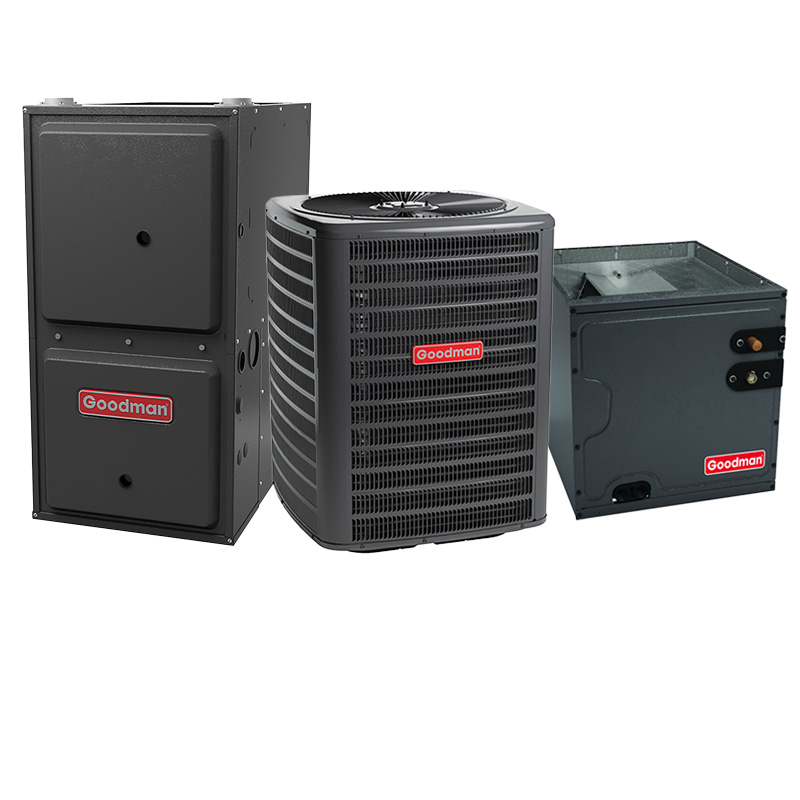
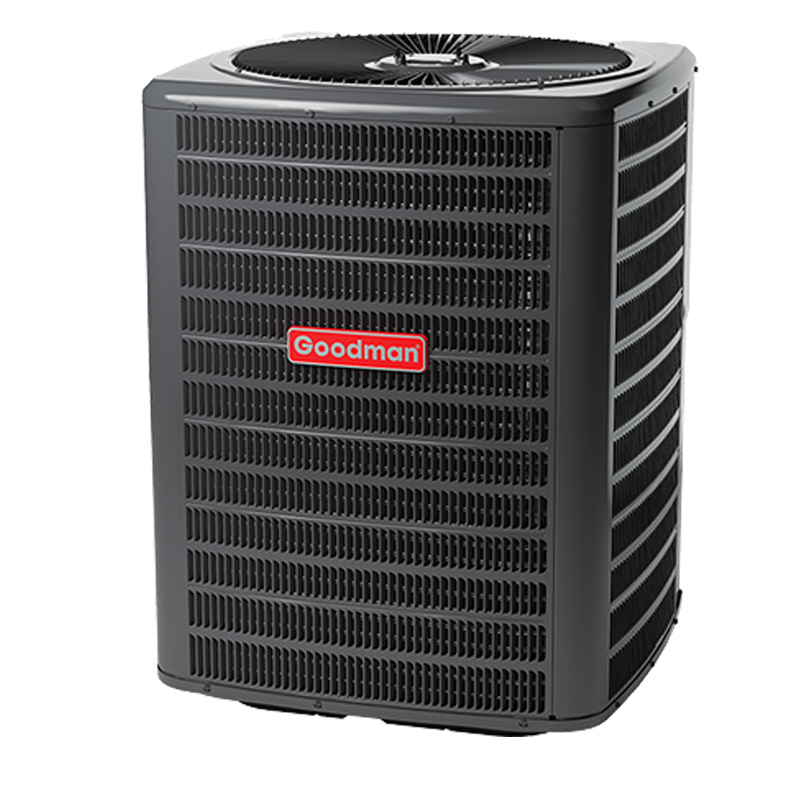
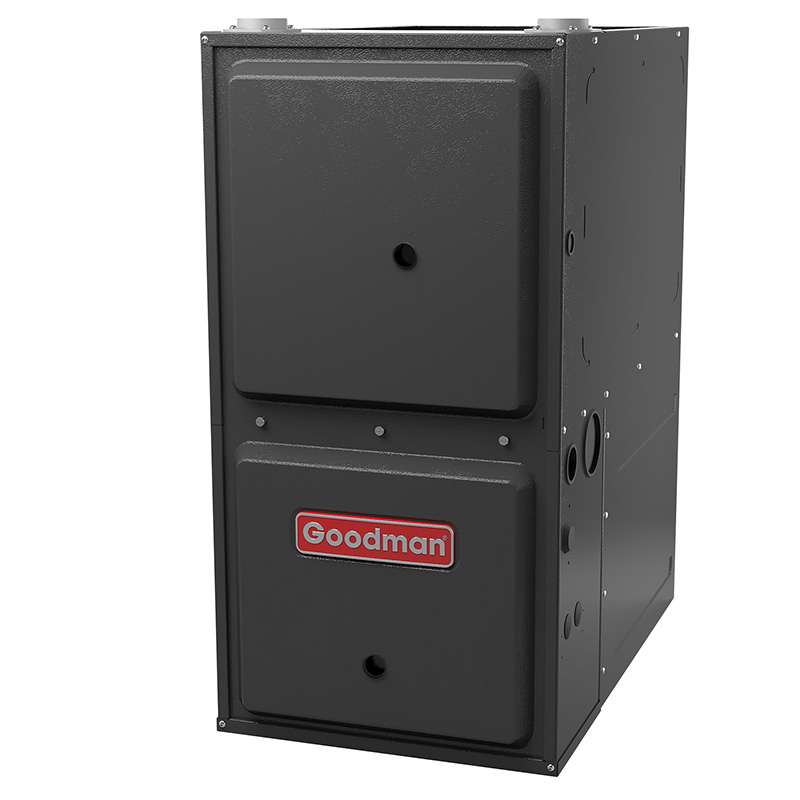
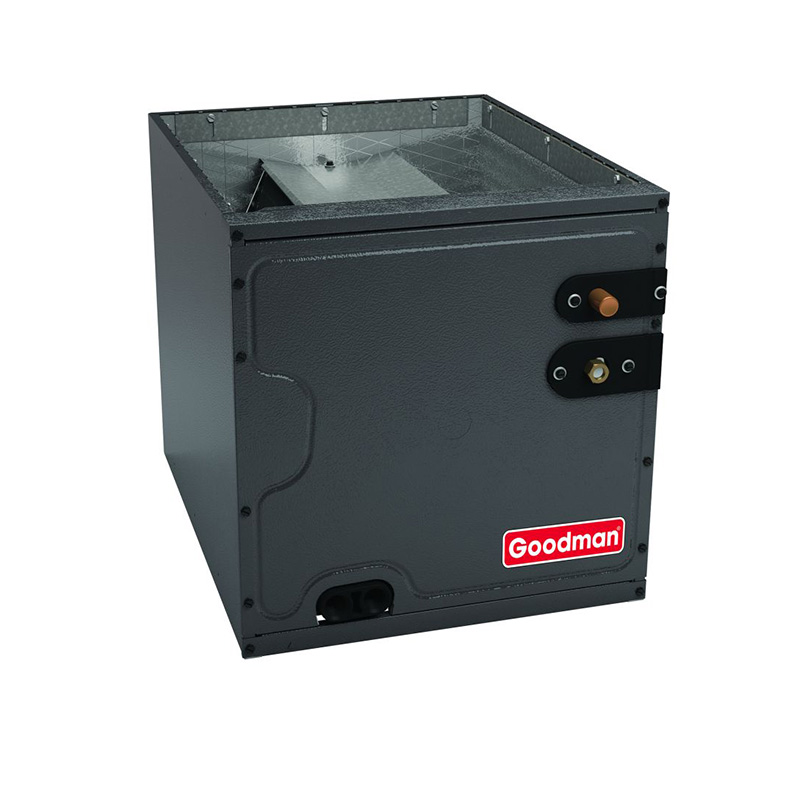
The Goodman GLXS4BA3610 pairs a 3-ton, 15.2 SEER2 central air conditioner with a 100,000 BTU, 97% AFUE modulating gas furnace in a downflow configuration. The AC side uses R-32 refrigerant, a lower global-warming-potential option that is becoming standard as the industry moves away from R-410A. At 15.2 SEER2, this system clears the federal minimum for most U.S. climate zones by a meaningful margin without reaching the premium efficiency tiers that carry a steep price premium. The furnace side is where this combo earns its specification credentials: 97% AFUE means virtually all fuel is converted to heat, and the modulating burner paired with a variable-speed ECM blower allows the system to run at partial capacity most of the time, which delivers steadier temperatures and quieter operation compared to single-stage or two-stage equipment.
The downflow configuration directs conditioned air downward through floor registers, making this combo appropriate for homes where the air handler sits in an upper-floor closet, a garage, or on a platform above a crawlspace. That is a narrower installation footprint than upflow systems, so confirming the existing ductwork layout before purchasing is essential. This package suits homeowners in colder climates who spend heavily on heating bills and want genuine efficiency gains from the furnace side, while accepting a mid-range rather than top-tier cooling efficiency. It is a realistic choice for budget-conscious buyers who want a high-AFUE modulating furnace without paying Carrier or Lennox prices for the same feature set.
This combo delivers genuinely high furnace efficiency and variable-speed comfort at a price point that undercuts comparable Carrier, Trane, and Lennox packages by a noticeable margin. The trade-off is a brand reliability track record that sits below the premium tier, and a cooling efficiency score that is solid but not exceptional. Buyers who prioritize heating performance and upfront cost savings will find real value here; those who want the lowest long-term ownership risk should budget for a service plan.
Overall score is the average of the five ratings above.
What we like
- 97% AFUE modulating furnace delivers top-tier heating efficiency and fuel savings
- Variable-speed ECM blower reduces energy use and improves comfort consistency
- R-32 refrigerant is a more environmentally responsible refrigerant choice
- Priced roughly 15 to 25 percent below comparable Trane, Lennox, and Carrier systems
- 15.2 SEER2 clears federal minimums by a useful margin without a premium efficiency surcharge
Trade-offs
- Dual-run capacitors are the most commonly reported failure point, typically requiring repair within the first decade
- Evaporator coil leaks appear in a meaningful share of owner reviews and can be costly
- Compressor lifespan averages 10 to 14 years versus 15 to 20 for premium brands
- Downflow-only configuration limits installation flexibility; not compatible with most attic or basement upflow setups
What homeowners and pros say about Goodman
Owners and dealers discussing Goodman equipment on Google review platforms average around 3.8 out of 5 stars, with affordability cited most often as the deciding reason for choosing the brand. On ConsumerAffairs, which skews toward dissatisfied owners, Goodman sits near 2.5 out of 5, and the recurring pattern in those negative reviews is repair costs that become burdensome after roughly year seven. For this specific combo, the high-AFUE modulating furnace draws praise from owners in colder regions who see measurable drops in gas bills, while the 15.2 SEER2 cooling side is treated as adequate rather than impressive. Installers frequently note that a clean, correctly charged installation is the single biggest factor in how long any Goodman system lasts, and the first-year refrigerant leak reports in owner reviews almost always trace back to charging errors at install rather than factory defects.
HVAC technicians who service Goodman equipment regularly point to dual-run capacitors as the component they replace most often on these systems, a repair that typically falls in the 300 to 600 dollar range and is considered a routine fix rather than a serious failure. Evaporator coil leaks come up frequently enough in owner accounts to be worth factoring into a long-term ownership budget, and the compressor lifespan on Goodman equipment tends to average 10 to 14 years in field experience, noticeably shorter than the 15 to 20 years technicians associate with Trane or Carrier compressors. Pros who recommend Goodman typically do so in situations where the customer has a firm budget ceiling, wants a modulating furnace at a reachable price, and is willing to carry a service agreement to offset the higher-than-average probability of mid-decade component repairs.
Sources: ConsumerAffairs Goodman owner reviews, AHRI Directory of Certified Product Performance, U.S. DOE appliance and equipment efficiency standards, Goodman product specification sheets.
What it costs to run
At 15.2 SEER2, cooling this 3-ton system for a typical 1200-hour cooling season at the U.S. average electricity rate of $0.17/kWh works out to roughly $483 per year in cooling, about $65 less per year than a minimum-efficiency 13.4 SEER2 unit of the same size. Your real cost depends on your climate and local rate.
Method: (36,000 BTU/hr ÷ 15.2 SEER2) × 1200 hours ÷ 1000 × $0.17/kWh. Rate source: U.S. EIA average; cooling hours: moderate-climate estimate.
How it compares
| Brand | Comparable model | SEER2 | Stage | Price position |
|---|---|---|---|---|
| Goodman | GLXS4BA3610 (this system) | 15.2 | Variable/Modulating | Value pick |
| Carrier | Performance 96 / 24ACC636A003 | 16.0 | Two-stage | Approximately 20 to 25 percent more than this Goodman package |
| Trane | S9V2 / XR15 combo | 15.2 | Variable/Modulating | Approximately 20 to 30 percent more than this Goodman package |
| Lennox | SL280V / XC16 combo | 16.0 | Variable/Two-stage | Approximately 25 to 35 percent more than this Goodman package |
Competitor rows are comparable single-stage units at similar efficiency; price is relative position, not a quote.
Questions about this system
Why does this system only work in a downflow configuration, and how do I know if my home qualifies?
Downflow means the furnace discharges conditioned air through the bottom and into floor-level ducts, which suits homes where the air handler sits in a closet, garage, or on a raised platform above floor registers. Check your existing furnace orientation before ordering; installing a downflow unit in an upflow duct system requires significant ductwork modification and is not practical in most cases.
What does modulating mean for the furnace, and is it worth the added complexity?
A modulating furnace can vary its firing rate in small steps rather than simply turning fully on or off, which keeps indoor temperatures closer to the setpoint and reduces the blasts of hot air common with single-stage equipment. The added mechanical complexity does mean more components that can eventually require service, but the comfort and efficiency gains are real and measurable on heating bills.
What are the most likely repair costs I should plan for with a Goodman system?
Dual-run capacitor failures are the most commonly reported issue and typically cost between 300 and 600 dollars to fix, usually within the first decade of use. Evaporator coil leaks and refrigerant issues show up in owner reviews as well; a minority of owners report refrigerant problems in the first year, which often traces back to installation quality rather than a component defect.
Is R-32 refrigerant harder to service than R-410A, and will technicians in my area know how to handle it?
R-32 requires technicians to follow mildly different handling procedures since it is mildly flammable, but it is not a niche refrigerant; it is widely used in commercial and residential equipment globally and is increasingly common in U.S. residential systems. Most licensed HVAC technicians are already trained on R-32, but confirming this with your service contractor before installation is a reasonable step.
How much does Goodman's warranty actually protect me compared to a premium brand?
Goodman offers a 10-year parts warranty on registered units, which is competitive on paper, but the warranty covers parts only and requires registration within a set window after installation. Labor costs, which often exceed parts costs on complex repairs, are not covered, so a service contract or extended labor warranty from your installer meaningfully changes the real-world protection picture.
Specifications
| Cooling capacity | 3 Ton |
| Efficiency | 15.2 SEER2 |
| Furnace output | 100000 BTU |
| Furnace efficiency | 97% AFUE |
| Configuration | Downflow |
| Refrigerant | R-32 |
| Model | GLXS4BA3610 |