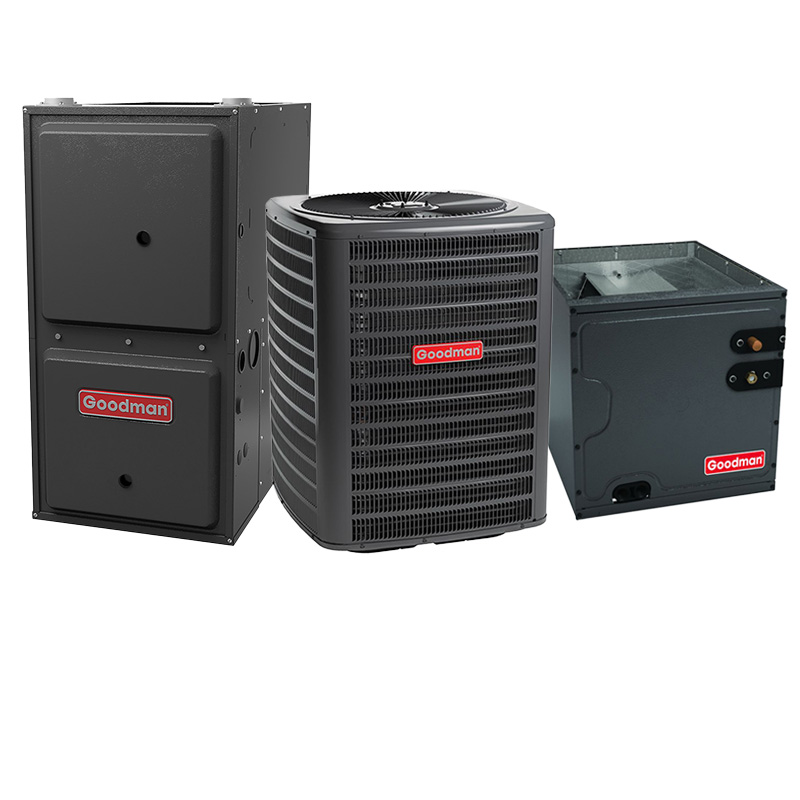
Goodman Furnace AC Combo – 3 Ton 14.5 SEER2 AC With 80000 BTU 97% AFUE Modulating Variable-Speed ECM Gas Furnace System – Downflow | R32
View on AC Direct see your lowest price →Check current price on AC Direct →
Key features
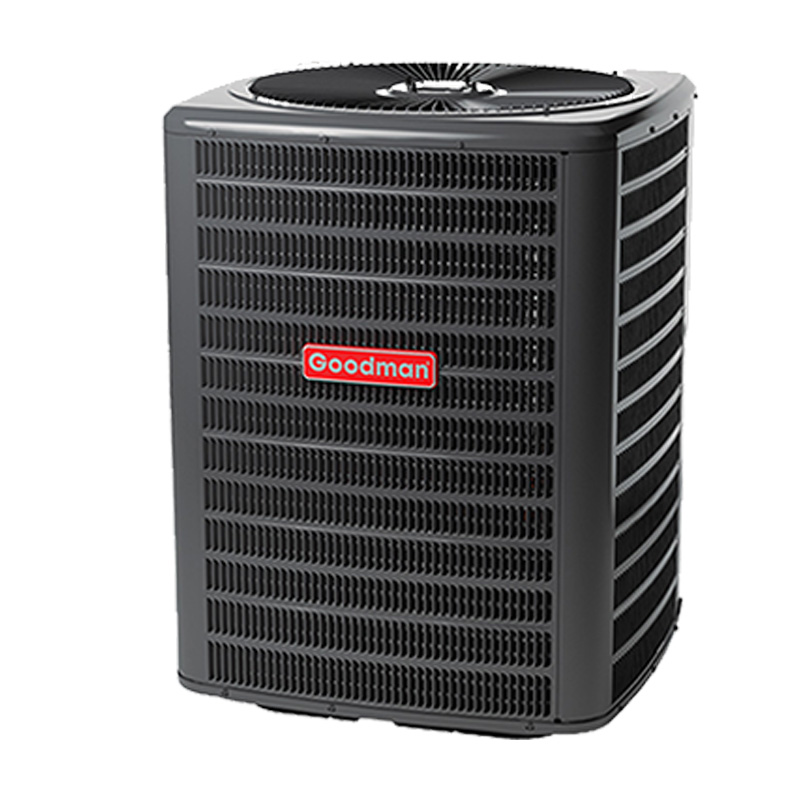
- 3-ton 14.5 SEER2 central AC using R-32 refrigerant
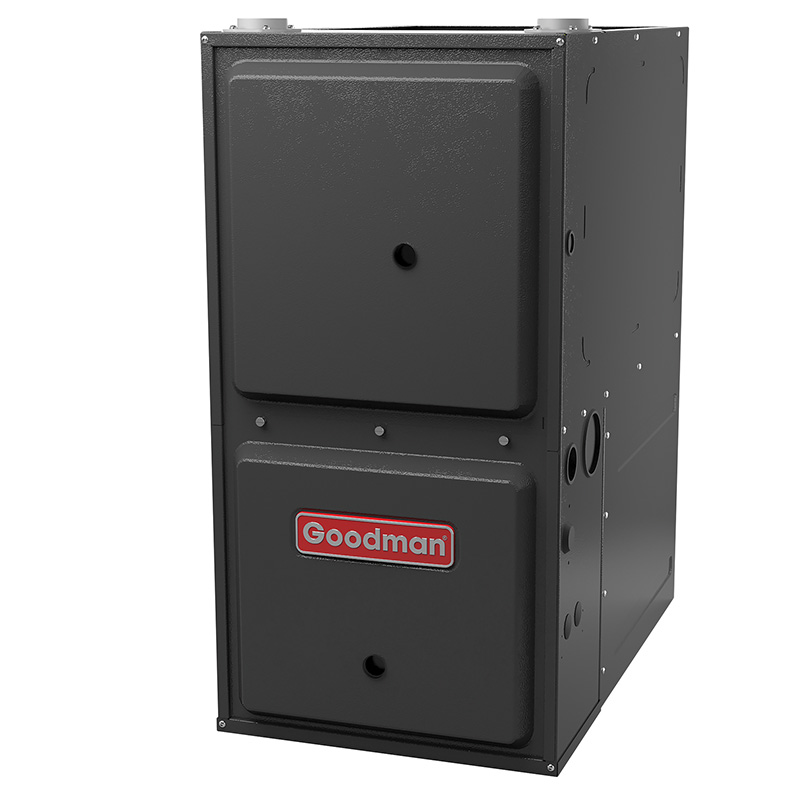
- 80,000 BTU modulating gas furnace rated at 97% AFUE
- Variable-speed ECM blower motor for low-noise, efficient airflow
- Downflow configuration for specific duct layouts
- R-32 refrigerant: lower global warming potential than R-410A
- Factory-matched system for simplified load calculations and warranty coverage
About this system
This Goodman combo pairs a 3-ton, 14.5 SEER2 central air conditioner with an 80,000 BTU, 97% AFUE modulating gas furnace in a downflow configuration, making it a strong candidate for homes where the air handler sits above the living space and supply air flows downward, common in upflow-basement setups inverted or in crawl-space and closet installs. The R-32 refrigerant charge is a forward-looking choice: R-32 carries a lower global warming potential than R-410A and is increasingly the industry standard as R-410A is phased down under EPA regulations, so parts and service should remain accessible for the foreseeable future.
The furnace side of this system is where the real headline is. A 97% AFUE modulating burner with a variable-speed ECM blower is genuinely high-end furnace technology at a Goodman price point. Modulating means the burner adjusts its output in fine increments rather than cycling fully on and off, which smooths temperature swings, reduces short-cycling wear, and squeezes the most heat out of every cubic foot of gas. The ECM motor runs at lower speeds during mild demand, cutting fan electricity costs significantly compared to a standard PSC motor. For a household in a cold climate where the furnace carries a heavy seasonal load, that 97% AFUE rating translates to real annual savings on gas bills versus an 80% unit.
This system delivers genuinely premium furnace technology at a below-market price, and the 97% AFUE modulating furnace with ECM blower is a real standout for high-heating-load climates. The 14.5 SEER2 AC side is efficient enough to meet most regional minimums without being exceptional, and Goodman's real-world track record means long-term durability depends heavily on who installs it and how well the system is maintained after year seven.
Overall score is the average of the five ratings above.
What we like
- 97% AFUE modulating furnace is top-tier efficiency technology for the price
- Variable-speed ECM motor reduces electricity use and indoor noise versus standard motors
- R-32 refrigerant is more future-proof than R-410A as regulations tighten
- Priced roughly 15 to 25 percent below equivalent Trane, Carrier, and Lennox systems
- Factory-matched coil and furnace combination simplifies installation and preserves full warranty coverage
Trade-offs
- Dual-run capacitors are a documented early failure point, typically requiring a 300 to 600 dollar service call
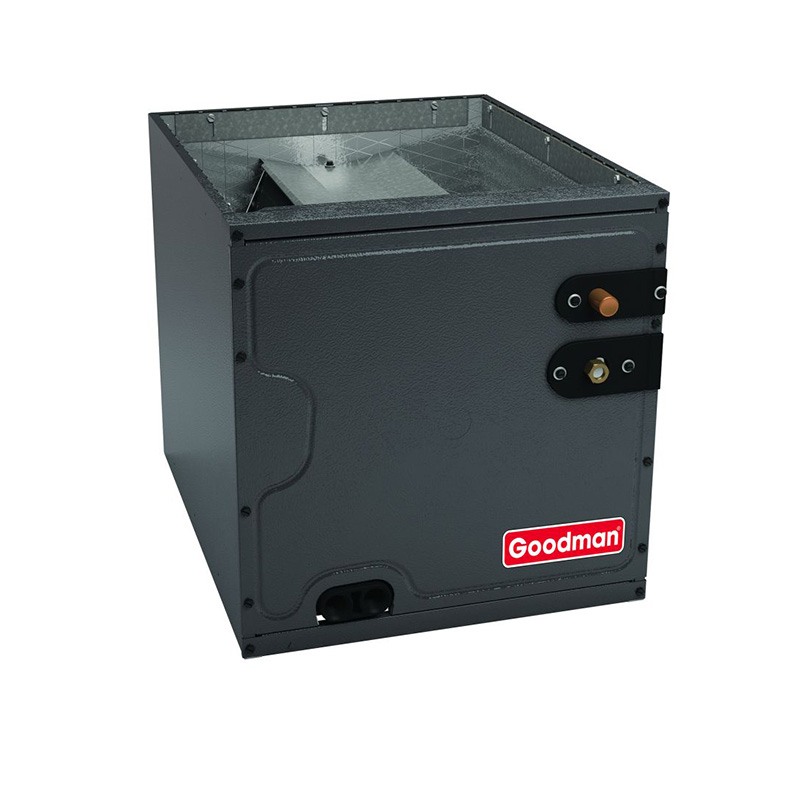
- Evaporator coil leaks appear in a notable share of owner reports, which can be costly if outside warranty
- Compressor lifespan averages 10 to 14 years versus 15 to 20 years for premium brands
- Downflow-only configuration limits which homes this system fits without significant duct modification
What homeowners and pros say about Goodman
Homeowners who post about Goodman equipment tend to cluster at the extremes. On ConsumerAffairs, where the platform skews toward frustrated buyers, Goodman averages around 2.5 out of 5, with the recurring complaint being repair costs that start climbing after roughly year seven, particularly around coil leaks and compressor issues. Google dealer reviews paint a more balanced picture at around 3.8 out of 5, where affordability is the praise that shows up most consistently. The honest read is that satisfied Goodman owners rarely feel the urge to post a review, so both scores should be weighted with that in mind.
HVAC technicians who work on Goodman equipment regularly point to a few predictable failure modes on this product line. Dual-run capacitors on the AC side are considered a routine eventual replacement, usually a quick and relatively inexpensive fix in the 300 to 600 dollar range but one that tends to happen at an inconvenient time if it is not caught during annual maintenance. Evaporator coil leaks appear in a meaningful portion of owner reports and are more disruptive, particularly if the system is out of its parts warranty window. Compressor longevity is the bigger long-term concern: Goodman compressors tend to average 10 to 14 years in real-world use, noticeably shorter than the 15 to 20 years more commonly reported with Trane or Carrier compressors. On the furnace side, the 97% AFUE modulating technology in this unit is hardware that appears in much more expensive systems, and technicians generally regard it as a legitimate upgrade, provided the install is done carefully and the heat exchanger is inspected at each annual service visit.
Sources: ConsumerAffairs Goodman owner reviews, AHRI Directory of Certified Product Performance, U.S. DOE appliance and equipment efficiency standards, Goodman product specification sheets.
What it costs to run
At 14.5 SEER2, cooling this 3-ton system for a typical 1200-hour cooling season at the U.S. average electricity rate of $0.17/kWh works out to roughly $506 per year in cooling, about $42 less per year than a minimum-efficiency 13.4 SEER2 unit of the same size. Your real cost depends on your climate and local rate.
Method: (36,000 BTU/hr ÷ 14.5 SEER2) × 1200 hours ÷ 1000 × $0.17/kWh. Rate source: U.S. EIA average; cooling hours: moderate-climate estimate.
How it compares
| Brand | Comparable model | SEER2 | Stage | Price position |
|---|---|---|---|---|
| Goodman | This system (3T 14.5 SEER2 / 80k BTU 97% AFUE Modulating ECM Downflow R-32) | 14.5 | Modulating / Variable-speed | Value pick |
| Carrier | Performance 96 / 24ACC636A003 paired with 59TP6 | 15.0 | Two-stage / Variable-speed | 20 to 30 percent higher than this Goodman system |
| Trane | XR15 / XC15 paired with XC97 Variable-Speed Furnace | 15.0 | Two-stage to variable / Variable-speed | 25 to 35 percent higher than this Goodman system |
| Lennox | ML14XC1 paired with SLP99V | 14.3 | Single-stage AC / Modulating furnace variable-speed | 25 to 40 percent higher than this Goodman system |
Competitor rows are comparable single-stage units at similar efficiency; price is relative position, not a quote.
Questions about this system
Is the downflow configuration the same as a standard upflow furnace? Can I install this in a basement?
No, downflow and upflow are distinct configurations. A downflow furnace draws return air from the top and pushes conditioned air downward into floor-level ducts, which is common in main-floor closet installs or manufactured housing. A standard basement setup usually requires an upflow unit. Confirm your existing duct layout before ordering, because converting between configurations is not a simple field modification.
Will my existing R-410A tools and gauges work with R-32, or does my technician need new equipment?
R-32 requires dedicated recovery equipment and a different set of gauges because it operates at higher pressures than R-410A and is mildly flammable (A2L classification). Most recently certified HVAC technicians have or are acquiring compatible equipment, but it is worth confirming before scheduling the install since not every local contractor is equipped for R-32 work yet.
What does the modulating burner actually do day to day, and is it noticeable?
A modulating burner adjusts its flame output in small steps to match your home's heat loss rather than blasting at full capacity every cycle. In practice this means fewer and longer, quieter heating cycles, more even room temperatures, and less thermal stress on the heat exchanger over time. Paired with the variable-speed ECM blower, most owners notice the system is significantly quieter than a single-stage furnace.
What are the most likely repair costs I should budget for over the first ten years?
Based on Goodman's documented failure patterns, the most common early repair is a failed dual-run capacitor on the AC side, which typically runs 300 to 600 dollars including labor. Evaporator coil leaks are the next most reported issue and can cost significantly more depending on whether the coil is still under the parts warranty. Scheduling annual maintenance and replacing the capacitor proactively around year five is a common strategy to avoid a summer breakdown.
How important is installer quality for this specific system, and what should I ask a contractor before hiring?
Installer quality is arguably the most important factor in how long this system lasts. HVAC professionals consistently note that Goodman equipment performs well when sized correctly and charged to spec, and underperforms when it is not. Ask any contractor whether they will perform a Manual J load calculation to confirm the 3-ton sizing is right for your home, and ask how they verify refrigerant charge on R-32 systems. A contractor who skips load calculations is a red flag regardless of brand.
Specifications
| Cooling capacity | 3 Ton |
| Efficiency | 14.5 SEER2 |
| Furnace output | 80000 BTU |
| Furnace efficiency | 97% AFUE |
| Configuration | Downflow |
| Refrigerant | R-32 |