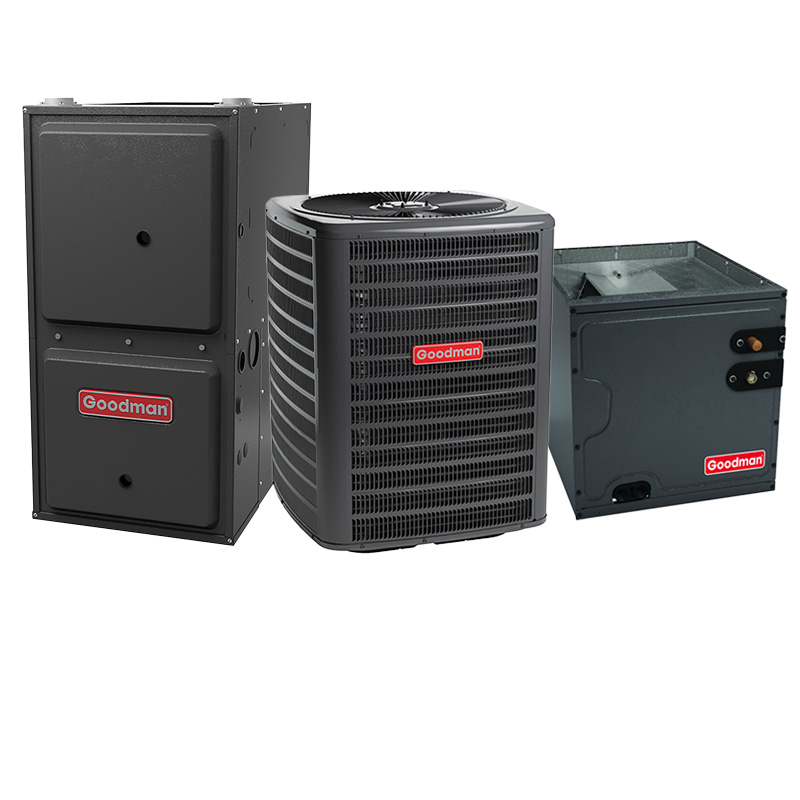
Goodman Furnace AC Combo – 3 Ton 15.2 SEER2 AC With 80000 BTU 97% AFUE Modulating Variable-Speed ECM Gas Furnace System – Downflow | R32
View on AC Direct see your lowest price →Check current price on AC Direct →
Key features
- 3-ton, 15.2 SEER2 air conditioner using R-32 refrigerant
- 80,000 BTU modulating gas furnace rated at 97% AFUE
- Variable-speed ECM blower motor for quieter, more efficient airflow
- Downflow discharge configuration for basement or under-floor duct systems
- Matched factory system qualifies for efficiency-tier utility rebates in many regions
- R-32 refrigerant charge aligns with current EPA phase-down direction away from R-410A
About this system
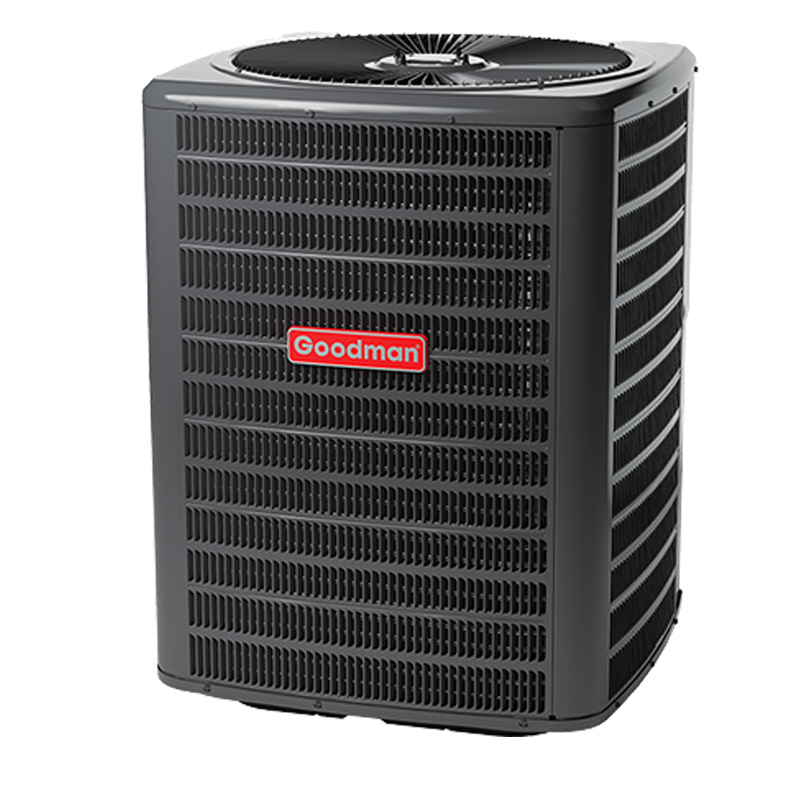
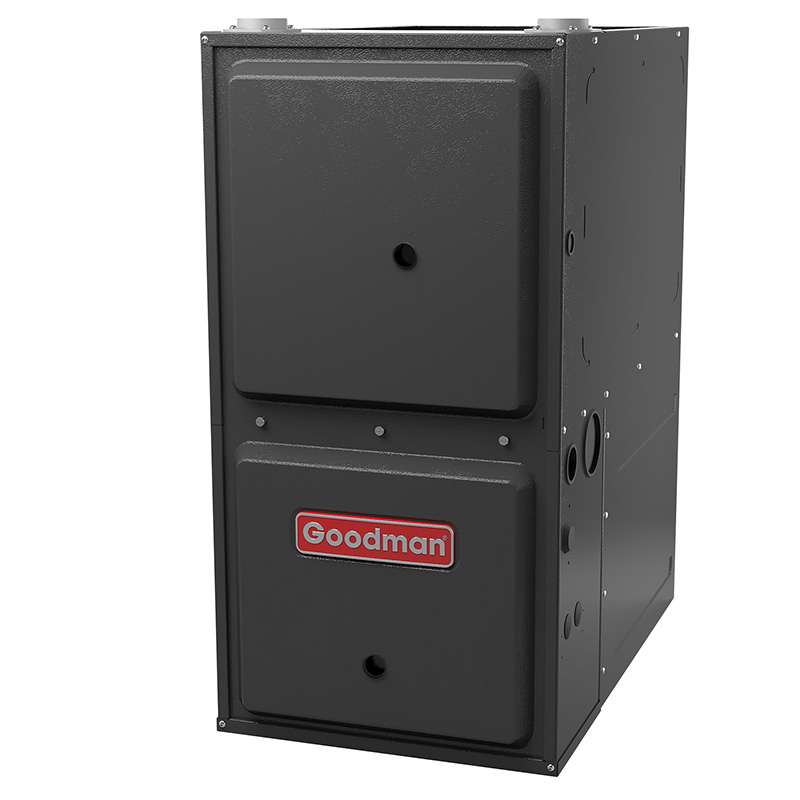
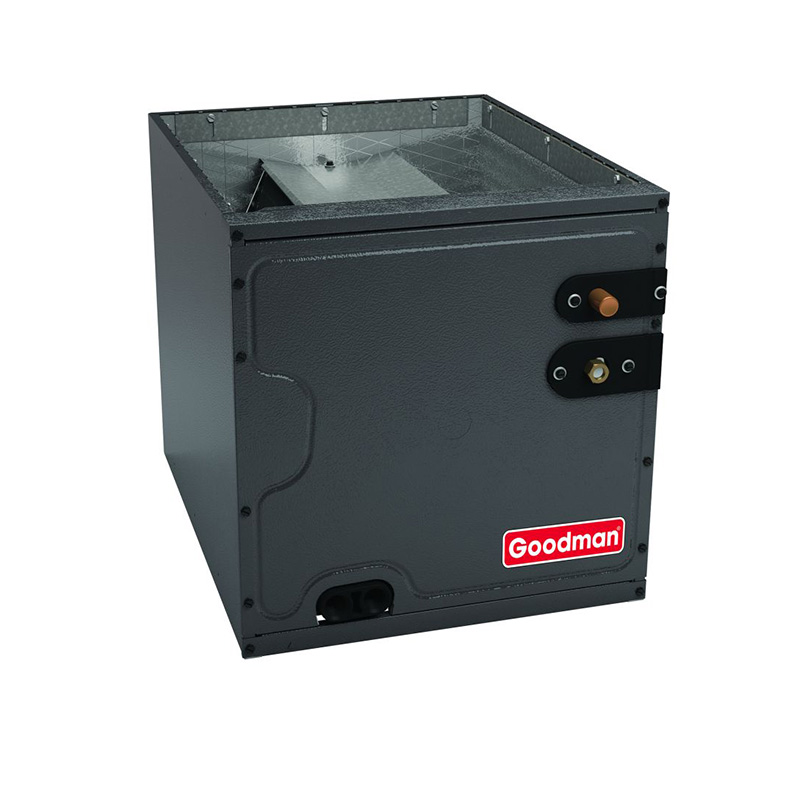
The Goodman GLXS4BA3610 bundles a 3-ton, 15.2 SEER2 central air conditioner with an 80,000 BTU, 97% AFUE modulating gas furnace into a single matched system for homes that need both cooling and heating from a ground-up installation or a full-system replacement. The downflow configuration means warm or conditioned air exits the bottom of the air handler and feeds ductwork below the unit, making it a natural fit for homes with basement or crawlspace duct runs and for installations in utility closets on main floors. The R-32 refrigerant charge is a meaningful spec detail: R-32 carries a lower global-warming potential than the outgoing R-410A, and because the industry is actively moving toward it, sourcing refrigerant for future service calls should remain straightforward for years.
The furnace side of this system earns its 97% AFUE rating through a modulating gas valve and a variable-speed ECM blower motor, two features that are uncommon at this price tier. Modulating operation means the furnace ramps its heat output up and down in small increments rather than cycling fully on and off, which keeps temperatures more even room to room and reduces the cold-blast-then-overshoot pattern common with single-stage equipment. The ECM motor draws significantly less electricity than a standard PSC blower and runs longer at lower speeds, which also helps the AC side maintain more consistent dehumidification during mild summer days. For a 1,500 to 2,200 square foot home in a mixed climate where both heating and cooling bills are real concerns, this combination addresses both operating costs at once.
This Goodman combo delivers genuinely high furnace efficiency and useful variable-speed hardware at a price most competing brands cannot match, but buyers accept a shorter expected compressor lifespan and a reliability floor that depends heavily on how well the system is installed and commissioned. It is a strong value play for cost-conscious homeowners who vet their installer carefully and budget for possible capacitor or coil work past year seven.
Overall score is the average of the five ratings above.
What we like
- 97% AFUE modulating furnace is top-tier efficiency at a value price point
- Variable-speed ECM blower improves comfort and lowers fan electricity costs year-round
- R-32 refrigerant is future-friendly and increasingly well-supported by HVAC technicians
- Priced roughly 15 to 25 percent below comparable Trane, Lennox, and Carrier matched systems
- 15.2 SEER2 rating clears the efficiency threshold for utility rebates in most U.S. climate zones
Trade-offs
- Compressor lifespan averages 10 to 14 years, several years shorter than premium-brand benchmarks
- Dual-run capacitor failures are the most documented recurring repair, typically appearing after year five
- Evaporator coil leaks appear in a meaningful share of owner reports and can be costly to address
- Overall reliability is strongly tied to install quality, so a cut-rate installation erases much of the cost advantage
What homeowners and pros say about Goodman
Homeowners who research Goodman online encounter a split picture. On ConsumerAffairs, the brand scores around 2.5 out of 5, a channel that skews toward people filing complaints rather than satisfied owners writing in to say nothing broke. The recurring pattern in those reviews is not early catastrophic failure but rather repair costs that start accumulating after roughly year seven, with capacitor replacements being the most frequently mentioned service call. On Google dealer reviews, where the sample includes a broader range of customers, Goodman averages closer to 3.8 out of 5, and affordability is the word that shows up most consistently in the positive feedback. That gap between the two scores is itself informative: the brand works well enough for most people most of the time, but it carries more service frequency risk than Trane, Carrier, or Lennox equipment at similar ages.
HVAC technicians who work on Goodman equipment regularly tend to describe it the same way: the hardware is adequate, the price is real, and the outcome depends enormously on who put it in. Documented failure modes follow a recognizable pattern. Dual-run capacitors are the most common call, a low-drama fix when caught early. Evaporator coil leaks appear often enough in owner reports to be a genuine planning item rather than an outlier. Compressor lifespan on Goodman units tends to land in the 10 to 14 year range, which is shorter than the 15 to 20 years technicians associate with premium brands. And a minority of owners report refrigerant leaks in the first year, a pattern that points to installation and initial charge quality rather than manufacturing defects. For this specific system, the 97% AFUE modulating furnace and the variable-speed ECM blower are legitimate upgrades that justify the product on efficiency grounds alone. The honest trade-off is that those features arrive inside a cabinet with a reliability ceiling that a premium brand buyer would not accept, making installer selection the most important decision in the whole purchase.
Sources: ConsumerAffairs Goodman owner reviews, AHRI Directory of Certified Product Performance, U.S. DOE appliance and equipment efficiency standards, Goodman product specification sheets.
What it costs to run
At 15.2 SEER2, cooling this 3-ton system for a typical 1200-hour cooling season at the U.S. average electricity rate of $0.17/kWh works out to roughly $483 per year in cooling, about $65 less per year than a minimum-efficiency 13.4 SEER2 unit of the same size. Your real cost depends on your climate and local rate.
Method: (36,000 BTU/hr ÷ 15.2 SEER2) × 1200 hours ÷ 1000 × $0.17/kWh. Rate source: U.S. EIA average; cooling hours: moderate-climate estimate.
How it compares
| Brand | Comparable model | SEER2 | Stage | Price position |
|---|---|---|---|---|
| Goodman | GLXS4BA3610 (this system) | 15.2 | Modulating / Variable-speed | Value pick |
| Carrier | Infinity 16 with Infinity 96 Furnace (24ANB6 / 59MN7) | 16+ | Variable / Modulating | Approximately 20 to 30 percent more than this Goodman system |
| Trane | XR15 with S9V2 Furnace | 15.2 to 15.5 | Single-stage AC / Two-stage furnace | Approximately 15 to 25 percent more than this Goodman system |
| Lennox | Merit 16ACX with ML296V Furnace | 16 | Single-stage AC / Variable-speed furnace | Approximately 20 to 30 percent more than this Goodman system |
Competitor rows are comparable single-stage units at similar efficiency; price is relative position, not a quote.
Questions about this system
Why does this system use R-32 instead of R-410A, and does that affect service costs?
Goodman transitioned this line to R-32 as the industry phases out R-410A under EPA regulations. R-32 has a lower global-warming potential and is increasingly stocked by wholesale distributors, so refrigerant availability for top-offs or leak repairs should be comparable to R-410A going forward. Technicians who are EPA 608 certified can handle it, though a small number of older shops may not stock it yet, so confirming your service contractor carries R-32 before signing a maintenance agreement is worth the two-minute phone call.
My house has ductwork under the floor. Is downflow the right configuration for me?
Downflow means the furnace and air handler discharge conditioned air out of the bottom of the cabinet, which feeds directly into a plenum or duct system located below the unit, exactly what a basement or crawlspace duct layout requires. If your supply ducts exit through the top or sides of the air handler location, you would need an upflow or horizontal unit instead, and installing this downflow cabinet in that scenario would require expensive duct modifications.
What does a modulating furnace actually do differently from a two-stage model?
A two-stage furnace runs at one of two fixed output levels, typically around 65 percent and 100 percent capacity. A modulating furnace adjusts its flame in small steps across a wide range, often from roughly 40 percent up to full capacity, reacting continuously to how much heat the house actually needs at that moment. In practice this produces steadier indoor temperatures with less noticeable cycling, and when paired with the variable-speed ECM blower it also runs more quietly during partial-load operation, which covers most heating hours in a typical season.
What are the most likely repairs I should budget for over the first ten years?
The most commonly reported failure on Goodman equipment is the dual-run capacitor, a relatively inexpensive component with typical repair costs in the 300 to 600 dollar range including labor. Evaporator coil leaks are a second documented issue and carry higher repair costs depending on whether the coil needs cleaning, resealing, or full replacement. A small number of owners also report refrigerant leaks in the first year, which is generally an installation or initial charge issue rather than a product defect, underscoring why install quality matters so much with this brand.
Does this system qualify for the federal 25C tax credit or utility rebates?
The furnace at 97% AFUE and the air conditioner at 15.2 SEER2 both meet or exceed the efficiency thresholds the IRS currently uses for the 25C residential clean energy credit, so the system is likely eligible for up to 600 dollars in federal tax credit on qualifying installation costs, subject to your individual tax situation. Many utilities also offer rebates for systems above 15 SEER2 or 96 percent AFUE, so checking your utility's current incentive schedule before purchasing is a practical step that occasionally changes the effective cost comparison between this and a competing system.
Specifications
| Cooling capacity | 3 Ton |
| Efficiency | 15.2 SEER2 |
| Furnace output | 80000 BTU |
| Furnace efficiency | 97% AFUE |
| Configuration | Downflow |
| Refrigerant | R-32 |
| Model | GLXS4BA3610 |