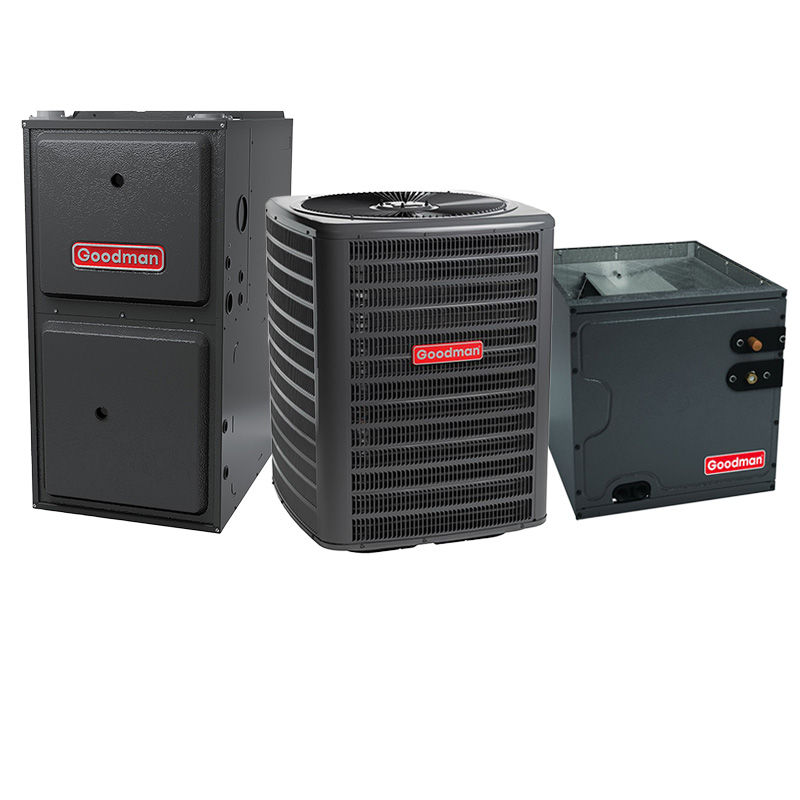
Goodman Furnace AC Combo – 4 Ton 13.5 SEER2 AC With 120000 BTU 97% AFUE Modulating Variable-Speed ECM Gas Furnace System – Upflow | R32
View on AC Direct see your lowest price →Check current price on AC Direct →
Key features
- 97% AFUE modulating furnace with variable-speed ECM blower for precise, efficient heating
- 4-ton, 13.5 SEER2 air conditioner meets current federal efficiency minimums for most northern regions
- R-32 refrigerant with a lower global-warming potential than the R-410A it replaces
- Upflow configuration matches the most common residential ductwork layout
- 120,000 BTU heating capacity suited to larger homes or colder climates
- Modulating gas valve adjusts output incrementally, reducing temperature swings and short-cycling
About this system
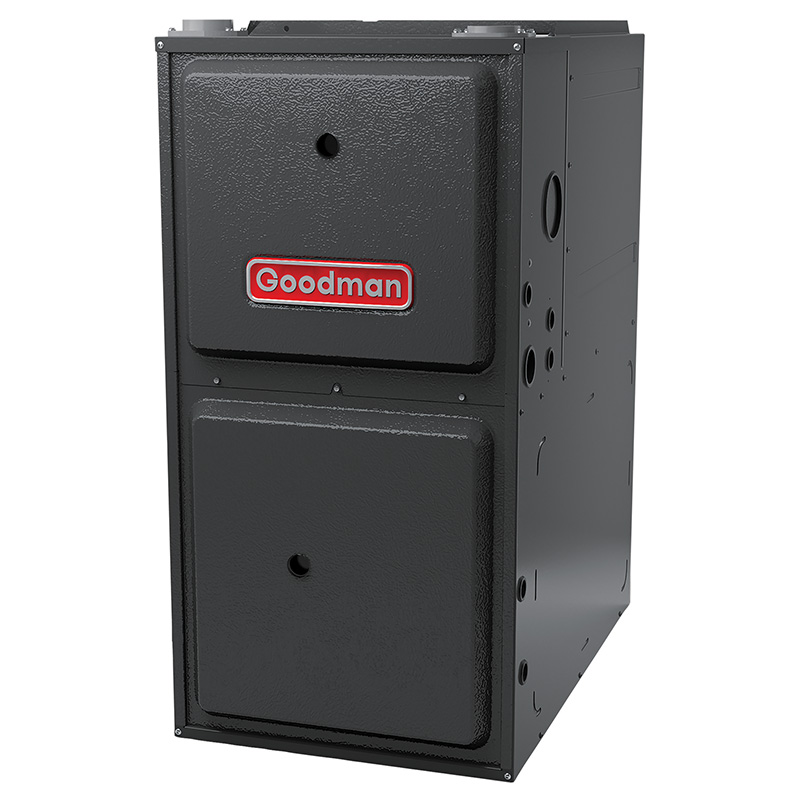
This Goodman combo pairs a 4-ton, 13.5 SEER2 central air conditioner with a 120,000 BTU, 97% AFUE modulating gas furnace in an upflow configuration. The furnace is the headline here: a true modulating, variable-speed ECM unit can ramp heat output up or down in small increments rather than cycling on and off at full blast, which translates to steadier temperatures floor to ceiling, quieter operation, and lower gas bills compared to single-stage or two-stage equipment. At 97% AFUE, only 3 cents of every dollar spent on gas escapes as waste, placing this squarely in the top efficiency tier for residential furnaces.
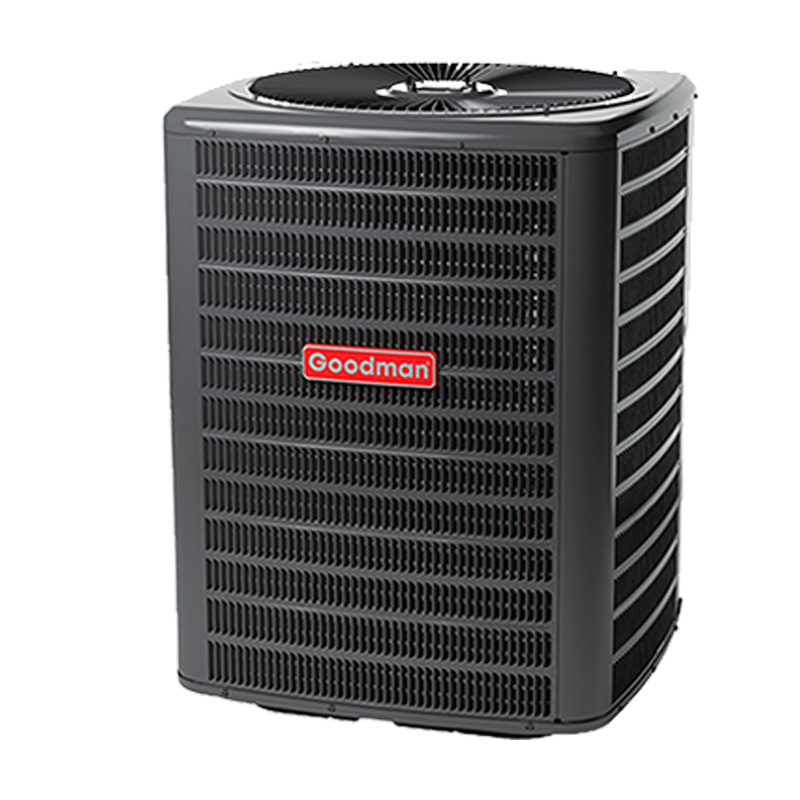
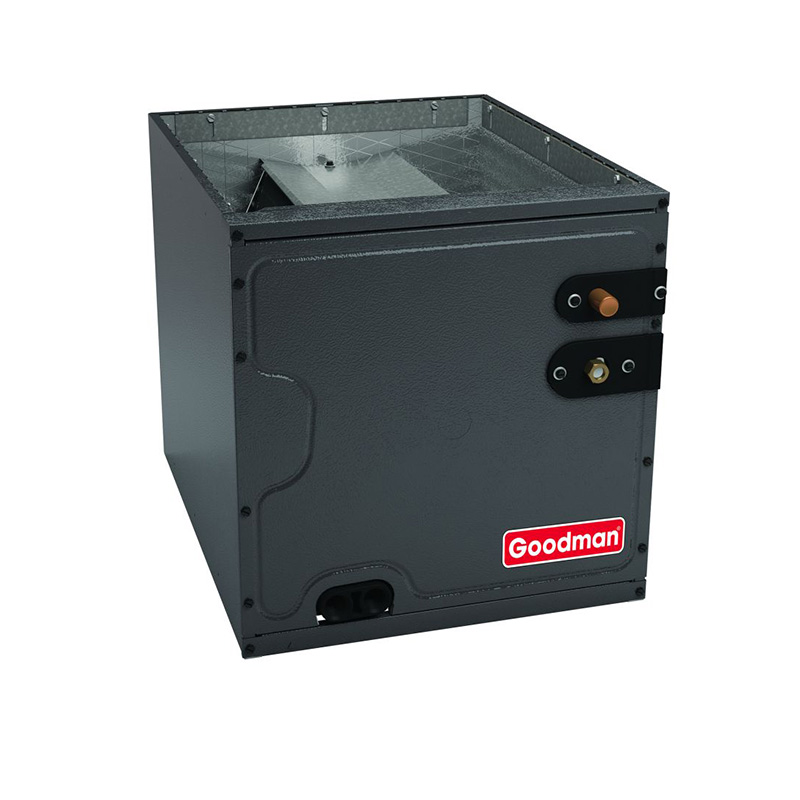
The air conditioner side runs on R-32 refrigerant, a lower global-warming-potential option that is increasingly common as the industry moves away from R-410A. At 13.5 SEER2, the cooling efficiency meets the updated federal minimum for many northern U.S. climate zones but sits near that floor rather than the middle of the market. Homeowners in hotter southern climates who run their AC heavily from May through September may find the cooling efficiency underwhelming relative to 16 SEER2 or higher options. The upflow configuration suits the most common residential installation layout, where the air handler sits in a basement or utility closet and conditioned air rises through overhead ductwork.
This system is a strong fit for a mid-size to larger home in a heating-dominant climate, where the high-efficiency modulating furnace will deliver the most return on investment. The pairing makes practical sense for a homeowner who wants premium furnace performance on a budget, accepts that the AC side is competent rather than exceptional, and plans to hire an experienced installer who knows Goodman equipment well.
The furnace half of this system is genuinely impressive for the price: modulating, variable-speed, 97% AFUE hardware that competes with equipment costing significantly more. The AC at 13.5 SEER2 is the weaker link, doing just enough to pass code rather than delivering standout cooling efficiency. For heating-focused buyers who want sophisticated comfort control without paying Carrier or Trane prices, this combo earns its spot, provided the installation is handled by a skilled technician.
Overall score is the average of the five ratings above.
What we like
- 97% AFUE modulating furnace delivers top-tier heating efficiency and comfort at a value price point
- Variable-speed ECM blower reduces electricity consumption and runs significantly quieter than single-speed alternatives
- Modulating gas valve minimizes temperature swings and extends equipment run cycles for more even heat distribution
- R-32 refrigerant is forward-looking and compliant with tightening environmental regulations
- Priced roughly 15 to 25 percent below equivalent Carrier, Trane, or Lennox systems, freeing budget for quality installation
Trade-offs
- 13.5 SEER2 cooling efficiency is near the federal minimum, meaning higher summer utility bills compared to 16 SEER2 or better units
- Goodman compressors average 10 to 14 years versus 15 to 20 years for premium brands, a meaningful long-term cost consideration
- Evaporator coil leaks and dual-run capacitor failures are documented recurring issues that can add repair costs after year 7
- System performance is heavily dependent on install quality; a subpar technician can undercut the efficiency and reliability of even the best hardware
What homeowners and pros say about Goodman
Homeowners who research Goodman before buying tend to land in two camps, and both camps are visible in the brand’s ratings. On ConsumerAffairs, where the score sits around 2.5 out of 5, the recurring complaint is repair costs climbing after roughly year 7, with dual-run capacitor failures and evaporator coil leaks cited most often. On Google dealer reviews, the score is a more moderate 3.8 out of 5 across hundreds of reviews per location, and affordability is the praise that comes up again and again. Neither number tells the full story on its own.
HVAC technicians who work on both Goodman and premium brands tend to describe Goodman equipment as acceptable hardware that asks more of the installer than Trane or Carrier does. Compressor longevity is a real concern: documented averages of 10 to 14 years compare unfavorably to the 15 to 20 years typical of premium brands, which matters when you are factoring total cost of ownership. The upside with this particular system is that the modulating furnace is a step above what most budget buyers expect, and owners in cold climates who had a skilled contractor handle the installation report genuine satisfaction with heating comfort and gas bills. The honest takeaway is that this system rewards buyers who invest in a quality installation and keep up with maintenance, and it carries more risk for those who cut corners on either.
Sources: ConsumerAffairs Goodman owner reviews, AHRI Directory of Certified Product Performance, U.S. DOE appliance and equipment efficiency standards, Goodman product specification sheets.
What it costs to run
At 13.5 SEER2, cooling this 4-ton system for a typical 1200-hour cooling season at the U.S. average electricity rate of $0.17/kWh works out to roughly $725 per year in cooling, about $6 less per year than a minimum-efficiency 13.4 SEER2 unit of the same size. Your real cost depends on your climate and local rate.
Method: (48,000 BTU/hr ÷ 13.5 SEER2) × 1200 hours ÷ 1000 × $0.17/kWh. Rate source: U.S. EIA average; cooling hours: moderate-climate estimate.
How it compares
| Brand | Comparable model | SEER2 | Stage | Price position |
|---|---|---|---|---|
| Goodman | GMVM97 / GSXH5 series (this system) | 13.5 | Modulating / Variable-speed | Value pick |
| Carrier | Performance 13 / 58MXB series | 13.4-14.0 | Single-stage / Single-speed | Typically 15 to 25 percent more than this Goodman system |
| Trane | XR13 / S9V2 series | 13.4-14.0 | Single-stage / Variable-speed furnace | Typically 15 to 25 percent more than this Goodman system |
| Lennox | Merit 13ACX / ML296V series | 13.4 | Single-stage / Variable-speed furnace | Typically 15 to 25 percent more than this Goodman system |
Competitor rows are comparable single-stage units at similar efficiency; price is relative position, not a quote.
Questions about this system
Is 13.5 SEER2 going to cost me significantly more to run in summer compared to a higher-efficiency unit?
Yes, compared to a 16 SEER2 system the cooling cost difference is real and adds up over a full season, especially in climates with 4 or more months of heavy AC use. In heating-dominant climates where the AC runs only a few months a year, the gap in annual utility costs is smaller and the 97% AFUE furnace savings can offset it.
What does 'modulating' actually mean for day-to-day comfort, and is it worth it over two-stage?
A modulating furnace adjusts its flame in small increments, sometimes as fine as 1 percent of capacity, rather than switching between two fixed output levels. The result is that the temperature in your home stays much closer to the thermostat setpoint with fewer noticeable swings, and the blower runs longer at lower speeds, which improves air mixing and filtration. For a 120,000 BTU unit serving a large home, the comfort difference over two-stage is noticeable.
What are the most likely repairs I should budget for over the first 10 years?
Dual-run capacitor failures are the most commonly reported issue on Goodman AC equipment and typically cost 300 to 600 dollars to fix, so that is worth having in the back of your mind. Evaporator coil leaks show up in a meaningful share of owner reports and are more expensive to address. A small number of owners have also reported refrigerant leaks within the first year, which usually points to an installation or initial charge problem rather than a manufacturing defect.
Does this system qualify for the federal energy efficiency tax credit?
The 97% AFUE modulating furnace meets the efficiency threshold that qualifies for the federal 25C energy efficiency tax credit, which can cover up to 30 percent of the equipment cost up to the annual cap. The 13.5 SEER2 air conditioner is at the lower end of the efficiency range and may not independently qualify for the cooling credit; confirm current IRS and ENERGY STAR requirements with your installer before purchasing.
How important is it to use a technician who has worked with Goodman equipment before?
Very important. Goodman's own documentation and technicians in online trade forums consistently point to install quality as the single biggest predictor of how long and how well this equipment performs. Proper refrigerant charging, correct airflow setup for the ECM blower, and accurate gas valve commissioning are all critical, and errors in any of these areas can cause the very refrigerant leak and coil problems that show up in negative owner reviews.
Specifications
| Cooling capacity | 4 Ton |
| Efficiency | 13.5 SEER2 |
| Furnace output | 120000 BTU |
| Furnace efficiency | 97% AFUE |
| Configuration | Upflow |
| Refrigerant | R-32 |