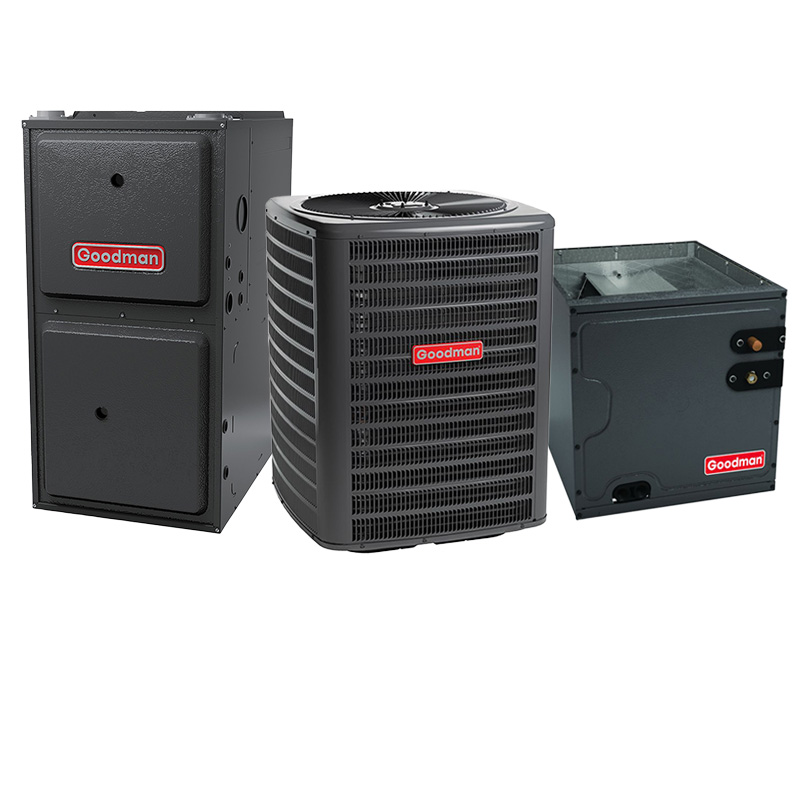
Goodman Furnace AC Combo – 4 Ton 14.5 SEER2 AC With 100000 BTU 97% AFUE Modulating Variable-Speed ECM Gas Furnace System – Upflow | R32
View on AC Direct see your lowest price →Check current price on AC Direct →
Key features
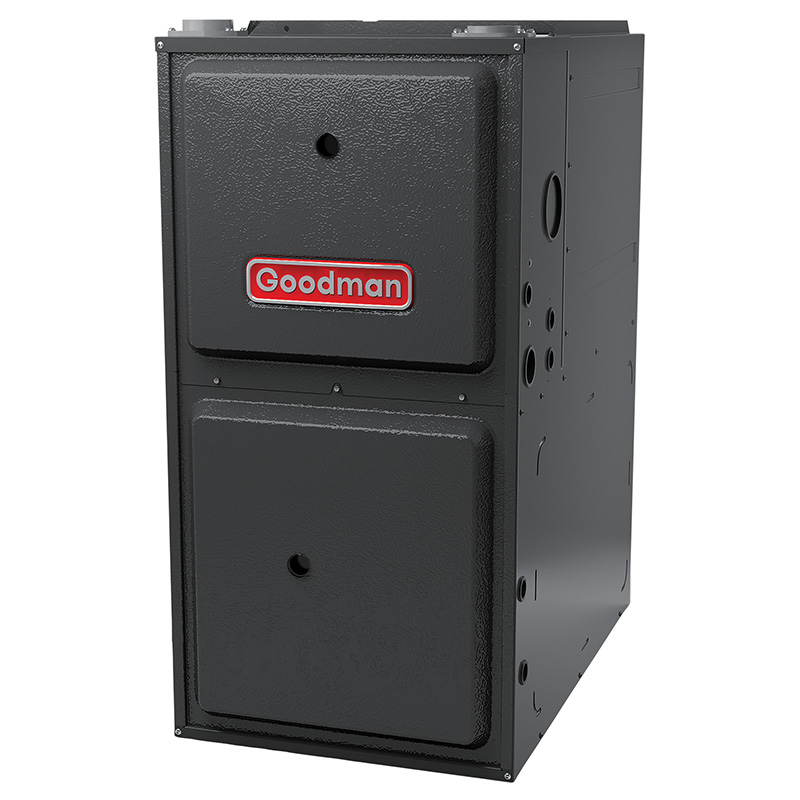
- 97% AFUE modulating gas furnace reduces fuel waste and maintains more consistent room temperatures
- Variable-speed ECM blower motor lowers electricity consumption and operates quieter than PSC motors
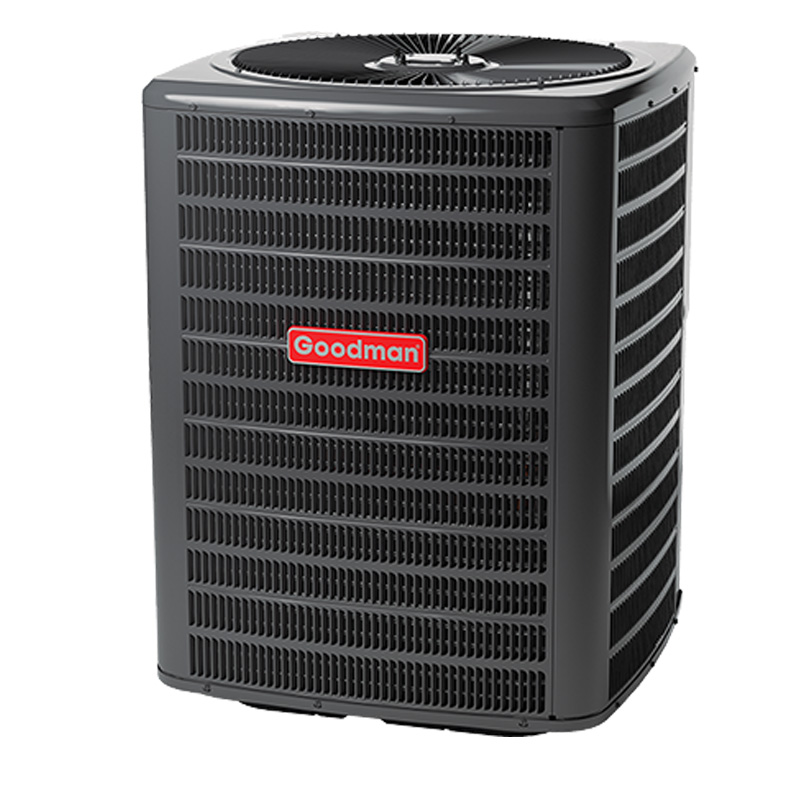
- 4-ton cooling capacity with 14.5 SEER2 efficiency, meeting current federal minimums for most U.S. regions
- R-32 refrigerant charge with lower global-warming potential than R-410A
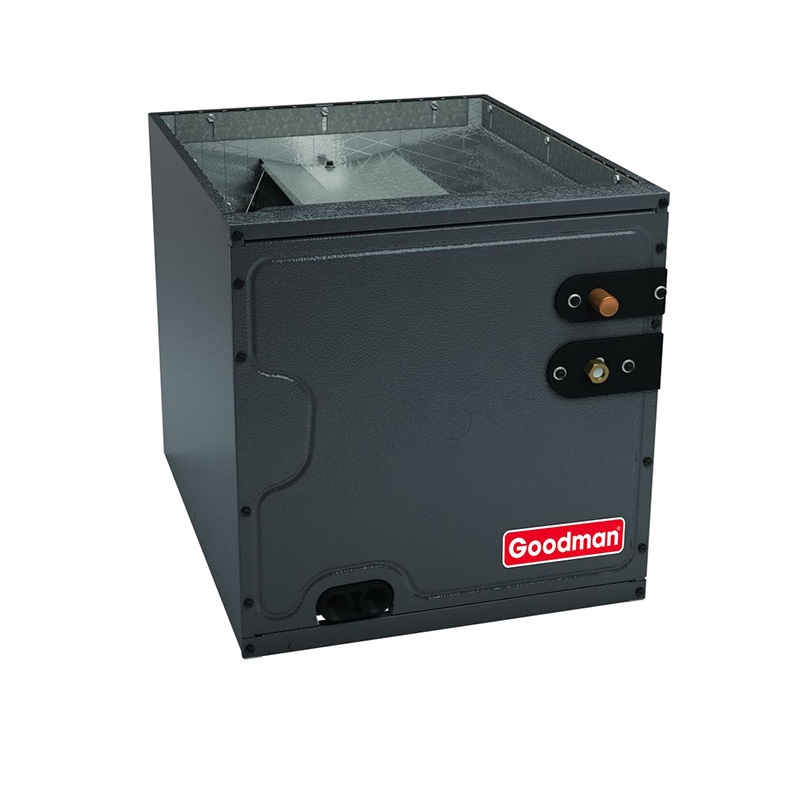
- Upflow air handler orientation designed for basement or utility closet installations with overhead duct systems
- Modulating burner stages down during mild weather to reduce short-cycling and temperature overshoot
About this system
The Goodman GLXS4BA4810 pairs a 4-ton, 14.5 SEER2 central air conditioner with a 100,000 BTU, 97% AFUE modulating gas furnace in an upflow configuration. The furnace side is the headliner here: a 97% AFUE rating means roughly 97 cents of every dollar of gas burned goes toward heating your home, and the modulating burner adjusts output in small increments rather than simply cycling on and off. That works alongside a variable-speed ECM blower motor to maintain steadier indoor temperatures, reduce hot and cold swings, and run more quietly than single-stage equipment. The R-32 refrigerant charge is a lower global-warming-potential option compared to R-410A, and it is increasingly common in new residential equipment as the industry moves away from older refrigerants.
A 4-ton capacity is suited to homes roughly in the 2,000 to 2,600 square foot range, though the actual right-size for your house depends on local climate, insulation, window area, and a proper Manual J load calculation. The upflow configuration means the air handler draws from the bottom and discharges upward, making it a natural fit for basement or closet installations where ductwork runs through the ceiling or upper floors. The 14.5 SEER2 cooling efficiency sits just above the current federal minimum for most northern and southern U.S. regions, so it qualifies as code-compliant but is not a high-efficiency cooling unit. Homeowners who prioritize heating performance and indoor comfort control will find the furnace specs far more impressive than the AC efficiency rating on this bundle.
This combo delivers a genuinely high-performing furnace at a price point well below premium brands, making it a strong option for budget-conscious buyers who place heating comfort at the top of their list. The 14.5 SEER2 AC side is adequate but unremarkable, and Goodman's real-world durability record means long-term ownership costs depend heavily on installation quality and a willingness to budget for component repairs after year seven. It is a reasonable value purchase, not a set-it-and-forget-it premium system.
Overall score is the average of the five ratings above.
What we like
- 97% AFUE modulating furnace is genuinely high efficiency and offers measurable heating cost savings over mid-efficiency equipment
- Variable-speed ECM blower improves comfort and lowers blower electricity use compared to single-speed motors
- Priced roughly 15 to 25 percent below comparable Trane, Carrier, and Lennox systems, making premium furnace features more accessible
- R-32 refrigerant is a forward-looking choice as the industry phases out R-410A
- Modulating operation reduces temperature swings and short-cycling, which many homeowners notice as a meaningful comfort upgrade
Trade-offs
- 14.5 SEER2 cooling efficiency is near the minimum threshold; homeowners in hot climates may find utility savings modest compared to higher-SEER2 alternatives
- Dual-run capacitors are the most frequently reported failure point for Goodman equipment, typically appearing in years five through ten and costing 300 to 600 dollars to repair
- Compressor lifespan averages 10 to 14 years based on owner reports, shorter than the 15 to 20 years often cited for premium-brand compressors
- A minority of owners have reported refrigerant leaks within the first year, most often traced to installation or initial charge issues rather than the equipment itself
What homeowners and pros say about Goodman
Homeowners who have lived with Goodman equipment for several years tend to split into two camps. Those with properly sized, well-installed systems often report years of reliable service and point to the lower purchase price as a genuine win. Those who run into problems frequently mention repair costs that start climbing around year seven, a pattern consistent with Goodman’s ConsumerAffairs score of approximately 2.5 out of 5, a channel where dissatisfied owners are far more likely to post than satisfied ones. Google dealer reviews tell a more balanced story, averaging around 3.8 out of 5 across hundreds of location-level reviews, where affordability is the most repeated praise. The honest read is that Goodman occupies a legitimate place in the market for buyers who are working within a budget and understand that the savings up front come with a trade-off in expected component longevity.
HVAC technicians who service Goodman equipment regularly point to two issues worth knowing before you buy. Dual-run capacitor failures are the most common service call on these systems, a relatively inexpensive fix at 300 to 600 dollars but one that comes up more frequently than on premium brands. Evaporator coil leaks are a second documented concern that appears in a meaningful share of owner accounts and carries a higher repair cost. Compressor lifespan on Goodman units tends to run 10 to 14 years on average, compared to the 15 to 20 years that premium-brand compressors often reach. For this specific combo, the 97% AFUE modulating furnace is a genuine bright spot and represents real technology at a below-market price. Whether the system earns its keep over a decade depends largely on who installs it and how well it is maintained.
Sources: ConsumerAffairs Goodman owner reviews, AHRI Directory of Certified Product Performance, U.S. DOE appliance and equipment efficiency standards, Goodman product specification sheets.
What it costs to run
At 14.5 SEER2, cooling this 4-ton system for a typical 1200-hour cooling season at the U.S. average electricity rate of $0.17/kWh works out to roughly $675 per year in cooling, about $56 less per year than a minimum-efficiency 13.4 SEER2 unit of the same size. Your real cost depends on your climate and local rate.
Method: (48,000 BTU/hr ÷ 14.5 SEER2) × 1200 hours ÷ 1000 × $0.17/kWh. Rate source: U.S. EIA average; cooling hours: moderate-climate estimate.
How it compares
| Brand | Comparable model | SEER2 | Stage | Price position |
|---|---|---|---|---|
| Goodman | GLXS4BA4810 (this system) | 14.5 | Modulating / Variable-speed | Value pick |
| Carrier | Performance 14 (24ACC4) with 58MVC furnace | 14.3 to 15 | Single-stage / Variable-speed furnace | Typically 15 to 25 percent more than this Goodman system |
| Trane | XR14c with S9X2 furnace | 14.3 to 15 | Single-stage / Two-stage furnace | Typically 15 to 25 percent more than this Goodman system |
| Lennox | Merit 14ACX with ML296V furnace | 14.3 to 15 | Single-stage / Variable-speed furnace | Typically 15 to 25 percent more than this Goodman system |
Competitor rows are comparable single-stage units at similar efficiency; price is relative position, not a quote.
Questions about this system
Is 14.5 SEER2 good enough, or should I pay more for higher cooling efficiency?
14.5 SEER2 meets current federal minimums and will run more efficiently than the equipment it typically replaces, but it sits at the lower end of the available range. If your home is in a hot climate where the AC runs heavily from May through September, stepping up to a 16 or 18 SEER2 unit could reduce summer cooling bills enough to offset part of the price difference over time. In milder climates or in homes where heating is the dominant cost, the difference is less significant.
What are the most likely repairs I should budget for over the life of this system?
Dual-run capacitor failure is the most commonly reported issue with Goodman equipment and typically costs 300 to 600 dollars to diagnose and replace. Evaporator coil leaks show up in a meaningful share of owner reviews and are more expensive to address. Setting aside a small annual maintenance fund and scheduling yearly tune-ups is the most practical way to catch these issues early.
Why does the refrigerant type say R-32 instead of R-410A?
R-32 has a significantly lower global-warming potential than R-410A and is part of a broader industry shift driven by updated EPA and international regulations. Functionally it performs similarly to R-410A in residential cooling applications, but technicians will need R-32-specific recovery equipment and certification to service the system, so confirm your HVAC contractor is equipped to handle it before signing a service agreement.
Does the modulating furnace actually make a noticeable comfort difference, or is it mostly a marketing feature?
For most homeowners upgrading from a single-stage furnace, the difference is real and noticeable. Modulating operation reduces the temperature swings that happen when a furnace blasts on at full capacity and then shuts off, and the variable-speed blower runs longer at lower speeds, distributing heat more evenly. It also tends to run more quietly. The trade-off is added mechanical complexity, which means more components that can eventually require service.
How important is the installer for a system like this, and what should I look for?
Installation quality is the single biggest factor in how long a Goodman system lasts and how efficiently it runs, according to HVAC technicians who service this equipment. You should ask any contractor to perform a Manual J load calculation to confirm 4 tons is the correct size for your specific home, verify they are certified to handle R-32 refrigerant, and check that they will pressure-test the refrigerant lines before startup. A rushed or undersized installation can cause refrigerant leaks, short-cycling, and voided warranty claims.
Specifications
| Cooling capacity | 4 Ton |
| Efficiency | 14.5 SEER2 |
| Furnace output | 100000 BTU |
| Furnace efficiency | 97% AFUE |
| Configuration | Upflow |
| Refrigerant | R-32 |
| Model | GLXS4BA4810 |