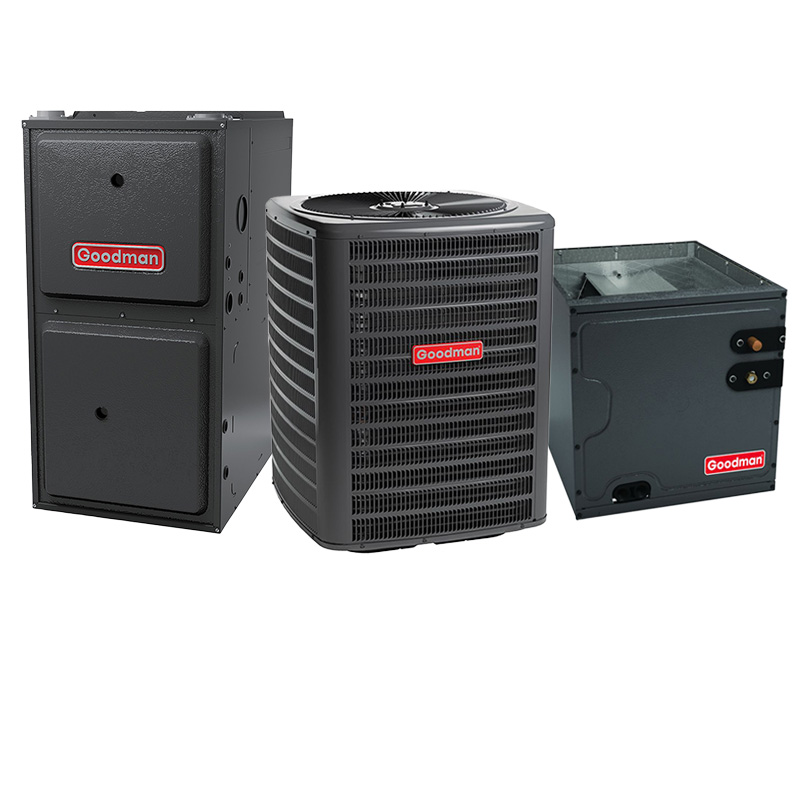
Goodman Furnace AC Combo – 4 Ton 14.5 SEER2 AC With 120000 BTU 97% AFUE Modulating Variable-Speed ECM Gas Furnace System – Upflow | R32
View on AC Direct see your lowest price →Check current price on AC Direct →
Key features
- 4-ton, 14.5 SEER2 cooling with R-32 refrigerant
- 120,000 BTU modulating gas furnace at 97% AFUE
- Variable-speed ECM blower motor for quiet, steady airflow
- Upflow configuration for overhead duct systems
- Modulating burner adjusts output for consistent room temperatures
- R-32 refrigerant with lower global-warming potential than R-410A
About this system
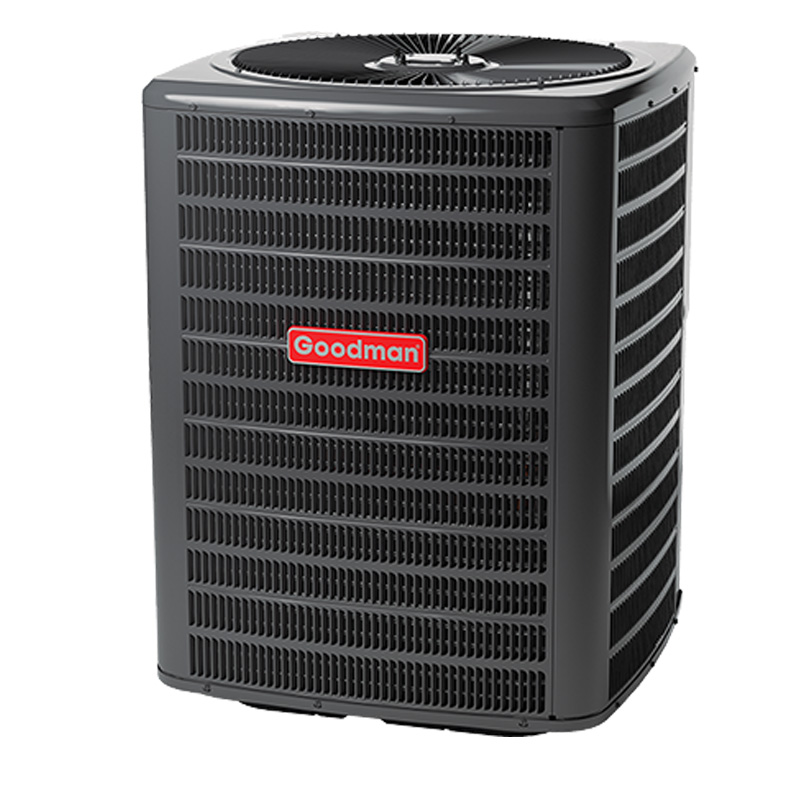
The Goodman GLXS4BA4810 pairs a 4-ton, 14.5 SEER2 central air conditioner with a 120,000 BTU, 97% AFUE modulating gas furnace in an upflow configuration. The R-32 refrigerant charge reflects the industry’s ongoing shift away from R-410A, offering a lower global-warming potential while maintaining strong heat-transfer efficiency. At 14.5 SEER2, this unit clears the federal minimum threshold for most U.S. regions and will deliver real savings over older 13 or 14 SEER equipment, though it sits at the entry tier of the efficiency range rather than at the top.
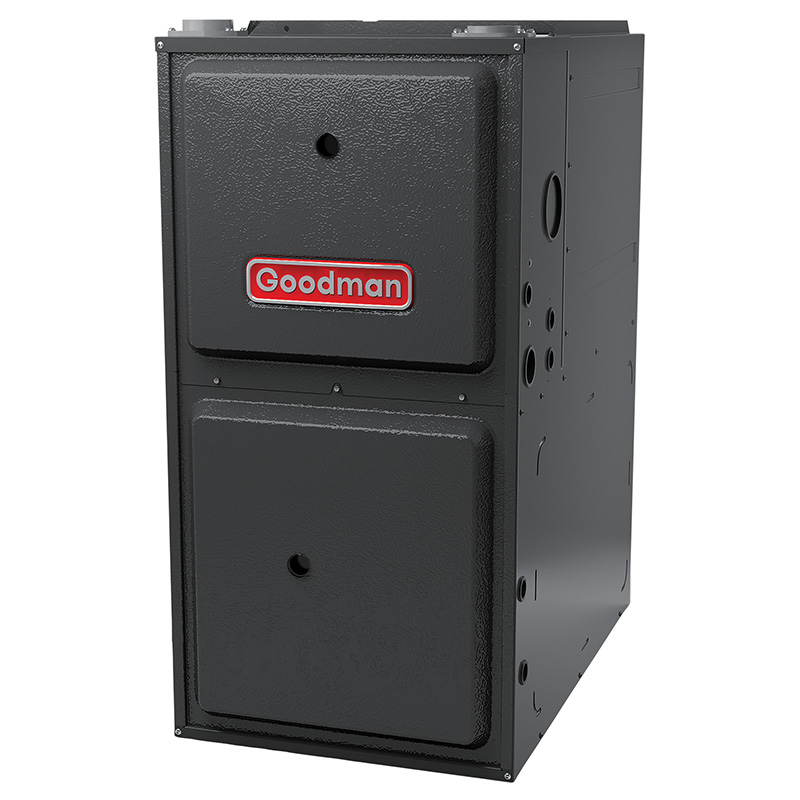
Where this system genuinely earns attention is the furnace side. A 97% AFUE modulating burner with a variable-speed ECM blower is premium-tier performance at a budget-brand price. Modulating heat output means the furnace ramps up and down to match demand instead of cycling on at full blast, which translates to steadier indoor temperatures, quieter operation, and meaningful gas savings versus single-stage or even two-stage units. The variable-speed ECM motor also moves air more efficiently and consistently, which helps with humidity control and air filtration. This combination suits larger homes in cold-to-mixed climates where heating cost and comfort are the primary concerns and the cooling load is secondary.
The upflow configuration is the most common residential setup, with supply air directed upward into overhead ductwork from a basement, utility closet, or first-floor mechanical room. Buyers should confirm their duct layout matches before ordering, as converting an existing system to upflow is straightforward but a horizontal or downflow system is not compatible without a different air handler or coil cabinet. Professional installation is strongly recommended for any modulating, variable-speed system because commissioning the gas valve modulation and ECM blower correctly is more involved than a standard single-stage setup.
This combo delivers a genuinely high-spec furnace, specifically its 97% AFUE modulating burner and variable-speed ECM blower, at a price well below what Trane, Carrier, or Lennox would charge for equivalent heating technology. The 14.5 SEER2 cooling side is honest entry-level efficiency and not a standout feature. Long-term satisfaction will hinge heavily on the quality of the installing contractor, which is true of all Goodman equipment and more pronounced with a complex modulating system.
Overall score is the average of the five ratings above.
What we like
- 97% AFUE modulating furnace represents top-tier heating efficiency at a value-brand price
- Variable-speed ECM blower improves comfort, humidity control, and quiet operation
- R-32 refrigerant is forward-looking and already compliant with evolving refrigerant regulations
- Priced roughly 15 to 25 percent below comparable Trane, Lennox, and Carrier systems
- Upflow design fits the most common residential duct configuration
Trade-offs
- 14.5 SEER2 is entry-level efficiency on the cooling side, not a strong performer for hot climates
- Dual-run capacitor failures are the most documented repair issue, typically occurring in years 5 to 10
- Compressor lifespan averages 10 to 14 years versus 15 to 20 years for premium brands, a real long-term cost consideration
- Modulating and variable-speed systems require more careful commissioning; poor installs are a documented source of early problems including refrigerant leaks
What homeowners and pros say about Goodman
Homeowners who research Goodman before buying generally land in one of two camps. Across Google dealer reviews, the brand averages around 3.8 out of 5, and affordability is the most consistent praise. Buyers who found a careful installer and stayed on top of basic maintenance often report years of reliable service. The ConsumerAffairs rating tells a harder story, sitting at roughly 2.5 out of 5, a number shaped by the self-selecting nature of complaint platforms but also by a real pattern: repair costs tend to climb noticeably after year seven, and owners who were not expecting that feel let down. For this specific combo, the furnace draws more praise than the AC unit because a 97% AFUE modulating furnace at this price genuinely stands out.
HVAC technicians tend to describe Goodman as installer-dependent equipment. The specific failure modes they see most are dual-run capacitor replacements, which are common, inexpensive, and not a mark against the brand in isolation; evaporator coil leaks, which show up often enough in the field to be worth mentioning to any homeowner budgeting for the long term; and compressor longevity averaging 10 to 14 years compared to 15 to 20 years for premium brands like Trane or Carrier. Technicians also flag that a small minority of first-year refrigerant leak reports tie back to installation and charge issues rather than factory defects, which is why commissioning quality matters even more on R-32 systems than it did on older equipment. The consensus among experienced installers is that this is solid equipment for the price when it is set up correctly.
Sources: ConsumerAffairs Goodman owner reviews, AHRI Directory of Certified Product Performance, U.S. DOE appliance and equipment efficiency standards, Goodman product specification sheets.
What it costs to run
At 14.5 SEER2, cooling this 4-ton system for a typical 1200-hour cooling season at the U.S. average electricity rate of $0.17/kWh works out to roughly $675 per year in cooling, about $56 less per year than a minimum-efficiency 13.4 SEER2 unit of the same size. Your real cost depends on your climate and local rate.
Method: (48,000 BTU/hr ÷ 14.5 SEER2) × 1200 hours ÷ 1000 × $0.17/kWh. Rate source: U.S. EIA average; cooling hours: moderate-climate estimate.
How it compares
| Brand | Comparable model | SEER2 | Stage | Price position |
|---|---|---|---|---|
| Goodman | GLXS4BA4810 (this system) | 14.5 | Variable / Modulating | Value pick |
| Carrier | Performance 14 / 59MN7 furnace series | 14.5 | Single-stage / Two-stage | Typically 15 to 25 percent more than Goodman |
| Trane | XR14 / S9V2 furnace series | 14.5 | Single-stage / Variable | Typically 15 to 25 percent more than Goodman |
| Lennox | Merit 14 / ML296V furnace series | 14.5 | Single-stage / Variable | Typically 15 to 25 percent more than Goodman |
Competitor rows are comparable single-stage units at similar efficiency; price is relative position, not a quote.
Questions about this system
Is 14.5 SEER2 good enough, or should I pay more for a higher SEER2 unit?
14.5 SEER2 meets federal minimums and will outperform equipment older than five to seven years, but it is the bottom of the current efficiency range. If your home runs the AC heavily from May through September, a 16 or 17 SEER2 unit will recover the cost difference in utility savings faster than you might expect. For mild or short cooling seasons, 14.5 SEER2 is a reasonable stopping point.
What does modulating mean on the furnace, and why does it matter?
A modulating furnace adjusts its gas valve output in small increments rather than switching fully on or fully off. In practice this means the furnace can run at low fire for long, quiet cycles that hold the house within a degree or two of the set temperature, rather than blasting heat and then shutting off. Paired with the variable-speed ECM blower, it is noticeably quieter and more comfortable than single-stage or two-stage furnaces, and it wastes less gas during the on-off cycling.
What are the most common repairs on Goodman systems, and what do they cost?
Dual-run capacitors are the most frequently reported failure, usually in the 300 to 600 dollar range for parts and labor, and a competent tech can swap one in under an hour. Evaporator coil leaks show up in a meaningful share of owner reviews and are more expensive to address. Compressors on Goodman units tend to average 10 to 14 years of service, so budgeting for a potential compressor replacement or system upgrade in that window is realistic.
Does this system work with my existing R-410A coil or line set?
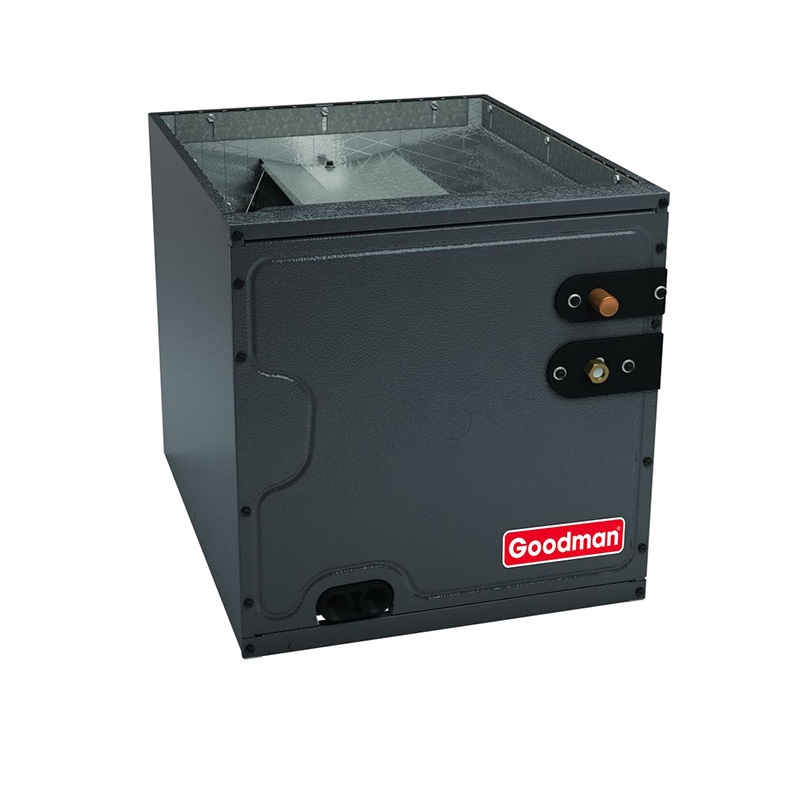
No. R-32 and R-410A are not interchangeable, and the system requires a matched R-32 coil. Existing copper line sets may be reusable depending on their condition and diameter, but your installer must verify compatibility and flush the lines before charging with R-32. Using mismatched components will void the warranty and can damage the compressor.
What size home is 4 tons and 120,000 BTU appropriate for?
As a rough guide, 4 tons of cooling is commonly sized for homes in the 2,000 to 2,600 square foot range, though climate, insulation, window area, and ceiling height all affect the actual load calculation. The 120,000 BTU furnace is on the larger end and is better suited to colder climates or homes with above-average heat loss. A proper Manual J load calculation by your installer will confirm whether this capacity is the right fit for your specific home.
Specifications
| Cooling capacity | 4 Ton |
| Efficiency | 14.5 SEER2 |
| Furnace output | 120000 BTU |
| Furnace efficiency | 97% AFUE |
| Configuration | Upflow |
| Refrigerant | R-32 |
| Model | GLXS4BA4810 |