Goodman Furnace AC Combo – 4 Ton 14.5 SEER2 AC With 80000 BTU 97% AFUE Modulating Variable-Speed ECM Gas Furnace System – Downflow | R32
View on AC Direct see your lowest price →Check current price on AC Direct →
Key features
- 97% AFUE modulating gas furnace reduces fuel waste to roughly 3 cents on every dollar of gas burned
- Variable-speed ECM blower motor lowers electricity consumption and improves humidity control during cooling season
- 14.5 SEER2 cooling efficiency meets the current federal minimum for northern regions and beats it in southern regions
- Downflow configuration designed for slab-foundation homes or under-floor duct systems
- R-32 refrigerant with lower global warming potential than R-410A, aligned with current industry transition
- 4-ton capacity suited to homes approximately 2,000 to 2,600 square feet when properly load-calculated
About this system
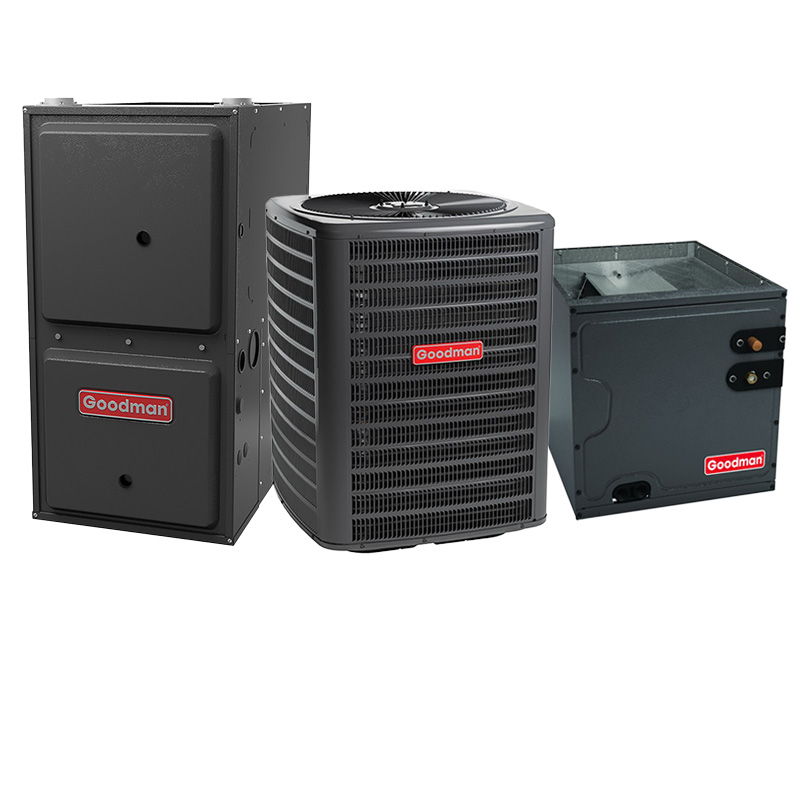
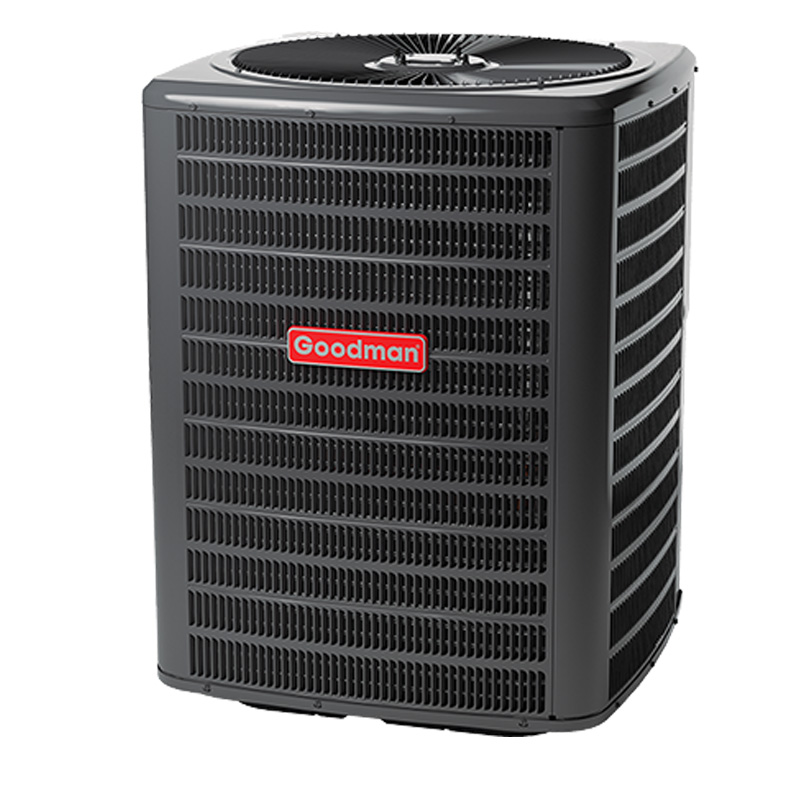
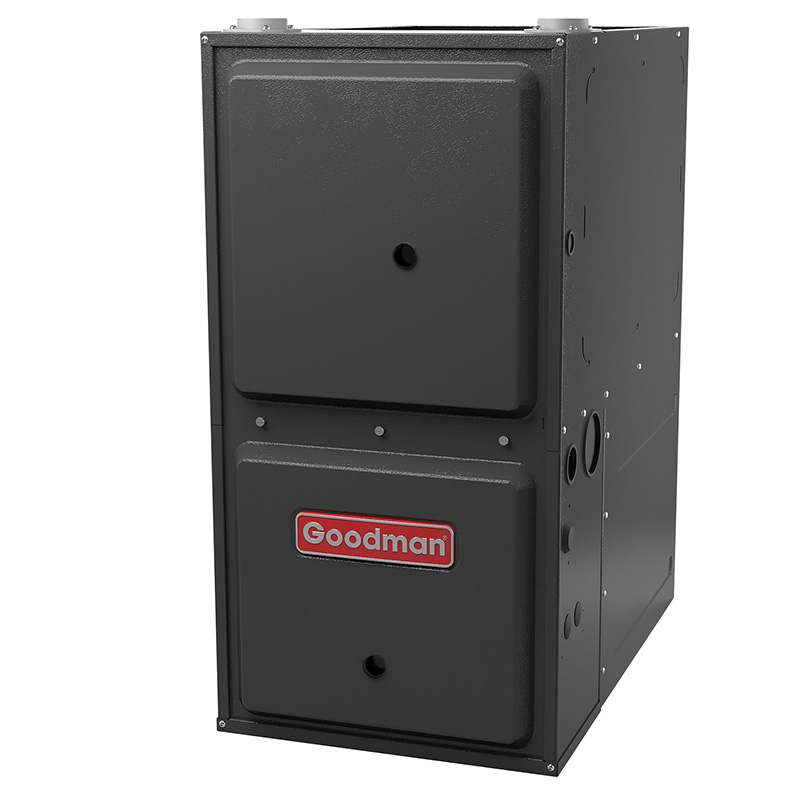
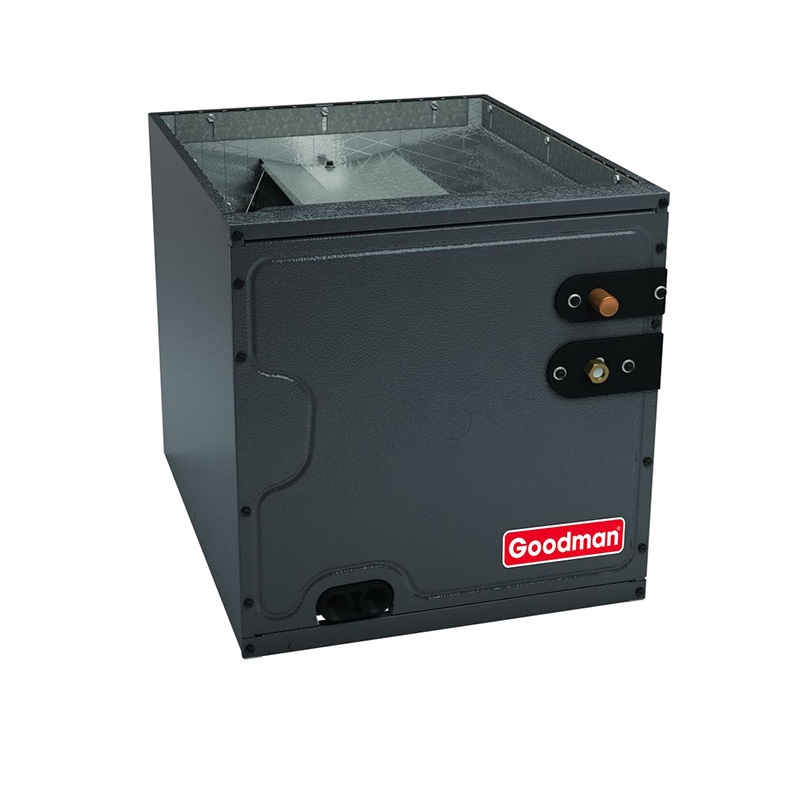
The Goodman GLXS4BA4810 pairs a 4-ton, 14.5 SEER2 central air conditioner with an 80,000 BTU, 97% AFUE modulating gas furnace in a downflow configuration. The furnace side is the headline here: a 97% AFUE rating means nearly all the gas burned becomes usable heat, which puts this unit among the most efficient gas furnaces available and qualifies it for federal tax credits in most tax years. The modulating burner adjusts output in small increments rather than snapping between high and low, and the variable-speed ECM blower motor follows suit, running longer at lower capacity to hold a steadier indoor temperature and pull more humidity out of the air during cooling season.
The downflow orientation sends conditioned air downward through the duct system, which suits homes built on a slab or with ductwork running beneath the floor. R-32 refrigerant carries a lower global warming potential than the R-410A it replaces and is becoming the regional standard as older refrigerants are phased out. At 4 tons this system targets homes roughly in the 2,000 to 2,600 square foot range, though proper Manual J load calculations should always drive final sizing. Buyers who want high-efficiency heating without the price tag of Trane, Lennox, or Carrier will find this combination worth a close look, provided they invest in a quality installation.
This Goodman combo delivers genuinely premium furnace technology at a value price point, and the 97% AFUE modulating furnace is a real standout for heating efficiency. The trade-off is that Goodman's documented reliability record is below the premium tier, and long-term ownership costs depend heavily on who installs the system and how well it is maintained. Buyers comfortable with that calculus get a lot of efficiency per dollar spent.
Overall score is the average of the five ratings above.
What we like
- 97% AFUE modulating furnace is top-tier heating efficiency and can qualify for federal energy tax credits
- Variable-speed ECM blower provides quieter operation and better humidity control than single- or two-speed alternatives
- R-32 refrigerant is future-aligned as R-410A is phased out, simplifying future service
- Priced roughly 15 to 25 percent below comparable Carrier, Trane, and Lennox systems
- Downflow design fills a specific market need that not every manufacturer covers at this efficiency tier
Trade-offs
- Dual-run capacitors are the most frequently reported failure point, typically requiring a 300 to 600 dollar repair after several years of operation
- Evaporator coil leaks appear in a meaningful share of owner reports and can be a costly fix if the coil needs replacement
- Compressor lifespan averages 10 to 14 years in owner data, noticeably shorter than the 15 to 20 years reported for premium brands
- A minority of owners report refrigerant leaks within the first year, most often traced to installation or initial charge issues rather than a factory defect
What homeowners and pros say about Goodman
Homeowners and HVAC technicians tend to agree on the same two things about Goodman: the upfront price is real, and what happens after year seven depends a lot on luck and installation quality. On ConsumerAffairs, Goodman scores around 2.5 out of 5, a channel that skews toward people who had a bad enough experience to write about it, and the recurring complaint is repair bills that accumulate in the second half of the equipment’s life. Google dealer reviews tell a more balanced story, averaging around 3.8 out of 5 across hundreds of reviews per location, where affordability consistently earns praise. For this specific system, the 97% AFUE modulating furnace is widely acknowledged as a genuinely high-performing piece of equipment at a price that would cost noticeably more from Carrier, Trane, or Lennox.
On the mechanical side, technicians flag dual-run capacitor failures as the most common service call on Goodman equipment, typically a straightforward repair in the 300 to 600 dollar range. Evaporator coil leaks show up in a meaningful portion of owner reports and tend to be more expensive to address. Compressor longevity in documented owner data averages 10 to 14 years, which is shorter than the 15 to 20 years more commonly reported for premium brands. A smaller group of first-year owners have reported refrigerant leaks, which technicians most often attribute to installation or initial charge quality rather than factory error, which is a reminder that the installer you choose matters as much as the equipment you buy.
Sources: ConsumerAffairs Goodman owner reviews, AHRI Directory of Certified Product Performance, U.S. DOE appliance and equipment efficiency standards, Goodman product specification sheets.
What it costs to run
At 14.5 SEER2, cooling this 4-ton system for a typical 1200-hour cooling season at the U.S. average electricity rate of $0.17/kWh works out to roughly $675 per year in cooling, about $56 less per year than a minimum-efficiency 13.4 SEER2 unit of the same size. Your real cost depends on your climate and local rate.
Method: (48,000 BTU/hr ÷ 14.5 SEER2) × 1200 hours ÷ 1000 × $0.17/kWh. Rate source: U.S. EIA average; cooling hours: moderate-climate estimate.
How it compares
| Brand | Comparable model | SEER2 | Stage | Price position |
|---|---|---|---|---|
| Goodman | GLXS4BA4810 (this system) | 14.5 | Variable / Modulating | Value pick |
| Carrier | Performance 96 / 24ACC6 series | 14.3 to 15.2 depending on configuration | Two-stage | Typically 15 to 25 percent more than this Goodman system |
| Trane | S9X2 furnace / 4TTR4 condenser series | 14.3 to 15.0 depending on configuration | Two-stage | Typically 15 to 25 percent more than this Goodman system |
| Lennox | ML296V furnace / 14ACX condenser series | 14.3 to 15.0 depending on configuration | Variable / Two-stage | Typically 15 to 25 percent more than this Goodman system |
Competitor rows are comparable single-stage units at similar efficiency; price is relative position, not a quote.
Questions about this system
Why does the downflow configuration matter, and can I convert it to upflow or horizontal?
Downflow means the furnace draws return air in at the top and discharges heated or cooled air downward into the duct system below. This is purpose-built for slab homes or structures where ductwork runs under the floor. The GLXS4BA4810 is not field-convertible to upflow or horizontal; if your home needs a different orientation, you will need a different model.
What does R-32 refrigerant mean for future service and refrigerant costs?
R-32 has a lower global warming potential than the R-410A used in most existing systems, and it is the direction the industry is moving as R-410A production is phased down under current EPA rules. Technician training and parts availability for R-32 are improving steadily, and over time it is expected to be widely stocked. One practical note: R-32 is mildly flammable, classified A2L, so any future service should be handled by a technician familiar with A2L refrigerant safety procedures.
What tax credits does this system qualify for?
The 97% AFUE modulating furnace can qualify under the federal 25C Residential Clean Energy Credit, which as of current IRS guidance allows up to 30 percent of the cost of qualifying high-efficiency HVAC equipment, subject to annual caps. The 14.5 SEER2 air conditioner may or may not meet the ENERGY STAR threshold required for the cooling portion of that credit depending on the specific rated combination. Confirm current eligibility with a tax professional or the ENERGY STAR product list before filing.
How does the modulating furnace affect comfort compared to a standard two-stage furnace?
A modulating burner adjusts heat output in small steps rather than toggling between two fixed levels, which means the furnace tends to run longer cycles at lower intensity. That typically results in more even room temperatures, fewer hot or cold swings near the thermostat, and better dehumidification when paired with the variable-speed blower. The trade-off is more mechanical complexity, which means more components that could eventually need service.
What does Goodman's warranty cover on this system, and what do I need to do to activate it?
Goodman offers a 10-year parts limited warranty on registered systems, which requires registration within a defined window after installation, typically 60 days. Without registration the warranty typically drops to five years on parts. The compressor often carries its own extended warranty term within the registered period. Labor is not covered by Goodman's manufacturer warranty, so any repair bill will still include technician time on top of parts costs.
Specifications
| Cooling capacity | 4 Ton |
| Efficiency | 14.5 SEER2 |
| Furnace output | 80000 BTU |
| Furnace efficiency | 97% AFUE |
| Configuration | Downflow |
| Refrigerant | R-32 |
| Model | GLXS4BA4810 |