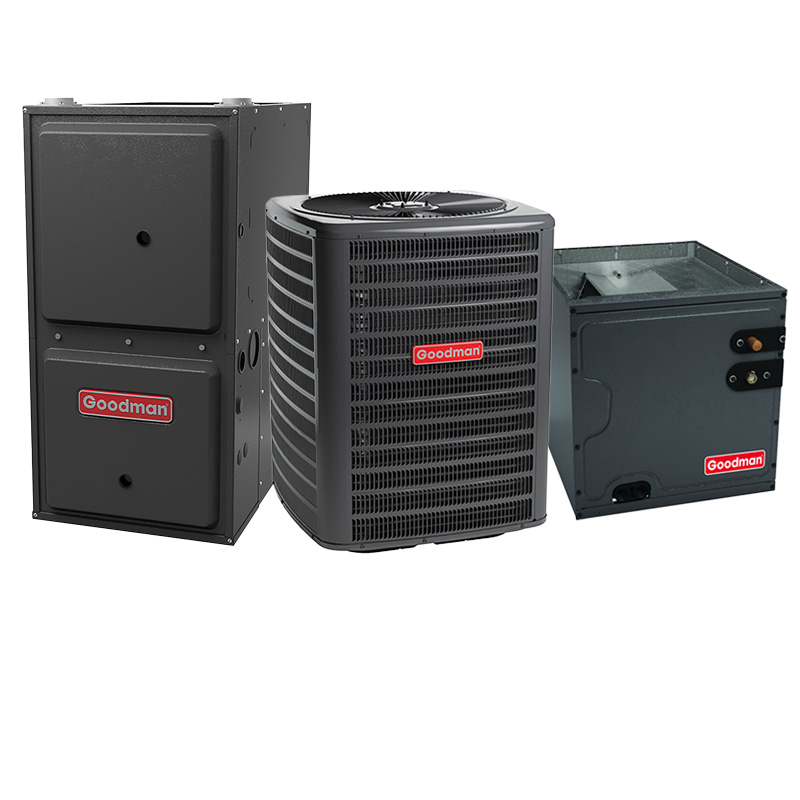
Goodman Furnace AC Combo – 4 Ton 14.5 SEER2 AC With 100000 BTU 97% AFUE Modulating Variable-Speed ECM Gas Furnace System – Downflow | R32
View on AC Direct see your lowest price →Check current price on AC Direct →
Key features
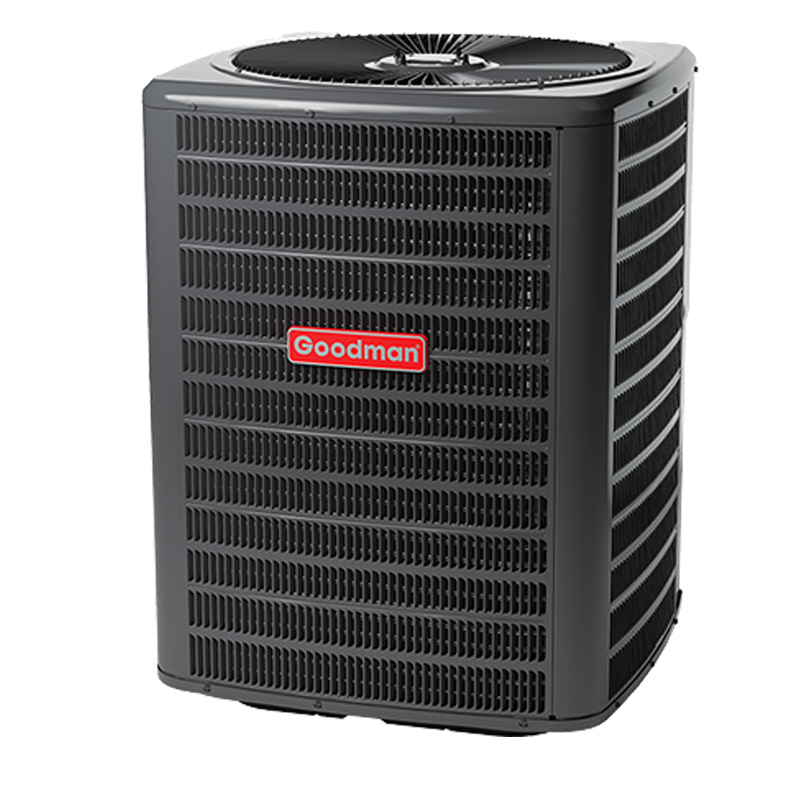
- 4-ton 14.5 SEER2 air conditioner using R-32 refrigerant
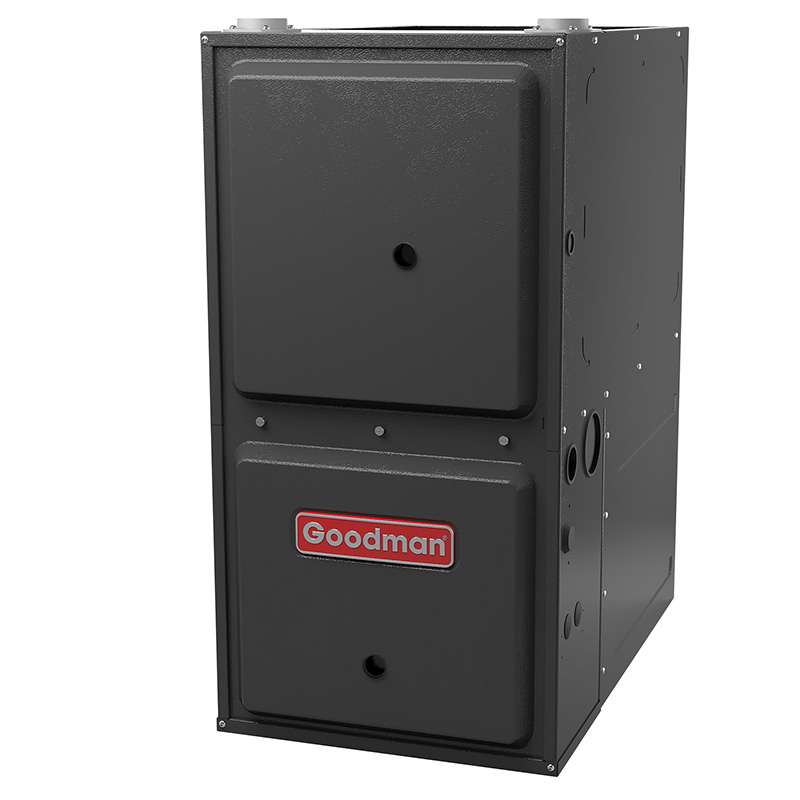
- 100,000 BTU 97% AFUE modulating gas furnace
- Variable-speed ECM blower motor for quiet, efficient airflow
- Downflow configuration for closet or main-floor installations
- Modulating burner reduces temperature swings and cycling losses
- Factory-matched system tested and rated as a certified combination
About this system
The Goodman GLXS4BA4810 pairs a 4-ton, 14.5 SEER2 central air conditioner with a 100,000 BTU, 97% AFUE modulating gas furnace in a downflow configuration, making it a strong candidate for homes where the air handler sits in a closet or utility room above a crawlspace or on the main floor with ductwork running beneath. The R-32 refrigerant charge is a meaningful forward-looking choice: R-32 has a lower global warming potential than the R-410A it replaces and is becoming the new industry standard, so parts and service should remain accessible well into the system’s lifespan.
The furnace side is where this combo earns its keep. A 97% AFUE modulating burner adjusts its output in small increments rather than cycling fully on and off, which reduces temperature swings, keeps humidity more consistent, and can noticeably cut gas bills compared to an 80% or even a two-stage 96% unit. The variable-speed ECM blower motor complements that by running longer at lower speeds, moving more total air volume per heating cycle while drawing far less electricity than a standard PSC motor. For a 4-ton load, the 100,000 BTU input is sized for colder climates or larger homes, though a proper Manual J load calculation is essential before purchase to confirm fit.
This combo delivers genuinely high furnace efficiency and a thoughtful R-32 refrigerant transition at a price point that undercuts comparable Carrier, Trane, and Lennox systems by a meaningful margin. The trade-off is a brand track record that shows more repair activity after year seven and component failure modes that premium brands handle better on average. Buyers who prioritize upfront cost and have access to a skilled installing contractor will get solid performance; those who want the lowest long-term ownership risk may find the savings gap narrower than it appears when repair costs are factored in.
Overall score is the average of the five ratings above.
What we like
- 97% AFUE modulating furnace is among the most efficient available and reduces gas bills materially versus 80% or single-stage units
- Variable-speed ECM motor lowers electricity consumption and improves comfort compared to standard fixed-speed blowers
- R-32 refrigerant is forward-compatible and has lower environmental impact than R-410A
- Factory-matched combo means the AC and furnace are tested and rated together, simplifying permitting and commissioning
- Purchase price typically runs 15 to 25 percent below comparable Trane, Lennox, or Carrier equipment
Trade-offs
- Dual-run capacitors are the most frequently reported early failure on Goodman equipment, typically a 300 to 600 dollar repair
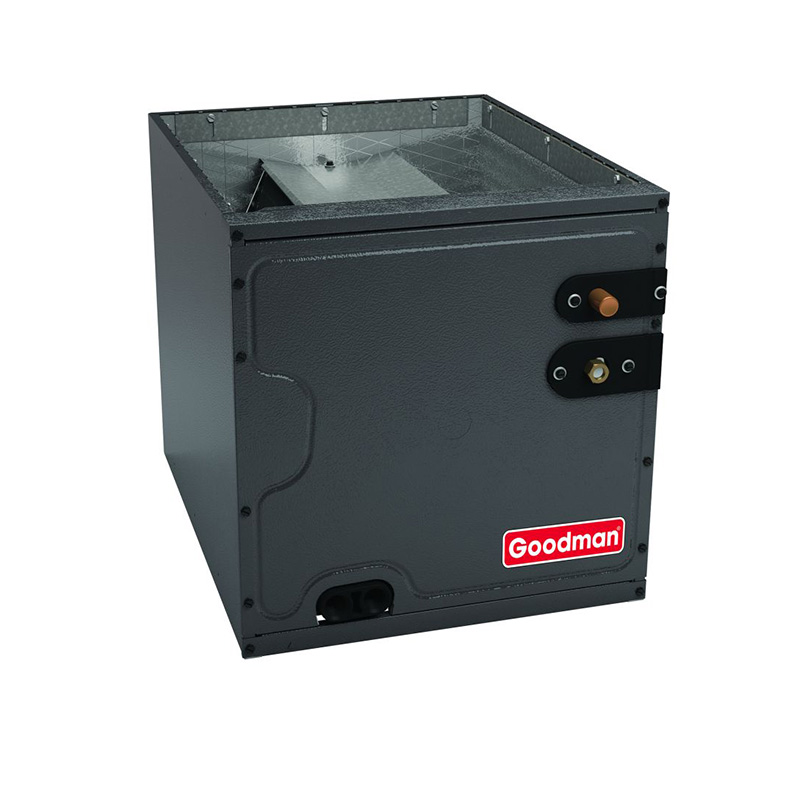
- Evaporator coil leaks appear in a notable share of owner reviews and can become costly if the refrigerant charge is affected
- Compressor lifespan averages 10 to 14 years in owner and technician accounts, shorter than the 15 to 20 years commonly cited for premium brands
- A minority of owners report refrigerant leaks in the first year, usually traced to install or factory charge issues rather than a product defect, which puts significant weight on contractor quality
What homeowners and pros say about Goodman
Homeowners who post about Goodman equipment online tend to fall into two camps, and both perspectives are worth taking seriously. On Google dealer review pages, where verified customers rate local HVAC contractors who installed Goodman systems, the brand scores around 3.8 out of 5 across hundreds of reviews per location, with affordability cited most often as the reason for satisfaction. On ConsumerAffairs, which skews toward buyers motivated enough by frustration to write a review, Goodman sits at roughly 2.5 out of 5, and the complaints clustering around year seven and beyond center on repair costs that buyers did not anticipate when they chose the lower upfront price. That gap between the two scores is informative: early ownership tends to go well, and problems accumulate in the mid-life window.
HVAC technicians who service Goodman equipment regularly point to three specific failure modes. Dual-run capacitors are the most routine issue, typically an inexpensive fix in the 300 to 600 dollar range that techs say is common across the brand. Evaporator coil leaks appear in a meaningful share of service calls and can become costly when refrigerant loss is involved, particularly as refrigerant prices fluctuate. Compressor longevity is the longest-term concern: field accounts suggest Goodman compressors average 10 to 14 years before replacement, compared to 15 to 20 years for premium-brand equipment. For this specific combo, technicians consistently emphasize that install quality is the dominant variable, because a well-commissioned modulating furnace and properly charged R-32 system will outperform a carelessly installed premium unit every time.
Sources: ConsumerAffairs Goodman owner reviews, AHRI Directory of Certified Product Performance, U.S. DOE appliance and equipment efficiency standards, Goodman product specification sheets.
What it costs to run
At 14.5 SEER2, cooling this 4-ton system for a typical 1200-hour cooling season at the U.S. average electricity rate of $0.17/kWh works out to roughly $675 per year in cooling, about $56 less per year than a minimum-efficiency 13.4 SEER2 unit of the same size. Your real cost depends on your climate and local rate.
Method: (48,000 BTU/hr ÷ 14.5 SEER2) × 1200 hours ÷ 1000 × $0.17/kWh. Rate source: U.S. EIA average; cooling hours: moderate-climate estimate.
How it compares
| Brand | Comparable model | SEER2 | Stage | Price position |
|---|---|---|---|---|
| Goodman | GLXS4BA4810 (this system) | 14.5 | Variable / Modulating | Value pick |
| Carrier | Performance 16 with 59MN7 Modulating Furnace | 15-16 | Variable | 20 to 25 percent higher than this system |
| Trane | XR14c with S9V2 Variable-Speed Furnace | 14.5-15 | Two-stage / Variable | 20 to 30 percent higher than this system |
| Lennox | Merit ML14XC1 with SLP98V Variable-Speed Furnace | 14.5-15 | Variable / Modulating | 25 to 35 percent higher than this system |
Competitor rows are comparable single-stage units at similar efficiency; price is relative position, not a quote.
Questions about this system
Why does this system use R-32 instead of R-410A, and does that affect service costs?
R-32 is a newer refrigerant with a lower global warming potential and is being adopted industry-wide as R-410A is phased down under updated EPA rules. Most HVAC technicians are being trained on R-32 handling, and refrigerant availability should improve over time rather than tighten, so long-term service costs are unlikely to be higher than R-410A systems installed today.
Is a downflow furnace configuration right for my home?
Downflow means the furnace draws return air from the top and discharges conditioned air downward into the duct system below, which suits homes where the unit sits in a main-floor closet or utility room above a crawlspace or basement duct plenum. If your ductwork runs through an attic or your air handler is in a basement blowing upward, you would need an upflow or horizontal unit instead. Confirm your duct layout with your contractor before purchasing.
What does the modulating burner actually do differently from a two-stage furnace?
A two-stage furnace switches between a low and high fire setting, while a modulating burner adjusts output across a continuous range, typically from roughly 40% up to 100% of rated capacity. This means the furnace can hold a set temperature more precisely, run longer low-fire cycles that reduce humidity, and avoid the temperature overshoot and undershoot common with single-stage equipment. The efficiency gain versus a two-stage 96% AFUE unit is real but incremental; the comfort gain is more noticeable.
What are the most likely repairs I should budget for over the first ten years?
The most commonly reported failure on Goodman equipment is the dual-run capacitor, which typically costs 300 to 600 dollars to replace and is a straightforward repair. Evaporator coil leaks are documented in a meaningful share of owner reviews and can be more expensive depending on refrigerant loss and coil access. Budgeting for one or two service calls beyond routine maintenance over the first decade is realistic.
Does the 4-ton size mean this system is right for a 2,000 square foot home?
Tonnage alone does not determine the correct system size for a home. A proper Manual J load calculation accounts for insulation levels, window area, climate zone, ceiling height, and duct design. Oversizing a system causes short cycling, poor humidity control, and premature wear, while undersizing leaves the home uncomfortable on peak days. Have your contractor run the calculation before finalizing the purchase; 4 tons may be right, or a 3.5-ton or 3-ton system may serve the space better.
Specifications
| Cooling capacity | 4 Ton |
| Efficiency | 14.5 SEER2 |
| Furnace output | 100000 BTU |
| Furnace efficiency | 97% AFUE |
| Configuration | Downflow |
| Refrigerant | R-32 |
| Model | GLXS4BA4810 |