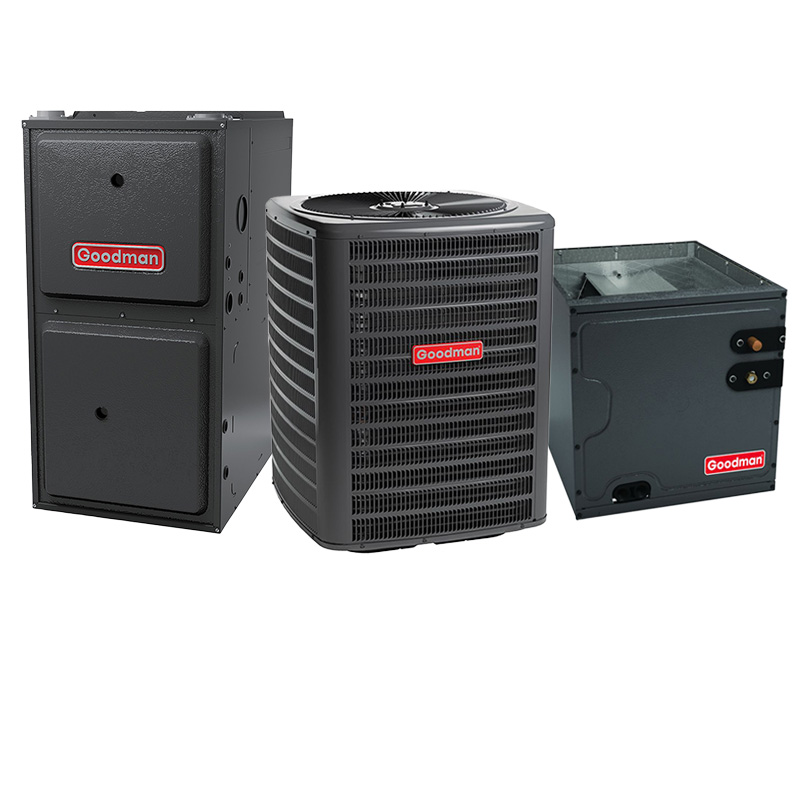
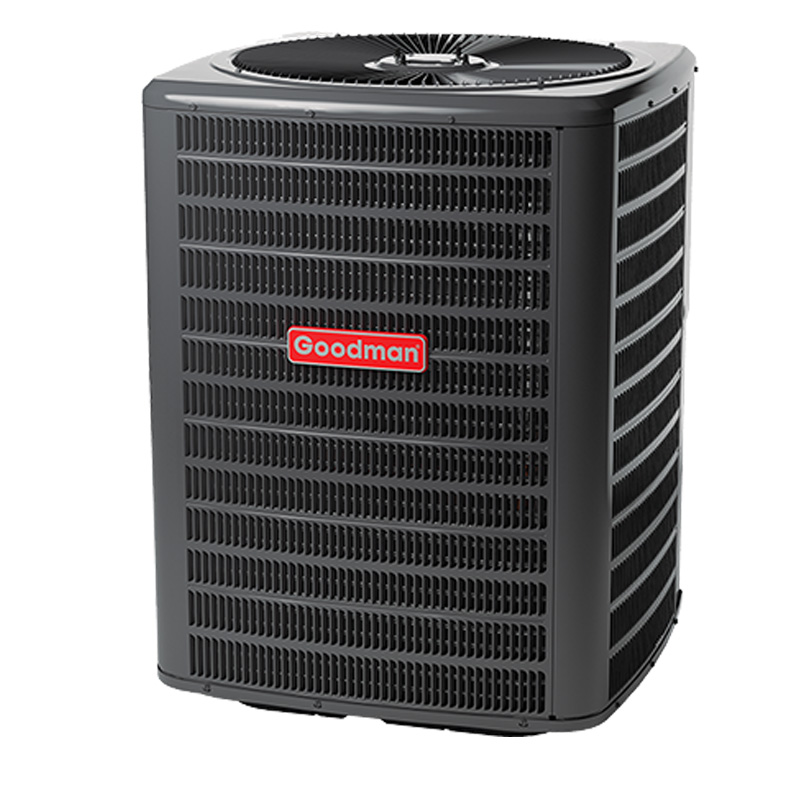
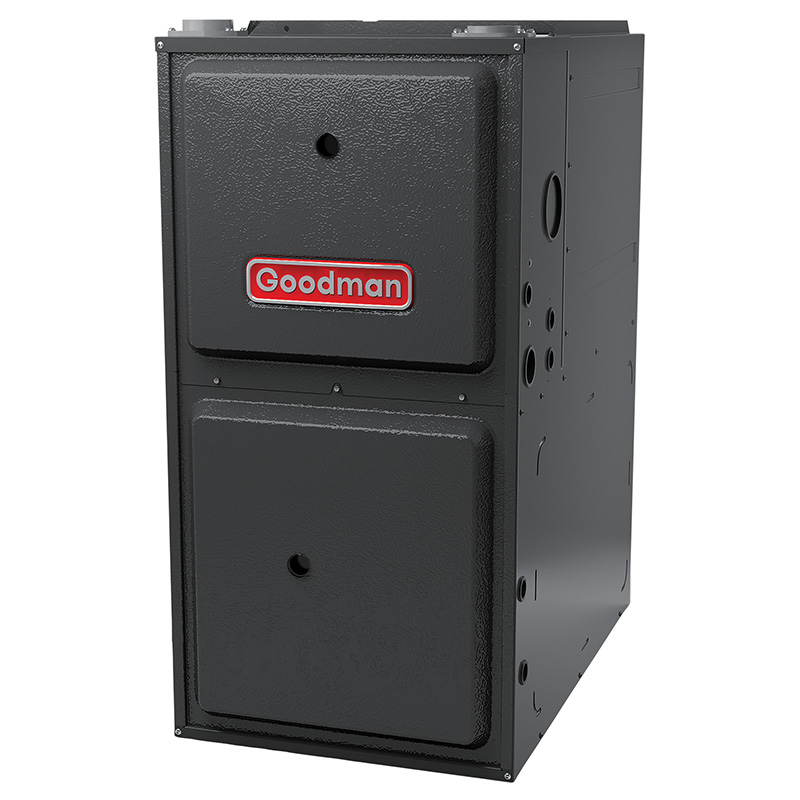
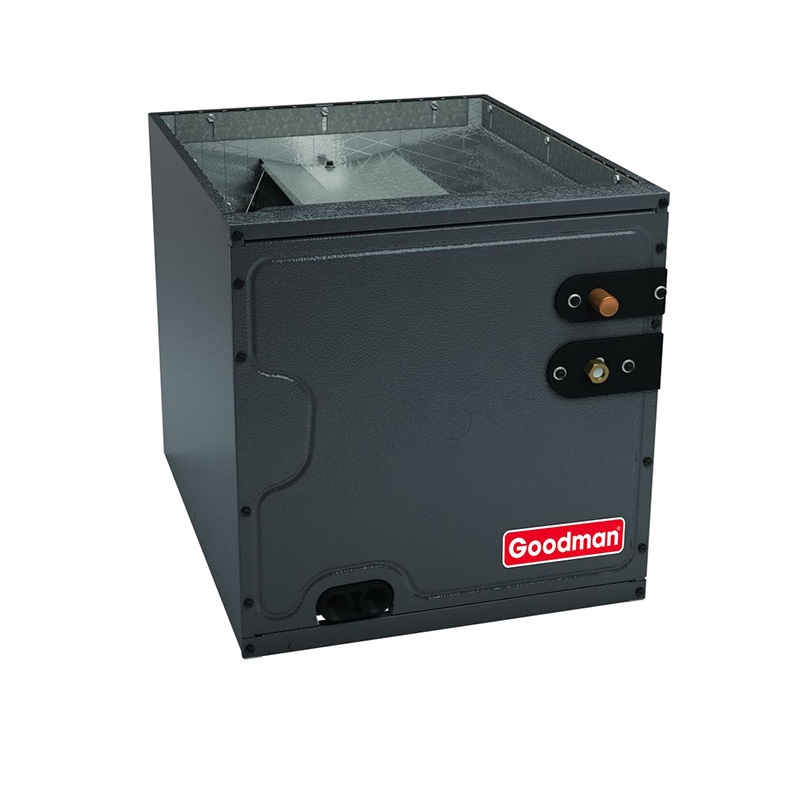
Goodman Furnace AC Combo – 5 Ton 14 SEER2 AC With 100000 BTU 97% AFUE Modulating Variable-Speed ECM Gas Furnace System – Upflow | R32
View on AC Direct see your lowest price →Check current price on AC Direct →
Key features
- 5-ton cooling capacity with 14 SEER2 efficiency rating
- 100,000 BTU modulating gas furnace at 97% AFUE for precise heat output
- Variable-speed ECM blower motor for quieter operation and better humidity control
- R-32 refrigerant with lower global warming potential than R-410A
- Upflow cabinet design for overhead duct systems
- Goodman's 10-year parts warranty when registered within 60 days of installation
About this system
The Goodman GLXS4BA6010 pairs a 5-ton, 14 SEER2 central air conditioner with a 100,000 BTU, 97% AFUE modulating gas furnace in an upflow configuration, making it a strong candidate for larger homes in climates where both serious cooling and serious heating loads are the norm. The furnace’s modulating burner adjusts output continuously rather than switching between two fixed stages, which keeps temperatures steadier room to room and reduces the short-cycling that wears equipment faster. The variable-speed ECM blower reinforces that comfort story by running at lower speeds for longer periods, improving humidity control and filtration effectiveness compared with single-speed systems.
On the cooling side, 14 SEER2 sits at the current federal minimum efficiency floor for northern states and just above it for many southern markets, so this is an entry-level efficiency rating rather than a premium one. That said, the R-32 refrigerant charge is a forward-looking choice: R-32 has a lower global warming potential than the R-410A it is gradually replacing, and it is becoming the industry standard, which should make future service easier as technician familiarity grows. The upflow cabinet directs conditioned air upward into overhead ductwork, which suits most single-story homes with attic or overhead duct runs and most multi-story homes with a basement or ground-floor mechanical room. Buyers with horizontal or downflow duct layouts will need a different configuration entirely.
This system delivers genuinely high furnace efficiency and comfort-oriented modulating technology at a price point that undercuts major premium brands by 15 to 25 percent, making it a reasonable choice for budget-conscious buyers who prioritize furnace performance. The 14 SEER2 AC rating is the minimum acceptable and not a selling point, and Goodman's documented reliability record means the long-term cost of ownership depends heavily on installer quality and maintenance discipline. It earns its place in the market but asks more of the owner than a Trane or Carrier equivalent would.
Overall score is the average of the five ratings above.
What we like
- 97% AFUE modulating furnace is genuinely high-efficiency and reduces gas bills meaningfully versus 80% AFUE alternatives
- Variable-speed ECM blower improves comfort, humidity management, and air filtration compared with single-speed systems
- R-32 refrigerant is increasingly industry-standard and easier to source and service going forward
- Purchase price typically 15 to 25 percent below comparable Carrier, Trane, and Lennox systems
- 10-year registered parts warranty provides reasonable long-term parts cost protection
Trade-offs
- 14 SEER2 is the minimum efficiency tier and adds nothing in energy savings over other compliant systems at this rating
- Dual-run capacitor failures and evaporator coil leaks are documented recurring issues that can add repair costs after year 7
- Compressor longevity averages 10 to 14 years versus 15 to 20 years on premium-brand compressors, meaning earlier replacement likelihood
- A minority of owners report refrigerant leaks within the first year, typically traced to installation quality rather than the unit itself, which puts added pressure on choosing a highly qualified installer
What homeowners and pros say about Goodman
Owners and independent HVAC technicians tend to agree that Goodman sits in a specific, well-defined lane: affordable upfront, acceptable performance when installed correctly, and more maintenance-dependent than the premium brands it undercuts on price. Google dealer reviews average around 3.8 out of 5 across multiple locations, where affordability and workable quality are the most consistent themes. ConsumerAffairs scores land closer to 2.5 out of 5, though that channel draws disproportionately from owners who sought it out specifically to report a problem, making it a useful signal for what can go wrong rather than a fair average of the ownership experience overall. The recurring complaint there is repair costs climbing after roughly the seventh year of service.
For this particular system, the high-AFUE modulating furnace component tends to draw less criticism than the cooling side. The documented failure points worth knowing before you buy are dual-run capacitor failures, which are common, relatively inexpensive, and usually a straightforward fix in the 300 to 600 dollar range; evaporator coil refrigerant leaks, which appear in a meaningful share of owner accounts and are a costlier repair; and compressor lifespan averaging 10 to 14 years rather than the 15 to 20 years more typical of Carrier, Trane, and Lennox compressors. A small minority of owners also report refrigerant leaks within the first year, a pattern that points to installation or initial charge issues rather than manufacturing defects. The consistent professional advice is that install quality is the single largest variable in how long and how well a Goodman system performs, which makes the choice of contractor at least as important as the choice of equipment.
Sources: ConsumerAffairs Goodman owner reviews, AHRI Directory of Certified Product Performance, U.S. DOE appliance and equipment efficiency standards, Goodman product specification sheets.
What it costs to run
At 14 SEER2, cooling this 5-ton system for a typical 1200-hour cooling season at the U.S. average electricity rate of $0.17/kWh works out to roughly $874 per year in cooling, about $39 less per year than a minimum-efficiency 13.4 SEER2 unit of the same size. Your real cost depends on your climate and local rate.
Method: (60,000 BTU/hr ÷ 14 SEER2) × 1200 hours ÷ 1000 × $0.17/kWh. Rate source: U.S. EIA average; cooling hours: moderate-climate estimate.
How it compares
| Brand | Comparable model | SEER2 | Stage | Price position |
|---|---|---|---|---|
| Goodman | GLXS4BA6010 (this system) | 14 | Modulating / Variable-speed | Value pick |
| Carrier | Performance 14 Series (24ACC4) | 14 | Single-stage | Typically 15 to 25 percent more than this Goodman system |
| Trane | XR14c Series | 14 | Single-stage | Typically 15 to 25 percent more than this Goodman system |
| Lennox | Merit ML14XC1 Series | 14 | Single-stage | Typically 15 to 25 percent more than this Goodman system |
Competitor rows are comparable single-stage units at similar efficiency; price is relative position, not a quote.
Questions about this system
Is a 5-ton unit actually right for my house, or is bigger always better?
Bigger is not better with HVAC equipment. A properly sized system is determined by a Manual J load calculation that accounts for your home's square footage, insulation levels, window area, and local climate. An oversized unit will short-cycle, wear faster, and handle humidity poorly. Have your installer perform a Manual J before assuming 5 tons is correct, even for a large home.
What does 14 SEER2 actually mean for my electric bill compared with a higher-rated system?
SEER2 measures seasonal cooling efficiency under standardized test conditions. Stepping up from 14 SEER2 to 18 SEER2 can reduce cooling energy use by roughly 20 to 25 percent, but the payback period depends on how hot your climate is, how many cooling hours you accumulate annually, and the price premium of the higher-efficiency unit. In moderate climates, the payback on a premium-efficiency upgrade can stretch to 10 or more years.
What is the most common repair I should budget for on this Goodman system?
Dual-run capacitors are the most frequently reported failure point on Goodman equipment and typically cost 300 to 600 dollars to diagnose and replace. Evaporator coil refrigerant leaks are also documented in a meaningful share of owner reports and are a more expensive repair. Keeping up with annual maintenance and addressing small issues early is the most effective way to avoid larger bills.
Does the upflow configuration work if my ductwork runs horizontally in a crawl space?
No. The upflow cabinet is designed to discharge air upward into overhead or attic duct systems. If your ductwork runs beneath the living space in a crawl space, you need a downflow or horizontal configuration. Installing an upflow unit with the wrong duct orientation will severely restrict airflow and damage the system.
Does using R-32 refrigerant change anything about how this system is serviced?
R-32 is mildly flammable, which means technicians servicing the system need proper certification and handling procedures specific to A2L refrigerants. Most licensed HVAC contractors are already training for or certified in R-32 service as it becomes the industry standard, but it is worth confirming your local technicians are equipped to handle it before you need an emergency repair.
Specifications
| Cooling capacity | 5 Ton |
| Efficiency | 14 SEER2 |
| Furnace output | 100000 BTU |
| Furnace efficiency | 97% AFUE |
| Configuration | Upflow |
| Refrigerant | R-32 |
| Model | GLXS4BA6010 |