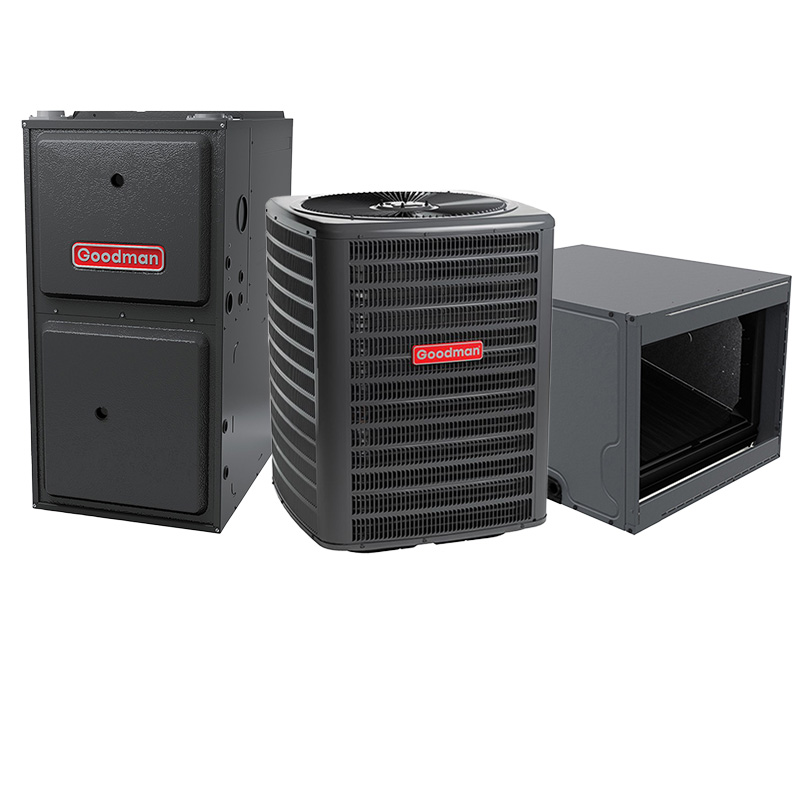
Goodman Furnace AC Combo – 5 Ton 14 SEER2 AC With 120000 BTU 97% AFUE Modulating Variable-Speed ECM Gas Furnace System – Horizontal | R32
View on AC Direct see your lowest price →Check current price on AC Direct →
Key features
- 5-ton cooling capacity with 14 SEER2 efficiency rating
- 120,000 BTU modulating gas furnace at 97% AFUE
- Variable-speed ECM blower motor for quieter, steadier airflow
- Horizontal configuration for attic, crawlspace, or side-discharge installs
- R-32 refrigerant with lower global-warming potential than R-410A
- Modulating burner adjusts firing rate for consistent comfort and reduced short-cycling
About this system
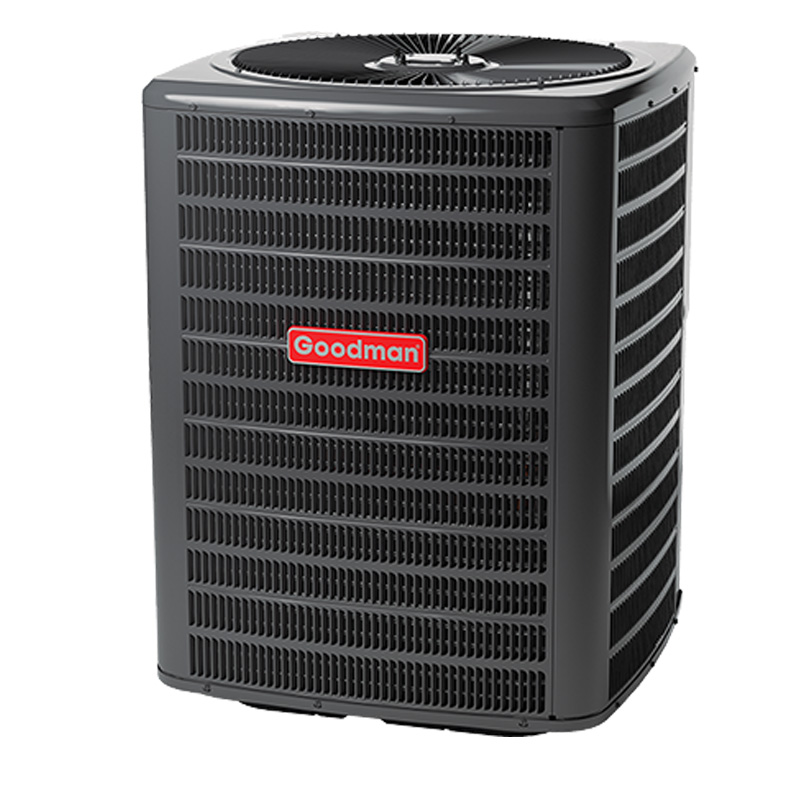
The Goodman GLXS4BA6010 pairs a 5-ton, 14 SEER2 central air conditioner with a 120,000 BTU, 97% AFUE modulating gas furnace in a horizontal configuration, making it a purpose-built option for homes where attic or crawlspace installs are required and a closet or basement setup simply is not possible. The R-32 refrigerant charge is a forward-looking choice: R-32 has a lower global-warming potential than R-410A, and as the industry moves away from older refrigerants, having equipment already on the newer standard reduces future servicing headaches. At 5 tons, this system is sized for larger homes, typically in the 2,400 to 3,200 square foot range depending on climate zone, insulation quality, and duct layout.
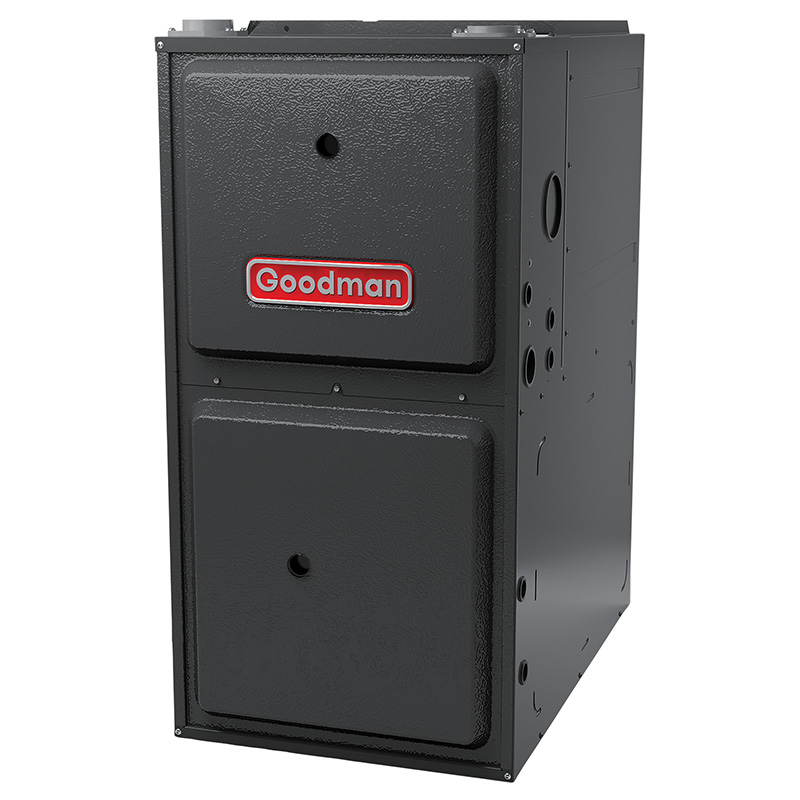
The furnace side is where this combo genuinely earns its keep. A 97% AFUE rating means only about 3 cents of every dollar spent on gas escapes as waste heat, which is as efficient as residential gas furnaces get. The modulating burner adjusts output in fine increments rather than cycling hard on and off, and the variable-speed ECM blower motor follows suit, running at lower speeds for longer periods. That combination delivers more consistent room temperatures, quieter operation, and better humidity control in heating mode compared to single-stage or two-stage equipment. For buyers in cold climates who run the furnace heavily from October through April, the operating cost difference over a decade is real money. The 14 SEER2 cooling side is baseline efficient, adequate for moderate cooling climates but not a standout if summer electricity bills are your primary concern.
This combo is a strong value proposition for large homes in heating-heavy climates: the 97% AFUE modulating furnace punches well above its price point, while the 14 SEER2 AC is honest but unremarkable on the cooling side. Goodman's track record means you get a capable system at a real discount over premium brands, provided it is installed correctly and you budget for likely capacitor and possible coil service after the first several years.
Overall score is the average of the five ratings above.
What we like
- 97% AFUE modulating furnace is best-in-class efficiency for heating costs
- Variable-speed ECM blower improves comfort and humidity control meaningfully
- R-32 refrigerant positions the system well ahead of coming refrigerant regulations
- Horizontal config opens installation options for attic or crawlspace applications
- Priced roughly 15 to 25 percent below comparable Trane, Lennox, and Carrier combos
Trade-offs
- 14 SEER2 on the AC side is only baseline efficient; not ideal for hot climates where cooling dominates
- Compressor longevity averages 10 to 14 years versus 15 to 20 for premium brands, according to owner data
- Dual-run capacitor failures are the most commonly documented issue, typically appearing after year 5 to 7
- A minority of owners have reported refrigerant leaks in year one, most often traced to installation or charge quality rather than the equipment itself
What homeowners and pros say about Goodman
Homeowners who have lived with Goodman equipment for several years tend to hold two consistent views at once: the upfront savings are real and the comfort from a properly installed system is genuine, but repair costs become a more frequent topic after roughly year seven. On ConsumerAffairs, Goodman scores around 2.5 out of 5, a figure shaped heavily by owners who sought out a review platform specifically because something went wrong. The recurring complaints there center on climbing service bills in the back half of a system’s life, not on early catastrophic failure. Google dealer reviews tell a more balanced story, averaging around 3.8 out of 5, where affordability and installer responsiveness are the most common themes.
HVAC technicians who service Goodman equipment regularly point to dual-run capacitor replacements as the most routine call they make on these systems, a repair that is genuinely low-cost and straightforward but does happen more often than on premium-tier equipment. Evaporator coil leaks and compressor lifespan are the more consequential concerns: compressors on Goodman units tend to average 10 to 14 years in the field, compared to 15 to 20 years for Trane or Carrier at similar use levels. A small share of owners also report refrigerant leaks within the first year, and technicians are consistent that this almost always points to installation quality rather than a factory defect. For a 97% AFUE modulating furnace at this price point, the trade-off many buyers make is accepting a somewhat shorter equipment horizon in exchange for meaningful savings on the front end and strong heating efficiency throughout the system’s life.
Sources: ConsumerAffairs Goodman owner reviews, AHRI Directory of Certified Product Performance, U.S. DOE appliance and equipment efficiency standards, Goodman product specification sheets.
What it costs to run
At 14 SEER2, cooling this 5-ton system for a typical 1200-hour cooling season at the U.S. average electricity rate of $0.17/kWh works out to roughly $874 per year in cooling, about $39 less per year than a minimum-efficiency 13.4 SEER2 unit of the same size. Your real cost depends on your climate and local rate.
Method: (60,000 BTU/hr ÷ 14 SEER2) × 1200 hours ÷ 1000 × $0.17/kWh. Rate source: U.S. EIA average; cooling hours: moderate-climate estimate.
How it compares
| Brand | Comparable model | SEER2 | Stage | Price position |
|---|---|---|---|---|
| Goodman | GLXS4BA6010 (this system) | 14 | Modulating / Variable-speed | Value pick |
| Carrier | Performance 14 / 58MVC series combo | 14-15 | Two-stage / Variable-speed | Typically 15 to 25 percent more than Goodman |
| Trane | XR14 / S9V2 series combo | 14-15 | Single-stage / Variable-speed | Typically 15 to 25 percent more than Goodman |
| Lennox | Merit 14ACX / ML296V series combo | 14 | Single-stage / Variable-speed | Typically 15 to 25 percent more than Goodman |
Competitor rows are comparable single-stage units at similar efficiency; price is relative position, not a quote.
Questions about this system
What size home is a 5-ton system actually right for?
A 5-ton unit is generally appropriate for homes between roughly 2,400 and 3,200 square feet, but that range shifts significantly based on your climate zone, ceiling height, insulation, and window area. An oversized unit short-cycles and does a poor job removing humidity, so a Manual J load calculation by your installer is the only reliable way to confirm 5 tons is the correct size for your specific house.
Why does horizontal configuration matter, and does it affect performance?
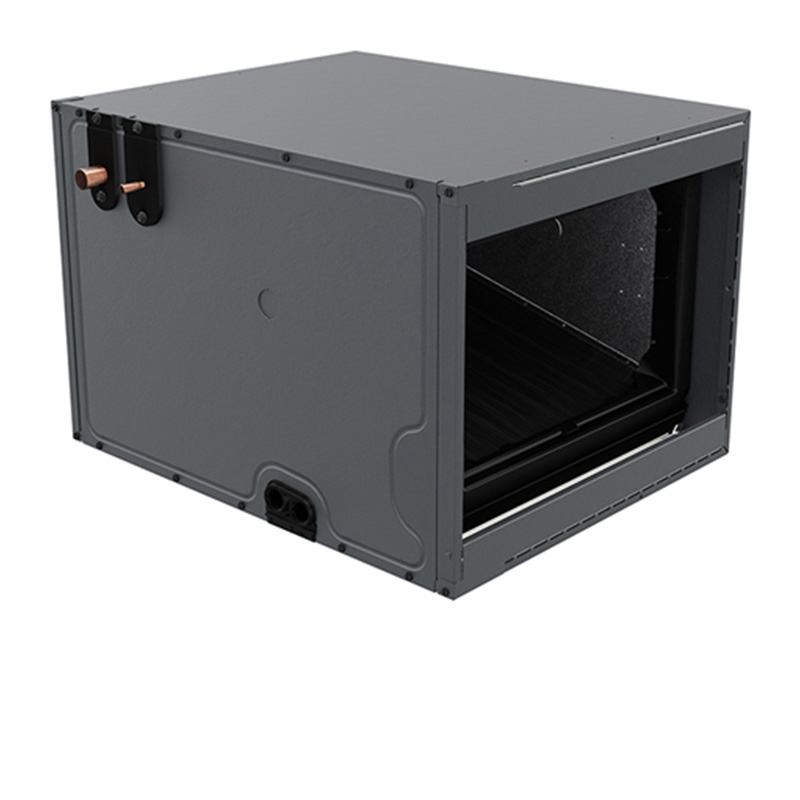
Horizontal configuration means the air handler is designed to lie on its side, which is required for attic installations and many crawlspace or platform installs where vertical clearance is limited. It does not reduce heating or cooling performance, but it does mean condensate drainage routing is different and must be handled carefully during installation to avoid water damage or drain pan overflow.
What does modulating mean on the furnace, and why does it matter for a 120,000 BTU unit?
A modulating furnace adjusts its firing rate continuously, often from around 40 percent up to 100 percent of capacity, rather than simply turning on at full blast and shutting off. On a 120,000 BTU furnace, that matters a great deal: most hours do not call for maximum heat, so the system runs longer at lower output, which keeps temperatures more even room to room, reduces temperature swings, and cuts noise from frequent on-off cycling.
What are the most common repairs I should budget for over the first ten years?
Dual-run capacitors are the most frequently reported failure on Goodman equipment and typically cost between $300 and $600 to replace, parts and labor included. Evaporator coil leaks appear in a meaningful share of longer-term owner reviews and are a more expensive repair. Having a service agreement or setting aside a few hundred dollars a year for maintenance is a reasonable approach given Goodman's documented repair history.
Does using R-32 refrigerant mean my technician needs special certification or tools?
R-32 requires EPA Section 608 certification, which any licensed HVAC technician already holds, but it is mildly flammable (classified A2L), so your technician should confirm their recovery equipment and manifold gauges are rated for A2L refrigerants before servicing. Most equipment purchased now in 2024 and beyond is moving to A2L refrigerants, so this is increasingly standard rather than unusual.
Specifications
| Cooling capacity | 5 Ton |
| Efficiency | 14 SEER2 |
| Furnace output | 120000 BTU |
| Furnace efficiency | 97% AFUE |
| Configuration | Horizontal |
| Refrigerant | R-32 |
| Model | GLXS4BA6010 |