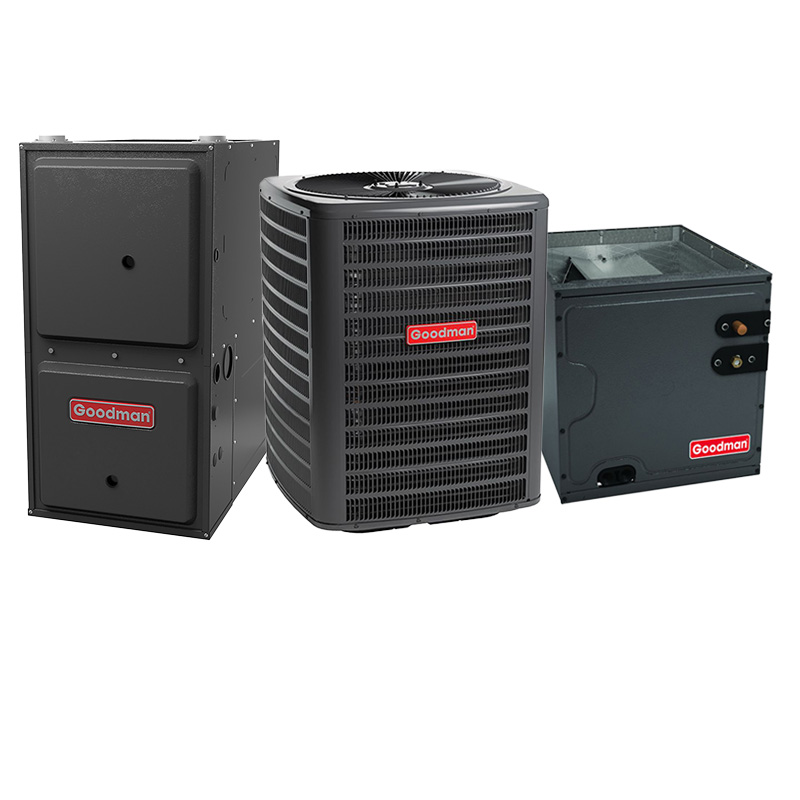
Goodman Air Conditioning And Heating – 1.5 Ton 15.2 SEER2 AC With 60000 BTU 96% AFUE Two Stage Multi-Speed ECM Gas Furnace System – Downflow | R32
View on AC Direct see your lowest price →Check current price on AC Direct →
Key features
- 15.2 SEER2 cooling efficiency meets current federal minimum standards for most U.S. climate zones
- 96% AFUE two-stage gas furnace reduces fuel waste and temperature swings versus single-stage operation
- ECM variable-speed blower motor lowers electrical consumption and improves air distribution consistency
- Downflow configuration designed for installations where supply air exits through the bottom of the unit
- R-32 refrigerant offers a lower global-warming potential than R-410A and is the emerging industry standard
- 1.5-ton capacity suited to smaller homes or dedicated zones in the 600 to 900 square foot range
About this system
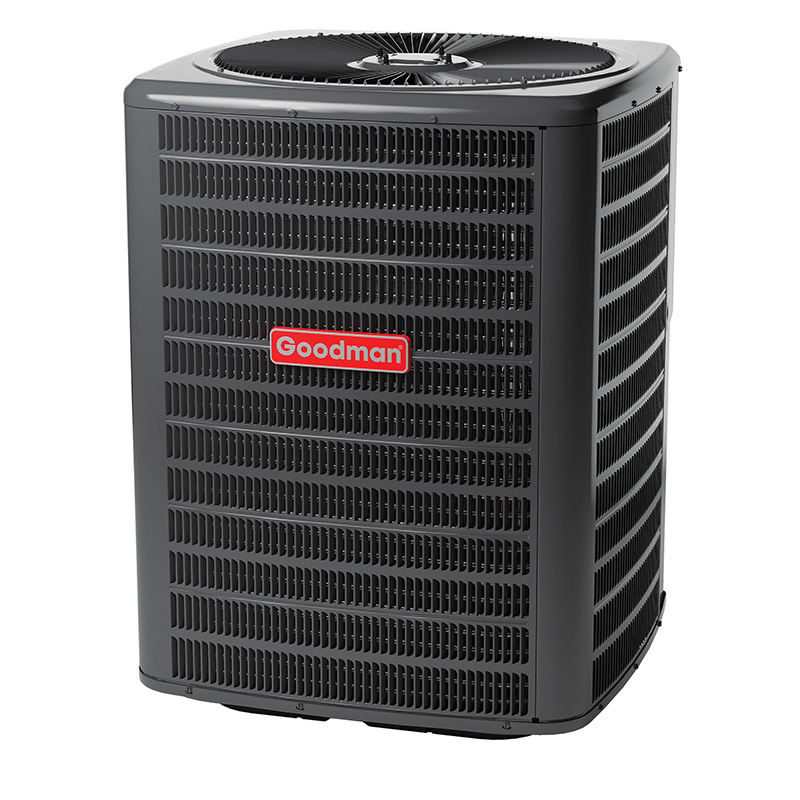
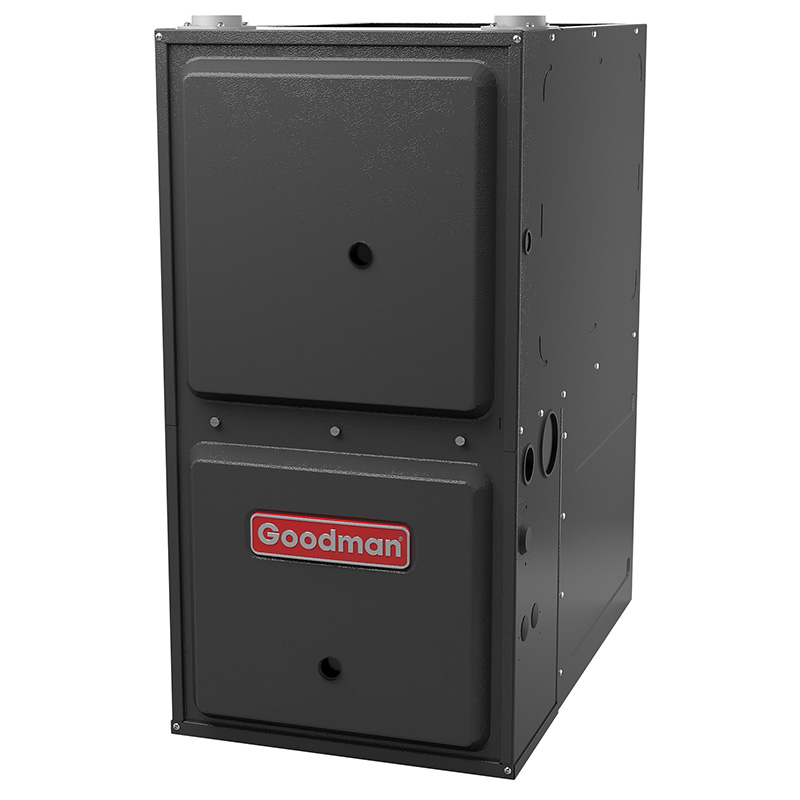
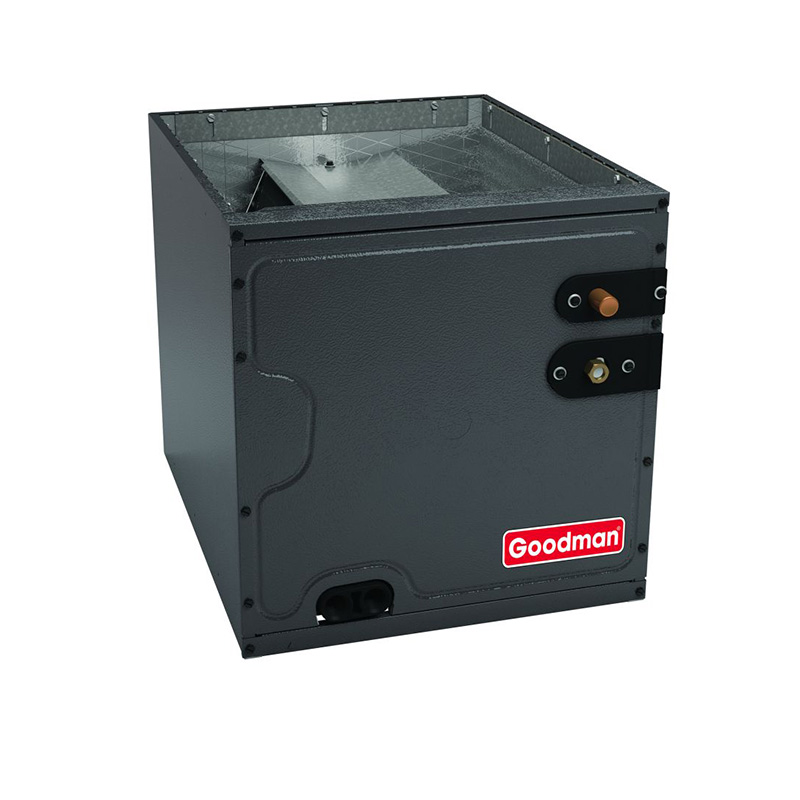
This 1.5-ton Goodman system pairs a 15.2 SEER2 air conditioner with a 60,000 BTU, 96% AFUE two-stage gas furnace in a downflow configuration, making it a practical choice for homes with basement or closet installations where conditioned air is delivered downward through floor registers. At 1.5 tons, it is sized for smaller homes or individual zones, typically spaces in the 600 to 900 square foot range depending on insulation quality, ceiling height, and climate. The R-32 refrigerant is a lower global-warming-potential option compared to R-410A, and is becoming the new industry standard for residential split systems.
The two-stage furnace is a meaningful upgrade over single-stage units. It runs on a lower capacity setting during mild weather and steps up only when demand calls for it, which reduces temperature swings, lowers operating noise, and tends to cut fuel consumption compared to a furnace that only runs at full blast. The ECM (electronically commutated motor) blower further improves efficiency by modulating airflow speed rather than running at a fixed RPM. Together, the 96% AFUE rating means roughly 96 cents of every dollar spent on gas goes to usable heat, which is a strong figure and qualifies as a high-efficiency unit under most utility rebate programs. At 15.2 SEER2, the cooling side meets but does not significantly exceed current federal minimums for most regions, so buyers in extreme cooling climates may want to weigh a higher SEER2 option.
This Goodman bundle delivers a genuine high-efficiency furnace and a code-compliant AC at a price point that undercuts major premium brands by a notable margin, making it a reasonable value for budget-conscious buyers who can secure a skilled installer. The trade-off is a brand track record that shows compressors averaging 10 to 14 years rather than the 15 to 20 years seen from premium competitors, and a customer satisfaction history that trends lower once equipment ages past year seven. It earns its place in the market, but the long-term cost picture depends heavily on installation quality and maintenance discipline.
Overall score is the average of the five ratings above.
What we like
- Priced 15 to 25 percent below comparable Trane, Lennox, and Carrier equipment, reducing upfront cost
- 96% AFUE two-stage furnace is a genuine high-efficiency design, not a budget-grade spec
- ECM blower motor improves comfort and lowers operating costs compared to PSC motor furnaces
- R-32 refrigerant positions the system for compatibility with evolving environmental regulations
- Downflow furnace design suits a range of installation scenarios including basement and utility closet setups
Trade-offs
- Compressors average 10 to 14 years in documented owner experience, shorter than the 15 to 20 years typical of premium brands
- Dual-run capacitor failures are the most commonly reported repair issue, though they are usually a low-cost fix in the 300 to 600 dollar range
- Evaporator coil leaks appear in a meaningful share of owner reviews, a failure mode less commonly associated with premium-brand systems
- A minority of owners report refrigerant leaks within the first year, typically traced to installation or initial charge quality rather than the unit itself
What homeowners and pros say about Goodman
Homeowners who bought Goodman equipment largely echo what the numbers suggest. Google dealer reviews cluster around 3.8 out of 5, and the most consistent praise is straightforward: the system costs less up front and works as advertised when properly installed. The problems tend to surface later. ConsumerAffairs shows a rating of about 2.5 out of 5, and while that platform skews toward unhappy owners, the complaint pattern is specific enough to take seriously: repair bills climbing after roughly year 7, with dual-run capacitor failures being the most frequently mentioned and fortunately lowest-cost issue in the 300 to 600 dollar repair range. Evaporator coil leaks appear in enough reviews to be a known risk rather than an isolated anomaly, and a smaller group of owners describe refrigerant leaks within the first year, a problem that typically points to how the system was charged at installation rather than a factory defect.
HVAC technicians who work on Goodman equipment tend to offer a more measured view than either the brand advocates or its critics. The consensus among installers is that Goodman builds a functional, serviceable unit at a price point that makes homeownership more accessible, but the equipment rewards careful installation and penalizes shortcuts more visibly than premium brands do. Compressor lifespan averaging 10 to 14 years versus the 15 to 20 years associated with Trane or Carrier is a real gap, not a myth, and it matters in a total cost of ownership calculation. For this specific 1.5-ton, two-stage furnace configuration, the ECM motor and 96% AFUE rating are legitimate quality specifications, not marketing language, and technicians note that the two-stage furnace tends to hold up better than some of Goodman’s entry-level single-stage products.
Sources: ConsumerAffairs Goodman owner reviews, AHRI Directory of Certified Product Performance, U.S. DOE appliance and equipment efficiency standards, Goodman product specification sheets.
What it costs to run
At 15.2 SEER2, cooling this 1.5-ton system for a typical 1200-hour cooling season at the U.S. average electricity rate of $0.17/kWh works out to roughly $242 per year in cooling, about $32 less per year than a minimum-efficiency 13.4 SEER2 unit of the same size. Your real cost depends on your climate and local rate.
Method: (18,000 BTU/hr ÷ 15.2 SEER2) × 1200 hours ÷ 1000 × $0.17/kWh. Rate source: U.S. EIA average; cooling hours: moderate-climate estimate.
How it compares
| Brand | Comparable model | SEER2 | Stage | Price position |
|---|---|---|---|---|
| Goodman | GSXN4-18 / GCVC960603BN (this system) | 15.2 | Two-stage furnace / single-stage condenser | Value pick |
| Carrier | Comfort 15 (24ACC6) with 58MVC furnace | 15.2 | Two-stage | Approximately 15 to 20 percent more than this Goodman system |
| Trane | XR15 (4TTR5) with S9V2 furnace | 15.0 to 16.0 | Two-stage | Approximately 20 to 25 percent more than this Goodman system |
| Lennox | Merit 16ACX with ML196E furnace | 15.0 to 16.0 | Single-stage AC, two-stage furnace | Approximately 15 to 20 percent more than this Goodman system |
Competitor rows are comparable single-stage units at similar efficiency; price is relative position, not a quote.
Questions about this system
Is a downflow furnace right for my house, and can it be converted to upflow or horizontal?
Downflow furnaces are specifically designed for installations where the air handler sits above the ductwork and delivers conditioned air downward, common in closet or basement configurations with floor registers. This unit is factory-configured for downflow only and cannot be field-converted to upflow. Confirm your duct layout with your installer before purchasing.
Why does this system use R-32 refrigerant instead of R-410A, and does that affect service costs?
R-32 has a lower global-warming potential than R-410A and is being adopted industry-wide as R-410A is phased out. Most certified HVAC technicians are already working with R-32 systems, but you should confirm your local service providers have the appropriate equipment and certification before a repair situation arises. Refrigerant cost differences between R-32 and R-410A are minimal at this point.
What does two-stage mean for the furnace, and will I actually notice it?
A two-stage furnace operates at a lower capacity, typically around 65 to 70 percent, during mild weather and ramps up to full capacity only when needed. Most homeowners notice fewer temperature spikes, quieter operation during low-stage runs, and modestly lower gas bills compared to a single-stage unit of the same AFUE. The ECM blower in this system further smooths out airflow, which adds to comfort.
Goodman reviews on ConsumerAffairs are pretty negative. Should I be worried?
ConsumerAffairs rates Goodman at around 2.5 out of 5, but that channel attracts a disproportionate share of complaints relative to satisfied owners who do not post reviews. Google dealer reviews average around 3.8 out of 5, and affordability is the most frequently cited positive. The recurring complaint pattern on ConsumerAffairs is repair costs climbing after roughly year 7, which aligns with the documented compressor lifespan and capacitor failure data. The risk is real but not unusual for a value-tier brand.
What is the warranty on this system, and what should I watch for in the registration process?
Goodman typically offers a 10-year parts warranty on registered equipment, which requires online registration within a set window after installation. Failing to register usually drops coverage to a shorter period. The warranty covers parts but not labor, which can be a meaningful out-of-pocket cost if the evaporator coil or compressor, the two more serious documented failure modes, requires service after the install warranty from your contractor expires.
Specifications
| Cooling capacity | 1.5 Ton |
| Efficiency | 15.2 SEER2 |
| Furnace output | 60000 BTU |
| Furnace efficiency | 96% AFUE |
| Configuration | Downflow |
| Refrigerant | R-32 |