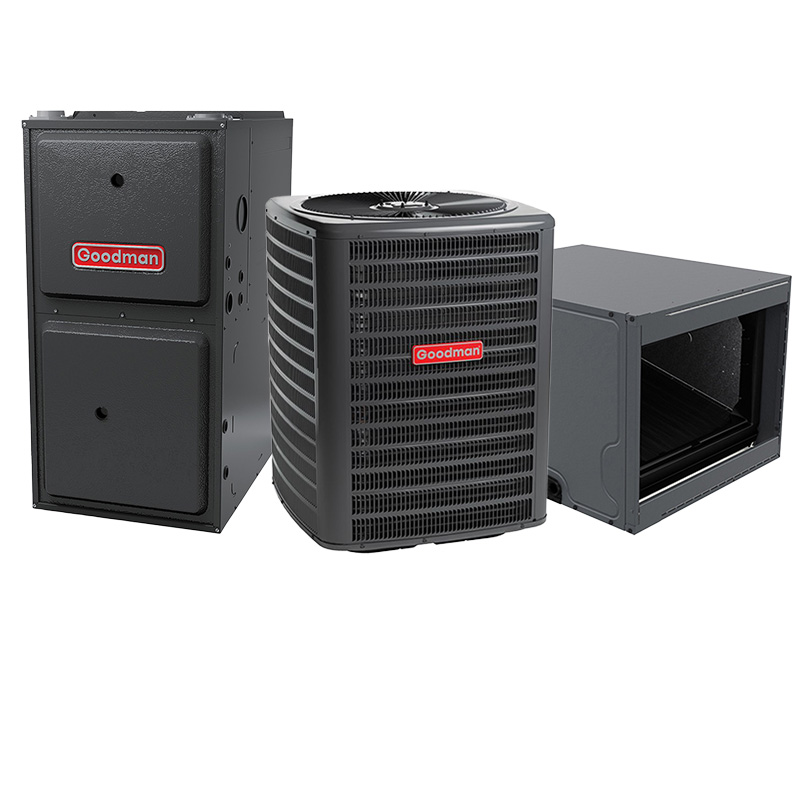
Goodman Furnace And Air Conditioner 1.5 Ton 14.5 SEER2 AC With 60000 BTU 80% AFUE Two Stage Multi-Speed ECM Gas Furnace System – Horizontal | R32
View on AC Direct see your lowest price →Check current price on AC Direct →
Key features
- 1.5-ton, 14.5 SEER2 air conditioner with R-32 refrigerant
- 60,000 BTU two-stage gas furnace at 80% AFUE
- Multi-speed ECM blower motor for quieter, more efficient airflow
- Horizontal configuration designed for tight or unconventional installs
- Matched factory system for simplified warranty compliance
- R-32 refrigerant: lower global-warming potential than R-410A
About this system
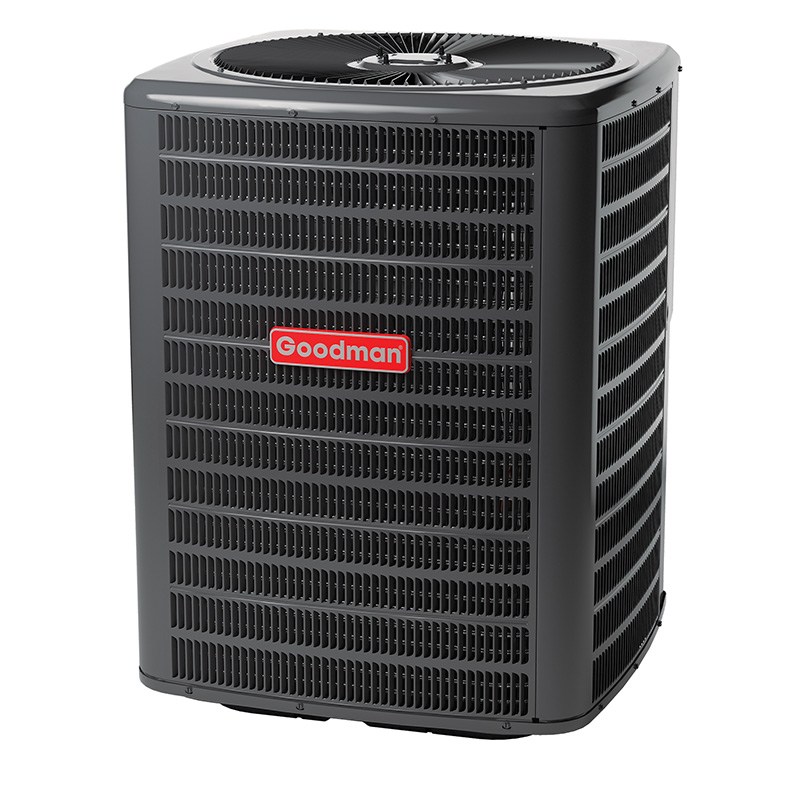
This Goodman bundle pairs a 1.5-ton, 14.5 SEER2 air conditioner with a 60,000 BTU, 80% AFUE two-stage gas furnace in a horizontal configuration, making it a practical choice for manufactured homes, attic installations, or any application where floor space is limited and the air handler must lie on its side. The R-32 refrigerant charge is a forward-looking detail: R-32 has a lower global-warming potential than the older R-410A it replaces, and its adoption across the industry is accelerating, so parts and service familiarity are growing quickly.
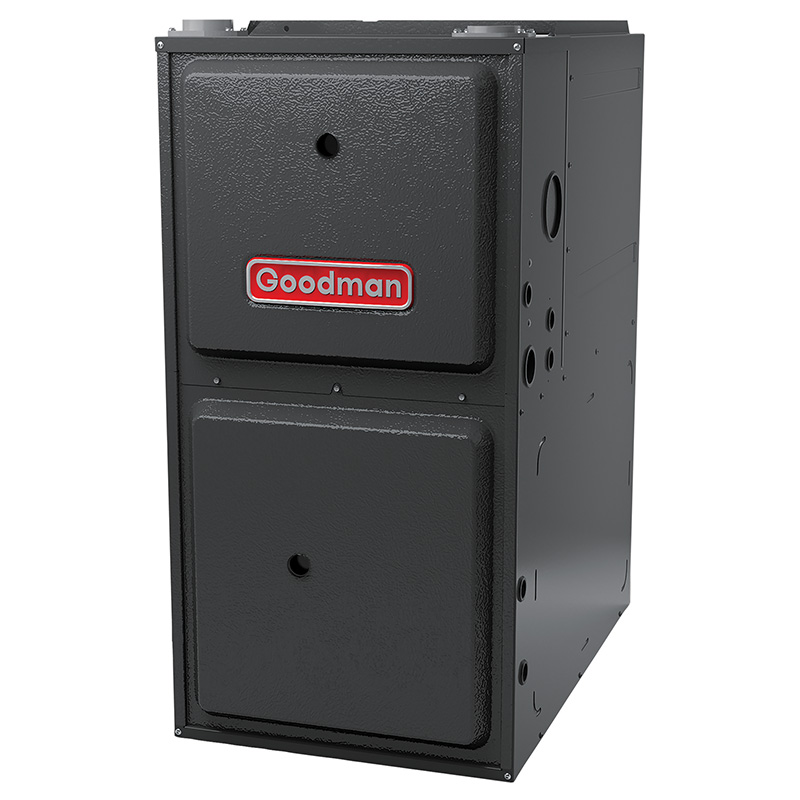
The furnace specs deserve a clear-eyed read. Two-stage operation means the burner runs at a lower output on mild days and steps up only when demand calls for it, which smooths out temperature swings and can modestly improve comfort compared to single-stage units. The multi-speed ECM blower motor is more efficient than a standard PSC motor and runs quieter at lower speeds. That said, 80% AFUE sits at the federal minimum threshold for most northern U.S. climates, meaning roughly one in five BTUs of gas consumed goes out the flue. Buyers in colder regions or homes with high heating loads should weigh whether a 96% AFUE unit would pay back the price difference over time. The 14.5 SEER2 cooling rating is entry-level compliant and practical for mild to moderate cooling climates, but it will not deliver the monthly savings of a 17 or 18 SEER2 system.
This bundle is sold as a matched system, which matters for warranty purposes and for ensuring the coil and condenser are rated to work together. Horizontal-only configurations add a layer of complexity at installation: the unit must be leveled precisely, condensate drainage must be routed correctly, and refrigerant line routing is often less straightforward than in upflow or downflow installs. Goodman’s own documentation and every experienced installer will tell you that a careful, code-compliant setup is the single largest variable in how this system performs over its lifetime.
This Goodman bundle offers a legitimate entry-level path for homeowners who need a horizontally installed matched system without the price premium of Trane or Carrier. The two-stage furnace and ECM blower add genuine comfort value at this price point, but 80% AFUE and 14.5 SEER2 are the efficiency floor, not a selling point, and long-term ownership costs hinge almost entirely on installation quality and whether you hit one of Goodman's documented weak spots. Buyers who can afford a step up in efficiency or brand reliability tier should at least price-compare before committing.
Overall score is the average of the five ratings above.
What we like
- Priced 15 to 25 percent below comparable Carrier, Trane, and Lennox bundles
- Two-stage furnace reduces temperature swings versus single-stage alternatives
- ECM blower motor lowers electricity use and noise during lower-demand operation
- R-32 refrigerant is a more future-forward choice than R-410A at this price tier
- Factory-matched system simplifies warranty registration and coil compatibility
Trade-offs
- 80% AFUE is the minimum allowed in many regions and leaves significant efficiency gains on the table
- Dual-run capacitor failures are Goodman's most commonly reported issue, typically appearing after year 7
- Compressor lifespan averages 10 to 14 years versus 15 to 20 years for premium brands
- Horizontal-only configuration increases install complexity and condensate drainage risk
What homeowners and pros say about Goodman
Homeowners who share feedback on Goodman units tend to cluster at the poles: those who had a smooth installation and kept up with annual maintenance often report years of trouble-free operation and are quick to praise the price-to-function ratio. That affordability is the most common praise across Google dealer reviews, which average around 3.8 out of 5. The ConsumerAffairs channel tells a harder story, averaging closer to 2.5 out of 5, and the complaint thread that runs through it consistently involves repair costs climbing after roughly year seven. The two failure modes that appear most often in owner accounts are dual-run capacitor failures, which are annoying but generally cost between $300 and $600 to fix, and evaporator coil leaks, which are more disruptive and expensive. A smaller share of owners report refrigerant leaks in the first year, and technicians tend to attribute those to installation or initial charge problems rather than the equipment itself.
HVAC professionals who work on Goodman units regularly will tell you the brand’s reputation lives and dies with the installing contractor. A rushed or inexperienced install on a Goodman is much harder to recover from than the same mistake on a Trane or Carrier, because those brands have somewhat more tolerance built into their components. For this horizontal-configuration system specifically, pros flag condensate drainage setup and refrigerant line routing as the two spots where corner-cutting causes early problems. On compressor lifespan, the honest industry expectation for Goodman is 10 to 14 years in normal use, which is a real gap compared to the 15 to 20 years more common with premium brands. For a buyer replacing a system in a tight budget situation who will sell the home within a decade, that gap is less consequential than it is for someone planning a long-term hold.
Sources: ConsumerAffairs Goodman owner reviews, AHRI Directory of Certified Product Performance, U.S. DOE appliance and equipment efficiency standards, Goodman product specification sheets.
What it costs to run
At 14.5 SEER2, cooling this 1.5-ton system for a typical 1200-hour cooling season at the U.S. average electricity rate of $0.17/kWh works out to roughly $253 per year in cooling, about $21 less per year than a minimum-efficiency 13.4 SEER2 unit of the same size. Your real cost depends on your climate and local rate.
Method: (18,000 BTU/hr ÷ 14.5 SEER2) × 1200 hours ÷ 1000 × $0.17/kWh. Rate source: U.S. EIA average; cooling hours: moderate-climate estimate.
How it compares
| Brand | Comparable model | SEER2 | Stage | Price position |
|---|---|---|---|---|
| Goodman | This system (1.5T 14.5 SEER2 / 60K BTU 80% AFUE Two-Stage ECM Horizontal R-32) | 14.5 | Two-stage | Value pick |
| Carrier | Performance Series (24ACC636 condenser + 58TP furnace bundle) | 15-16 | Two-stage | Roughly 20 to 30 percent more than this Goodman bundle |
| Trane | XR15 condenser + S9V2 furnace bundle | 15 | Two-stage | Typically 20 to 25 percent above this Goodman bundle |
| Lennox | Merit ML14XC1 condenser + ML195 furnace bundle | 14.3-15 | Single-stage to two-stage | Generally 15 to 25 percent higher than this Goodman bundle |
Competitor rows are comparable single-stage units at similar efficiency; price is relative position, not a quote.
Questions about this system
Is R-32 refrigerant harder to find a technician for than R-410A?
R-32 is becoming more common as manufacturers phase out R-410A, and most certified HVAC technicians are getting familiar with it. However, in some rural markets, not every service van will have R-32 on hand yet, so it is worth asking your local contractors about their current stock and experience before you buy.
What does horizontal-only configuration actually mean for installation, and does it cost more?
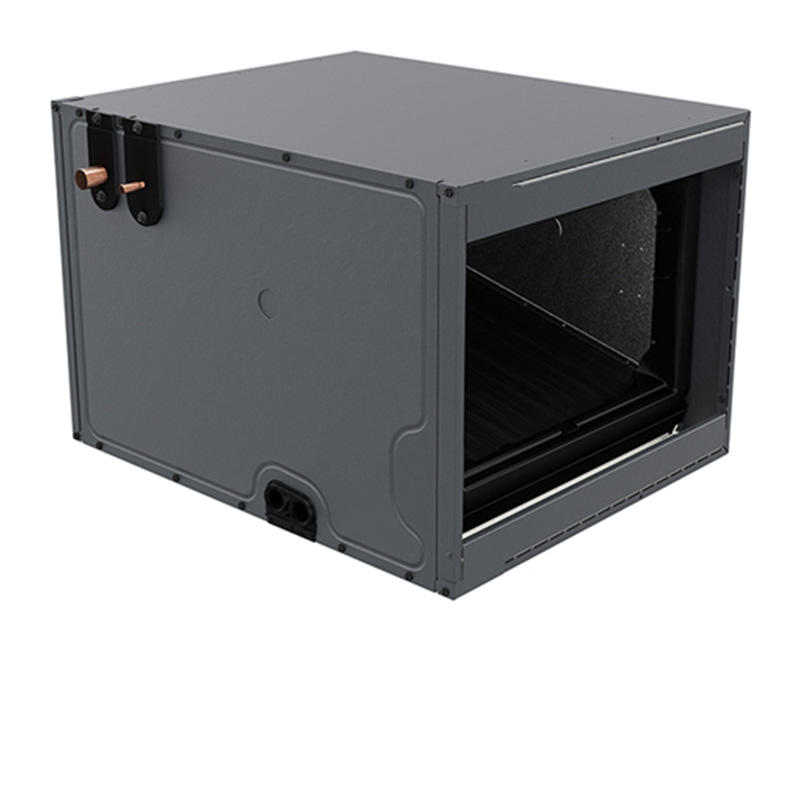
Horizontal configuration means the air handler is designed to lie on its side rather than stand upright, which is common in attics, crawl spaces, and manufactured homes. It typically adds labor time because the installer must handle precise leveling, correct condensate pan orientation, and non-standard line-set routing, so expect installation quotes to run somewhat higher than a standard upflow job.
The furnace is 80% AFUE. Will that disqualify me from any efficiency rebates?
Many utility rebate programs and the federal tax credit under the Inflation Reduction Act require at least 97% AFUE for gas furnaces to qualify. An 80% AFUE unit typically does not meet those thresholds, so you should check your utility's current rebate schedule and consult a tax professional before counting on incentives to offset the purchase price.
Goodman has mixed consumer reviews. Should I be worried about buying this system?
Goodman scores around 2.5 out of 5 on ConsumerAffairs, a channel skewed toward complaints, and around 3.8 out of 5 on Google dealer reviews. The documented weak points are dual-run capacitor failures (a relatively low-cost fix in the $300 to $600 range), evaporator coil leaks, and compressors that average 10 to 14 years versus 15 to 20 for premium brands. A minority of owners have also reported refrigerant leaks in year one, usually tied to the initial installation. Hiring an experienced, licensed installer and keeping up with annual maintenance addresses most early-failure risk.
Can I use this 1.5-ton system for a larger home if my old system was 2 tons?
Sizing should be based on a proper Manual J load calculation, not on matching whatever the previous system happened to be. An undersized unit will run continuously in peak heat or cold, wearing components faster and failing to maintain setpoint. If a qualified contractor's load calc says 2 tons, do not install 1.5 tons to save money upfront.
Specifications
| Cooling capacity | 1.5 Ton |
| Efficiency | 14.5 SEER2 |
| Furnace output | 60000 BTU |
| Furnace efficiency | 80% AFUE |
| Configuration | Horizontal |
| Refrigerant | R-32 |