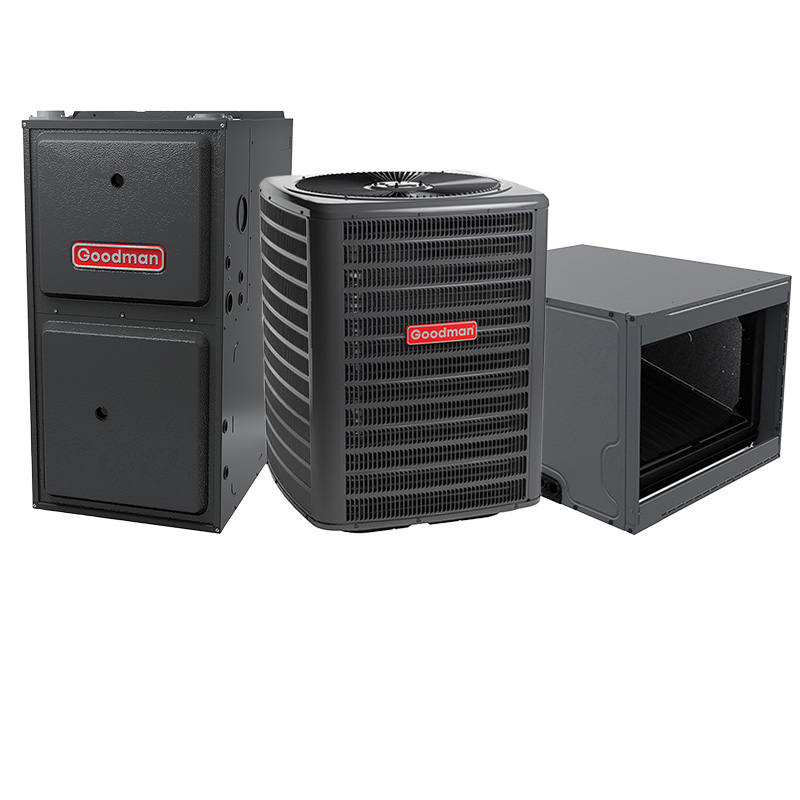
Goodman Furnace And AC – 1.5 Ton 15.2 SEER2 AC With 60000 BTU 96% AFUE Two Stage Multi-Speed ECM Gas Furnace System – Horizontal | R32
View on AC Direct see your lowest price →Check current price on AC Direct →
Key features
- 1.5-ton cooling capacity, 15.2 SEER2 rated efficiency
- 60,000 BTU two-stage gas furnace at 96% AFUE
- ECM variable-speed blower motor for lower fan energy use
- Horizontal configuration for crawl-space or attic installs
- R-32 refrigerant charge, lower GWP than R-410A
- Two-stage heating reduces temperature swings on mild days
About this system
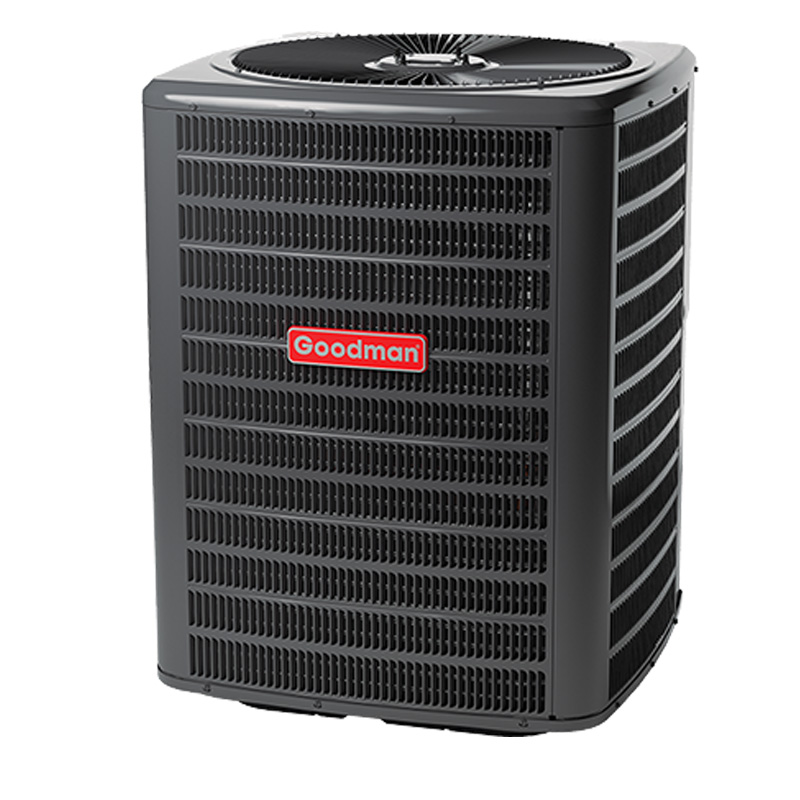
This Goodman bundle pairs a 1.5-ton, 15.2 SEER2 central air conditioner with a 60,000 BTU, 96% AFUE two-stage gas furnace in a horizontal configuration, making it a practical choice for crawl-space installs, attic air handlers, or any application where vertical clearance is limited. The R-32 refrigerant charge is a forward-looking detail: R-32 has a lower global warming potential than the older R-410A it replaces, and it is becoming the new industry standard as regulations tighten. At 1.5 tons, this system is sized for smaller homes, typically in the 600 to 900 square foot range depending on local climate, insulation quality, and window load, so confirming a proper Manual J load calculation before purchase is essential.
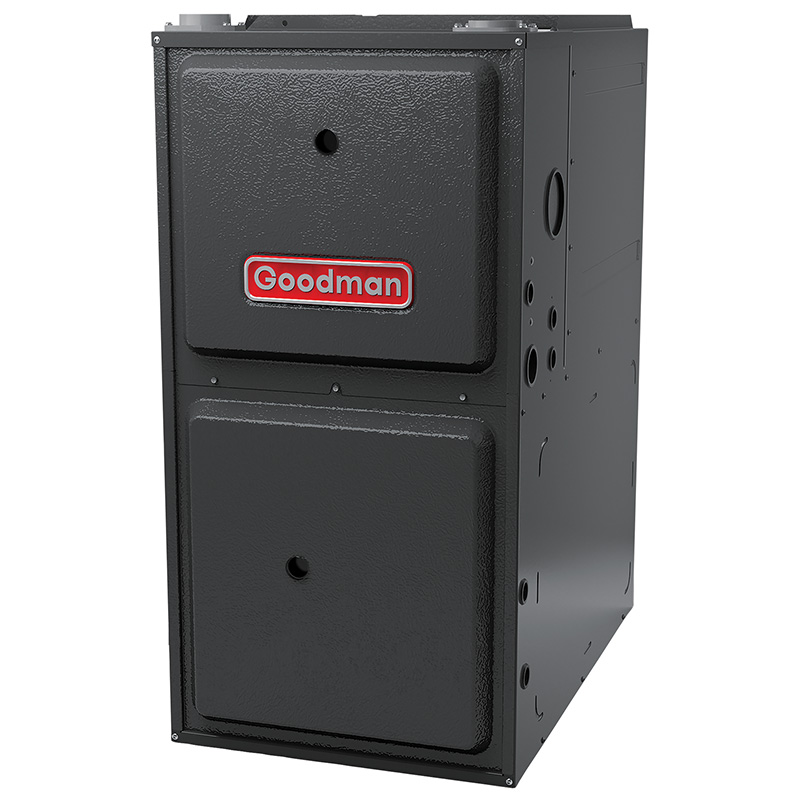
The 96% AFUE furnace is solidly efficient, recovering 96 cents of heat energy from every dollar of natural gas burned. Two-stage operation lets the furnace run at a lower output on mild days, which reduces temperature swings, lowers noise, and cuts fuel bills compared to single-stage equipment. The ECM (electronically commutated motor) blower is a meaningful upgrade over a standard PSC motor, using roughly 25 to 75 percent less electricity during continuous fan operation and contributing to better humidity management. Together, these features put this system above entry-level but well short of fully modulating variable-speed equipment, which is an appropriate middle ground for budget-conscious buyers who still want noticeable comfort improvements over a basic replacement system.
This bundle offers genuine efficiency upgrades, specifically two-stage heating and an ECM blower, at a price point 15 to 25 percent below comparable Carrier, Trane, or Lennox systems. The trade-off is a brand track record that shows shorter compressor longevity and some documented coil leak issues, meaning long-term ownership costs can narrow that upfront savings gap. Buyers who invest in a careful, experienced installation and budget for a service contract will get the best result from this system.
Overall score is the average of the five ratings above.
What we like
- Priced 15 to 25 percent below comparable premium brand systems
- 96% AFUE two-stage furnace meaningfully cuts heating bills versus single-stage 80% equipment
- ECM blower motor reduces electricity consumption during fan-only and continuous circulation
- R-32 refrigerant is forward-compatible as environmental regulations tighten
- Horizontal configuration handles install situations where vertical units simply will not fit
Trade-offs
- Compressor lifespan averages 10 to 14 years versus 15 to 20 years for premium competitors
- Evaporator coil leaks appear in a meaningful share of owner reports, a known Goodman pattern
- Dual-run capacitor failures are common after several years, adding recurring service costs
- Overall brand reputation sits around 2.5 on ConsumerAffairs, with repair costs after year 7 a recurring complaint
What homeowners and pros say about Goodman
Homeowners who chose Goodman most often point to the upfront price as the deciding factor, and that sentiment is reflected in Google dealer review scores that average around 3.8 out of 5 across hundreds of reviews, where affordability is the most repeated compliment. On the other end of the spectrum, ConsumerAffairs tells a harder story, with Goodman sitting near 2.5 out of 5, and the thread running through those lower scores is service costs that start accumulating somewhere around the seven-year mark. The failure modes that show up most consistently are dual-run capacitor replacements, which are relatively inexpensive at 300 to 600 dollars but can feel like a pattern when they recur, and evaporator coil leaks, which are a more serious and costly repair. A smaller share of owners report refrigerant leaks within the first year, which technicians typically attribute to installation issues or an improper charge rather than a factory defect.
HVAC professionals have a nuanced view of Goodman. Many install it regularly for budget-conscious customers and report that systems maintained consistently and installed carefully by experienced technicians perform reasonably well through 10 to 12 years. The concern they voice most often is compressor longevity: Goodman compressors tend to average 10 to 14 years in real-world service, compared to 15 to 20 years that technicians report from premium brands like Trane and Carrier. For this specific system, the two-stage furnace and ECM blower are genuine quality upgrades that pros generally view positively, since those components improve comfort and reduce operating costs in ways that matter day to day. The horizontal configuration also means the installer needs real experience with that orientation, since improper setup can create drainage and airflow problems that the equipment itself cannot compensate for.
Sources: ConsumerAffairs Goodman owner reviews, AHRI Directory of Certified Product Performance, U.S. DOE appliance and equipment efficiency standards, Goodman product specification sheets.
What it costs to run
At 15.2 SEER2, cooling this 1.5-ton system for a typical 1200-hour cooling season at the U.S. average electricity rate of $0.17/kWh works out to roughly $242 per year in cooling, about $32 less per year than a minimum-efficiency 13.4 SEER2 unit of the same size. Your real cost depends on your climate and local rate.
Method: (18,000 BTU/hr ÷ 15.2 SEER2) × 1200 hours ÷ 1000 × $0.17/kWh. Rate source: U.S. EIA average; cooling hours: moderate-climate estimate.
How it compares
| Brand | Comparable model | SEER2 | Stage | Price position |
|---|---|---|---|---|
| Goodman | GLXS15M18 + GC9S960603BX (this system) | 15.2 | Two-stage furnace / single-stage AC | Value pick |
| Carrier | Comfort 15 Series (24ACC6) | 15.2 | Single-stage | Approximately 15 to 25 percent more than this Goodman system |
| Trane | XR15 Series | 15.2 | Single-stage | Approximately 20 to 30 percent more than this Goodman system |
| Lennox | Merit ML15 Series | 15.2 | Single-stage | Approximately 20 to 30 percent more than this Goodman system |
Competitor rows are comparable single-stage units at similar efficiency; price is relative position, not a quote.
Questions about this system
Is 1.5 tons actually enough for my home, and how do I know for sure?
A 1.5-ton system is generally appropriate for conditioned spaces in the 600 to 900 square foot range, but that range shifts significantly based on your climate zone, ceiling height, insulation, and window area. The only reliable answer comes from a Manual J load calculation performed by your HVAC contractor before equipment is ordered. Oversizing is a common and costly mistake that causes short-cycling, poor humidity control, and premature wear.
What does horizontal configuration mean and how do I know if I need it?
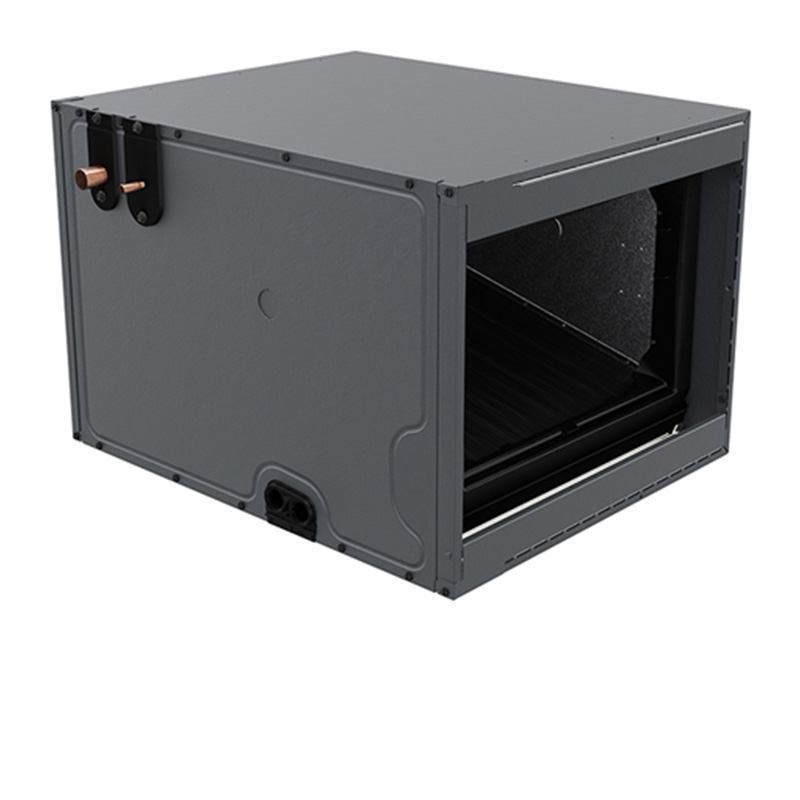
Horizontal configuration means the air handler and furnace are designed to lie on their side, with airflow traveling horizontally through the unit rather than vertically upward or downward. This is the correct choice for crawl-space installations, some attic setups, and tight mechanical rooms where vertical clearance is insufficient. If your existing system is vertical, you would need a different configuration.
My previous system used R-410A. Can an R-32 system be installed without major changes?
R-32 operates at different pressures than R-410A and requires technicians who are familiar with the refrigerant and have the correct recovery equipment. Existing linesets can sometimes be reused if they are clean and properly sized, but your installer should inspect them carefully. R-32 is mildly flammable (A2L classification), so local codes may require specific handling and labeling practices.
Goodman has mixed reviews online. Should I be worried about reliability on a two-stage system like this?
Goodman scores around 2.5 out of 5 on ConsumerAffairs, a channel that skews toward complaints, and around 3.8 out of 5 on Google dealer reviews where affordability is frequently praised. The documented weak points are dual-run capacitor failures (typically a low-cost fix in the 300 to 600 dollar range), evaporator coil leaks, and compressors that average 10 to 14 years rather than the 15 to 20 years seen in premium brands. A two-stage system adds one more control board and staging component versus a single-stage unit, so there is slightly more to maintain, though two-stage furnaces are well-established technology.
What warranty comes with this system and what do I need to do to protect it?
Goodman typically offers a 10-year parts limited warranty when the equipment is registered within a set window after installation, usually 60 days. Failure to register on time often drops coverage to a shorter base period, so registration should be treated as a required step immediately after startup. The warranty covers parts but not labor, refrigerant, or diagnostic fees, which are out-of-pocket costs on any service call.
Specifications
| Cooling capacity | 1.5 Ton |
| Efficiency | 15.2 SEER2 |
| Furnace output | 60000 BTU |
| Furnace efficiency | 96% AFUE |
| Configuration | Horizontal |
| Refrigerant | R-32 |