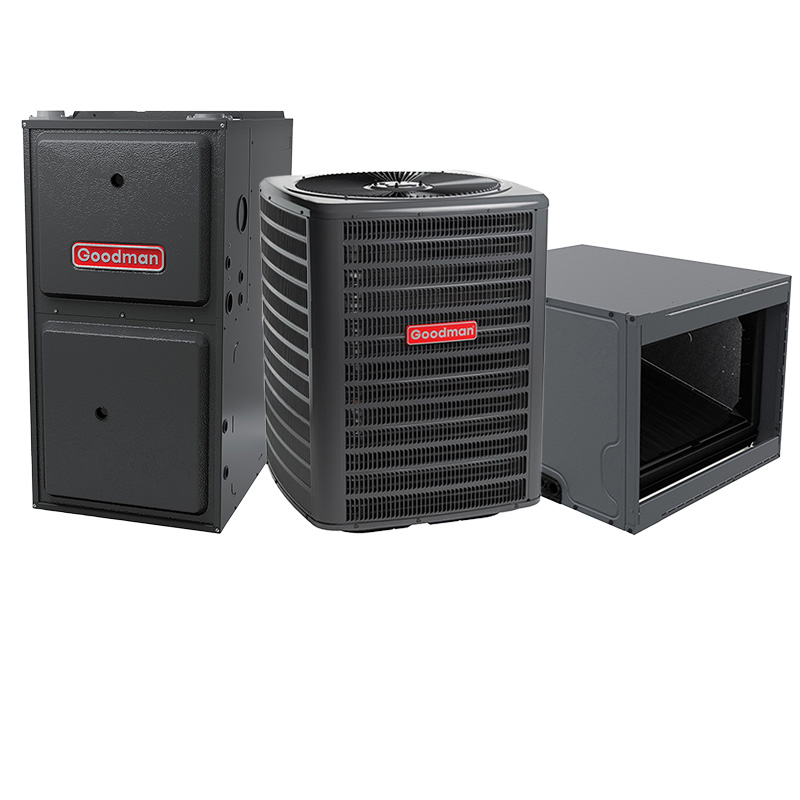
Goodman Air Conditioning And Heating – 2.5 Ton 15.2 SEER2 AC With 60000 BTU 96% AFUE Two Stage Multi-Speed ECM Gas Furnace System – Horizontal | R32
View on AC Direct see your lowest price →Check current price on AC Direct →
Key features
- 2.5-ton cooling capacity rated at 15.2 SEER2 for moderate energy efficiency
- 60,000 BTU two-stage gas furnace operating at 96% AFUE for high heating efficiency
- Multi-speed ECM blower motor reduces electricity use and softens airflow noise
- Horizontal configuration designed for crawl spaces, attics, and side-mount installations
- R-32 refrigerant with lower global warming potential than R-410A
- Two-stage burner delivers longer, steadier heat cycles for more consistent room temperatures
About this system
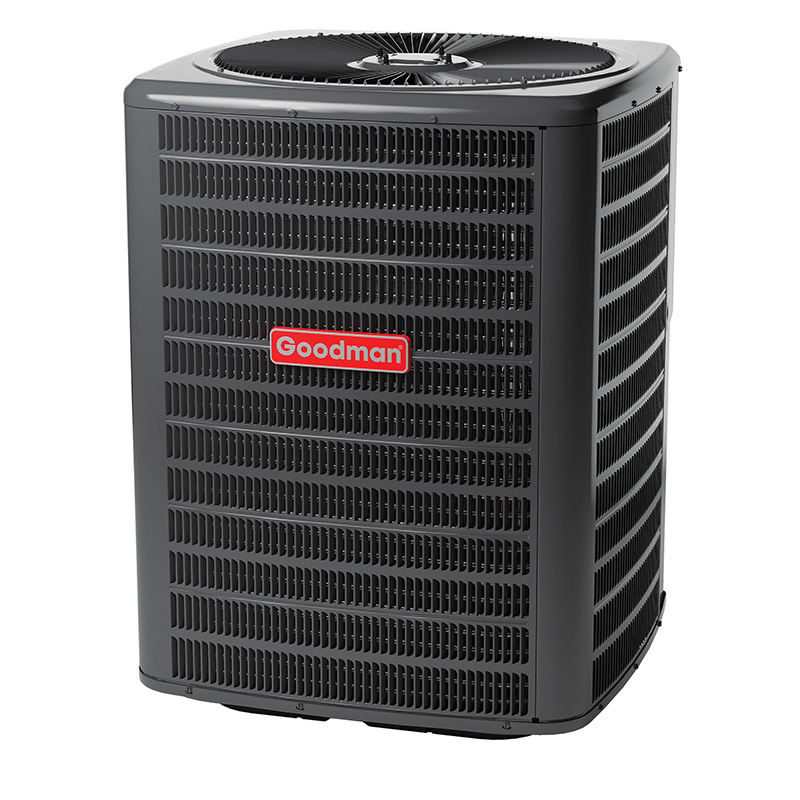
This Goodman bundle pairs a 2.5-ton, 15.2 SEER2 air conditioner with a 60,000 BTU, 96% AFUE two-stage gas furnace in a horizontal configuration, making it a practical choice for homes where the air handler must sit on its side, such as in a crawl space, attic, or closet with limited vertical clearance. The R-32 refrigerant charge is a forward-looking detail: R-32 has a lower global warming potential than the older R-410A it replaces, and it is increasingly the industry standard as manufacturers phase down higher-GWP refrigerants. At 15.2 SEER2, this system clears the federal minimum for most U.S. climate zones but sits at the entry tier of mid-efficiency equipment, not the top.
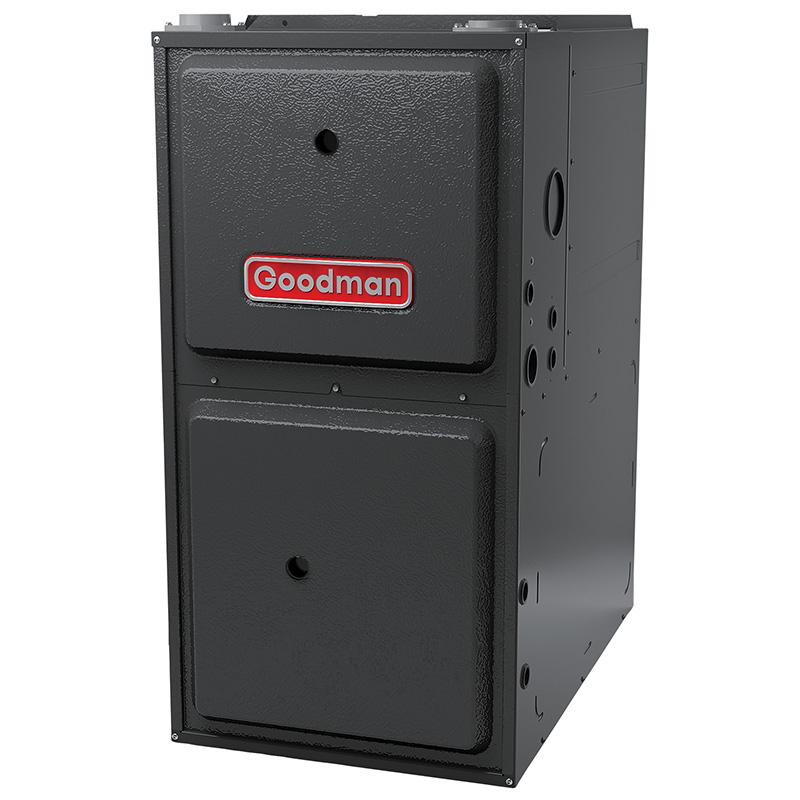
The two-stage furnace is the standout component here. Running at a lower fire stage the majority of the time, it produces longer, gentler heat cycles rather than short, aggressive blasts. That typically means more even temperatures room to room and quieter operation compared with a single-stage unit. The multi-speed ECM blower motor complements that behavior, modulating airflow to match demand and using considerably less electricity than a standard PSC motor. Together, the two-stage burner and ECM blower make the heating side of this system punching noticeably above its price point. The cooling side is more conventional: two-stage compression at 15.2 SEER2 is solid but unremarkable efficiency for 2024 and beyond.
This system suits homeowners in moderate climates who heat more than they cool and want a meaningful upgrade in comfort over single-stage equipment without stretching to variable-speed pricing. The horizontal-only configuration narrows the install base, so confirm your mechanical space before ordering. Because Goodman’s long-term performance is highly sensitive to installation quality, budgeting for an experienced, licensed contractor is not optional with this package.
This Goodman package delivers genuinely good heating performance through its two-stage, 96% AFUE furnace and ECM blower, and it undercuts comparable Trane, Carrier, and Lennox bundles by a meaningful margin. The trade-off is a brand track record that shows more repair activity after year seven than premium competitors, and a cooling efficiency tier that is adequate rather than impressive. Buyers who prioritize heating comfort on a budget and commit to a quality installation will get solid value here.
Overall score is the average of the five ratings above.
What we like
- 96% AFUE two-stage furnace is a high-efficiency heating unit at a value price point
- ECM blower motor cuts fan electricity consumption compared with standard PSC motors
- R-32 refrigerant is a future-ready choice as the industry moves away from R-410A
- Priced roughly 15 to 25 percent below comparable Carrier, Trane, and Lennox bundles
- Two-stage operation produces quieter, more even heat distribution than single-stage units
Trade-offs
- Dual-run capacitors are a well-documented early failure point, typically requiring a 300 to 600 dollar repair
- Compressor lifespan averages 10 to 14 years versus 15 to 20 years on premium brands
- Evaporator coil leaks appear in a meaningful share of owner reports, a cost that can run into the thousands
- 15.2 SEER2 cooling efficiency is at the low end of mid-tier and will cost more to operate than higher-SEER2 alternatives in hot climates
What homeowners and pros say about Goodman
Homeowners who review Goodman equipment on ConsumerAffairs give the brand roughly 2.5 out of 5 stars, and the complaints that appear repeatedly center on repair costs that begin climbing after about seven years of ownership. Google dealer reviews land considerably higher, around 3.8 out of 5 across hundreds of reviews per location, where the most common positive note is simply that Goodman made a working system accessible at a price that did not require financing. That gap between the two scores is informative: buyers who got a clean installation from a reputable dealer tend to be satisfied, while those who experienced rough installs or drew the short straw on early component failures are the loudest voices in the complaint forums.
HVAC technicians who service Goodman equipment regularly point to dual-run capacitors as the component most likely to fail first, typically a straightforward 300 to 600 dollar call. More significant is the documented pattern of evaporator coil refrigerant leaks across owner reports, which can push repair costs into the thousands if the coil itself needs replacement. Compressor longevity is another honest concern: Goodman compressors average roughly 10 to 14 years in the field, a shorter window than the 15 to 20 years technicians commonly cite for Trane or Carrier compressors. For this specific two-stage, ECM furnace package, the heating system is generally considered the stronger half of the bundle, and pros frequently note that the ECM motor in particular holds up well. The recurring advice from installers is blunt: Goodman rewards a careful, experienced installation and punishes a sloppy one more visibly than premium brands do.
Sources: ConsumerAffairs Goodman owner reviews, AHRI Directory of Certified Product Performance, U.S. DOE appliance and equipment efficiency standards, Goodman product specification sheets.
What it costs to run
At 15.2 SEER2, cooling this 2.5-ton system for a typical 1200-hour cooling season at the U.S. average electricity rate of $0.17/kWh works out to roughly $403 per year in cooling, about $54 less per year than a minimum-efficiency 13.4 SEER2 unit of the same size. Your real cost depends on your climate and local rate.
Method: (30,000 BTU/hr ÷ 15.2 SEER2) × 1200 hours ÷ 1000 × $0.17/kWh. Rate source: U.S. EIA average; cooling hours: moderate-climate estimate.
How it compares
| Brand | Comparable model | SEER2 | Stage | Price position |
|---|---|---|---|---|
| Goodman | 2.5T 15.2 SEER2 AC + 60K BTU 96% AFUE Two-Stage ECM Furnace (Horizontal, R-32) | 15.2 | Two-stage | Value pick |
| Carrier | Performance 15 (24ACC6) with 58MVC Two-Stage Furnace | 15+ | Two-stage | 15 to 25 percent higher than this Goodman bundle |
| Trane | XR15 (4TTR5) with S9V2 Two-Stage Furnace | 15+ | Two-stage | Typically 15 to 20 percent higher than this Goodman bundle |
| Lennox | Merit ML15 (4AC16L) with ML196 Two-Stage Furnace | 15+ | Two-stage | Comparable to or slightly above this Goodman bundle depending on dealer |
Competitor rows are comparable single-stage units at similar efficiency; price is relative position, not a quote.
Questions about this system
Why does this system only install horizontally, and how do I know if my space qualifies?
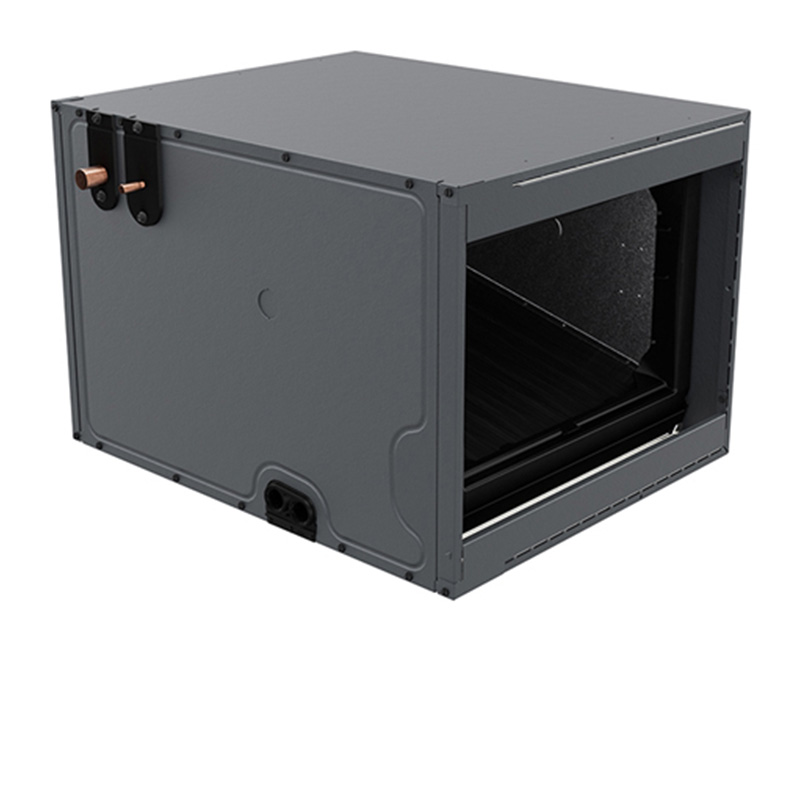
The coil cabinet and furnace in this bundle are configured to lie on their side, which suits crawl spaces, low attics, and closets where upright installation is impossible. Measure your available height and confirm with your installer before ordering, because the refrigerant and drain connections are oriented for horizontal airflow and cannot simply be stood upright.
What does two-stage mean on the furnace, and will I actually notice a difference?
A two-stage furnace fires at a lower output, roughly 65 to 70 percent of capacity, for most heating calls and only ramps to full output in very cold weather or when the space is far below setpoint. In practice, this produces longer, gentler cycles that reduce temperature swings between rooms and tends to run more quietly than a single-stage unit cycling on and off at full blast.
R-32 is new to me. Is it safe, and will my contractor be familiar with it?
R-32 is mildly flammable (A2L classification) but has been widely used in Europe and Asia for years and is being adopted broadly across the U.S. market. Most licensed HVAC technicians are now trained to handle it safely, but it is worth confirming your contractor has current R-32 certification before scheduling, especially in an area where older R-410A systems still dominate service calls.
What are the most common repairs on Goodman systems, and how expensive are they?
Dual-run capacitors are the most frequently reported failure and are generally an inexpensive fix in the 300 to 600 dollar range that a technician can complete quickly. More costly documented issues include evaporator coil refrigerant leaks, which can reach into the thousands depending on whether the coil needs replacement, and compressor failures after the 10 to 14 year mark, which is shorter on average than what owners of Trane or Carrier equipment typically report.
Goodman's ratings online are mixed. Should I be concerned, and how do I protect myself?
Goodman scores roughly 2.5 out of 5 on ConsumerAffairs, a platform that attracts dissatisfied owners, and around 3.8 out of 5 on Google dealer reviews where affordability is the most cited strength. The honest picture is a budget brand with a decent initial cost but more repair frequency after year seven than premium alternatives. The single most protective step you can take is hiring an experienced, licensed installer, because technicians consistently cite installation quality as the dominant factor in how long any Goodman system lasts.
Specifications
| Cooling capacity | 2.5 Ton |
| Efficiency | 15.2 SEER2 |
| Furnace output | 60000 BTU |
| Furnace efficiency | 96% AFUE |
| Configuration | Horizontal |
| Refrigerant | R-32 |