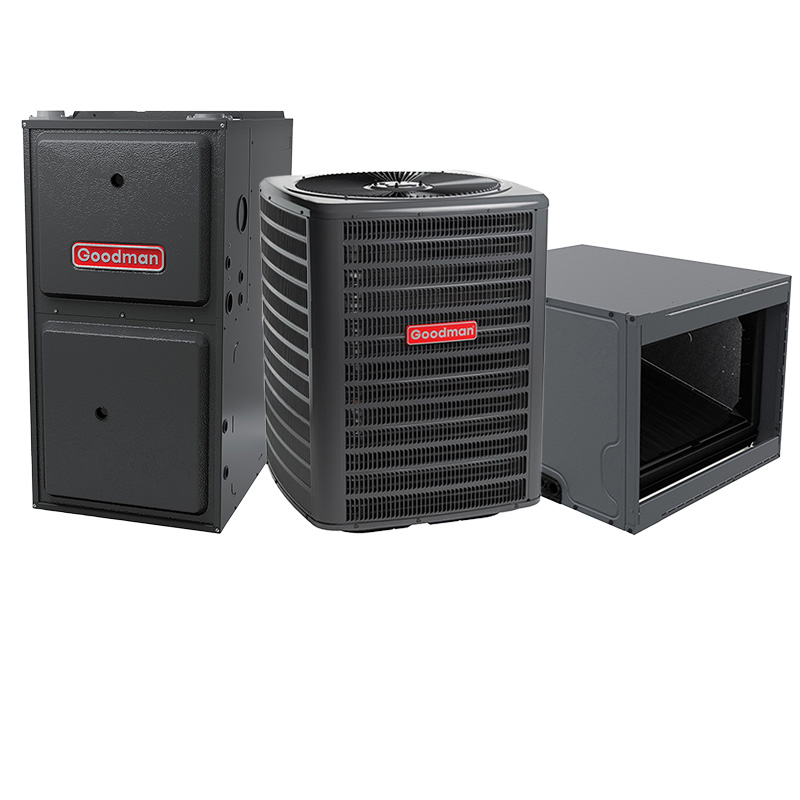
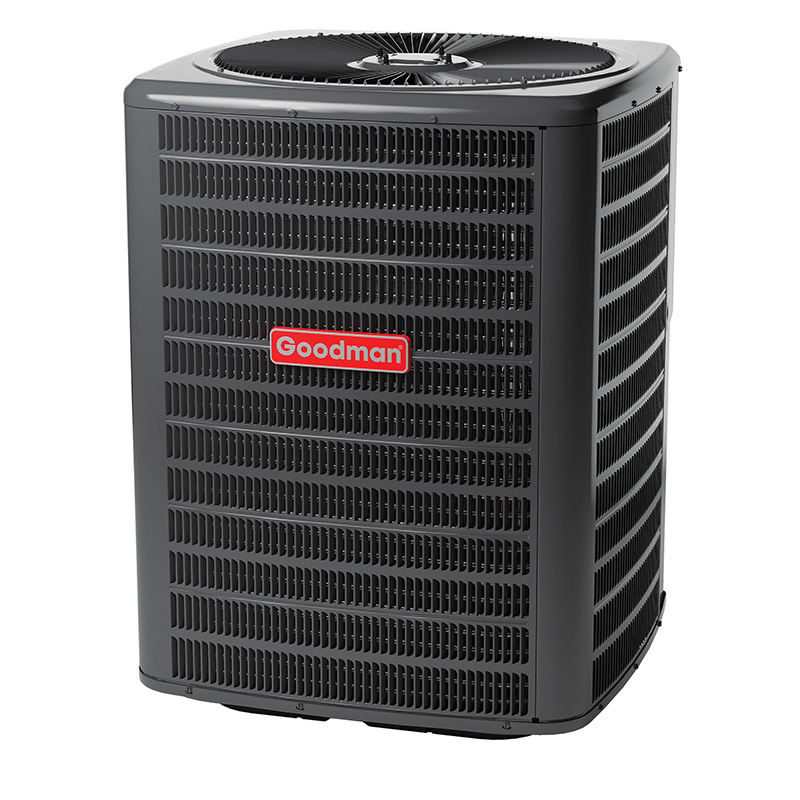
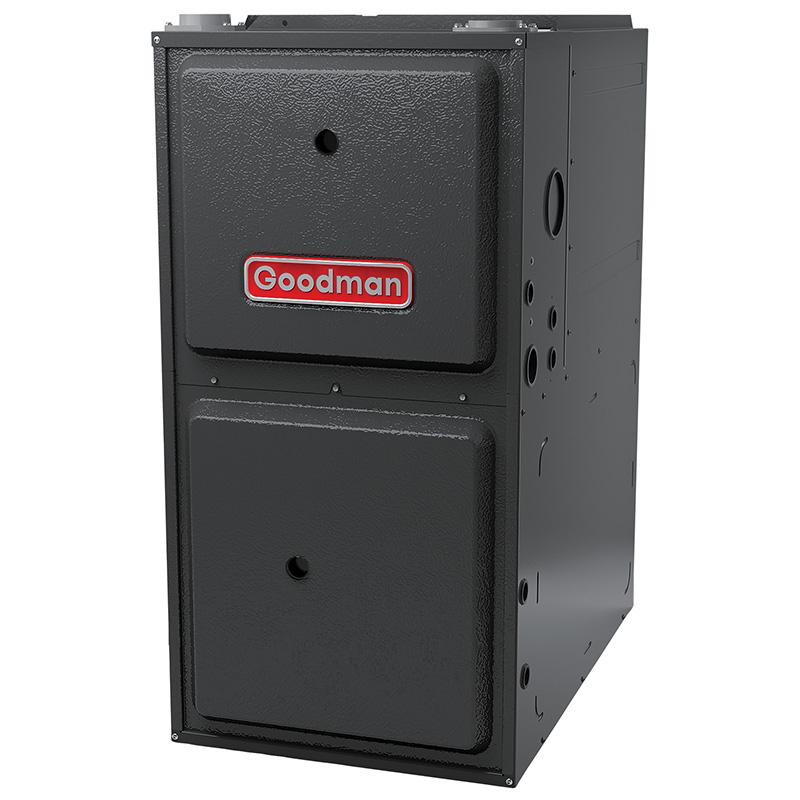
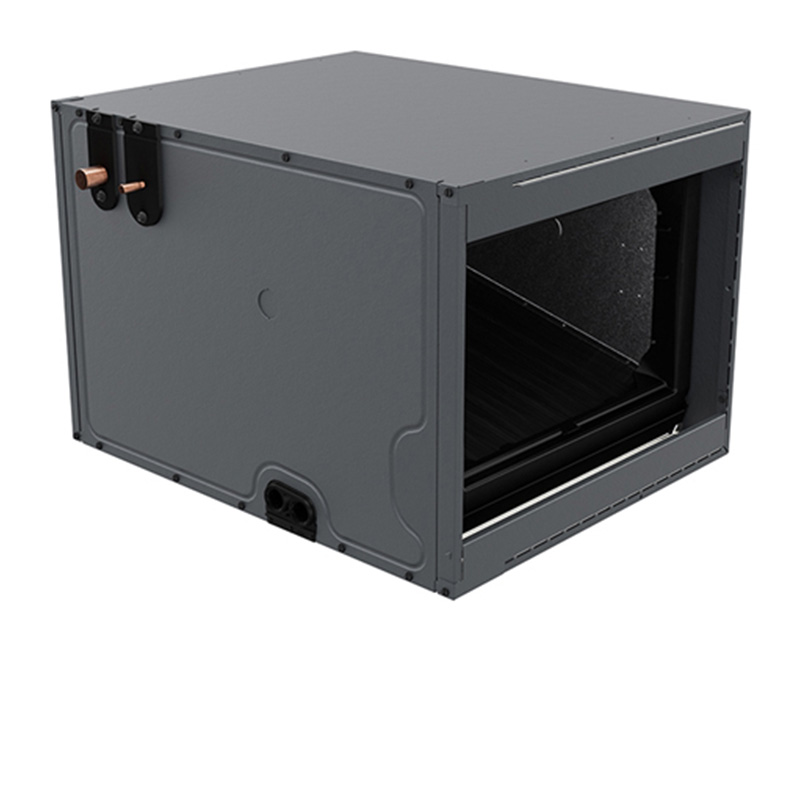
Goodman Air Conditioning And Heating – 2 Ton 15.2 SEER2 AC With 60000 BTU 96% AFUE Two Stage Multi-Speed ECM Gas Furnace System – Horizontal | R32
View on AC Direct see your lowest price →Check current price on AC Direct →
Key features
- 15.2 SEER2 cooling efficiency, meeting or exceeding current federal minimums in most U.S. climate regions
- 96% AFUE two-stage gas furnace runs at reduced capacity on mild days for steadier temperatures and fewer on/off cycles
- Multi-speed ECM blower motor lowers fan electricity use and reduces air-delivery noise versus standard PSC motors
- Horizontal cabinet configuration designed for attic, crawlspace, or closet installations where vertical clearance is limited
- R-32 refrigerant charge with lower global warming potential than R-410A and broad future serviceability
- Goodman factory warranty covers the compressor and heat exchanger for an extended term when registered within 60 days of installation
About this system
This Goodman package pairs a 2-ton, 15.2 SEER2 air conditioner with a 60,000 BTU, 96% AFUE two-stage gas furnace in a horizontal configuration, making it a practical choice for homes where attic or crawlspace installation is required and vertical cabinet space is not available. The R-32 refrigerant charge is a forward-looking detail: R-32 has a lower global warming potential than R-410A and is becoming the industry standard, so sourcing refrigerant for future service calls should remain straightforward as the transition continues. At 15.2 SEER2, the cooling efficiency sits just above the federal minimum for most U.S. regions, meaning you get a modest but real improvement over a code-minimum system without paying for premium-tier efficiency hardware.
The two-stage furnace and multi-speed ECM blower are the standout comfort features here. A two-stage gas valve runs at a lower capacity on mild days, cycling less frequently and holding steadier indoor temperatures than a single-stage unit. The ECM blower motor adjusts airflow continuously, which reduces the cold-blast feeling at startup, cuts blower electricity consumption noticeably versus a PSC motor, and moves air more quietly at lower speeds. Together, these make the system perform more like equipment sold at a higher price point than the upfront cost suggests. That said, horizontal configuration adds complexity at installation time, and the system’s long-term performance will depend heavily on how carefully the installing contractor handles refrigerant charging, drain routing, and airflow balancing in the attic or crawlspace environment.
This combination suits budget-conscious buyers who need to replace both heating and cooling at once, own a home with horizontal equipment space, and want two-stage comfort without moving into premium brand territory. It is less suited to homeowners who want the lowest possible utility bills above all else or who prefer the documented long-term track record of brands like Trane or Lennox.
This system delivers genuine two-stage comfort and a 96% AFUE furnace at a price point well below comparable Trane or Carrier packages, which is its core appeal. The horizontal configuration and R-32 refrigerant are practical choices for the right home, but buyers should budget for the higher-than-average chance of a capacitor or coil service call in years seven through twelve. Goodman's value proposition holds up when the install is done right and expectations are set accordingly.
Overall score is the average of the five ratings above.
What we like
- Two-stage furnace and ECM blower deliver noticeably more even temperatures than single-stage, lower-priced alternatives
- 96% AFUE furnace efficiency is among the highest available in this class, keeping heating bills competitive
- R-32 refrigerant is increasingly the industry standard, supporting long-term parts and refrigerant availability
- Priced roughly 15 to 25 percent below comparable Trane, Lennox, and Carrier systems, lowering the barrier to two-stage comfort
- Horizontal layout is purpose-built for attic and crawlspace installs where other configurations simply will not fit
Trade-offs
- Dual-run capacitors are the most frequently reported failure point, typically showing up after year seven and costing 300 to 600 dollars to fix
- Evaporator coil leaks appear in a meaningful share of owner reviews, a more expensive repair than a capacitor swap
- Compressor lifespan averages 10 to 14 years based on documented field experience, shorter than the 15 to 20 years reported for premium brands
- A minority of owners report refrigerant leaks within the first year, usually tied to installation quality rather than the equipment itself, so contractor selection matters significantly
What homeowners and pros say about Goodman
Homeowners who have lived with this class of Goodman equipment for several years tend to describe a clear split in experience. Those who had a careful installation done by an experienced contractor often report years of trouble-free operation and credit the two-stage furnace for genuinely better comfort than their previous single-stage system. The affordability relative to Trane, Carrier, and Lennox is consistently cited as the reason they chose Goodman in the first place. On the other hand, Goodman’s ConsumerAffairs score sits at roughly 2.5 out of 5, a platform where complaints dominate and the recurring theme is repair costs that begin climbing noticeably around year seven. Google dealer reviews average closer to 3.8 out of 5, where affordability is the most common point of praise, suggesting that buyers who go in with realistic expectations tend to be more satisfied.
HVAC technicians are candid about where Goodman equipment tends to show its limits. Dual-run capacitors are the most commonly cited failure point, a repair that is usually quick and stays in the 300 to 600 dollar range but that shows up often enough to be worth budgeting for. Evaporator coil leaks appear in enough owner accounts to be a genuine pattern rather than an outlier, and compressor lifespan in the field averages 10 to 14 years based on reported experience, compared to 15 to 20 years for premium brands. A smaller group of owners reports refrigerant leaks within the first year, and technicians generally attribute those to installation problems rather than factory defects, which underscores how much this brand’s real-world performance depends on who does the install. For buyers who understand that trade-off and choose their contractor carefully, the value case for this system remains solid.
Sources: ConsumerAffairs Goodman owner reviews, AHRI Directory of Certified Product Performance, U.S. DOE appliance and equipment efficiency standards, Goodman product specification sheets.
What it costs to run
At 15.2 SEER2, cooling this 2-ton system for a typical 1200-hour cooling season at the U.S. average electricity rate of $0.17/kWh works out to roughly $322 per year in cooling, about $43 less per year than a minimum-efficiency 13.4 SEER2 unit of the same size. Your real cost depends on your climate and local rate.
Method: (24,000 BTU/hr ÷ 15.2 SEER2) × 1200 hours ÷ 1000 × $0.17/kWh. Rate source: U.S. EIA average; cooling hours: moderate-climate estimate.
How it compares
| Brand | Comparable model | SEER2 | Stage | Price position |
|---|---|---|---|---|
| Goodman | 2-Ton 15.2 SEER2 AC / 60K BTU 96% AFUE Two-Stage ECM Horizontal R-32 | 15.2 | Two-stage | Value pick |
| Carrier | Performance Series 24ACC636A / 59TP6 | 15.2 | Two-stage | 15 to 25 percent above this Goodman package |
| Trane | XR15 / S9X2 Two-Stage | 15.0 | Two-stage | 15 to 25 percent above this Goodman package |
| Lennox | Merit ML15XC1 / ML196E | 15.2 | Two-stage | 20 to 30 percent above this Goodman package |
Competitor rows are comparable single-stage units at similar efficiency; price is relative position, not a quote.
Questions about this system
Is horizontal installation harder to maintain than a standard upright furnace setup, and does it affect reliability?
Horizontal units require careful attention to drain pan slope and condensate routing during installation to prevent water damage and coil corrosion over time. Access for filter changes and coil inspection can also be tighter in attic or crawlspace locations. These are not dealbreakers, but they make installer skill and annual maintenance visits more important than they would be for a standard vertical install.
Why does this system use R-32 refrigerant, and will it be hard to find a technician who services it?
R-32 is a single-component refrigerant with a lower global warming potential than R-410A, and the HVAC industry is actively transitioning toward it as regulations tighten. Most technicians being certified today are trained on R-32, and refrigerant availability is growing, so service access should be comparable to R-410A within a few years. If you are in a rural area with limited HVAC options, it is worth confirming your local techs are already certified before purchasing.
How often should I expect to service this system, and what repairs should I budget for?
Annual preventive maintenance is the standard recommendation for any gas-electric system. Based on documented field experience with Goodman equipment, dual-run capacitor replacement is the most common repair, typically arising after year seven and running 300 to 600 dollars. Setting aside a service fund of 150 to 200 dollars per year starting around year five is a reasonable approach.
Does the two-stage furnace actually make a noticeable difference in comfort compared to a single-stage unit?
Yes, in most homes the difference is noticeable. A two-stage furnace runs at its lower stage for the majority of heating hours, cycling on and off less often and holding room temperatures within a tighter band. Combined with the ECM blower, air distribution feels less abrupt, and the system operates more quietly during the long low-fire runs typical of mild winter days.
What warranty does Goodman provide, and is there anything I need to do to activate it?
Goodman generally offers a 10-year parts warranty and an extended compressor and heat exchanger warranty when the equipment is registered with Goodman within 60 days of installation by a licensed contractor. If registration is missed, coverage typically drops to five years on parts. Always confirm current warranty terms directly with Goodman at the time of purchase, as coverage details can change.
Specifications
| Cooling capacity | 2 Ton |
| Efficiency | 15.2 SEER2 |
| Furnace output | 60000 BTU |
| Furnace efficiency | 96% AFUE |
| Configuration | Horizontal |
| Refrigerant | R-32 |